
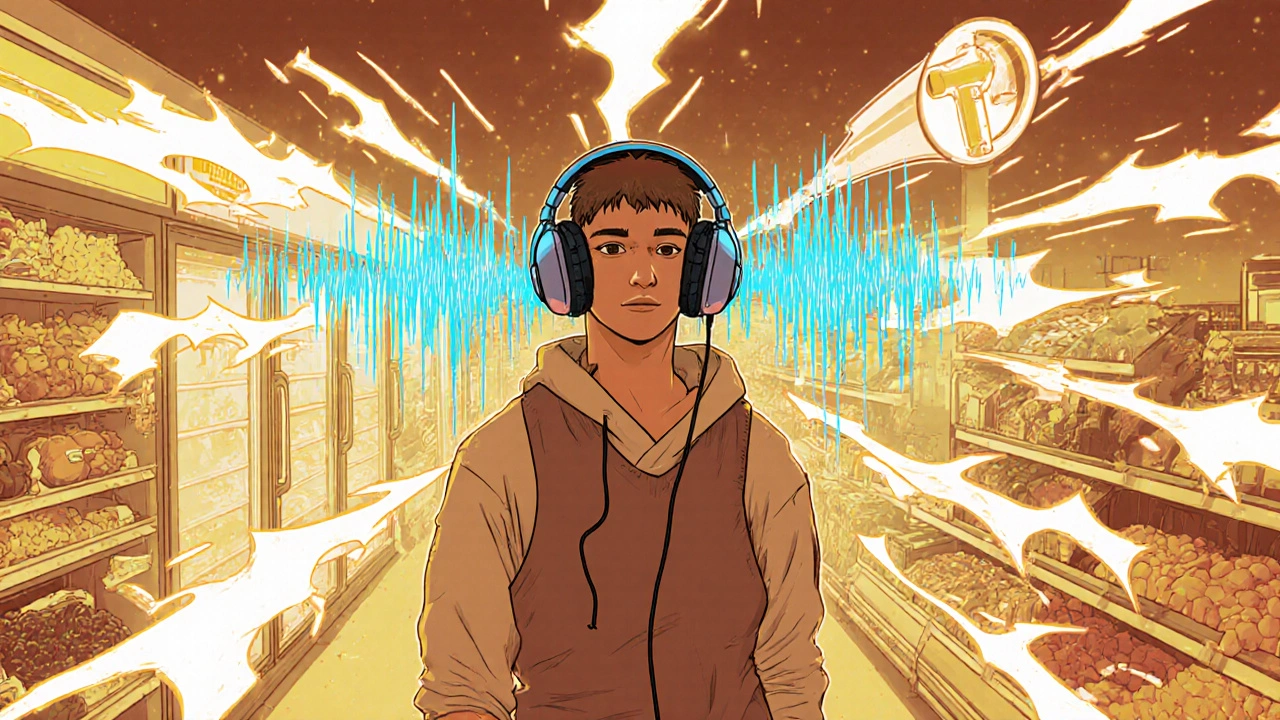
When a vacuum cleaner, chewing, or even someone tapping their fingers feels like a drill in your skull, you’re not just being picky—you might have noise intolerance, a condition where ordinary sounds trigger intense discomfort, anxiety, or pain. Also known as hyperacusis, it’s not about volume—it’s about how your brain processes sound. This isn’t just annoyance. People with noise intolerance often avoid social events, quit jobs, or isolate themselves because normal environments become unbearable. It’s real, it’s documented, and it’s more common than you think.
Noise intolerance often shows up alongside other conditions like migraines, recurrent headaches triggered by sensory stimuli, autism spectrum disorder, a neurodevelopmental condition where sensory input is processed differently, or PTSD, a trauma-related disorder where sounds can act as triggers. It’s not always about the ears—it’s about the nervous system. Some people develop it after head injuries, ear infections, or prolonged exposure to loud environments. Others have had it since childhood without knowing why. The key is recognizing it as a neurological response, not a personal flaw.
What helps? There’s no one-size-fits-all fix, but many find relief through sound therapy, cognitive behavioral techniques, or even specialized ear protection that filters out specific frequencies without total silence. Medications don’t cure it, but they can help manage related anxiety or depression. You’re not alone in this. Thousands of people navigate daily life with this challenge, and understanding the science behind it is the first step toward control.
The posts below cover real cases, treatment options, and connections to other conditions like medication side effects, neurological sensitivity, and how certain drugs can worsen or improve sound tolerance. Whether you’re trying to find relief for yourself or someone you care about, you’ll find practical, no-fluff advice here—no guesswork, just what works.
 21 November 2025
Hyperacusis is a condition where everyday sounds feel painfully loud. Desensitization therapy is the most effective, non-invasive treatment that retrains the brain to tolerate noise. Learn how it works, who it helps, and why avoidance makes it worse.





©2026 rxmedicin.su. All rights reserved
14