
Starting a new medication can feel overwhelming. You’re handed a prescription, told when to take it, and sent on your way. But what if you don’t fully understand why you’re taking it? What if you don’t know what side effects to watch for? Or worse - what if it interacts dangerously with something else you’re already taking?
Here’s the hard truth: half of all patients don’t take their medications as prescribed. And a big reason why? They simply don’t know how to use them correctly. The good news? Asking the right questions before you leave the office can change that.
What is this medication, and why am I taking it?
Start with the basics. Ask for the exact name - both the brand name and the generic name. Many errors happen because patients confuse similar-sounding drugs. For example, Hydroxyzine and Hydralazine sound alike but do completely different things. One treats anxiety, the other high blood pressure.
Then ask: “Which specific condition is this meant to treat?” Don’t settle for vague answers like “It’s for your health.” Be specific. If you’re prescribed a statin, ask if it’s for cholesterol, inflammation, or something else. If it’s for depression, ask how it’s expected to help your mood, sleep, or energy. Knowing the purpose helps you recognize if it’s working - or if something’s wrong.
How and when should I take it?
Dosage instructions are often given too fast. You might hear “take one daily,” but what does that really mean?
- Do I take it with food or on an empty stomach?
- Should I take it at the same time every day?
- Is it okay to split the pill or crush it?
- How long is the full course? Is this a 7-day, 30-day, or lifelong treatment?
Thirty-four percent of patients misunderstand dosage instructions, according to the Agency for Healthcare Research and Quality. That’s not just confusing - it’s dangerous. Taking a blood thinner with food when you’re supposed to take it on an empty stomach can reduce its effectiveness. Taking an antibiotic too early or too late can let bacteria survive and grow resistant.
Write down the instructions. Or better yet, take a photo of the prescription label with your phone. Don’t rely on memory.
How will I know if it’s working?
This is one of the most overlooked questions - and one of the most important.
Many people stop taking their medication because they don’t feel any different right away. Antidepressants can take 4-6 weeks to show effects. Blood pressure meds might not make you feel anything at all - but they’re still working. If you don’t know what to expect, you might quit too soon.
Ask: “What signs should I look for to know this is helping?” For pain meds, is it a 30% reduction in pain? For thyroid meds, will your energy improve in 2-3 weeks? For cholesterol drugs, will your next lab test show improvement?
Studies show 68% of people stop taking medications early because they don’t see immediate results. You’re not alone. But knowing the timeline helps you stick with it.
What side effects should I expect - and which ones are dangerous?
Every medication has side effects. The key is knowing which are normal and which are warning signs.
Ask: “Which side effects are common and likely to go away?” For example, nausea from antibiotics often fades after a few days. Drowsiness from sleep meds might wear off as your body adjusts.
Then ask: “Which side effects mean I need to call you or go to the ER?” For example: swelling of the face or throat, chest pain, sudden confusion, severe dizziness, or unusual bleeding. These aren’t “mild” - they’re emergencies.
Adverse drug reactions send over 1 million people to the hospital every year in the U.S. Most of these could be prevented if patients knew what to watch for. Don’t wait until it’s too late.
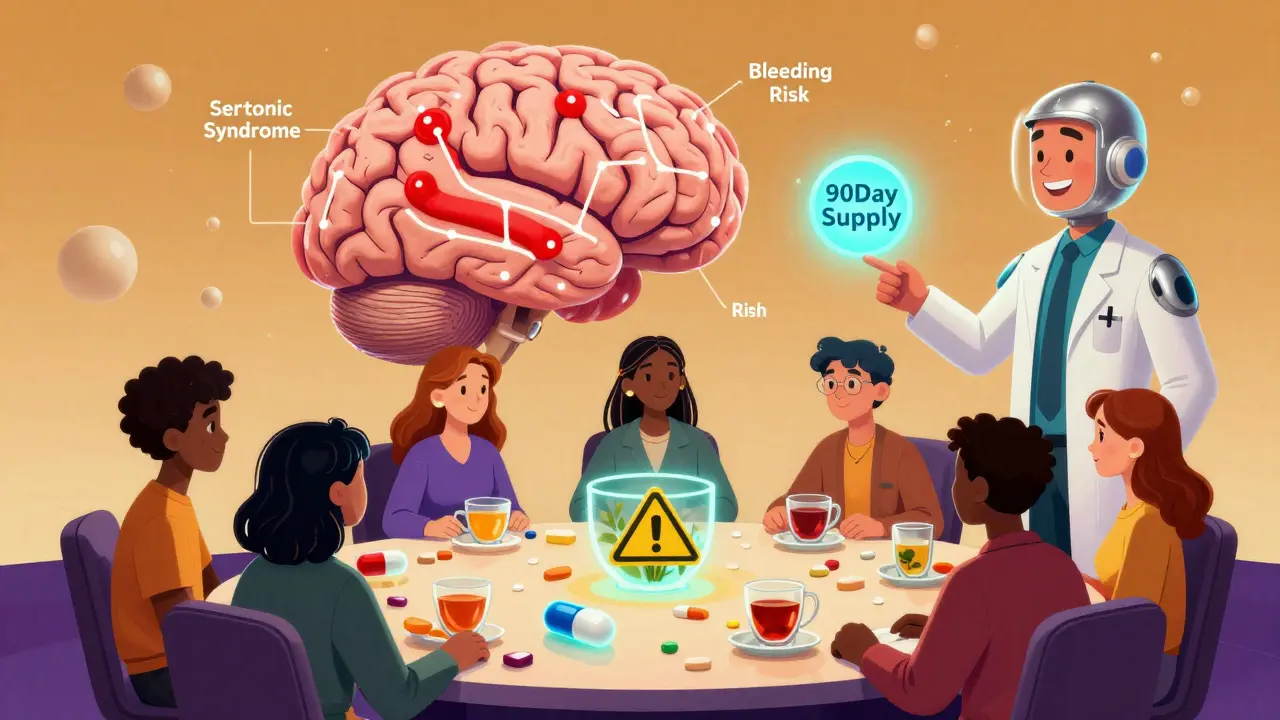
Will this interact with anything else I’m taking?
Most people don’t realize how many things can interfere with a new drug.
Bring a list - everything. Not just prescriptions. Include:
- Over-the-counter meds (like ibuprofen, antacids, or cold pills)
- Vitamins and supplements (especially fish oil, St. John’s Wort, magnesium)
- Herbal teas or remedies
- Alcohol and caffeine habits
Forty percent of adults take five or more medications at once. That’s a recipe for dangerous interactions. For example, mixing blood thinners with garlic supplements can increase bleeding risk. Taking certain antidepressants with migraine meds can trigger a life-threatening condition called serotonin syndrome.
Don’t assume your doctor knows what you’re taking. They rarely ask about supplements unless you bring it up. Be the one to speak up.
Are there alternatives - and why this one?
There’s rarely just one option. Ask: “Why this medication instead of another?”
Maybe there’s a cheaper generic. Maybe a different drug has fewer side effects for your age or condition. Maybe a non-drug option (like physical therapy or diet changes) could work just as well.
And if you’re older or have chronic conditions, ask: “Has this been tested on people like me?” Many drugs are studied mostly on young, healthy adults. Your body might respond differently.
Genetic testing (like pharmacogenetics) is now available for some medications. It can tell if your body processes a drug slowly or quickly - which affects dosage and risk. It’s not for everyone, but it’s worth asking about, especially if you’ve had bad reactions to meds in the past.
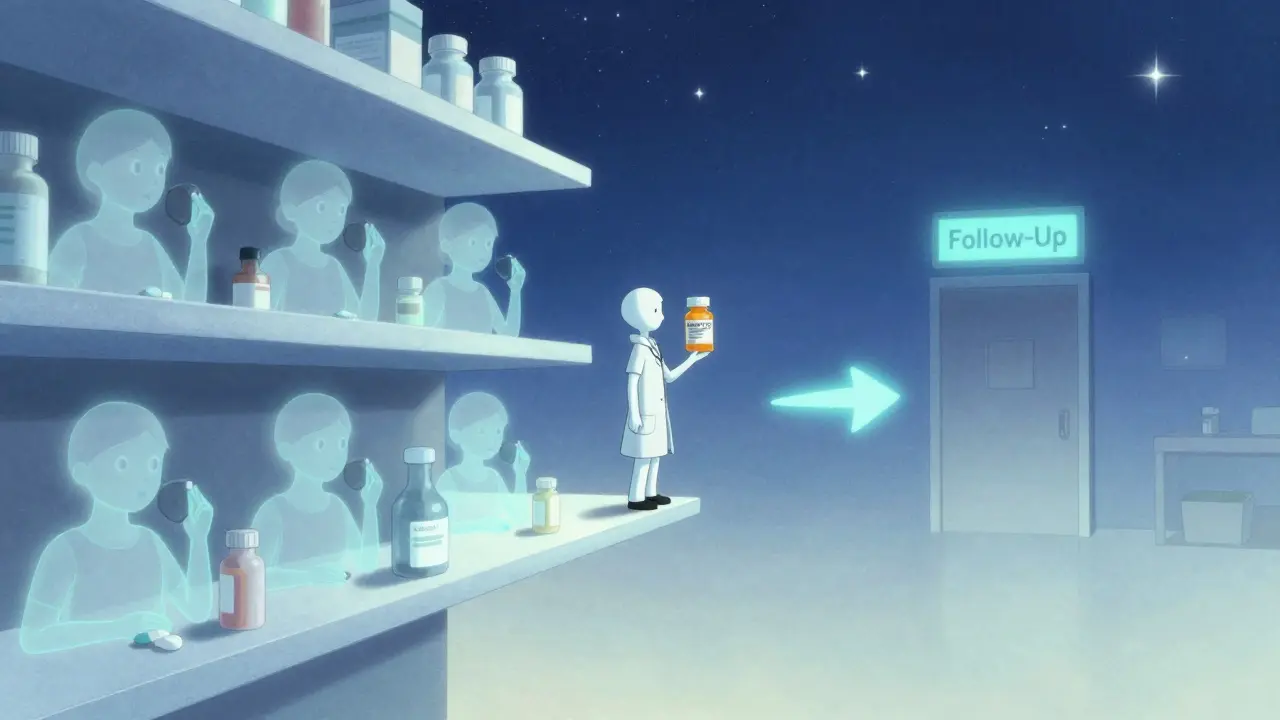
When should I come back? What if this doesn’t work?
Medication isn’t a “set it and forget it” deal. You need follow-up.
Ask: “When should I schedule a check-in?” Is it in 2 weeks? 6 weeks? After your next blood test?
And ask: “What’s the plan if this doesn’t help?” Will you switch to another drug? Increase the dose? Add another treatment? Knowing the next steps removes fear and uncertainty.
Almost half of patients never schedule follow-up visits - even when their doctor says to. That’s a missed opportunity. If a medication isn’t working, you need to know sooner rather than later.
How much will this cost?
Cost is a silent killer. One in four people skip doses because they can’t afford their meds.
Ask: “Is there a generic version?” “Can I get a 90-day supply to save money?” “Are there patient assistance programs?”
Many drug companies offer coupons or free samples. Your pharmacist can help too. Don’t be embarrassed to ask. If you can’t afford it, there’s usually a way - but you have to speak up.
How do I store this safely?
Some meds need refrigeration. Others must be kept away from light or moisture. Some are dangerous if kids or pets get into them.
Ask: “Where should I keep this?” “Do I need to lock it up?” “How do I dispose of it safely?”
Flushing pills down the toilet or tossing them in the trash can harm the environment - and sometimes, people. Many pharmacies have take-back programs. Ask about them.
What if I miss a dose?
This happens to everyone. But what you do next matters.
Ask: “If I forget, should I take it as soon as I remember? Skip it? Double the next dose?”
For some drugs, doubling up can be dangerous. For others, skipping even one dose reduces effectiveness. Know the rule before you need it.
Final tips to make this conversation work
- Write your questions down before your appointment. Don’t trust your memory.
- Bring a list of everything you take - prescriptions, OTC, supplements, even herbal teas.
- Bring someone with you - a family member or friend. They can help remember what was said.
- Ask them to explain it like you’re 12. If you don’t understand, say so. No shame in asking for simpler words.
- Take notes or record the conversation (ask permission first).
- Call your pharmacist after the visit. They’re trained to explain meds and often have more time than your doctor.
Healthcare isn’t a one-way street. You’re not just a patient - you’re a partner. The more you ask, the safer and more effective your treatment will be.
And if your doctor seems rushed or dismissive? That’s not normal. You deserve clear answers. If you don’t get them, find someone who will give them to you.
What if I don’t understand what my doctor says?
It’s your right to understand. Say, “I’m not sure I follow - can you explain that another way?” Use the “teach-back” method: ask your doctor to let you repeat the instructions in your own words. If you get it right, they know you understand. If you don’t, they’ll clarify. Most doctors appreciate this - it helps them do their job better.
Can I ask for a second opinion on a new medication?
Absolutely. Getting a second opinion isn’t disrespectful - it’s smart. Especially for serious conditions or long-term medications. You can ask your doctor for a referral to a specialist, or even consult a pharmacist. Many health plans allow you to see another provider for medication advice. Your health is worth the extra step.
Should I tell my doctor about supplements I take?
Yes - always. Supplements aren’t harmless. St. John’s Wort can make birth control, antidepressants, and blood thinners less effective. Vitamin K can interfere with warfarin. Even common ones like magnesium or calcium can affect how your body absorbs other drugs. List every supplement, no matter how “natural” it seems.
What if I start feeling worse after taking the new medication?
Don’t wait. Call your doctor or pharmacist immediately. Some side effects start within hours. If you feel dizzy, confused, have trouble breathing, or develop a rash, seek help right away. Don’t assume it’s “just part of the adjustment.” Trust your body. Your symptoms matter.
Is it okay to stop a medication if I feel fine?
No - unless your doctor says so. Even if you feel fine, stopping suddenly can cause withdrawal, rebound symptoms, or make your condition worse. Blood pressure meds, antidepressants, and steroids are especially risky to quit cold turkey. Always talk to your provider before making any changes.




Darren McGuff
January 9, 2026 AT 03:09This post is a godsend. I used to just swallow pills like candy until I nearly ended up in the ER because I didn’t know my blood thinner interacted with my fish oil. Now I print out this exact list and bring it to every appointment. My doctor actually asks me if I’ve read it before we start. It’s weird how such a simple habit changed everything.
Also, never underestimate the pharmacist. They know more about drug interactions than your doctor sometimes. I asked mine about a supplement I was taking for ‘energy’-turned out it was canceling out my thyroid med. They didn’t even blink. Just said, ‘Yeah, we see that all the time.’
Alicia Hasö
January 10, 2026 AT 14:24You are not just a patient-you are the CEO of your own health. And like any CEO, you need to ask the hard questions, demand clarity, and refuse to settle for vague answers. This isn’t about being ‘difficult.’ It’s about being responsible.
I’ve watched friends die because they trusted silence over curiosity. Don’t be one of them. Write your questions. Bring a notebook. Record the conversation. Bring someone who loves you. Your life depends on the details. And if your doctor rolls their eyes? Find a new one. You deserve better.
And yes-supplements are drugs. St. John’s Wort isn’t ‘natural’ magic. It’s a potent serotonin modulator. Treat it like one.
Jeffrey Hu
January 12, 2026 AT 14:10Let’s be real-most people don’t even know what ‘generic’ means. You think ibuprofen is just ibuprofen? Nope. There are at least five different formulations with varying bioavailability. And if you’re taking it with a proton pump inhibitor? You’re probably not getting full effect.
Also, the 34% statistic on dosage misunderstanding? That’s low. In my ER rotations, over half of patients couldn’t tell me the time of day they were supposed to take their meds. One guy took his beta-blocker at 3 a.m. because he ‘felt jittery.’
And yes, crushing pills? Sometimes it’s fine. Sometimes it’s lethal. Ask the pharmacist. Don’t YouTube it.
Meghan Hammack
January 13, 2026 AT 23:12I was terrified to start my antidepressant. I thought I’d turn into a zombie. But my doctor said, ‘You’ll know it’s working when you stop dreading Monday mornings.’ That’s it. That’s all I needed.
And guess what? It worked. I didn’t feel ‘happy’-I just stopped crying for no reason. That’s the win.
Don’t wait for fireworks. Look for quiet changes. Better sleep. Less dread. A little more energy to walk the dog. Those are the wins. You’re not broken. You’re healing. And you’re not alone.
Matthew Maxwell
January 15, 2026 AT 22:27It’s not rocket science. If you can’t be bothered to learn the name of your own medication, you don’t deserve to take it. Half of these people are on 7+ drugs and can’t tell you what any of them do. That’s not a healthcare crisis-it’s a personal failure.
And don’t get me started on supplements. ‘Natural’ doesn’t mean safe. It means unregulated. You wouldn’t let a stranger pour chemicals into your gas tank. Why do it to your liver?
Stop being passive. Educate yourself. Or stop complaining when things go wrong.
Lindsey Wellmann
January 16, 2026 AT 03:18OMG YES. 😭 I took my blood pressure med with grapefruit juice for 3 months because I thought ‘fruit = healthy.’ Then I passed out at Target. 🚨
My doctor was like, ‘That’s not a snack. That’s a chemical bomb.’ 🤯
Now I have a sticky note on my fridge: ‘NO GRAPEFRUIT. NO EXCEPTIONS. NO SADNESS.’
Also, I brought my mom to every appointment after that. She’s the only one who remembers what the doctor says. 💅
PS: I printed this list and laminated it. I carry it like a holy text. 🙏
tali murah
January 17, 2026 AT 12:53Oh, so now we’re blaming patients for not being medical experts? How convenient. The system is designed to confuse you. Labels are tiny. Doctors speak in jargon. Pharmacies rush you. And then you’re the ‘noncompliant’ one?
Let me guess-you’ve never had to wait 11 months for a specialist appointment. Never had to choose between rent and your insulin. Never had to explain to a 12-year-old why you’re crying because your meds made your hair fall out.
It’s not laziness. It’s systemic neglect. And you? You’re part of the problem.
Diana Stoyanova
January 18, 2026 AT 00:04Here’s the truth no one tells you: medicine isn’t magic. It’s math. It’s biology. It’s timing. It’s your body trying to find balance with a foreign chemical.
I used to think if I felt fine, the drug wasn’t working. But that’s not how it works. Sometimes healing is silent. Sometimes your cells are rebuilding while you’re scrolling TikTok.
And the cost? Oh, honey. I’ve skipped doses because I had to choose between my anxiety med and my cat’s food. I’m not proud. But I’m alive. And I learned to ask for samples. To call the drug company. To beg my pharmacist for a discount. You’d be shocked how often they say yes.
Don’t let shame silence you. Your life isn’t a luxury. It’s a right.
And if your doctor won’t sit with you? Find one who will. You’re worth the time.
Maggie Noe
January 18, 2026 AT 20:28I’m 72. I take 8 meds. I don’t remember all the names. I don’t care. What I care about is this: I have a little pill organizer with AM/PM slots. I fill it every Sunday. My daughter helps. We take a photo of it. I keep it on my fridge.
And I say out loud, every time I take a pill: ‘This is for my heart. This is for my joints. This is for my brain.’
It sounds silly. But it works. Because if you don’t connect the pill to the purpose, you forget. And forgetting kills.
Don’t overcomplicate it. Just show up. Be kind to yourself. You’re doing better than you think.
Gregory Clayton
January 18, 2026 AT 22:33Y’all are overthinking this. Just take the damn pill. If you’re too lazy to read the label, you shouldn’t be on meds. America’s falling apart because people want everything handed to them.
My grandpa took 12 pills a day. Couldn’t read. Didn’t have a phone. But he had a red box with ‘MORNING’ and ‘NIGHT’ written on it. He never missed one.
Stop making it a drama. Just do the work.
Catherine Scutt
January 19, 2026 AT 23:00I’ve been on antidepressants for 12 years. I’ve been told I’m ‘too emotional.’ I’ve been told I’m ‘addicted.’ I’ve been told I should ‘pray harder.’
None of it helped.
What helped? Asking my doctor: ‘What if I don’t like this one?’ And then asking again. And again. Until we found the right one.
You don’t owe anyone silence. Your body is not a sacrifice. Your questions are not a burden. You’re not ‘difficult.’ You’re alive.
Ashley Kronenwetter
January 20, 2026 AT 07:02Thank you for this. As a healthcare professional, I see too many patients who are terrified to ask questions because they fear being seen as ‘difficult.’ But the truth is: the most respectful patients are the ones who ask. They’re the ones who care enough to understand.
Please, if you’re reading this and you’re about to walk into a doctor’s office-write your questions down. Bring a list. Bring someone. You are not a burden. You are a partner. And your voice matters.