
Every year, millions of people in the U.S. finish their antibiotics early-because they feel better. They toss the leftover pills in the toilet, dump them in the trash, or save them for next time. None of these habits are safe. And none of them help you-or anyone else.
Antibiotics aren’t candy. They’re powerful drugs designed to kill specific bacteria. But when they’re used wrong, they don’t just lose their power-they make future infections harder to treat. That’s antibiotic resistance, and it’s already killing 35,000 Americans every year. The biggest driver? Home use. Not hospitals. Not clinics. Antibiotic stewardship at home is the missing piece in the fight against superbugs.
Why Finishing Your Course Isn’t Optional
You start an antibiotic. Day two: your fever’s gone. Day three: your cough’s gone. You feel fine. So you stop.
That’s exactly what the bacteria want.
Antibiotics don’t kill all the bacteria at once. They kill the weakest ones first. The ones that survive? The tough ones. The ones that can resist the drug. If you stop early, those survivors multiply. Next time, the same antibiotic won’t work. And now you’ve created a resistant strain-maybe one that can spread to your kids, your partner, or your elderly parent.
The CDC says stopping early increases your risk of resistance by 23% to 37%. That’s not a guess. That’s from 14 clinical trials tracking real patients. The Infectious Diseases Society of America confirms it: incomplete courses raise treatment failure rates by nearly 19%.
And here’s the hard truth: feeling better doesn’t mean the infection is gone. It just means the worst of the bacteria are dead. The rest? They’re still there. Waiting. And if you don’t finish the full course, they’ll come back stronger.
How to Actually Finish the Course
Most people don’t fail because they’re careless. They fail because they’re overwhelmed.
Imagine your mom takes seven different pills a day. One for blood pressure. One for cholesterol. One for arthritis. And now, antibiotics-three times a day, every eight hours. What happens when she’s sleeping at 2 a.m.? What happens when the alarm doesn’t go off? What happens when the caregiver forgets?
That’s not laziness. That’s a system failure.
The fix isn’t more willpower. It’s better tools.
- Use a pill organizer with built-in alarms. Brands like Hero or Medisafe sync with your phone and send reminders. Some even lock to prevent double-dosing.
- Set multiple alarms on your phone: one for morning, one for afternoon, one for night. Label them clearly: “Amoxicillin-8 a.m.”
- Write it on the calendar. Put a big X next to each dose. Seeing the streak builds momentum.
- Ask your pharmacist for a blister pack. Many pharmacies now offer pre-sorted, date-labeled packs for complex regimens.
For seniors, AALLCare’s 2024 guidelines say caregivers who use alarms or apps are 42% more likely to complete the full course. That’s not magic. That’s structure.
And if your loved one misses a dose? Don’t panic. Don’t double up. Call the doctor. Most antibiotics have a window-missed by a few hours? Just take it when you remember. Missed by more than half the dosing interval? Skip it and go back to the next scheduled time. Never double up unless your provider says so.
What to Do With Leftover Antibiotics
You’ve finished the course. There are pills left. What now?
Don’t keep them.
Don’t give them to your neighbor.
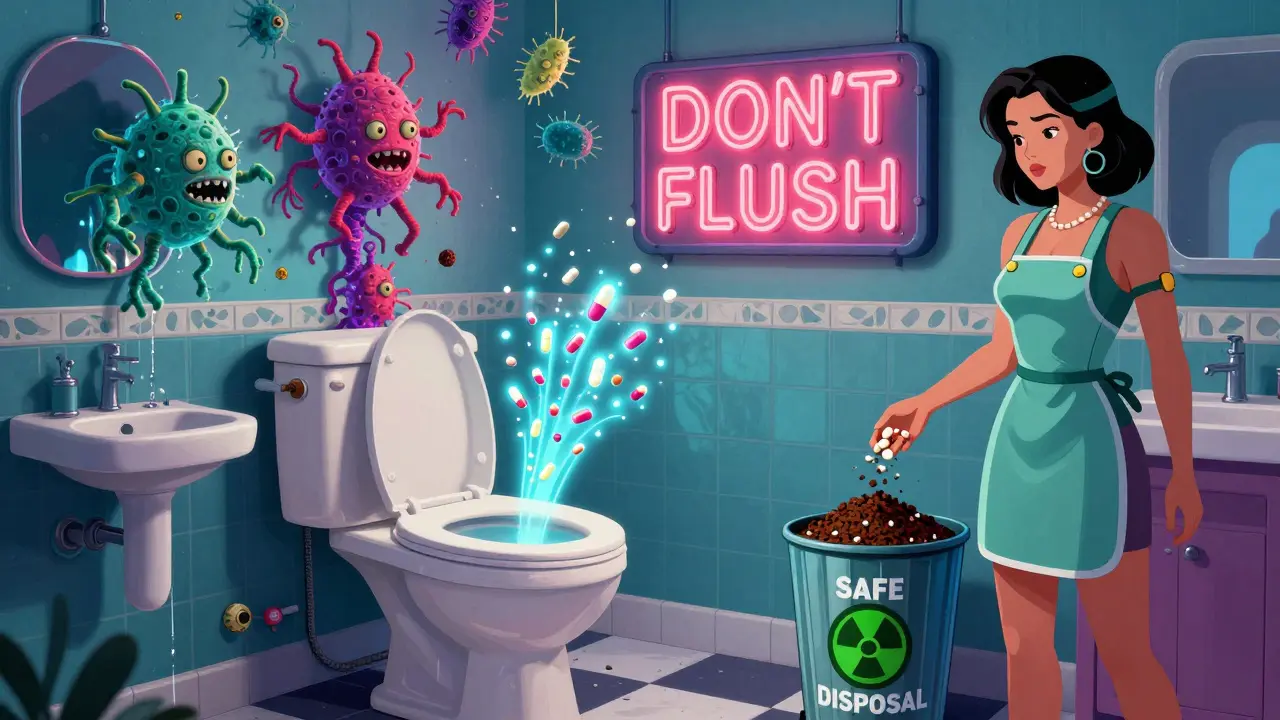
Don’t flush them.
Here’s what you do instead:
- Find a drug take-back location. Many pharmacies, hospitals, and police stations have drop boxes. Use the DEA’s take-back locator to find one near you.
- If no take-back is available, mix the pills with something unappetizing-used coffee grounds, kitty litter, or dirt. Put the mixture in a sealed plastic bag. Throw it in the trash.
- Scratch out your name and the prescription number on the bottle before tossing it.
Flushing? Bad. It pollutes waterways. The CDC found antibiotic residues in 63% of U.S. water sources near populated areas. That’s not a myth. That’s science.
Keeping them? Worse. The FDA says 61% of people save leftover antibiotics for later. That’s dangerous. A cough today isn’t the same as a cough next winter. The wrong antibiotic can make things worse-or mask a serious infection until it’s too late.
Why Home Care Is the Biggest Gap
Hospitals have antibiotic teams. Nurses check doses. Doctors review treatments every 48 hours. They call it an “antibiotic timeout.”
At home? You’re on your own.
Only 12% of home care agencies have formal protocols to reassess whether antibiotics are still needed. In nursing homes? 78% do. That’s a huge gap.
And caregivers? Only 31% have ever been trained on how to manage medications properly. Most don’t know the signs of a bad reaction-rash, diarrhea, confusion, dizziness. They don’t know when to call the doctor.
That’s why the CDC’s new Home Care Stewardship Toolkit (coming in Q1 2025) is so important. It’s the first real attempt to bring hospital-level standards into the living room.
But you don’t have to wait. You can start today:
- Keep a log: write down when each dose is given.
- Call the doctor after 48 hours. Ask: “Is this still needed? Could we stop early?”
- Ask for a prescription for the minimum number of pills. Not 10 days if 5 will do.
Studies show that when families ask these questions, antibiotic use drops by 17% to 29%. That’s not just safer. It’s cheaper. And it saves lives.
What Happens When You Don’t Act
Antibiotic resistance doesn’t wait. It doesn’t care if you’re old, young, healthy, or sick.
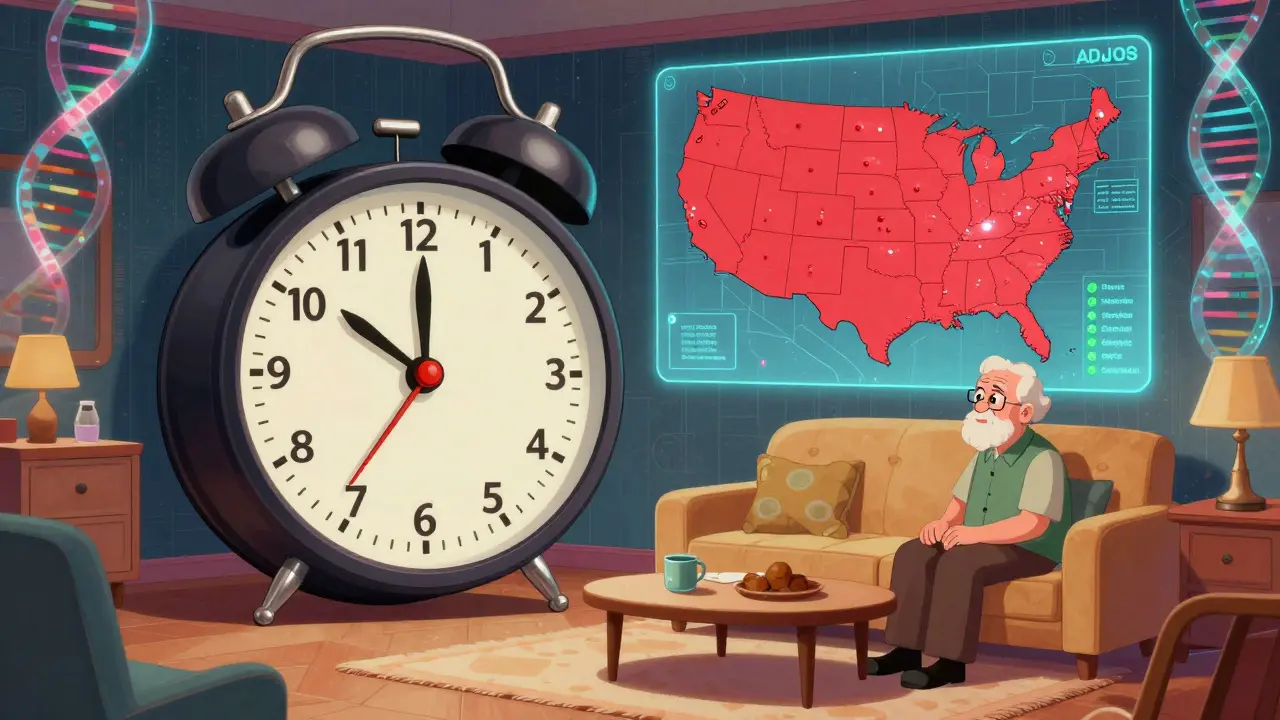
Right now, a simple UTI can turn into a blood infection. A cut on your finger can lead to amputation. A sinus infection can spread to your brain.
And the people most at risk? Seniors. Kids. People with weak immune systems. The same people who live at home, rely on family caregivers, and don’t have a clinical team watching over them.
Every time you stop an antibiotic early-or save it for later-you’re not just risking your own health. You’re making the world less safe for everyone.
That’s why stewardship isn’t a hospital thing. It’s a home thing. A family thing. A responsibility.
What You Can Do Right Now
You don’t need a degree. You don’t need a nurse. You just need to act.
- Finish every pill. Even if you feel fine.
- Never share antibiotics. Not even with your spouse.
- Dispose of leftovers safely. Mix with coffee grounds. Throw in trash. Don’t flush.
- Ask your doctor: “Is this really needed?” and “Can we prescribe fewer pills?”
- Use reminders. Phone alarms, pill boxes, apps. Whatever works.
And if you’re a caregiver? Talk to your pharmacist. Ask for training. Ask for a printed schedule. Ask for help. You’re not alone.
Antibiotic stewardship at home isn’t about perfection. It’s about progress. One pill. One dose. One conversation at a time.
The next time you open a bottle of antibiotics, remember: you’re not just treating an infection. You’re protecting the future.
What happens if I stop my antibiotics early?
Stopping antibiotics early leaves behind the strongest bacteria, which can multiply and cause a relapse-or develop resistance. Studies show incomplete courses increase the risk of antibiotic-resistant infections by 23% to 37%. Even if you feel better, the infection may not be fully cleared.
Can I save leftover antibiotics for next time?
No. Antibiotics are prescribed for a specific infection, at a specific dose, for a specific person. Using old antibiotics for a new illness can be ineffective, dangerous, or mask a serious condition. The CDC and FDA strongly warn against this practice.
How do I dispose of unused antibiotics safely?
Use a drug take-back program if available-many pharmacies and police stations offer free drop-off boxes. If none is nearby, mix pills with used coffee grounds or kitty litter in a sealed plastic bag, then throw them in the trash. Never flush them down the toilet or sink.
What if I miss a dose of my antibiotic?
If you miss a dose by a few hours, take it as soon as you remember. If it’s almost time for the next dose, skip the missed one and continue with your regular schedule. Never double up unless your doctor tells you to.
Can I ask my doctor for fewer pills?
Yes. Many infections, like sinusitis or ear infections, can be treated in 5 to 7 days-not 10. Ask your doctor: “What’s the shortest effective course?” Reducing unnecessary prescriptions helps prevent resistance and saves money.
Are there tools to help me remember to take my antibiotics?
Yes. Pill organizers with alarms, smartphone apps like Medisafe or Hero, and even simple phone alarms labeled with the drug name and time can improve adherence. Caregivers who use these tools are 42% more likely to complete the full course, according to AALLCare’s 2024 guidelines.
Why is antibiotic stewardship more important at home than in hospitals?
Hospitals have teams monitoring antibiotic use, checking for side effects, and reviewing treatment every 48 hours. At home, there’s no oversight. Over 90% of home care patients don’t get daily nurse visits. That’s why personal responsibility-and smart systems like reminders and logs-are critical to prevent misuse and resistance.
Next steps: If you’re caring for someone on antibiotics, write down the dosing schedule today. Set the alarms. Call your pharmacy to ask about take-back options. And next time you’re handed a prescription, ask: “How many pills do I really need?”
Small actions. Big impact.





Catherine Scutt
January 8, 2026 AT 02:12Ugh, I can't believe people still flush antibiotics. Like, are you trying to poison the fish? 🤦♀️
Darren McGuff
January 8, 2026 AT 18:59Let’s be real-antibiotic resistance isn’t some abstract public health crisis. It’s your grandma’s UTI turning into sepsis because someone saved pills from last winter. The CDC stats are terrifying, but the real problem? We treat meds like snacks. No one teaches you how to manage prescriptions at home. Pharmacies should hand out pre-sorted blister packs by default, not just for the elderly. And if your doctor prescribes 10 pills for a 5-day infection? Push back. Ask for the minimum. That’s stewardship. Not heroism. Just common sense.
Chris Kauwe
January 8, 2026 AT 22:09Another liberal panic about ‘antibiotic stewardship.’ Let me guess-next you’ll tell us to stop using hand sanitizer because it ‘creates superbugs.’ Meanwhile, China’s dumping antibiotics into rivers and we’re worried about grandma’s pill organizer. Wake up. The real threat isn’t your neighbor flushing pills-it’s global pharmaceutical negligence. Stop virtue signaling and demand accountability from the WHO and Big Pharma. We don’t need more apps. We need borders.
Kiruthiga Udayakumar
January 8, 2026 AT 23:22OMG I’m so glad someone finally said this! My mom took antibiotics for a sinus infection last year and saved the rest ‘just in case.’ Then she gave them to her friend’s kid when he had a cold. 😱 I almost had a heart attack. We’re not just talking about ‘resistance’-we’re talking about losing penicillin forever. Like, imagine if we ran out of painkillers. That’s where we’re headed. Please, everyone, just dispose of them properly. It’s not that hard. 🙏
Elisha Muwanga
January 9, 2026 AT 10:06It’s fascinating how this post frames antibiotic use as a moral failure. Yet hospitals, which consume 70% of all antibiotics in the U.S., are exempt from this ‘stewardship’ narrative. Why are we blaming caregivers for not using Medisafe apps while the VA and Kaiser prescribe 30-day courses for strep throat? This is performative individualism disguised as public health. The system is broken. You can’t fix a broken supply chain with pill organizers.
Maggie Noe
January 10, 2026 AT 17:00My 82-year-old dad used to forget his meds until we got him a Hero pill dispenser. Now he gets a text every time he takes one. I cried when he told me he felt ‘in control’ again. 💙 It’s not about willpower-it’s about design. We build alarms for coffee makers but expect seniors to remember 3x daily doses? That’s not care. That’s cruelty. Thank you for saying this. We need more tools, not guilt.
Gregory Clayton
January 11, 2026 AT 12:17Y’all are acting like this is the first time someone’s talked about this. I’ve been yelling about this since 2018. My cousin got MRSA because her mom saved leftover amoxicillin. She lost a toe. A TOE. And now you’re all posting about apps like it’s some revolutionary hack? We need legislation. Mandatory pharmacist counseling. No more 10-day scripts unless it’s sepsis. Stop making this a lifestyle blog. This is a public health emergency. 🚨
Aron Veldhuizen
January 13, 2026 AT 08:12You claim to advocate for ‘stewardship,’ yet you ignore the fundamental epistemological flaw: antibiotics are not ‘used wrong’-they are prescribed wrong. The burden of compliance is placed on the patient, while clinicians, armed with outdated guidelines and pharmaceutical incentives, continue to overprescribe. The 23-37% resistance statistic is misleading-it conflates non-adherence with inappropriate prescribing. The real data shows that 50% of outpatient antibiotic prescriptions are unnecessary. Fix the source. Don’t lecture the sick. You’re treating symptoms, not the disease of medical overreach.
Micheal Murdoch
January 14, 2026 AT 16:03Look-I’ve been a home health nurse for 18 years. I’ve seen it all. The person who forgets because they’re dizzy. The one who thinks ‘I’ll just take one if I feel sick again.’ The family that hides pills in the drawer ‘just in case.’ You’re not failing because you’re lazy. You’re failing because no one showed you how to navigate this. So here’s what I tell every family: Start with one thing. One alarm. One pill organizer. One call to the pharmacy. Don’t try to fix everything at once. Progress isn’t perfect. It’s just persistent. And if you’re a caregiver? You’re doing better than you think. Just keep showing up. One dose at a time.
Jerian Lewis
January 16, 2026 AT 11:37So you’re telling me I should feel guilty for not using a $200 smart pill box because I didn’t finish my antibiotics? Meanwhile, the government lets pharmaceutical companies patent antibiotics for 20 years and then charge $500 for a 10-day course. You want stewardship? Ban profit-driven overprescribing. Don’t shame the working class for not being tech-savvy. This isn’t about apps. It’s about capitalism. And you’re all just rearranging deck chairs on the Titanic.