
Why Infections Are the Biggest Threat After a Kidney Transplant
You got your new kidney. The surgery went well. But the real battle? It starts after you leave the hospital. Infections are the leading cause of death and graft loss in the first year after a kidney transplant. Why? Because the very drugs that keep your body from rejecting the new organ - immunosuppressants - also shut down your ability to fight off germs. A simple cold can turn into pneumonia. A cut on your finger can lead to a bloodstream infection. And some viruses, like CMV, don’t just make you sick - they can trigger rejection or damage your new kidney long-term.
Three Pillars of Infection Prevention: Medicine, Vaccines, and Lifestyle
There’s no single fix. Preventing infections after a transplant requires a three-part plan: preventive medicines, smart vaccination timing, and everyday habits that reduce your exposure to germs.
Preventive Medicines: The First Line of Defense
Right after transplant, you’ll be on a schedule of antiviral, antibacterial, and antifungal drugs - not because you’re sick, but because you’re at high risk. These aren’t optional. They’re life-saving.
- Herpes viruses (HSV, VZV): You’ll take acyclovir or valacyclovir for 1 to 3 months. These stop cold sores and shingles from flaring up when your immune system is down.
- CMV (Cytomegalovirus): If you’re a donor-negative, recipient-positive (D−/R+) pair, you’re at highest risk. Most centers give valganciclovir for 3 to 6 months. This drug cuts CMV infection rates by over 70%. Some high-risk patients now get letermovir, a newer drug approved for use beyond 100 days post-transplant.
- Pneumocystis jirovecii pneumonia (PCP): You’ll take trimethoprim-sulfamethoxazole (Bactrim) for at least 6 months. This also helps prevent some urinary and lung infections.
- Antibiotics for surgical sites: You might get one dose before surgery and a short course after to prevent wound infections.
Don’t skip doses. Missing even one day can let a hidden infection grow. Your team will adjust these meds as your immune system slowly recovers - usually after 6 to 12 months.
Vaccines: Timing Is Everything
Most vaccines you had before transplant won’t work anymore. Your immune system needs time to rebuild. That’s why timing matters more than the shot itself.
- Before transplant: Get all routine vaccines - flu, pneumococcal, hepatitis B, tetanus, and HPV - at least 2 to 4 weeks before surgery. This is your last chance for full protection.
- After transplant: Wait at least 6 months before getting any inactivated vaccines (flu shot, Tdap, hepatitis A, COVID-19 boosters). Live vaccines (like MMR, chickenpox, nasal flu) are never safe after transplant. They can cause the disease they’re meant to prevent.
- Family members: Everyone living with you should be up to date on flu, COVID-19, and whooping cough shots. This creates a "cocoon" around you. If your kid gets the flu, it won’t come home to you.
Check your antibody levels yearly. Some people never respond well to vaccines even after 6 months. Your doctor can test your blood to see if you’re protected.
Lifestyle: The Invisible Risks
You can take every pill and get every shot, but one bad meal or a visit to a crowded mall can undo it all.
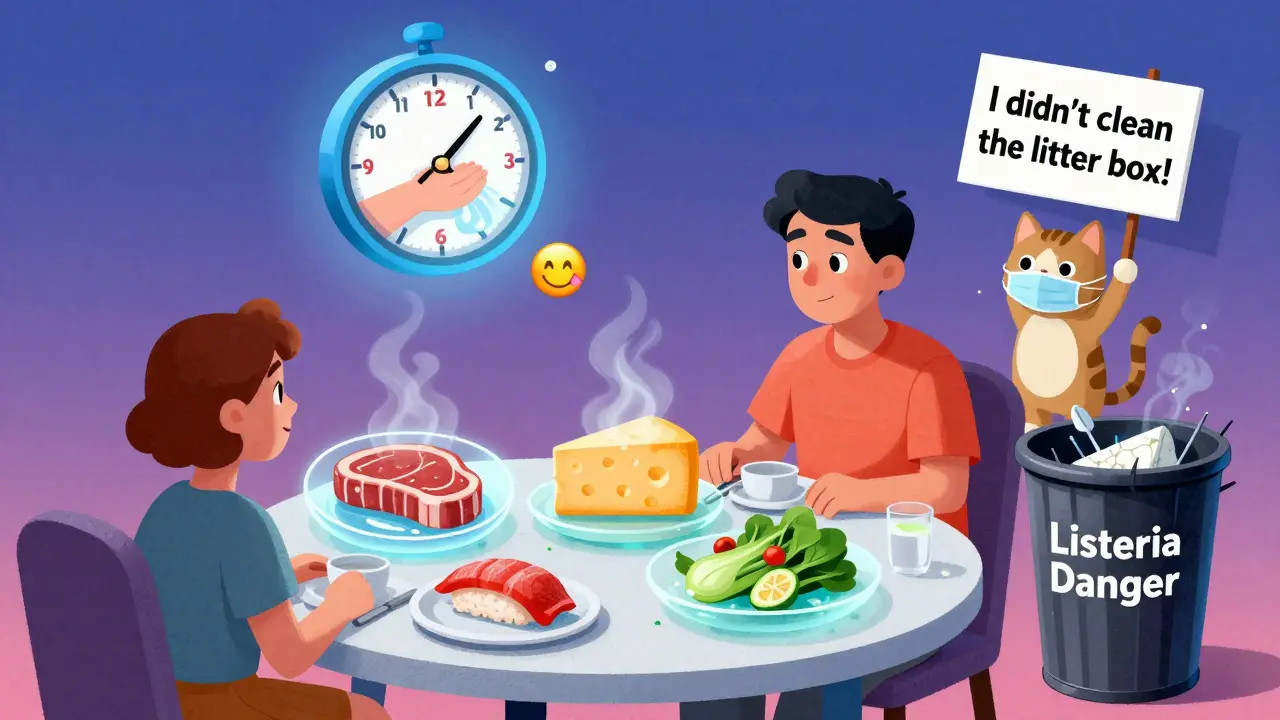
- Food safety: No raw fish, rare meat, unpasteurized cheese (like brie or feta), or deli meats unless reheated until steaming. Listeria from these foods kills transplant patients. Wash all fruits and veggies - even organic ones. Use separate cutting boards for meat and veggies.
- Water: Avoid hot tubs, public pools, and lakes. Tap water is fine, but don’t drink from garden hoses or unfiltered well water.
- Soil and plants: Wear gloves when gardening. Fungi like histoplasmosis live in bird or bat droppings in soil. Avoid cleaning bird cages, compost piles, or construction sites.
- Pets: Cats and dogs are okay, but avoid cleaning litter boxes or picking up poop. Wash your hands after petting. Don’t get new pets in the first 6 months. Reptiles, birds, and rodents carry dangerous germs - skip them entirely.
- Handwashing: Wash with soap and water for 20 seconds - the time it takes to sing "Happy Birthday" twice. Use alcohol gel when soap isn’t available. Do it before eating, after using the bathroom, and after touching public surfaces.
- Masks: Wear one in hospitals, clinics, and crowded indoor spaces, especially in winter when flu and RSV are high. N95 or KN95 masks are best.
Monitoring: Catching Infections Before They Spread
You can’t wait until you feel sick. By then, it might be too late. Regular blood tests and screenings are non-negotiable.
- CMV monitoring: Every 1 to 2 weeks for the first 3 months, then monthly until 6 months post-transplant. A blood test checks for CMV DNA. If it shows up, you start antivirals immediately - even if you feel fine. This is called preemptive therapy.
- Fungal infections: If you have a fever and no clear cause, your team will test for galactomannan (for aspergillus) and beta-D-glucan (for many fungi). These blood markers can detect fungal infections before a CT scan shows anything.
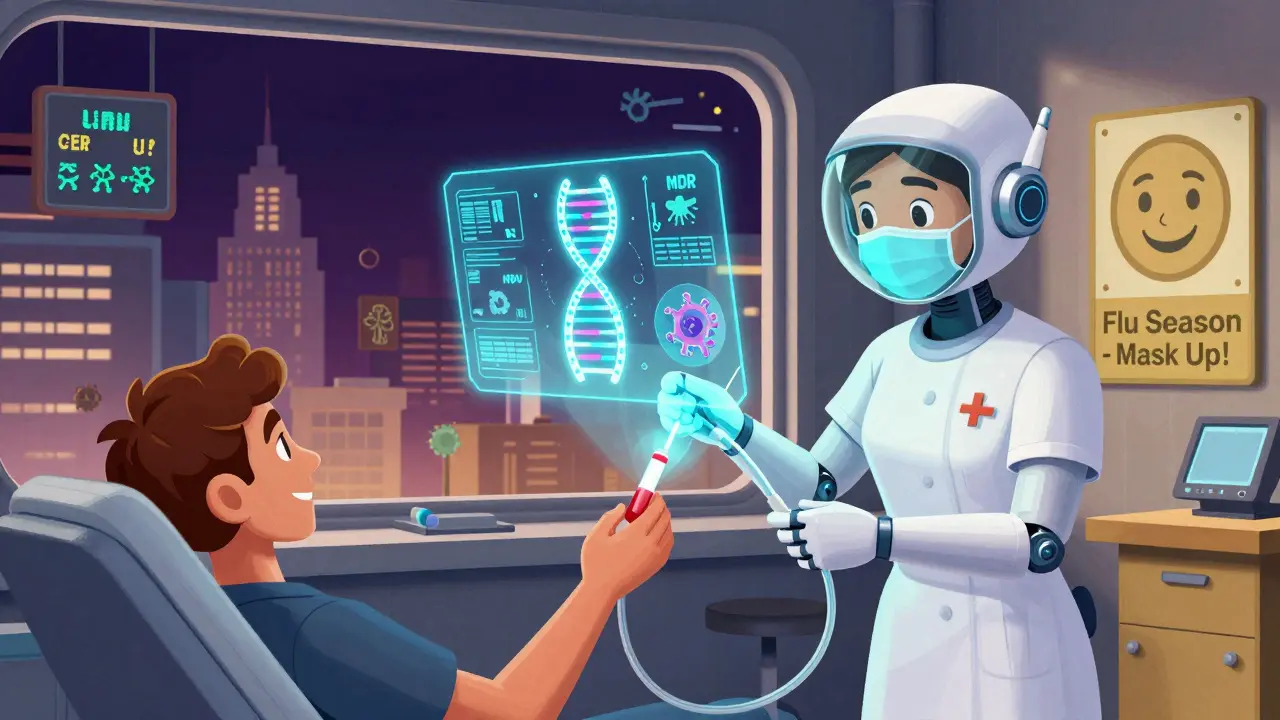
- MDR organisms: If you’ve been hospitalized or on antibiotics before transplant, you might be colonized with drug-resistant bacteria like ESBL or MRSA. Your center will screen your stool or nasal swabs every few months. If you carry them, you’ll get special cleaning protocols and avoid certain antibiotics.
- Central line care: If you have a PICC line or port, you must clean the cap with chlorhexidine before every use. Nurses change the dressing every 5 to 7 days. Never let anyone touch the line without clean hands.
The Hidden Danger: Multidrug-Resistant Infections
One in three bacterial infections in transplant patients now involves germs that don’t respond to standard antibiotics. These are called multidrug-resistant (MDR) organisms - like ESBL-producing E. coli or carbapenem-resistant Enterobacterales.
How do you get them? Often from your own gut. If you’ve taken lots of antibiotics in the past, bad bacteria can take over. They don’t make you sick right away - they just sit there, waiting. Then, when your immune system is down, they break through.
New strategies are emerging: fecal microbiota transplantation (FMT) - basically, a poop transplant - is being tested to restore healthy gut bacteria and push out the bad ones. Anti-adhesion therapies, which stop bacteria from sticking to your bladder or gut lining, are also in trials. These aren’t standard yet, but they’re the future.
What Happens After 6 Months?
After 6 months, your immunosuppression usually drops. You’ll stop most prophylactic drugs. But your risk doesn’t disappear.
- CMV can still reactivate, especially if you’re stressed, sick, or on high-dose steroids.
- Community viruses - flu, RSV, COVID-19 - are still dangerous. Stay up to date on boosters.
- Old wounds, dental infections, or skin abscesses can become serious.
- Travel? Avoid developing countries where water and food safety are poor. Malaria and typhoid are deadly for transplant patients.
Keep seeing your transplant team. Even if you feel great, you still need labs every 3 months. Your kidney function and infection markers are your early warning system.
What’s Next? The Future of Infection Control
There’s no CMV vaccine yet - but five are in clinical trials. If one works, it could replace lifelong antivirals. Researchers are also testing personalized immune monitoring: instead of giving everyone the same drug dose, they’ll measure your actual immune response and adjust meds accordingly. This could mean less infection risk without increasing rejection.
For now, the best tools are simple: take your pills, get your shots, wash your hands, avoid risky food, and speak up if you feel off. Don’t wait for a fever. If you have chills, fatigue, or a sore throat - call your team. Early action saves kidneys and lives.
Can I get the flu shot after a kidney transplant?
Yes, but only after 6 months post-transplant, and only the inactivated flu shot - never the nasal spray. The shot is safe and helps reduce your risk of severe illness. Family members should also get vaccinated each year to protect you.
Is it safe to have pets after a kidney transplant?
Yes, but with strict rules. Cats and dogs are okay if they’re healthy and up to date on vaccines. Never clean litter boxes or pick up dog poop - ask someone else to do it. Avoid reptiles, birds, and rodents. Wash your hands after touching any pet. Don’t get a new pet in the first 6 months after transplant.
Why can’t I eat raw cheese or sushi after a transplant?
Raw or undercooked foods can carry dangerous germs like Listeria, E. coli, or Salmonella. Your immune system can’t fight them off after transplant. Listeria, found in soft cheeses like brie or unpasteurized milk, can cause blood infections or meningitis - both life-threatening for transplant patients. Always choose cooked, pasteurized, and fresh foods.
What should I do if I have a fever after transplant?
Call your transplant team immediately - don’t wait. A fever can be the first sign of a serious infection, even if you feel fine otherwise. Don’t take fever reducers like Tylenol without telling them first. They may need to run blood tests, cultures, or start antibiotics right away.
Do I need to avoid crowds after a transplant?
In the first 6 months, yes - especially during flu season or outbreaks. Avoid large indoor gatherings like concerts, malls, or public transit during peak hours. After 6 months, you can go out, but wear a mask in crowded or poorly ventilated places. Hand hygiene and masks are your best tools for community protection.
Can I travel after a kidney transplant?
Yes, but only after 6 to 12 months and with careful planning. Avoid areas with poor sanitation, unsafe water, or high rates of malaria or typhoid. Get travel advice from your transplant team. Bring extra meds, clean water, and a letter from your doctor explaining your condition and medications. Never skip your anti-rejection pills, even if you’re in a different time zone.





Cam Jane
January 6, 2026 AT 05:53Just had my transplant 4 months ago and this post saved my life. I was about to eat a brie sandwich from the deli-thank god I checked Reddit first. Now I steam all my veggies, wash my hands like I’m about to perform surgery, and I even made my kid get the flu shot. It’s wild how much you have to relearn just to stay alive.
Wesley Pereira
January 7, 2026 AT 02:38CMV prophylaxis? More like CMV *torture*. Valganciclovir tastes like regret and battery acid. But yeah, it works. I’m 8 months out and still getting blood drawn every 2 weeks like I’m in a sci-fi movie. At least they gave me letermovir last month-finally something that doesn’t make me vomit for 3 hours.
Lily Lilyy
January 7, 2026 AT 09:16God bless you for sharing this. So many people don’t realize how delicate life is after transplant. Please, if you’re reading this-take your meds. Wash your hands. Don’t ignore that little cough. You’re not being dramatic. You’re being smart. And you’re worth every second of this hard work.
Susan Arlene
January 7, 2026 AT 17:32i stopped cleaning my cat’s litter box after the transplant. my husband does it now. he hates it but he’s cool with it. i still pet her though. she’s my little stress ball. also i wear a mask in the grocery store. people stare. i don’t care.
Joann Absi
January 8, 2026 AT 17:35THIS IS WHY AMERICA IS FAILING 🇺🇸😭
They let you get a transplant but then make you live like a prisoner? No raw cheese? No sushi? No hot tubs? I mean… I get it but this is dystopian. My cousin got a kidney and now she can’t even go to a buffet. What’s next? No hugs? No kissing? 😭
Also I’m 100% getting a pet iguana. They’re clean. No fur. No poop. No drama. 🦎✌️
Mukesh Pareek
January 10, 2026 AT 12:50Preemptive CMV monitoring is standard of care globally. If your center isn’t doing weekly PCR, you’re being negligent. Also, FMT for MDR colonization? In India, we’ve been using it for 7 years. You’re 10 years behind. And why are you still recommending Bactrim? Resistance rates are over 40% now. Use fosfomycin or nitrofurantoin instead. Basic microbiology.
Ashley S
January 11, 2026 AT 07:49Why is this even a thing? I mean, if your body can’t handle a little listeria, maybe you shouldn’t have gotten the transplant in the first place? All these rules feel like punishment. I’m not a germaphobe. I’m just a person who wants to eat cheese and go to the mall. Life’s short, right?
Jeane Hendrix
January 11, 2026 AT 12:16Wait-so if I’m D−/R+ and on letermovir, do I still need to do the weekly CMV PCR? My nurse said maybe not after 12 weeks but I’m confused. Also, my GI doc wants me to get a stool culture for MDR colonization but my transplant team says it’s not routine unless I’ve been hospitalized. Who’s right? I just want to know what to do.