
More than 96 million adults in the U.S. have prediabetes-and over 80% don’t even know it. That’s more than one in three people. If nothing changes, half of them will develop type 2 diabetes within five years. But here’s the good news: you don’t have to wait for the diagnosis. Prediabetes isn’t a life sentence. It’s a warning sign-and one you can act on right now.
What Exactly Is Prediabetes?
Prediabetes means your blood sugar is higher than normal, but not high enough yet to be called type 2 diabetes. It’s your body’s way of shouting, “Something’s off.” Your cells are starting to resist insulin-the hormone that helps move sugar from your blood into your cells for energy. When insulin doesn’t work well, sugar builds up in your bloodstream. Over time, that damages your blood vessels, nerves, and organs. The official markers? A fasting blood sugar between 100 and 125 mg/dL, an HbA1c of 5.7% to 6.4%, or a 2-hour glucose level of 140-199 mg/dL after a sugar drink test. These aren’t random numbers. They’re red flags. And they’re completely reversible-if you act.Why Lifestyle Changes Work Better Than Pills
There are drugs that can lower blood sugar. GLP-1 agonists, metformin, even magnesium supplements have shown some success. But here’s what the science says: lifestyle changes beat everything else when it comes to reversing prediabetes long-term. A major 2023 review of dozens of studies found that people who changed their diet and moved more were 18% more likely to get their blood sugar back to normal than those who didn’t. The number needed to treat? Just six people. That means for every six people who stick with real lifestyle changes, one will avoid diabetes entirely. Even better? You don’t need to lose a ton of weight. Losing just 5% to 7% of your body weight-like 10 to 14 pounds if you weigh 200-cuts your diabetes risk by 58%. But here’s the twist: some people reversed prediabetes without losing any weight at all. How? They lost belly fat. Visceral fat-the kind that wraps around your liver and organs-is the real villain. It’s what makes your body resistant to insulin. Even if your scale doesn’t move, shrinking that internal fat pack can turn your blood sugar around.The Four Pillars of Reversal
You don’t need a complicated plan. Four simple, science-backed habits make all the difference.1. Move More-But Not Like You’re Training for a Marathon
You don’t need to run marathons. You need to move consistently. The target? At least 150 minutes a week of moderate activity. That’s 30 minutes, five days a week. Brisk walking counts. Gardening counts. Dancing in your kitchen counts. Studies show that even short bursts of movement after meals-like a 10-minute walk after dinner-help lower blood sugar spikes. If you sit for long hours, get up every 30 minutes. Stand. Stretch. Walk to the mailbox. Small movements add up.2. Eat Real Food-Not Food-Like Products
What you eat matters more than how much you eat. The goal? Replace processed stuff with whole, colorful foods. - Swap white bread, white rice, and pastries for whole grains: quinoa, oats, farro, brown rice. - Fill half your plate with non-starchy vegetables: spinach, broccoli, peppers, zucchini, kale. - Add legumes: lentils, chickpeas, black beans. They’re packed with fiber and protein. - Cut out sugary drinks: soda, sweet tea, juice. Even “natural” fruit juice spikes blood sugar fast. - Reduce red and processed meats. Try fish, tofu, eggs, or chicken instead. A simple rule: if it came in a box with a long ingredient list, leave it on the shelf. If it looks like it grew in the ground or on a tree, eat it.3. Sleep and Stress Matter-Yes, Really
You can eat perfectly and still struggle if you’re sleep-deprived or stressed. Poor sleep messes with hormones that control hunger and insulin. Chronic stress floods your body with cortisol, which raises blood sugar. Aim for 7 to 8 hours of sleep. Turn off screens an hour before bed. Try a short breathing exercise: inhale for 4 counts, hold for 4, exhale for 6. Do this three times before bed. It lowers cortisol. It helps your body reset.4. Find Your Support System
Trying to change alone is hard. The CDC’s National Diabetes Prevention Program (DPP) isn’t just a program-it’s a community. Trained coaches help you set realistic goals, track progress, and stay accountable. Many programs are covered by insurance, including Medicare. You can join online or in person. Some even meet over Zoom. If you can’t join a formal program, find a buddy. A partner, friend, or family member who’s also trying to eat better or move more. Text each other. Share recipes. Walk together. Accountability doubles your chances of success.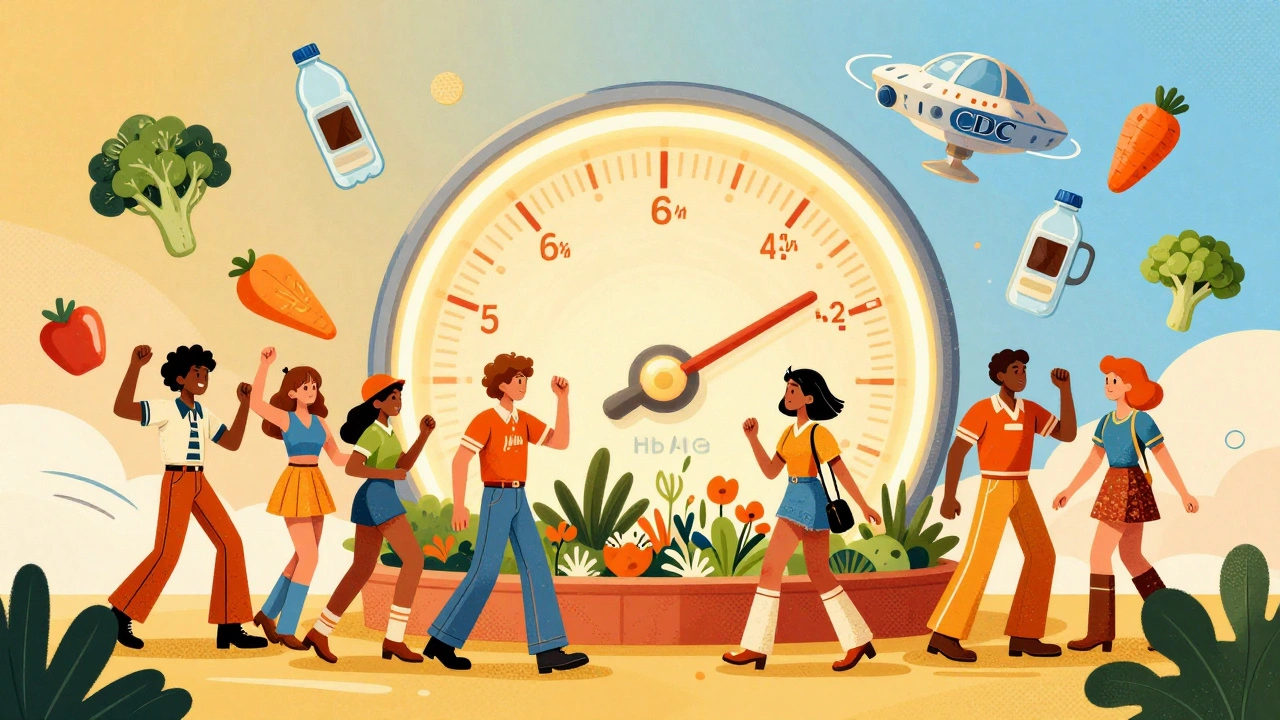
What Doesn’t Work
Fad diets? Keto? Juice cleanses? Intermittent fasting? Some people swear by them. But here’s the truth: if it’s unsustainable, it won’t reverse prediabetes long-term. Extreme restrictions lead to burnout. People quit. Blood sugar creeps back up. The goal isn’t to “fix” yourself for a few months. It’s to build habits that last a lifetime. Also, don’t try to do everything at once. Pick one thing. Maybe swap soda for sparkling water. Or take a 15-minute walk after dinner. Master that. Then add the next step. Progress, not perfection.Real Results: What Success Looks Like
One woman in her early 50s, diagnosed with prediabetes after a routine blood test, didn’t lose weight-but she did change her meals. She started eating beans and greens with every dinner. She walked after work. Within a year, her HbA1c dropped from 6.2% to 5.4%. Normal. Another man, 62, had been told he’d need insulin. He joined a CDC-recognized program. He learned to cook simple meals with vegetables and lean protein. He started walking with his grandson every morning. After 18 months, his fasting glucose dropped from 118 to 92. He’s off all medications. No diabetes. These aren’t rare cases. They’re the norm for people who stick with the basics.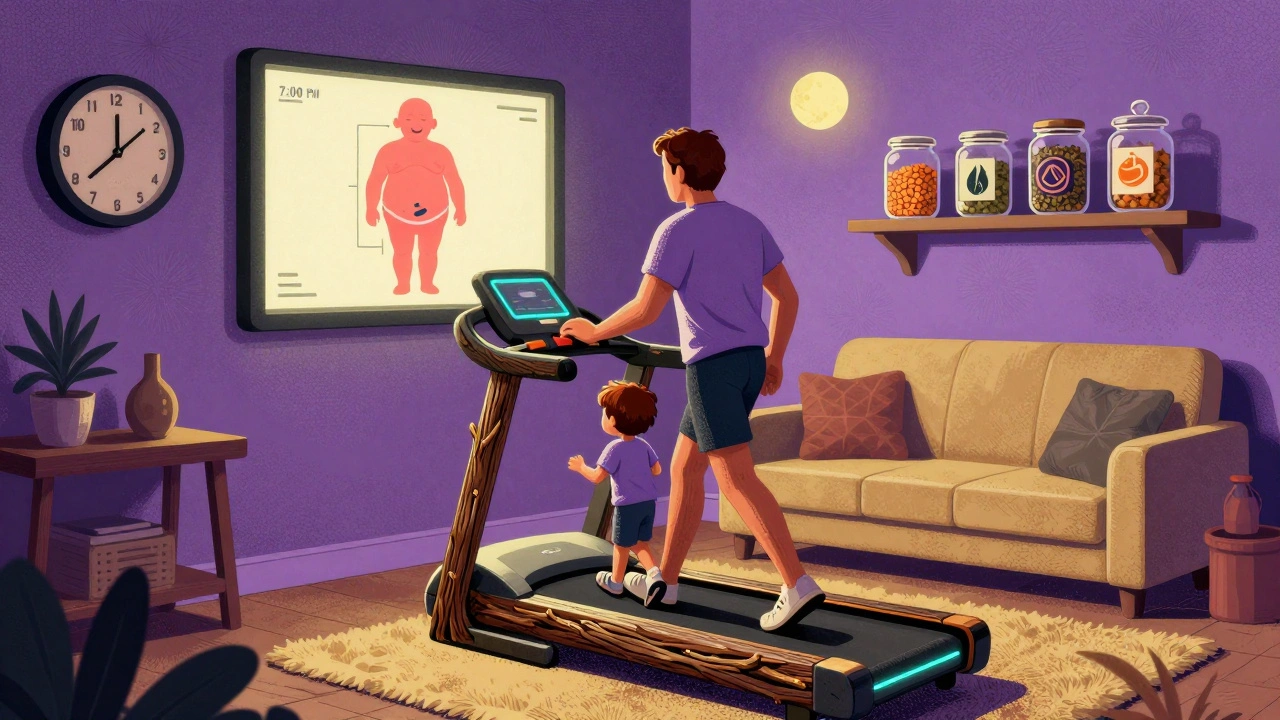
How to Start Today
You don’t need to wait for a doctor’s appointment or a fancy plan. Start now.- Drink one less sugary drink today. Swap it for water, herbal tea, or sparkling water with lemon.
- Take a 10-minute walk after your next meal.
- Swap one refined grain for a whole grain. Try brown rice instead of white.
- Fill half your plate with vegetables at your next dinner.
- Set a bedtime alarm to remind you to turn off screens 30 minutes before sleep.
It’s Not About Perfection
Some days you’ll eat too much sugar. Some days you’ll skip walking. That’s okay. What matters is that you keep coming back. Prediabetes reversal isn’t a race. It’s a rhythm. A new way of living. The science is clear: you can stop type 2 diabetes before it starts. Not with a pill. Not with surgery. But with your fork, your feet, your sleep, and your support system. You’ve already read this far. That means you care. Now take one small step. Today.Can prediabetes be reversed without losing weight?
Yes. Research published in Nature Medicine shows that people who normalized their blood sugar without losing weight still cut their risk of developing type 2 diabetes by about 70% over 10 years. The key was reducing visceral fat-the fat around organs-even if total body fat didn’t change. Moving more and eating whole foods can improve insulin sensitivity without a drop on the scale.
How long does it take to reverse prediabetes?
Many people see improvements in blood sugar within 3 to 6 months of making consistent lifestyle changes. Studies show that after 12 months, participants in the CDC’s Diabetes Prevention Program lowered their diabetes risk by 58% on average. But reversal isn’t a one-time fix. Keeping blood sugar normal requires ongoing habits. The longer you stick with healthy changes, the stronger your protection becomes.
Is the CDC’s Diabetes Prevention Program worth it?
Yes, especially if you’re eligible for insurance coverage. The CDC’s program has been proven in multiple studies to reduce diabetes risk by more than half. It’s not a diet-it’s a year-long coaching program focused on realistic, sustainable changes. You’ll learn how to eat better, move more, manage stress, and stay accountable. Many programs are free or low-cost through Medicare, Medicaid, or private insurance.
Do I need to check my blood sugar at home?
Not necessarily. Your doctor can monitor your progress with HbA1c tests every 3 to 6 months. But if you’re highly motivated, a simple glucose meter can help you see how food and activity affect your levels. For example, you might notice your blood sugar spikes after white rice but stays steady after quinoa. That kind of feedback can be powerful-just don’t obsess over numbers. Focus on habits, not daily fluctuations.
Can children with prediabetes reverse it too?
Absolutely. The same principles apply: more movement, less sugar, more vegetables. For kids, it’s about family habits-not restriction. Swap sugary cereals for oatmeal. Walk or bike to school. Cook meals together. Make it fun. A pediatric endocrinologist recommends “colorful plates”-if most of the food is green or red, you’re on the right track.
What if I’ve had prediabetes for years?
It’s never too late. Even if you’ve had elevated blood sugar for a while, lifestyle changes can still bring it back down. The longer you wait, the harder it gets-but not impossible. Studies show people over 50 benefit most from lifestyle interventions. The goal isn’t to undo years of damage overnight. It’s to stop further harm and give your body a chance to heal. Start now, no matter how long you’ve waited.





Regan Mears
December 9, 2025 AT 13:50I’ve been walking after dinner for 6 months now-no weight loss, but my HbA1c dropped from 6.1% to 5.3%!!! I didn’t even realize how much my belly fat was creeping up until I started measuring my waist-down 3 inches. It’s not about the scale. It’s about movement. Just move. Every. Single. Day.
Ben Greening
December 10, 2025 AT 05:03While the general recommendations presented are empirically sound, one must consider the heterogeneity of metabolic response across populations. The notion that 5% weight loss universally confers 58% risk reduction is an oversimplification derived from cohort studies with significant confounding variables. A more nuanced approach is warranted.
Nikki Smellie
December 11, 2025 AT 16:52Have you ever wondered who benefits from telling you to 'eat real food'? Big Pharma? The CDC? The food industry that sells 'whole grain' bread with 12 ingredients? They want you to think this is about health… but it’s about control. They’re replacing your sugar with stevia and calling it a win. Your blood sugar isn’t the enemy-corporate greed is. 😔
Neelam Kumari
December 12, 2025 AT 17:38Oh wow. Another 'eat veggies and walk' miracle cure. Let me guess-you also think yoga fixes anxiety and kombucha cures cancer. You people are hilarious. I’ve seen prediabetic Indians eat rice with ghee every day and live to 90. Your 'science' is just Western arrogance dressed in kale.
Queenie Chan
December 14, 2025 AT 07:21I tried the 10-minute walk after meals-and honestly? It felt like a tiny rebellion. Like I was stealing back time from my desk, from my phone, from the constant hum of productivity. And then I noticed something wild: my cravings for candy after dinner… just… faded. Not because I was depriving myself, but because my body stopped screaming for sugar. It’s like my cells finally whispered, ‘Hey, we’re still here.’
Stephanie Maillet
December 15, 2025 AT 12:19There’s something deeply spiritual in the quiet act of choosing a piece of broccoli over a bag of chips. It’s not discipline-it’s reconnection. We’ve been taught to treat our bodies like machines that need tuning, but they’re not. They’re living ecosystems, whispering in glucose spikes and cortisol surges. The reversal isn’t in the numbers-it’s in the return to rhythm. To breath. To stillness. To food that remembers its origin.
David Palmer
December 15, 2025 AT 22:26Bro, I tried all this. Walked. Ate quinoa. Slept 8 hours. Still woke up with a sugar crash at 3 p.m. I’m not saying it doesn’t work-I’m saying it’s exhausting. Why can’t we just take the pill and chill? I don’t have time to be a health guru.
Doris Lee
December 16, 2025 AT 15:58You got this. One step. One swap. One breath. That’s all you need. I started with swapping soda for sparkling water-and now I drink it with lemon like it’s a fancy cocktail. You’re not failing. You’re becoming.
Michaux Hyatt
December 16, 2025 AT 19:16Just wanted to add: if you’re on Medicare, check out the CDC DPP-it’s free. I helped a neighbor sign up last year. She went from 6.3% to 5.5% in 8 months. No meds. Just weekly Zoom calls and a notebook. It’s not magic. It’s community.
Raj Rsvpraj
December 17, 2025 AT 23:53How dare you suggest that Indians, who have thrived on rice and ghee for millennia, need to 'reverse' prediabetes by adopting Western dietary dogma? Your 'science' is colonial. Our ancestral diets are superior. You should be learning from us-not lecturing us. 🇮🇳
Jack Appleby
December 19, 2025 AT 04:02Technically, the 58% reduction figure comes from the Diabetes Prevention Program (DPP) trial, published in NEJM in 2002-not 2023. Also, 'visceral fat reduction without weight loss' is supported by MRI studies from the American Journal of Clinical Nutrition, 2021. Please cite properly. Also, 'quinoa' is not a whole grain-it’s a pseudocereal. Minor, but important.
Frank Nouwens
December 20, 2025 AT 18:44The data supporting lifestyle intervention as the most effective modality for prediabetes reversal remains robust and reproducible across multiple longitudinal cohorts. It is both prudent and scientifically sound to recommend increased physical activity, dietary modification, and sleep hygiene as primary therapeutic strategies.
Kaitlynn nail
December 21, 2025 AT 02:28It’s not about the food. It’s about the story you tell yourself. You’re not 'failing' if you eat cake. You’re just rewriting your narrative. And that’s the real reversal.
Aileen Ferris
December 22, 2025 AT 06:32who even is the cdc?? they said aspartame was safe till they said it wasnt and now they say walk more?? i’m out. 🤡
Rebecca Dong
December 22, 2025 AT 21:11THIS IS A COVER-UP. The real cause of prediabetes? Fluoride in the water. And glyphosate in your 'organic' kale. They don’t want you to know that your insulin resistance is caused by chemtrails and 5G. I’ve been tracking my blood sugar since 2020-and I only improved after I bought a Faraday cage for my bedroom. You’re being lied to.
Michelle Edwards
December 23, 2025 AT 18:11I started with just one walk after dinner. Then I added one veggie to lunch. Then I turned off my phone at 9. Now I sleep like a baby. It didn’t happen overnight. But it happened. And I’m still here. You can too.
Sarah Clifford
December 23, 2025 AT 18:13Why is everyone so obsessed with reversing it? Why not just accept that you’re gonna get diabetes? It’s not the end of the world. I’ve got type 2 and I still eat pizza. Life’s too short to be scared of glucose meters.