
When your body gets too warm, and suddenly your vision blurs, your legs feel heavy, or your balance goes off—even though you haven’t had a new flare-up—that’s likely Uhthoff's phenomenon, a temporary worsening of neurological symptoms due to a rise in body temperature. Also known as Uhthoff's sign, it’s not a new attack of multiple sclerosis, but a signal that your damaged nerves can’t handle the heat. This happens because heat slows down or blocks nerve signals in areas already injured by MS. Even a small temperature increase—like from a hot shower, exercise, or a sunny day—can make symptoms worse.
People with multiple sclerosis, a condition where the immune system attacks the protective covering of nerves are most affected, but it can also show up in other neurological disorders like spinal cord injuries or optic neuritis. The symptoms vary: blurred vision, muscle weakness, fatigue, tingling, or trouble walking. They come on fast, usually within minutes of heat exposure, and fade just as quickly once you cool down. That’s the key difference from a true relapse—Uhthoff's phenomenon doesn’t cause new damage. It just makes existing damage more obvious.
Managing heat sensitivity, the body’s abnormal reaction to temperature changes in neurological conditions isn’t about avoiding life—it’s about working smarter. Stay cool with air conditioning, wear cooling vests, drink cold fluids, and avoid hot tubs or intense workouts in summer. Even something as simple as skipping a long hot shower can make a difference. Many people with MS track their triggers and plan activities around the coolest parts of the day. It’s not about fear—it’s about control.
The posts below cover real-world strategies for dealing with heat-related symptoms, from how to recognize early signs to practical tips for staying cool without sacrificing your routine. You’ll also find advice on managing similar neurological reactions, understanding how body temperature affects medication response, and recognizing when a symptom change is just heat—or something more serious. Whether you’re living with MS or helping someone who is, these guides give you the tools to stay steady when the temperature rises.
 24 November 2025
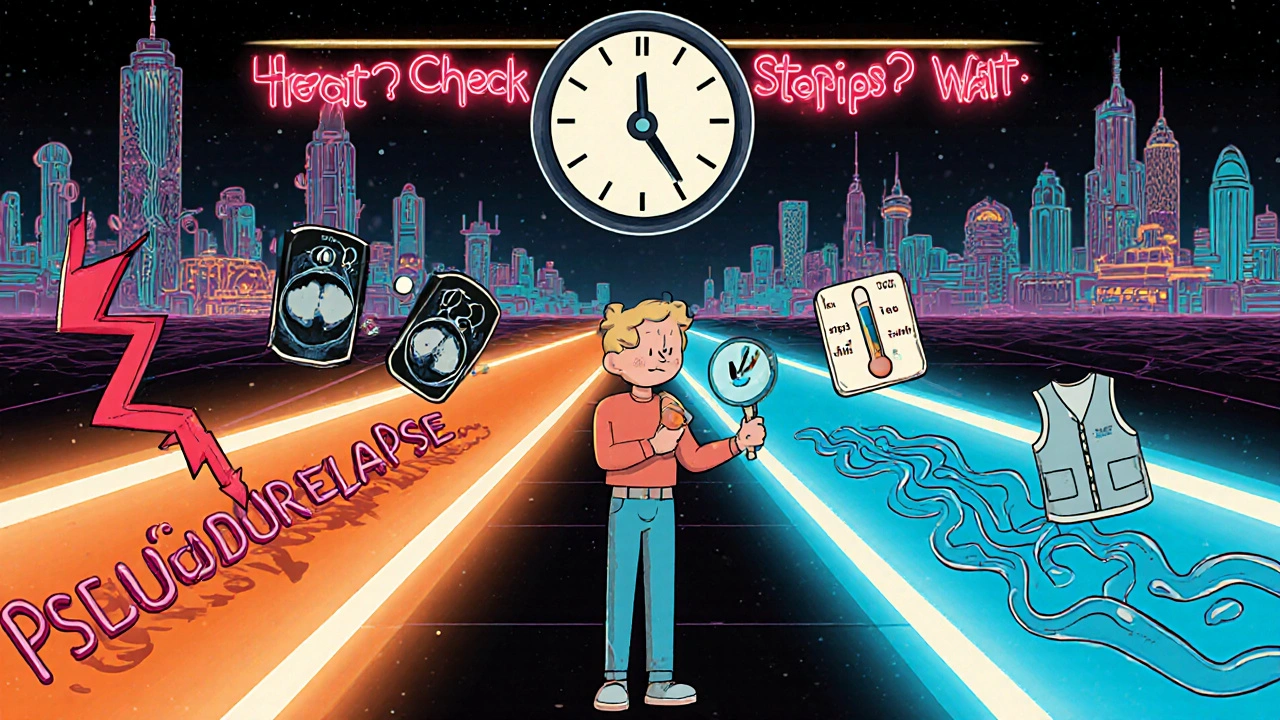
Learn how to tell the difference between a true MS relapse and a pseudorelapse, what triggers each, and why steroids aren't always the answer. Avoid unnecessary treatments and protect your health with smart, evidence-based steps.




©2026 rxmedicin.su. All rights reserved
9