
Every year, over 250,000 people in the U.S. end up in the hospital because they took the wrong pill, too much of a medicine, or missed doses that made their condition worse. Many of these mistakes aren’t due to carelessness-they’re caused by confusion. Imagine juggling five different pills, each with a different time of day to take them. Now add memory issues, poor eyesight, or a busy caregiver trying to help. It’s easy to mix things up. That’s where blister packs and pill organizers come in. They don’t just make life easier-they save lives.
What Are Blister Packs and How Do They Work?
Blister packs are pre-filled, sealed plastic trays with individual compartments for each dose. Each bubble holds one pill, clearly labeled with the day and time it should be taken-morning, noon, evening, or bedtime. These aren’t the same as the original packaging your pharmacy gives you. These are custom-made by specialty pharmacies to match your exact regimen.
Think of it like a calendar you can’t mess up. If you see an empty bubble, you know you missed a dose. If you see three pills in the morning row, you know something’s wrong. No counting. No guessing. No opening ten different bottles.
According to Pharmcare USA’s 2023 data, blister packs reduce medication errors by 67% compared to traditional vials. Why? Because they remove human error from the equation. You’re not sorting pills yourself-you’re just pulling out what’s already set. A 2022 study in the American Journal of Epidemiology tracked 180 older adults with high blood pressure. Those using blister packs took their meds correctly 87.4% of the time. Those using regular bottles? Only 64.3%.
How Pill Organizers Help-And Where They Fall Short
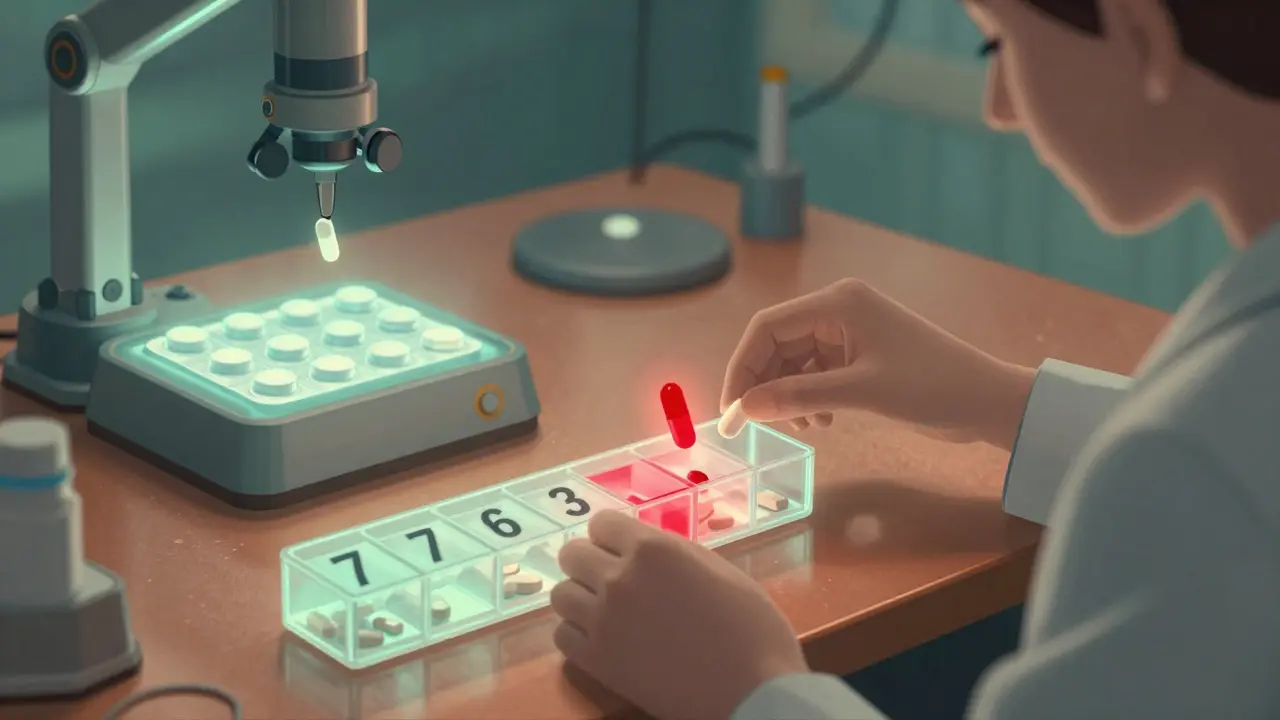
Pill organizers are the simpler, cheaper cousin of blister packs. They’re usually plastic boxes with 7 compartments (one for each day) and sometimes 2-4 time slots per day. You fill them yourself every week.
They work well if you have a stable routine and good eyesight. A 2021 study found that 7-day organizers with morning/afternoon/evening slots improved adherence by 18% over single-compartment boxes. Many users love them because they’re visible and portable. Amazon reviews average 4.2 out of 5 stars, with people praising the visual reminder.
But here’s the catch: you have to fill them. And that’s where mistakes happen. A caregiver on AgingCare.com shared that her dad with dementia kept taking extra pills because he thought he’d missed one. He’d look at the organizer, see an empty slot, and assume he forgot to take it-so he’d take two. That’s exactly the kind of error blister packs prevent.
Also, if you’re on meds that change often-say, your doctor adjusts your dose or adds a new one-you have to refill the whole organizer. That’s time-consuming and risky. One wrong pill in the wrong slot can lead to an overdose.
Why Blister Packs Are Better for Overdose Prevention
Overdose isn’t always accidental. Sometimes it’s the result of repeated mistakes. Taking two doses because you forgot you already took one. Mixing up similar-looking pills. Taking a pill meant for tomorrow because the label is faded.
Blister packs fix all of that. Each dose is sealed. You can’t accidentally pull out two pills. The label is printed directly on the pack. No handwritten notes. No faded stickers.
Dr. Sarah Johnson from Johns Hopkins says blister packs reduce medication errors by 42% in home care settings, especially for people with mild cognitive decline. That’s not a small number. It means fewer falls, fewer ER visits, fewer hospitalizations.
One caregiver in Seattle wrote on Reddit: “My mom was missing 3-4 doses a week. After switching to blister packs, it dropped to 1-2 a month. She can see which bubbles are empty. No more guessing.”
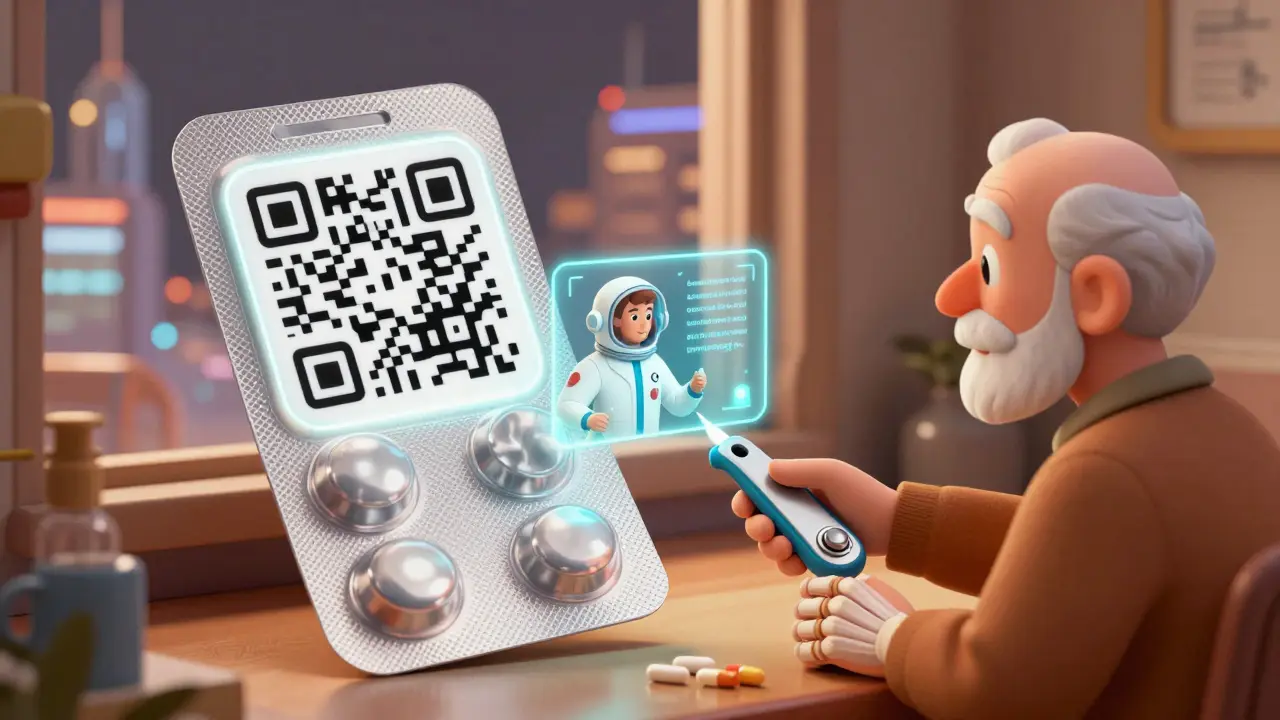
And it’s not just about memory. People with arthritis or shaky hands struggle to open small pill bottles. Blister packs can be designed with easy-open tabs. Some even come with a little tool to help pop the pills out without squeezing too hard.
Cost, Access, and How to Get Started
Basic weekly pill organizers cost between $4 and $13. You can buy them at any pharmacy or online. Blister packs are more expensive-but they’re often covered by insurance.
Custom blister packs from a specialty pharmacy typically cost $1.50 to $3.50 per day. For a month’s supply with 4 doses a day, that’s about $180-$420. But here’s the thing: Medicare Advantage plans cover this for 68% of eligible beneficiaries. Many long-term care facilities pay for it too.
Getting started is simple:
- Ask your pharmacist if they offer blister packaging services.
- If not, search for “medication adherence pharmacy near me.” Companies like Langford Pharmacy and Pharmcare USA work with most insurers.
- Send them your full medication list-prescriptions, supplements, even over-the-counter meds.
- They’ll review it, remove duplicates, check for interactions, and build your custom pack.
- Within 3-5 days, you’ll get your first pack, with clear instructions and a phone number to call if something’s wrong.
Some pharmacies even offer free delivery and refill reminders. You don’t have to go back every month. They send the next pack automatically.
When Blister Packs Don’t Work
Blister packs aren’t magic. They can’t help if you don’t understand why you’re taking a medicine. The FDA found that 32% of people using blister packs still didn’t know what each pill was for. That’s why it’s critical to pair them with education.
Also, some meds can’t go in blister packs. Insulin, liquid antibiotics, or anything that needs refrigeration won’t fit. If your doctor prescribes those, you’ll still need to manage them separately.
And if your meds change every week-say, you’re in a hospital or recovering from surgery-you might need to stick with pill organizers until things stabilize. Blister packs take time to reconfigure. You can’t just swap one pill in a sealed pack.
Smart Technology Is Making Blister Packs Even Better
In 2023, the FDA approved the first blister packs with QR codes. Scan the label with your phone, and you’ll see a video of your pharmacist explaining what the pill does, when to take it, and what side effects to watch for.
AdhereTech launched smart blister packs with sensors that track when you open each compartment. If you skip a dose, it texts your caregiver. In a 120-person pilot, adherence jumped 37%.
Some systems now use AI to auto-update your pack when your doctor changes your prescription. No more waiting for the pharmacy to call. The system detects the change and sends you a new pack before you even notice the old one is outdated.
What Caregivers and Families Should Know
If you’re helping someone manage their meds, your job isn’t just to fill the box. It’s to make sure they understand it.
Ask them: “Can you tell me what this pill is for?” If they can’t, call the pharmacist. Don’t assume they know.
Check the pack weekly. Look for empty bubbles. Are they skipping doses because they feel better? That’s dangerous. Or are they taking extra because they’re confused? That’s an overdose risk.
Join online groups like Facebook’s “Medication Management for Seniors.” It has over 14,000 members sharing tips on opening packs, dealing with dexterity issues, and spotting red flags.
Final Thoughts: Simplicity Saves Lives
Medication mistakes aren’t about being lazy or forgetful. They’re about complexity. Too many pills. Too many times. Too many changes. Too little clarity.
Blister packs cut through that noise. They turn chaos into clarity. They turn guesswork into confidence. And they turn risk into safety.
Pill organizers are a good start. But if someone is taking four or more medications daily-if they’ve ever taken the wrong pill, missed a dose, or had a scare-blister packs are the better choice. They’re not just a tool. They’re a safety net.
And in a world where one wrong pill can send someone to the hospital, that’s worth more than the price tag.




Jacob Cathro
January 19, 2026 AT 05:59lol so now we gotta pay $400 a month so grandma doesn't mix up her pills? what's next, mandatory biometric pill scanners? 🤡
Paul Barnes
January 20, 2026 AT 11:20The data cited in this article is statistically significant and methodologically sound. Blister packs demonstrably reduce medication errors by removing cognitive load and physical manipulation from the dosing process.
pragya mishra
January 21, 2026 AT 20:16I work in a nursing home in Delhi and we use blister packs every day. If you don't use them for your elderly, you're not doing your duty. This isn't a luxury-it's basic care.
Manoj Kumar Billigunta
January 23, 2026 AT 03:59Many people think these systems are only for the elderly, but I've seen young adults with chronic illness benefit just as much. The key is making it part of a routine, not just a tool. Consistency matters more than the gadget.
Andy Thompson
January 23, 2026 AT 08:44They're pushing this because Big Pharma wants you dependent on their overpriced packs. The real solution? Stop giving people 12 pills a day. But you won't hear that from the FDA. 🇺🇸💊
sagar sanadi
January 24, 2026 AT 13:16Yeah right. Next they'll say we need QR codes on water bottles so we don't drink too much. This is just another way to make money off people who are already sick.
kumar kc
January 26, 2026 AT 08:35If you can't manage four pills, you shouldn't be living alone.
clifford hoang
January 28, 2026 AT 04:16Smart blister packs with sensors? 😏 That's just the government's way of tracking your medication habits. Next thing you know, your insurance will deny your coverage if you miss a dose. They're building a pharmacological surveillance state. 🤖👁️
Greg Robertson
January 28, 2026 AT 06:56I helped my mom switch to blister packs last year. She cried because she finally felt in control again. No more panic at 3 a.m. wondering if she took her blood pressure pill. It's not perfect, but it's peace of mind.
Courtney Carra
January 28, 2026 AT 18:30There's something poetic about it, isn't there? We've outsourced our memory to plastic bubbles and QR codes. We're not just managing pills anymore-we're outsourcing our autonomy to systems designed to compensate for a society that doesn't care enough to simplify care.
Shane McGriff
January 29, 2026 AT 00:14I've seen this firsthand with my dad after his stroke. He couldn't open bottles, forgot names of meds, and kept taking double doses. Blister packs didn't just help him-they gave me back my sleep. No one talks about how much mental load this takes off families.
Carolyn Rose Meszaros
January 30, 2026 AT 05:15I just ordered one of those smart organizers with the app. It sends me a notification if my mom hasn't opened her morning compartment by 10 a.m. 😊 She thinks it's a toy. I think it's a lifeline.
thomas wall
January 31, 2026 AT 13:16The notion that medication adherence is a technical problem rather than a systemic failure of healthcare is profoundly misguided. We do not need more plastic compartments-we need fewer prescriptions, better physician training, and a healthcare system that prioritizes patient understanding over profit margins. This is a Band-Aid on a hemorrhage.