
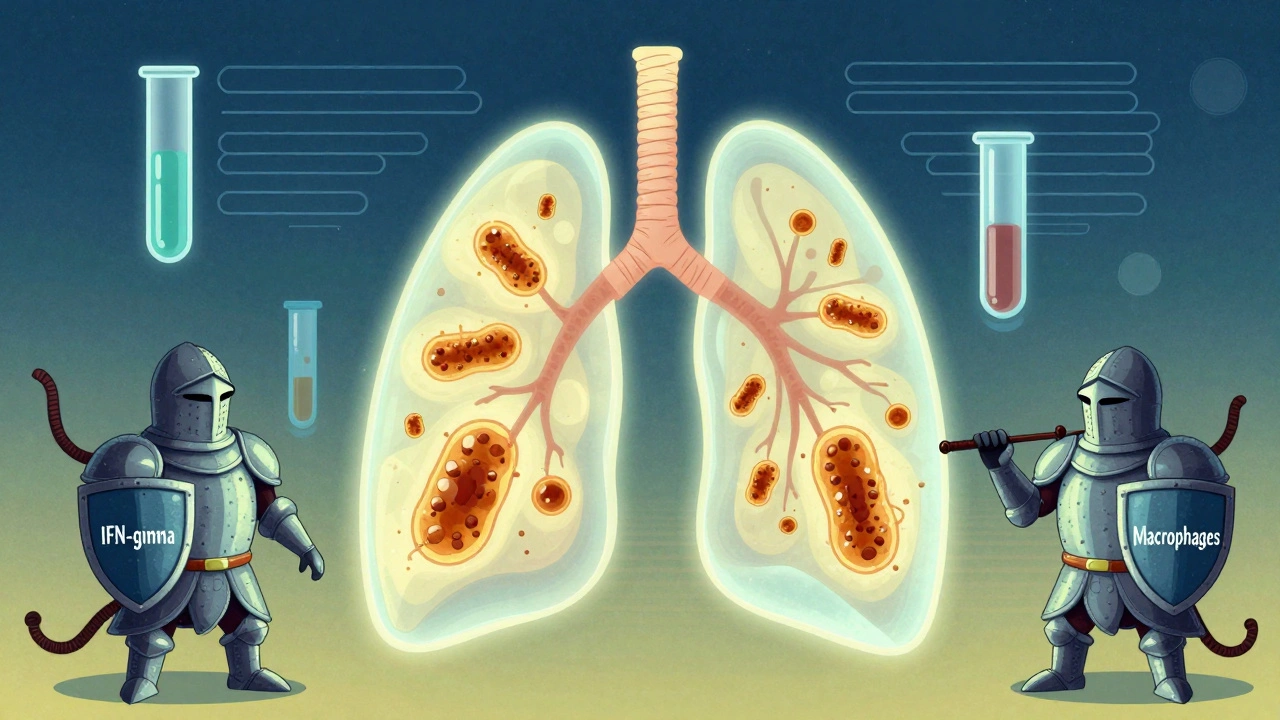
When we talk about tuberculosis, a contagious bacterial infection primarily affecting the lungs, caused by Mycobacterium tuberculosis. Also known as TB, it’s one of the oldest known diseases—and still one of the deadliest worldwide. It doesn’t just show up in developing countries; it lives in crowded cities, shelters, and even in people who’ve never traveled outside their hometown. Many carry it silently—called latent TB, a dormant form where the bacteria are present but not causing symptoms or spreading—until stress, illness, or a weakened immune system wakes it up.
TB treatment isn’t simple. It’s not a one-pill fix. The standard course lasts at least six months, often mixing four different anti-TB drugs, including isoniazid, rifampin, ethambutol, and pyrazinamide. Missing even a few doses can turn a treatable infection into something far worse: drug-resistant TB, a strain that doesn’t respond to first-line medications and requires longer, harsher, more expensive treatment. That’s why sticking to the full course isn’t just advice—it’s survival. And it’s why tracking your meds, like in a medication journal, matters more here than with most other conditions.
What makes TB tricky is how easily it hides. A cough that won’t go away, night sweats, unexplained weight loss—these aren’t just cold symptoms. They’re red flags. And while vaccines exist, the BCG shot isn’t widely used in the U.S. and doesn’t always prevent adult lung TB. That means early testing and honest conversations with your doctor are your best tools. If you’ve been around someone with active TB, or if you’ve lived in or traveled to high-risk areas, get checked—even if you feel fine.
Below, you’ll find real-world guides on how medications work, how side effects show up, and how to manage long-term treatment safely. Some posts talk about drug interactions that can mess with TB therapy. Others explain why generic versions matter when you’re on months of treatment. There’s even advice on how to keep track of your meds so you don’t accidentally skip a dose—and risk creating a superbug. This isn’t theory. These are the tools people actually use to beat TB.
 1 December 2025
Tuberculosis can remain hidden for years as latent infection or become deadly as active disease. Learn how to tell them apart, why treatment differs, and how drug therapy stops transmission and saves lives.



©2026 rxmedicin.su. All rights reserved
15