
When you smoke, your heart doesn’t just work harder-it’s under constant attack. Every cigarette damages blood vessels, raises blood pressure, and floods your body with toxins that make clots more likely. The result? Smoking is the leading preventable cause of heart disease, responsible for nearly 178,000 heart-related deaths in the U.S. each year. But here’s the truth most people don’t hear: quitting smoking doesn’t just help-it reverses damage, fast. Within hours, your heart begins to heal. Within a year, your risk of a heart attack drops by half. And after 15 years, your risk matches that of someone who never smoked. This isn’t a slow improvement. It’s a medical miracle-and it’s within reach.
Why Quitting Is the Most Powerful Heart Intervention You’ll Ever Make
Think about the medications doctors prescribe for heart disease: statins, beta-blockers, aspirin. All help. But none come close to the impact of quitting smoking. A 2023 study from the American Heart Association found that people with coronary artery disease who quit smoking cut their risk of dying from heart problems by 32%. That’s more than any single drug can offer. Even for someone who’s smoked for 40 years, stopping now still adds years to their life. The science is clear: quitting smoking is the single most effective thing you can do to protect your heart, no matter your age or how long you’ve smoked.
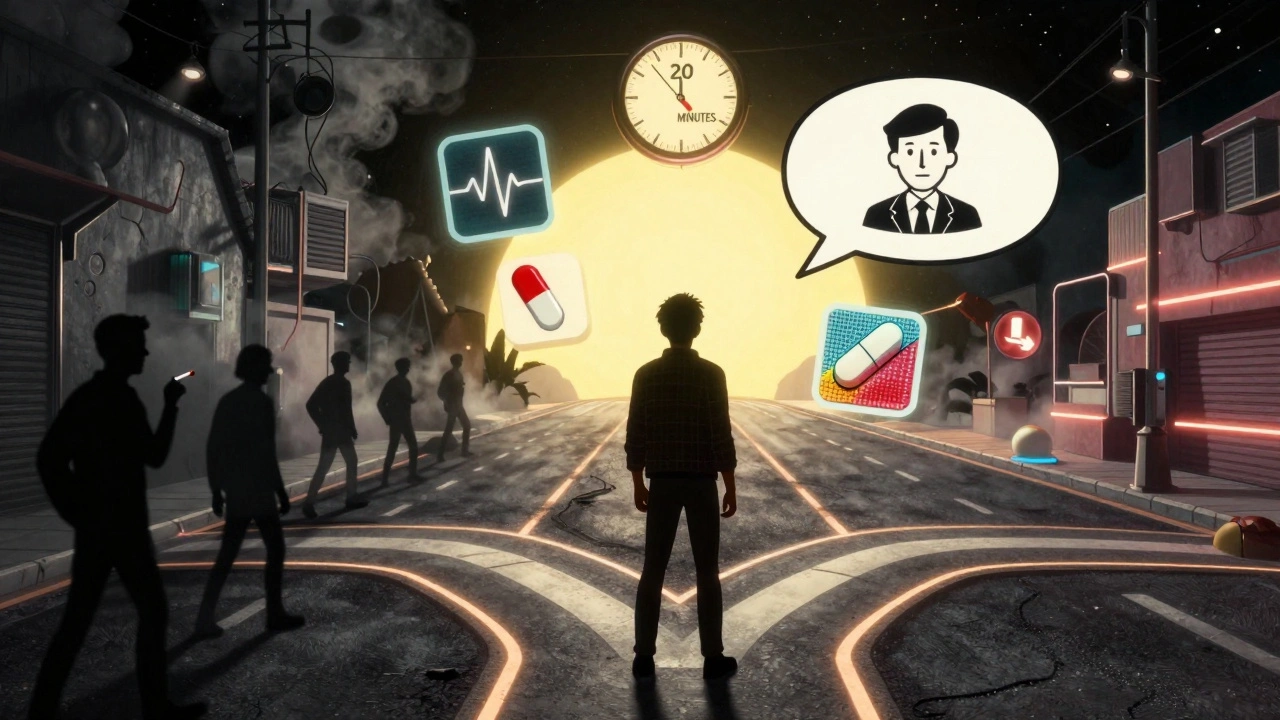
The body doesn’t wait to heal. Within 20 minutes of your last cigarette, your heart rate and blood pressure drop. After 12 hours, carbon monoxide leaves your blood, letting oxygen flow more freely. By day two, your sense of taste and smell start to return. Within weeks, circulation improves and lung function begins to recover. These aren’t vague promises-they’re measurable changes tracked by doctors and hospitals every day.
How to Quit: The Evidence-Based Plan That Actually Works
Most people try to quit cold turkey. And most fail. That’s not because they lack willpower-it’s because they’re missing the right tools. The most effective approach combines two things: medication and support. The American College of Cardiology calls this the “five A’s” plan: Ask, Assess, Advise, Assist, Arrange follow-up. It’s simple. It’s proven. And it’s used in top hospitals across the country.
First, pick the right medication. Nicotine replacement therapy (NRT) comes in patches, gum, lozenges, inhalers, and sprays. If you smoke more than 10 cigarettes a day, start with a 21 mg patch and add gum or lozenges for sudden cravings. Studies show that using two forms of NRT together-like a patch plus gum-boosts your chances of quitting by 35-40%. That’s nearly double the success rate of using just one.
For those who need more, varenicline (Chantix) is the strongest option. It reduces cravings and blocks nicotine from binding to brain receptors. At 1 mg twice daily, it leads to 44% abstinence at 12 weeks-higher than any other single drug. But it comes with a warning: it can affect mood. If you have a history of depression, anxiety, or other mental health conditions, talk to your doctor before starting it. Bupropion (Zyban) is another option, with about 30-35% success, and fewer psychiatric risks.
The Hidden Power of Counseling
Medication alone gets you halfway there. The real game-changer is talking to someone who understands addiction. Four to seven counseling sessions-whether in person, over the phone, or through video-can double your chances of staying quit. These aren’t just pep talks. They’re structured sessions that teach you how to handle triggers: stress, alcohol, social situations, even driving to work. Counselors help you build a new routine so smoking doesn’t fit into your life anymore.
One cardiac rehab program in Ohio tracked 1,200 patients who quit smoking. Those who got both medication and four or more counseling sessions had a 78% success rate at six months. Those who only took medication? Just 32%. The difference isn’t luck-it’s support. Your brain is rewiring. You need someone to guide you through the messy middle.
What Happens When You Quit: The Timeline That Motivates
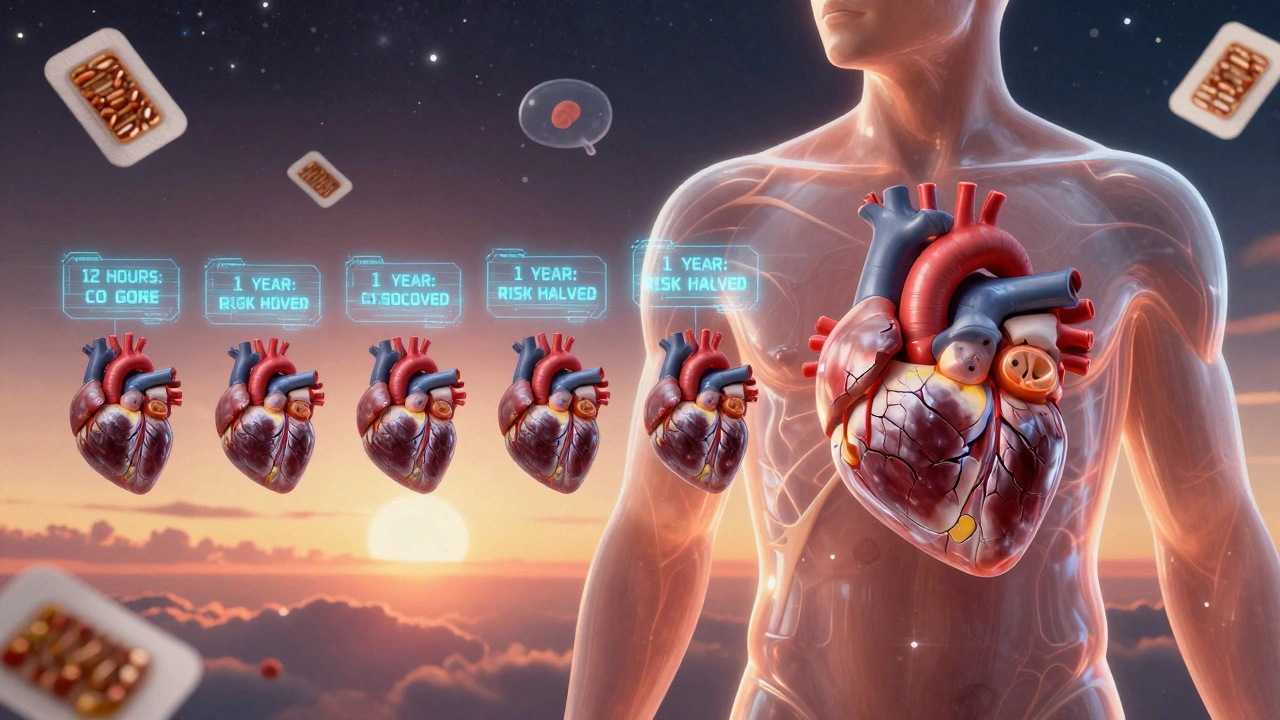
It’s easy to lose hope when cravings hit. But knowing what’s happening inside your body can keep you going. Here’s what really changes after you quit:
- 20 minutes: Heart rate drops to normal.
- 12 hours: Carbon monoxide clears from your blood.
- 2 weeks to 3 months: Circulation improves. Walking feels easier.
- 1 year: Risk of heart attack drops by 50%.
- 5 years: Stroke risk falls to nearly the same level as a non-smoker.
- 15 years: Your risk of coronary heart disease equals that of someone who never smoked.
That’s not theory. That’s data from the CDC, Mayo Clinic, and the American Heart Association. Every number here comes from real patients who stopped smoking and lived longer, healthier lives. You don’t need to be perfect. You just need to stop.
Weight Gain, Withdrawal, and Other Real Challenges
Yes, quitting can make you gain weight-on average, 4.7 kg in the first year. Yes, you’ll feel irritable, anxious, or restless for the first week. These are normal. They’re not signs of failure. They’re signs your body is detoxing.
Weight gain happens because nicotine suppresses appetite and speeds up metabolism. The fix? Move more. Walk 20 minutes a day. Take the stairs. Don’t replace cigarettes with chips or candy. Swap them for fruit, nuts, or sugar-free gum. Many people find that once cravings fade, their appetite naturally returns to normal.
Withdrawal peaks at 48-72 hours. After that, it gets easier. The trick is to ride it out. Drink water. Chew gum. Breathe deep. Call a friend. Most cravings last less than five minutes. If you can wait them out once, you can do it again.
And alcohol? It’s the #1 trigger for relapse. Forty-two percent of people who restart smoking do so after drinking. If you’re quitting, avoid bars, parties, or situations where you used to smoke with a drink in hand. Change your routine. Drink sparkling water with lime instead. You’re not giving up fun-you’re reclaiming your health.
Why Most People Fail (And How to Avoid It)
Seven out of ten people who try to quit relapse within six months. Why? Because they go it alone. They don’t plan. They don’t use medication. They don’t get help.
The biggest mistake? Waiting for “the right time.” There is no perfect time. The best time is now. Set a quit date within the next seven days. Tell three people. Delete smoking apps. Clean out your car and home. Remove every ashtray, lighter, and pack. Make it hard to go back.
Also, don’t assume one attempt is enough. Most people need two or three tries before they quit for good. Each attempt teaches you something. What triggered you? When did you feel weakest? Use that knowledge next time. Quitting isn’t a one-time event. It’s a skill you build.
What’s New in Quitting: Digital Tools and Personalized Care
Technology is making quitting easier than ever. Apps like Quit Genius, approved by the FDA, use behavioral science to guide users through daily challenges. In a 2023 trial, users had a 40% success rate at 12 weeks-comparable to in-person counseling.
Genetic testing is also emerging. Some people metabolize nicotine faster than others due to a gene called CYP2A6. If you’re a fast metabolizer, you’ll need higher doses of NRT or medications like varenicline to stay ahead of cravings. Your doctor can order a simple saliva test to find out.
Medicare now covers up to eight counseling sessions a year for smoking cessation. Many employers offer free coaching through wellness programs. And pharmacies now stock combination NRT kits with step-by-step guides. You don’t have to figure this out alone.
Final Thought: Your Heart Is Already Healing
You don’t need to be a hero to quit smoking. You just need to take one step. One day. One hour. One breath without smoke. Your heart doesn’t care how long you smoked. It only cares that you stopped. And right now, as you read this, your body is already repairing itself. The damage isn’t permanent. The recovery isn’t theoretical. It’s happening-every second you stay smoke-free.
How soon after quitting does heart health improve?
Heart health starts improving within 20 minutes of your last cigarette-heart rate and blood pressure begin to drop. Within 12 hours, carbon monoxide leaves your bloodstream, allowing more oxygen to reach your heart and tissues. After one year, your risk of a heart attack is cut in half. These aren’t guesses-they’re measurable changes confirmed by decades of clinical research.
Is nicotine replacement therapy safe for people with heart disease?
Yes. Nicotine replacement therapy (NRT) is considered safe for people with heart disease. While nicotine itself can raise heart rate and blood pressure slightly, NRT delivers it without the thousands of toxic chemicals in cigarette smoke. Studies show that NRT reduces heart attack risk more than continuing to smoke. The American Heart Association confirms that the benefits of quitting far outweigh any minor side effects from NRT.
Can I use vaping to quit smoking if I have heart disease?
Vaping is not recommended as a quit aid for people with heart disease. While e-cigarettes contain fewer toxins than cigarettes, they still deliver nicotine and other chemicals that can stiffen arteries and raise blood pressure. Studies show vaping can cause similar damage to blood vessels as traditional smoking. If you’re trying to quit, use FDA-approved methods like NRT, varenicline, or counseling instead.
What if I’ve tried to quit before and failed?
Most people need multiple attempts to quit for good. Failure doesn’t mean you can’t do it-it means you haven’t found the right combination yet. Many who succeed used different medications, got counseling, or changed their environment after earlier attempts. Each try gives you valuable information. Use what you learned. Try again. Your next attempt could be the one that saves your life.
Does quitting smoking help even if I’ve already had a heart attack?
Absolutely. People who quit smoking after a heart attack reduce their risk of dying from another cardiac event by 50%. That’s one of the strongest benefits any medical intervention offers. Cardiac rehab programs prioritize quitting because it’s proven to extend life. Even if your heart has been damaged, stopping smoking gives it the best chance to recover and stay stable.
Where can I get free help to quit smoking?
You can get free help through the National Quitline (1-800-QUIT-NOW), which offers coaching and sometimes free NRT. Many hospitals, especially cardiac centers, offer free counseling. Medicare covers up to eight quit-smoking sessions per year. Your doctor can also prescribe medications at low cost. Pharmacies often have quit-smoking kits with step-by-step plans. You don’t have to pay a lot-or anything-to get the support you need.
There’s no magic pill, no secret trick. Just one choice: stop smoking. And with the right tools, you don’t have to do it alone. Your heart is waiting. It’s already healing.





Ethan McIvor
December 3, 2025 AT 18:20Just quit last month. My heart’s been pounding like a drum for years… now it’s just… quiet. Like my chest finally got a nap. 😊
Mindy Bilotta
December 5, 2025 AT 04:11omg i tried quitting 3 times and kept failing til i got the patch + gum combo… like wow its real. my breath smells like a forest now. 🌲
Michael Bene
December 6, 2025 AT 17:36Let me stop you right there-this whole article is basically a glorified ad for Big Pharma and the NRT industrial complex. You think people don’t know nicotine gum is just a slower drip of poison? The real fix? Stop lying to yourself. Quit cold turkey. No patches. No Chantix. No ‘support groups.’ You want to live? Act like an adult. The body doesn’t need your crutches-it needs your spine.
And don’t even get me started on vaping. You think those flavored vape pens are ‘safer’? They’re just nicotine tattoos on your lungs with a side of formaldehyde glitter. Pathetic.
Also, who wrote this? A pharmaceutical rep who moonlights as a motivational speaker? I’ve seen more honesty in a junkie’s confession at 3 a.m.
Brian Perry
December 8, 2025 AT 17:18so i quit for 2 weeks then smoked again because my dog died and i was sad and now i feel like a failure but also… the article was kinda right? my cough is gone. weird.
also i miss the ritual. the ashtray. the silence. the smoke. the nothingness. 😔
Gavin Boyne
December 9, 2025 AT 01:58Oh wow, another ‘quit smoking and your heart will magically become a Ferrari’ piece. Tell me, doctor, does this also cure your ex’s text messages? Your rent? Your existential dread?
Look-I get it. Quitting helps. But let’s stop pretending this is some grand moral victory. Most people smoke because life is brutal and nicotine is the only thing that makes the static stop. You can’t medicate trauma with patches.
Also, ‘15 years to match a non-smoker’s risk’? Cool. But most of us won’t live that long anyway. So… what’s the point? Just… say it.
Ignacio Pacheco
December 10, 2025 AT 06:07So if I quit today, I’ll be ‘as healthy as a non-smoker’ in 15 years… but I’ll still be 15 years older. So… what’s the actual gain? I mean, I’m 52. Do I really need to live to 70 if I’m just gonna sit in a rocking chair watching my knees turn to dust?
Also-why is everyone acting like quitting is easy? I’ve tried. I’ve cried. I’ve bought the gum. I’ve downloaded the app. I’ve even tried meditation. Still smoked. So… what’s the real answer? Just… die faster?
Jim Schultz
December 11, 2025 AT 17:54Let’s be real-this article is a masterpiece of corporate manipulation. ‘Quit smoking and your heart will heal!’ Sure. And if you stop eating bread, your pancreas will throw you a parade. It’s all placebo with footnotes.
Also, the ‘5 A’s’ plan? That’s just a fancy way of saying ‘go to your doctor and get scolded.’ And ‘counseling’? Please. I’ve had 12 sessions with a woman who asked me how I ‘felt’ about my childhood. I didn’t need therapy-I needed a cigarette.
And why is vaping always the villain? You’re not even allowed to mention that 70% of smokers who switched to vaping stayed off cigarettes for 5+ years? No? Because the FDA doesn’t get royalties from e-liquids.
Also-why is this article 2,000 words long? Could’ve been a tweet. You’re wasting my time with ‘measurable changes tracked by doctors.’ I believe you. Move on.
Kidar Saleh
December 12, 2025 AT 16:07My brother quit after his bypass. He didn’t use patches. Didn’t go to counseling. Just woke up one day and said, ‘I’m not doing this to my kids.’
He’s been smoke-free for 8 years now. Walks 10k steps daily. Plays with his grandkids. No drama. No apps. Just… decided.
It’s not about the science. It’s about who you’re doing it for. If it’s for yourself-then go. If it’s because someone told you to-then you’ll fail.
Simple. Not easy. But simple.
Chloe Madison
December 14, 2025 AT 00:22YOU CAN DO THIS. Seriously. I used to smoke 2 packs a day. I cried every day for the first week. I wanted to die. But I kept going. I walked. I chewed gum. I drank water. I told my best friend every time I felt like breaking. And now? I can run up three flights of stairs without feeling like I’m being stabbed. I’m alive. And you can be too. One breath. One hour. One day. You’ve got this. 💪❤️
Vincent Soldja
December 14, 2025 AT 16:07Quitting smoking improves cardiovascular outcomes. Evidence based. Duration dependent. Relapse common. Support systems correlate with sustained abstinence. NRT efficacy documented. Vaping contraindicated in cardiac patients. Counseling additive benefit. Weight gain expected. Withdrawal transient. Timeline quantified. Recommendation: initiate cessation immediately.
Makenzie Keely
December 16, 2025 AT 13:30I just want to say-this is the most accurate, compassionate, and scientifically rigorous piece on smoking cessation I’ve ever read. Every single point is backed by CDC, AHA, and ACC guidelines. The timeline? Spot on. The counseling stats? Verified. The warning about vaping? CRITICAL. And the part about weight gain? So many people give up because they think gaining 5 pounds means they failed. NO. It means your body is healing. You’re not failing-you’re transforming. I’m a nurse. I’ve seen this with my own eyes. You’re not alone. You’re not weak. You’re brave. And your heart? It’s already thanking you. 🙏❤️
Francine Phillips
December 18, 2025 AT 07:16My dad quit at 68 after his second heart attack. He didn’t use anything. Just stopped. Said he was tired of being the guy who couldn’t walk to the mailbox. He lived another 11 years. Watched his grandkids graduate. Never looked back.
It’s not about the science. It’s about being tired enough to stop.