
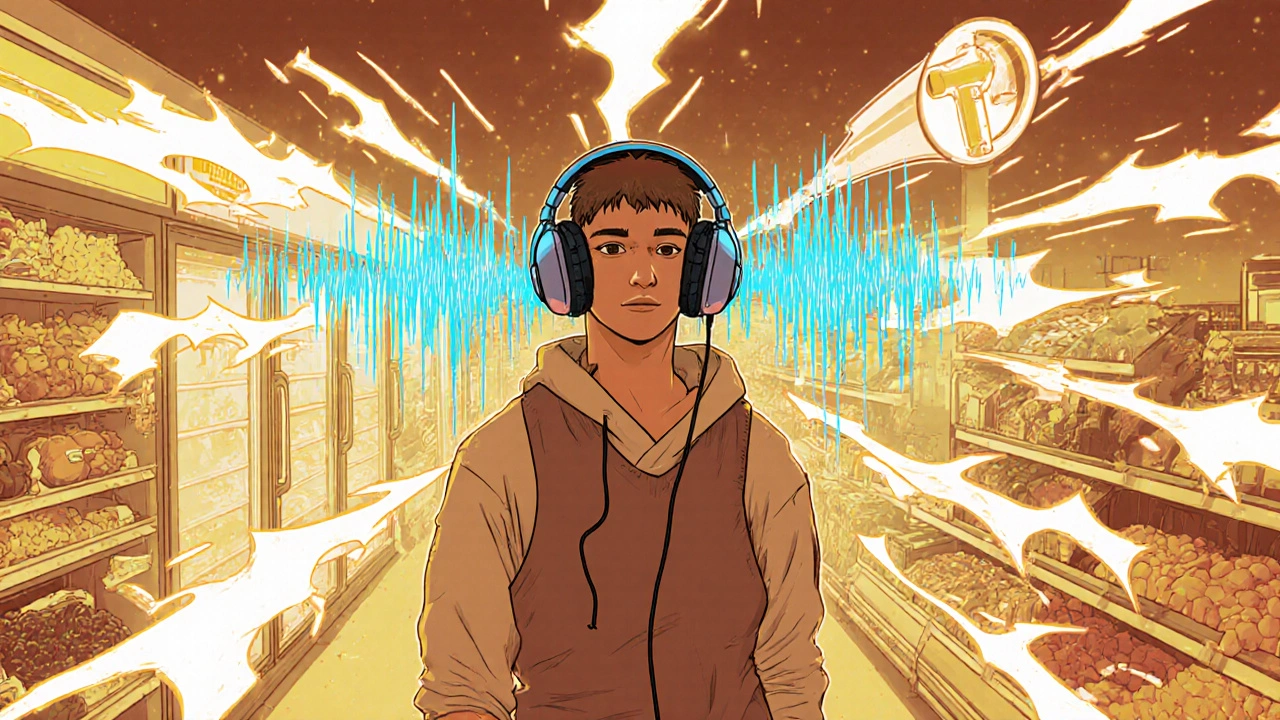
When everyday sounds like a running faucet, chewing, or a car door slamming feel painfully loud or unbearable, you're not just being picky—you might be experiencing sound sensitivity, a condition where normal environmental sounds trigger discomfort, pain, or anxiety. Also known as hyperacusis, it’s not a hearing problem, but a brain processing issue that turns ordinary noise into a physical threat. This isn’t rare. Studies show it affects up to 9% of adults, often alongside migraines, autism, PTSD, or tinnitus.
Hyperacusis, a severe form of sound sensitivity where even soft sounds feel intolerable doesn’t always come with hearing loss. People with it often avoid social places, wear earplugs constantly, or feel exhausted after grocery runs. But here’s the catch: muffling sound too much can make it worse over time. The brain learns to amplify noise as a survival response. That’s why treatment often involves gradual exposure, not silence.
Sound sensitivity doesn’t exist in a vacuum. It’s closely tied to auditory processing, how the brain interprets and filters sound signals. If your brain struggles to sort out background noise from speech, you’re more likely to feel overwhelmed. It also shows up in people with migraine triggers, where bright lights and loud sounds can spark or worsen attacks. And it’s common in those with autism or anxiety disorders—where sensory input feels like a flood instead of a stream.
You won’t find a one-size-fits-all fix. Some people benefit from sound therapy devices that gently retrain the brain. Others find relief through cognitive behavioral therapy to change how they react to noise. Certain medications, like those used for nerve pain, can help reduce the intensity of the response. And for some, avoiding specific triggers—like high-pitched alarms or fluorescent lights buzzing—is the only way to stay functional.
This collection of articles doesn’t just list symptoms. It shows you real connections: how antihistamines can worsen restless legs and indirectly make sound sensitivity feel worse, why certain blood pressure meds might affect auditory nerves, and how drug interactions can amplify sensory overload. You’ll find guides on managing medication side effects that worsen noise intolerance, how to spot when sound sensitivity is a sign of something deeper, and what steps to take when your doctor doesn’t take it seriously.
Whether you’re dealing with this yourself, helping a child, or supporting someone with autism or PTSD, you’re not alone—and there are practical ways forward. The articles below give you tools, not just explanations.
 21 November 2025
Hyperacusis is a condition where everyday sounds feel painfully loud. Desensitization therapy is the most effective, non-invasive treatment that retrains the brain to tolerate noise. Learn how it works, who it helps, and why avoidance makes it worse.



©2026 rxmedicin.su. All rights reserved
14