
CT Scan Risk Assessment for Blood Thinner Users
This tool follows ACEP guidelines
Based on American College of Emergency Physicians recommendations for patients taking blood thinners (warfarin, rivaroxaban, apixaban, etc.). One symptom means you should get a CT scan immediately.
Risk Assessment Results
When you’re on blood thinners, even a small bump on the head can feel terrifying. You might think, It’s just a bump - but for people taking warfarin, rivaroxaban, apixaban, or other anticoagulants, that’s not always true. A minor fall, a slip on the stairs, or a collision during a game can lead to something much more serious: bleeding inside the skull. And the clock starts ticking the moment the injury happens.
Why Even Minor Head Injuries Are Risky on Blood Thinners
Blood thinners work by slowing down your body’s ability to form clots. That’s great if you have atrial fibrillation or a history of blood clots - it prevents strokes and pulmonary embolisms. But if you hit your head, your brain doesn’t get the same protective clotting response. Even a small tear in a blood vessel can turn into a dangerous bleed over hours or days.Studies show people on anticoagulants are 2 to 3 times more likely to have bleeding inside the skull after head trauma than those not on these medications. This isn’t just theoretical - in emergency rooms across the U.S. and New Zealand, about 1 in 7 head injury visits involve someone taking blood thinners. Most of these patients are older adults, often over 65, who’ve been prescribed these drugs for heart conditions.
The scary part? You might feel fine right after the injury. No dizziness. No nausea. No confusion. But that doesn’t mean there’s no bleeding. Blood can slowly pool inside the skull, pressing on the brain without obvious symptoms - until it’s too late.
When to Get a CT Scan Immediately
Current guidelines from the American College of Emergency Physicians (ACEP) and state health departments like Washington State are clear: if you’re on blood thinners and you’ve had a head injury, get a CT scan right away. Don’t wait. Don’t hope it’ll pass. Don’t rely on how you feel.
You need imaging if you have any of these:
- Loss of consciousness - even for a few seconds
- Confusion, dizziness, or trouble remembering what happened
- Any direct blow to the head or neck
- A fall from standing height or higher
- Signs of a skull fracture - swelling, bruising around the eyes or behind the ears, clear fluid draining from the nose or ears
- Vomiting more than once
- Age 65 or older
Even if you only had one of these symptoms, it’s enough to warrant a scan. The Canadian CT Head Rule, which works well for healthy adults, doesn’t apply to people on blood thinners. In fact, experts like Dr. Ian Stiell, who created that rule, warn that using it here could miss up to 15% of dangerous bleeds.
What the CT Scan Shows - and What It Doesn’t
A non-contrast head CT is the gold standard. It’s fast, widely available, and excellent at spotting fresh bleeding. Radiologists look for signs of hemorrhage in the brain - epidural, subdural, or intracerebral bleeds. The scan uses thin 0.5 to 1.25 mm slices to catch even tiny fractures or small clots.
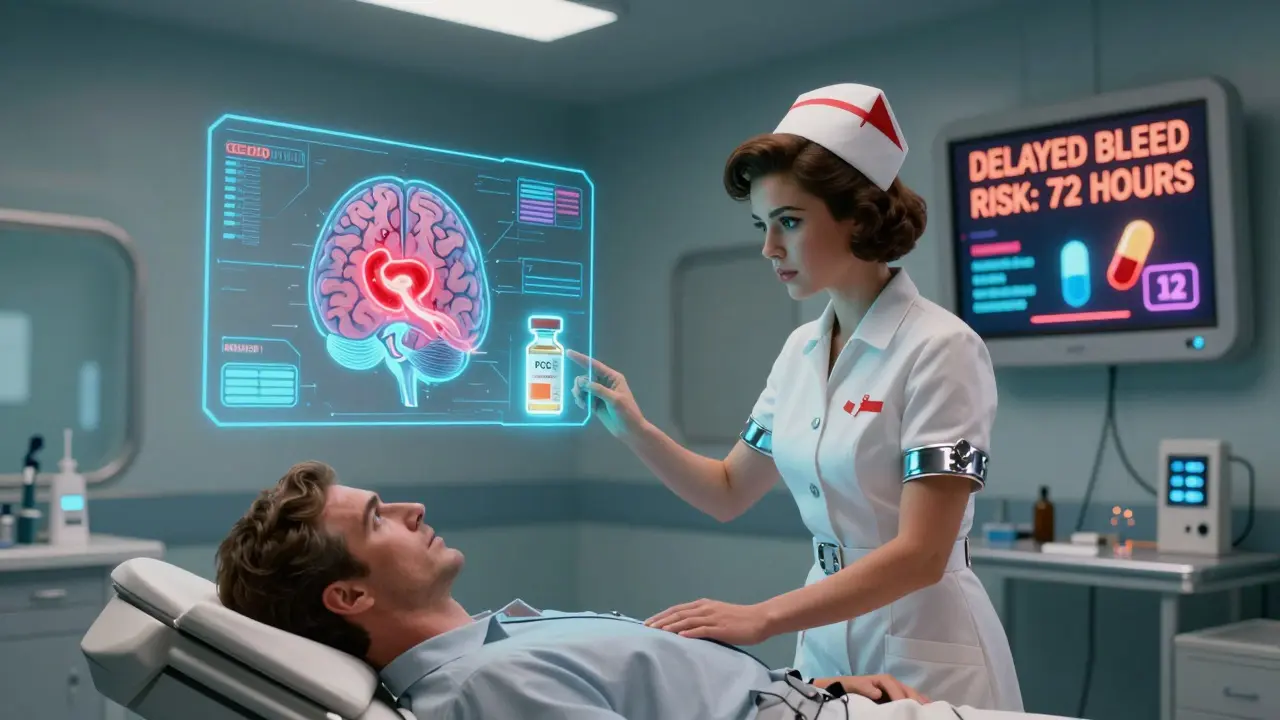
But here’s the catch: a normal CT scan doesn’t guarantee safety. About 0.5% to 1% of anticoagulated patients with a negative scan still develop bleeding later - sometimes up to 72 hours after the injury. That’s why observation matters as much as imaging.
Some hospitals, like those following University of Texas protocols, keep patients for 6 hours after injury to watch for changes. If you’re stable - no worsening headache, no vomiting, no drowsiness - you might be discharged. But if you’re on warfarin and your INR is above 3.5, or if you had a dangerous mechanism like a car crash or fall from height, you’ll likely be admitted for 23 hours and scanned again.
What Happens After the Scan?
If the CT shows bleeding, your care team will act fast. Depending on the drug you’re taking, they might reverse the anticoagulant effect:
- For warfarin: Vitamin K and prothrombin complex concentrate (PCC)
- For rivaroxaban or apixaban: Andexanet alfa or activated charcoal (if taken recently)
- For dabigatran: Idarucizumab (Praxbind)
These aren’t given lightly. Reversing blood thinners carries its own risks - especially if you’re on them for atrial fibrillation. Stopping them suddenly can cause a stroke. That’s why reversal is always done under specialist supervision.
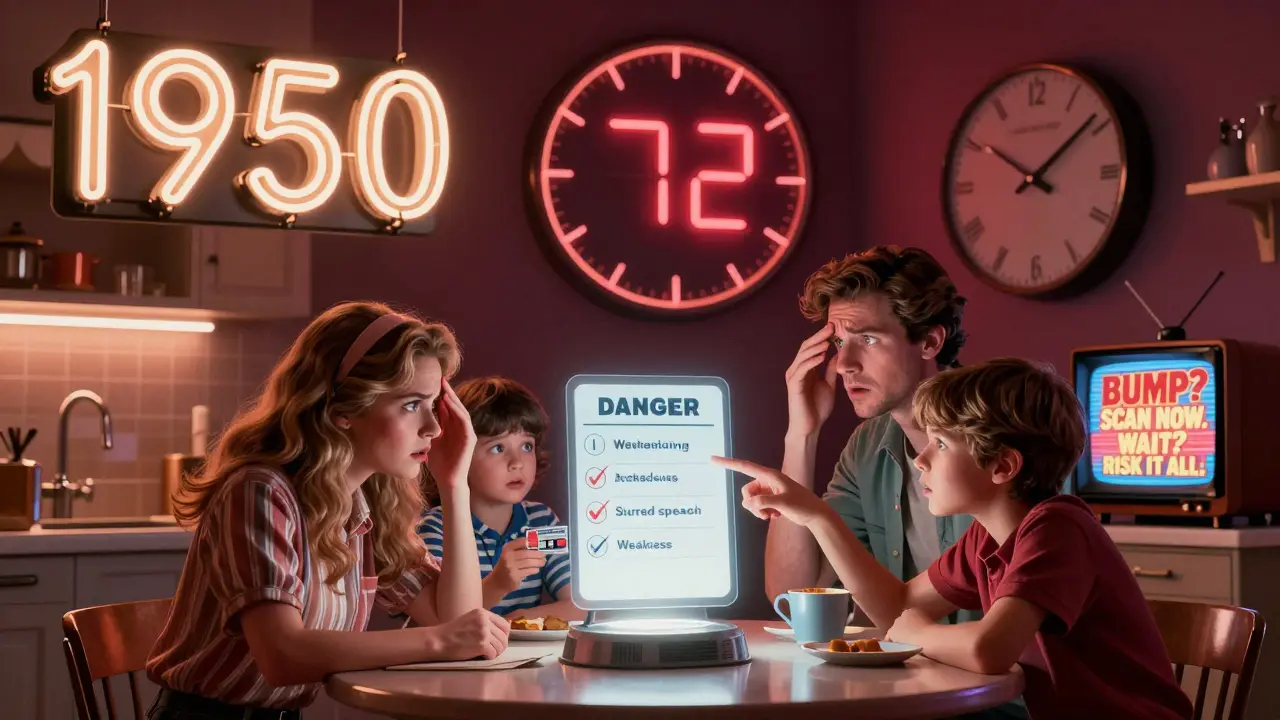
If the scan is clear, you’ll get detailed discharge instructions. You’ll be told to watch for:
- Worsening headache
- Repeated vomiting
- Difficulty waking up or staying alert
- Weakness on one side of the body
- Slurred speech or confusion
- Seizures
If any of these appear, go back to the ER immediately - even if it’s two days later. Delayed bleeds are rare but real.
The Hidden Risk: Stopping Your Blood Thinners
Some patients, scared of bleeding, stop their medication after a head injury. That’s a dangerous mistake. One case from the University of Texas study involved a patient who stopped rivaroxaban after a negative CT - and had a stroke three days later. The clotting risk from stopping anticoagulants can be just as deadly as the bleeding risk.
Your doctor will decide whether to pause, adjust, or continue your medication. Never make that decision on your own. If you’re unsure, call your prescriber or go to the ER. A blood test (INR or anti-Xa level) might be needed to guide the choice.
What Hospitals Are Doing Differently
Not every hospital follows the same rules. Some stick to the 6-hour observation window. Others, like Johns Hopkins, keep patients for 24 hours - just to be safe. The problem? Many emergency departments don’t have 24/7 access to rapid INR testing. That delays decisions and can lead to longer waits.
There’s also new hope on the horizon. The FDA-approved Banyan Brain Trauma Indicator, a blood test that measures two brain proteins (UCH-L1 and GFAP), might one day help doctors decide who really needs a CT. But right now, it’s not widely used for anticoagulated patients. The research is still evolving.
What You Can Do Now
If you’re on blood thinners:
- Wear a medical alert bracelet or carry a card listing your medication
- Keep your INR or drug level records handy
- Have your doctor’s contact info saved in your phone
- Know the signs of delayed bleeding
- Don’t assume you’re fine just because you didn’t lose consciousness
If you or someone you care for takes blood thinners and has a head injury - even a mild one - get checked. It’s not overreacting. It’s smart.
Waiting for symptoms to get worse is the biggest mistake people make. By the time you feel bad, it might be too late. A quick CT scan takes 10 minutes. It could save your life.
Do I need a CT scan after a minor head bump if I’m on blood thinners?
Yes. Even a small bump or fall can cause dangerous bleeding inside the skull if you’re on blood thinners. Guidelines from ACEP and state health departments recommend immediate CT imaging for any head injury in anticoagulated patients, regardless of how minor it seems. Symptoms may not appear right away, and waiting can be life-threatening.
Can I just wait and see if I feel worse?
No. Delayed intracranial bleeding can happen up to 72 hours after the injury - and sometimes even later. You might feel fine now, but bleeding can slowly build pressure on your brain without obvious warning signs. Waiting increases the risk of permanent damage or death. Immediate imaging is the safest approach.
What if my CT scan is normal? Am I safe?
A normal CT scan reduces risk, but it doesn’t eliminate it. About 0.5% to 1% of people on blood thinners develop bleeding after a negative scan. You’ll need to be observed for several hours and given clear instructions on warning signs. If you develop worsening headache, vomiting, confusion, or weakness, return to the ER immediately - even days later.
Should I stop taking my blood thinner after a head injury?
Never stop your blood thinner without talking to your doctor. Stopping it suddenly can cause a stroke or blood clot, which can be just as deadly as bleeding. Your care team will use blood tests (like INR or anti-Xa levels) to decide whether to pause, reverse, or continue your medication - based on your specific risk.
How long should I be observed after a head injury on blood thinners?
Observation time depends on your risk factors. Many hospitals observe patients for 6 hours if the CT is clear and you’re stable. But if you’re older, have a high INR, or had a high-risk injury, you may need 23 hours of monitoring and a repeat CT. Some centers, especially trauma centers, keep patients for 24 hours as a precaution.
Are there alternatives to a CT scan?
For now, non-contrast head CT is the only reliable tool for detecting acute bleeding in anticoagulated patients. Blood tests like the Banyan Brain Trauma Indicator are being studied but aren’t yet standard for this group. MRI can detect older bleeds but isn’t used in emergencies because it’s slower and less available. CT remains the gold standard.


Cam Jane
January 5, 2026 AT 18:55I’ve been on apixaban for AFib for 5 years and I still panic every time I trip. Last month I fell backwards on my kitchen tile-no loss of consciousness, no dizziness-but I called my ER anyway. They gave me the side-eye until I showed them my med list. Got the CT, zero bleed, but I slept better that night. Don’t wait. Just go. Your future self will thank you.
Also, wear that medical alert bracelet. I got mine engraved with ‘NO CT = NO CHANCE’ and I wear it to bed.
Venkataramanan Viswanathan
January 6, 2026 AT 03:49It is a matter of grave concern that even minor head trauma in individuals on anticoagulant therapy is not universally treated with the urgency it demands. In many parts of India, access to immediate CT imaging remains a luxury rather than a standard of care. The disparity in healthcare infrastructure renders such guidelines theoretically sound but practically unattainable for vast populations. We must advocate for equitable access to diagnostic tools, not merely for the privileged few.
Molly McLane
January 7, 2026 AT 17:44My mom’s on warfarin and she’s 78. She’s the toughest woman I know-fell off the ladder fixing the gutters last fall, brushed it off like it was nothing. I made her go to the ER anyway. She complained the whole way. Got the scan, turned out she had a tiny subdural. They kept her overnight, reversed her INR, and now she’s fine. She still says it was overkill. But I told her: better to be alive and annoyed than dead and quiet.
To anyone on blood thinners: your family’s scared for a reason. Listen to them. Even if you feel fine.
Beth Templeton
January 8, 2026 AT 14:08CT scan for a bump? Yeah because nothing says "I’m a responsible adult" like getting irradiated because you stubbed your toe on the coffee table.
Also, why are we treating every 70-year-old like they’re made of glass? Next they’ll want us to scan you after sneezing too hard.
Ryan Barr
January 8, 2026 AT 17:42It’s fascinating how the medical community has turned a simple trauma protocol into a bureaucratic nightmare. The fact that we need 12 pages of guidelines to tell people not to ignore head injuries speaks volumes about the state of modern medicine. Just scan them. Move on.
Dana Termini
January 10, 2026 AT 13:27I appreciate how thorough this is. I’ve been on rivaroxaban since my pulmonary embolism and I’ve been terrified of this exact scenario. I keep a printed copy of this post in my wallet next to my meds. I showed it to my dad last week after he fell at the grocery store-he didn’t want to go, but I said, ‘Dad, you’re not just risking yourself. You’re risking all of us.’ He went. Scan was clean. We cried in the parking lot.
Thank you for writing this. It’s not just medical advice. It’s a lifeline.
Wesley Pereira
January 12, 2026 AT 08:41so like... if you're on one of those new blood thinners and you get a bump? just go. no cap. no debate. they got reversal agents now so even if you bleed, they can fix it. but if you wait? boom. brain mush. and no one wants to be that guy who said 'i felt fine' and then died on a couch watching Netflix.
also, stop being a hero. your family doesn't want a eulogy. they want you alive to argue about who stole the last donut.
Isaac Jules
January 13, 2026 AT 02:33Everyone’s acting like this is some groundbreaking revelation. Newsflash: this isn’t news. It’s been standard of care since 2015. The fact that you’re only hearing this now means you’ve been living under a rock or ignoring your doctor. Also, if you’re still on warfarin in 2024 and don’t know your INR range? You’re not just at risk-you’re negligent. Get your act together.
Amy Le
January 14, 2026 AT 06:02AMERICA IS TOO COWARDLY. We scan for a sneeze. We panic over a stubbed toe. Meanwhile, real problems like opioid addiction or gun violence get ignored because we’re too busy treating elderly people like fragile porcelain dolls. Why not just put everyone on blood thinners in a bubble? 🤡
Also, if you’re over 65 and still walking around without a cane, you’re asking for trouble. Stop being so independent.
Pavan Vora
January 16, 2026 AT 03:42Dear all, I am from India, and I must say, this article is very, very, very important. In my village, many elderly people are on warfarin, but they do not have access to CT scans at all. Even if they do, they wait for days because they think, 'It is just a little pain.' I have seen three cases where delayed bleeding led to death. Please, if you are reading this, do not wait. Even if you are far from a hospital, go to the nearest clinic. Call an ambulance. Do not be proud. Your life is more important than your pride.
Stuart Shield
January 16, 2026 AT 19:35I’ve been on rivaroxaban since my bypass surgery, and I’ll be honest-I used to think I was invincible. Then I slipped on ice last winter, cracked my skull on the curb, and spent three hours in the ER watching a radiologist squint at a screen like it was a Rorschach test. When she said, ‘You’re lucky,’ I didn’t feel lucky. I felt like I’d been handed a second chance by a system that barely notices when you’re alive.
So yeah. Get the scan. Don’t be cool about it. Don’t be brave. Be alive. And if you’re reading this and you’re on blood thinners? Put your phone on speed dial for your nearest ER. Now. Before you need it.