
When researchers test a new drug or compare treatments, sample size calculation, the process of determining how many participants are needed to detect a real effect in a study. Also known as power analysis, it’s the backbone of any credible medical trial. Skip this step, and your results could be meaningless—either too noisy to trust or too small to matter. A study with too few people might miss a life-saving benefit. One with too many wastes time, money, and exposes more patients than needed to potential risks.
It’s not just about numbers. statistical power, the chance a study will correctly detect a true effect if it exists ties directly to sample size. If your power is below 80%, you’re basically flipping a coin to decide if a drug works. This is why trials for drugs like apixaban or prazosin need hundreds—even thousands—of participants. You can’t prove a drug reduces strokes or PTSD nightmares with just 20 people. And clinical trials, structured tests of medical treatments in human populations rely on this math to meet regulatory standards from the FDA or EMA. Without proper sample sizing, even well-designed studies get rejected or ignored.
Real-world examples show why this matters. Take generic drug studies: if you test only 50 people switching from brand to generic thyroid meds, you might miss subtle differences in absorption that affect heart rhythm or energy levels. That’s why the sample size calculation isn’t a footnote—it’s the first step. It also explains why some trials on diuretics in the elderly or SSRI-anticoagulant interactions include hundreds of patients: they’re trying to catch rare but dangerous side effects that only show up in larger groups. Even something as simple as tracking medication adherence needs enough participants to show if a journaling habit actually improves results.
These aren’t abstract stats. They’re the reason you can trust that Shingrix works, that DOACs are safe in obesity, or that switching to a generic won’t wreck your health. The posts below dive into real studies where sample size made the difference—whether it’s spotting a bleeding risk with SSRIs, proving biosimilars are interchangeable, or showing how many people need to quit smoking before you can say it cuts heart attack risk in half. You’ll see how researchers figured out how many people to include, what they were looking for, and why the numbers shaped what we know today.
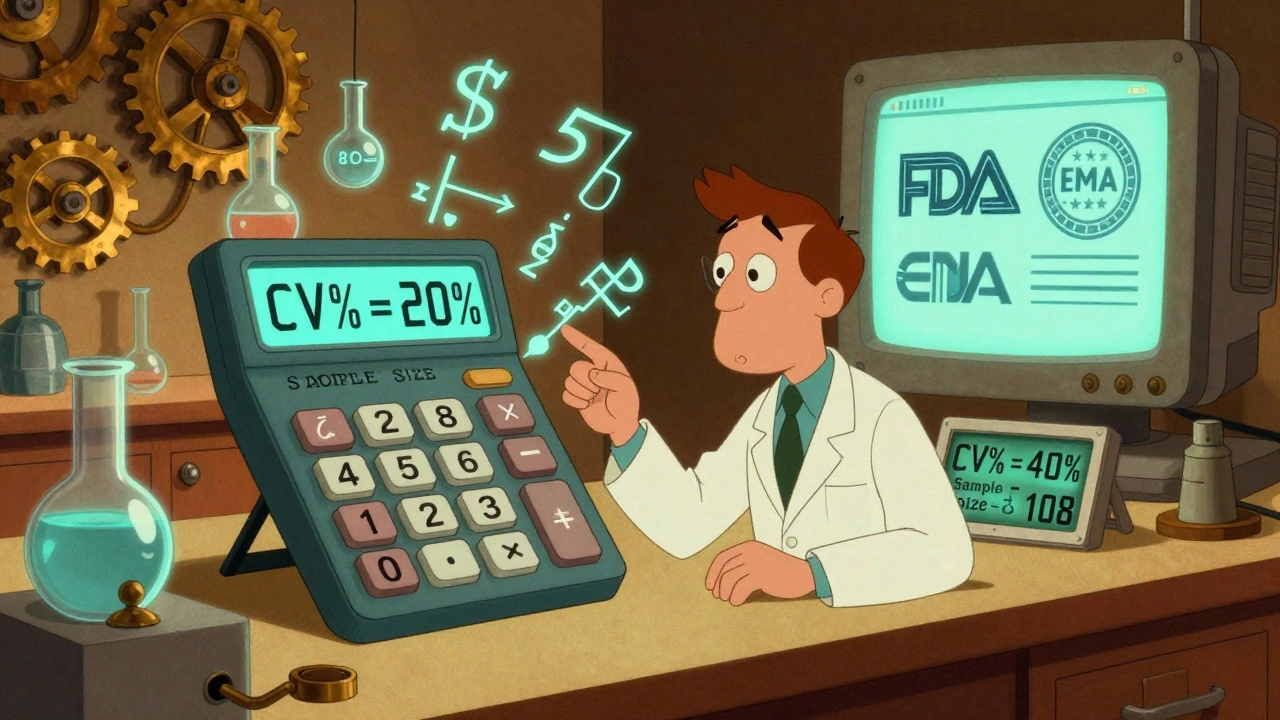 1 December 2025
Learn how to correctly calculate power and sample size for bioequivalence studies to avoid costly failures. Understand CV%, GMR, regulatory requirements, and tools used by industry professionals.





©2026 rxmedicin.su. All rights reserved
9