
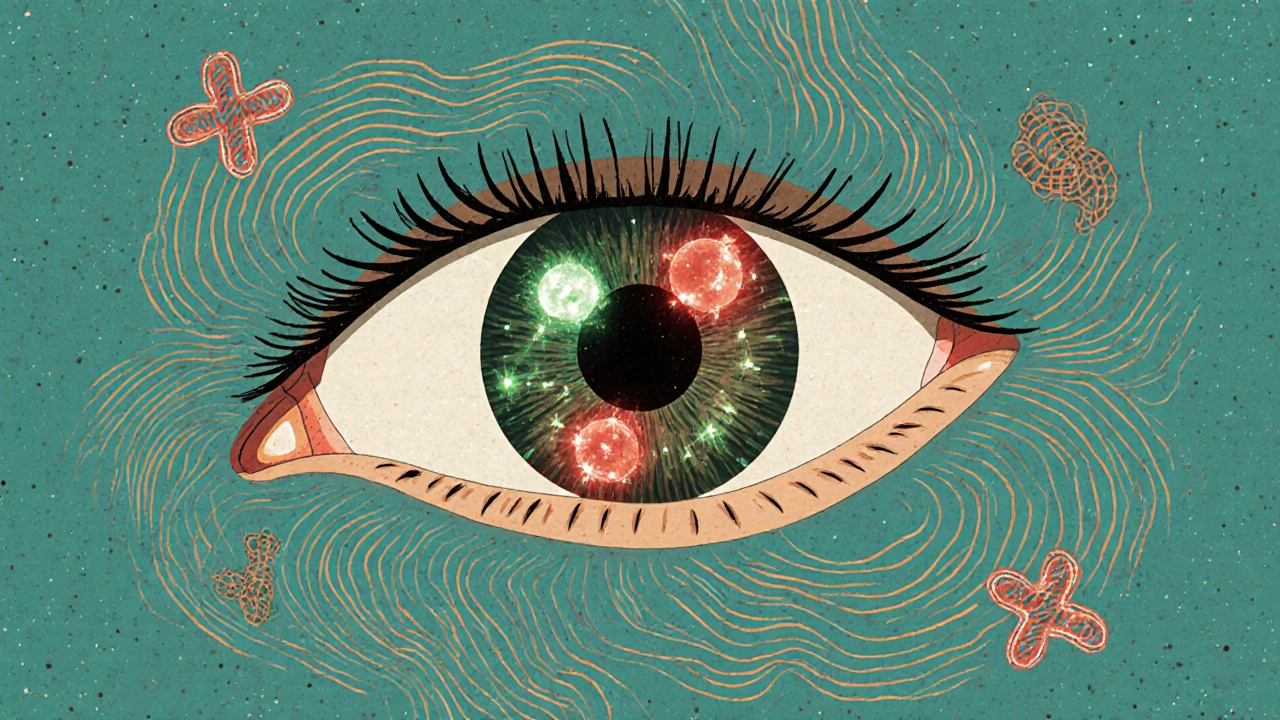
When you think of red-green color blindness, a common form of color vision deficiency where distinguishing between red and green hues becomes difficult. Also known as deuteranopia or protanopia, it’s not just about liking one color more than another—it’s about how your brain processes light signals from the eyes. This isn’t rare. About 1 in 12 men and 1 in 200 women have some version of it. You might not notice it until you’re older, or until someone points out you’re mixing up traffic lights, mismatching socks, or misreading a food label.
It’s not a disease. It’s a genetic trait, usually passed down from mom to son. The problem lies in the photoreceptor cells in your retina—specifically the cones that detect red or green light. If those cones don’t work right, the signal gets muddled. That’s why a ripe tomato might look brownish, or a green stoplight could appear too dim. It’s not about brightness—it’s about hue. And yes, this affects real-life decisions: choosing ripe fruit, reading color-coded maps, interpreting wiring in electronics, even picking out clothes that match.
There’s no cure, but there are tools. Special glasses like EnChroma can help some people see more distinct colors, though they don’t fix the root issue. Apps on your phone can label colors for you. Some workplaces now use patterns or symbols instead of color alone on safety signs. And if you’re a parent, knowing your child might have this can help teachers adjust materials—like avoiding red-on-green charts in school.
What you’ll find here isn’t just medical jargon. It’s real stories, practical tips, and clear comparisons from people who live with this every day. You’ll see how it connects to medications that affect vision, how it shows up in lab results, and why some allergy pills or blood pressure drugs might make color confusion worse. You’ll also learn how to spot early signs in kids, what to ask your doctor, and how to adapt without feeling limited.
This isn’t about fixing you. It’s about understanding how the world works for you—and making sure you’re not left out because of a color you can’t tell apart.
 13 November 2025
Red-green color blindness is a genetic condition affecting 8% of men and 0.5% of women. Learn how it's inherited, how it affects daily life, and what tools can help.




©2026 rxmedicin.su. All rights reserved
14