
When you decide to quit quitting smoking, the process of stopping tobacco use to improve health and longevity. Also known as smoking cessation, it’s not just about willpower—it’s a medical challenge that affects your brain chemistry, habits, and body’s response to withdrawal. Every year, millions try to quit, but most fail within the first week. Why? Because nicotine rewires your brain’s reward system, and stopping suddenly triggers cravings, irritability, and even depression. You’re not weak—you’re fighting a powerful biological addiction.
That’s where nicotine replacement, products like patches, gum, or lozenges that deliver controlled doses of nicotine without smoke comes in. It doesn’t cure addiction, but it eases the crash so your brain can adjust. Then there’s varenicline, a prescription drug that blocks nicotine receptors and reduces cravings, which studies show doubles your chances of success compared to going cold turkey. Another option is bupropion, an antidepressant repurposed to help with smoking cessation by reducing withdrawal symptoms. These aren’t magic pills, but they’re backed by real clinical data—and they work best when paired with behavior changes.
Many people think willpower alone is enough, but the truth is, quitting smoking is like managing any chronic condition. It needs tools, support, and sometimes medication. You don’t have to do it alone. The posts below show how people actually succeed—whether they used patches, switched to generic versions of quit-smoking meds, dealt with side effects like mood swings, or found that combining therapy with medication made all the difference. Some even discovered that what worked for their friend didn’t work for them, and that’s normal. This isn’t about one-size-fits-all solutions. It’s about finding what fits your body, your life, and your reasons for quitting.
 2 December 2025
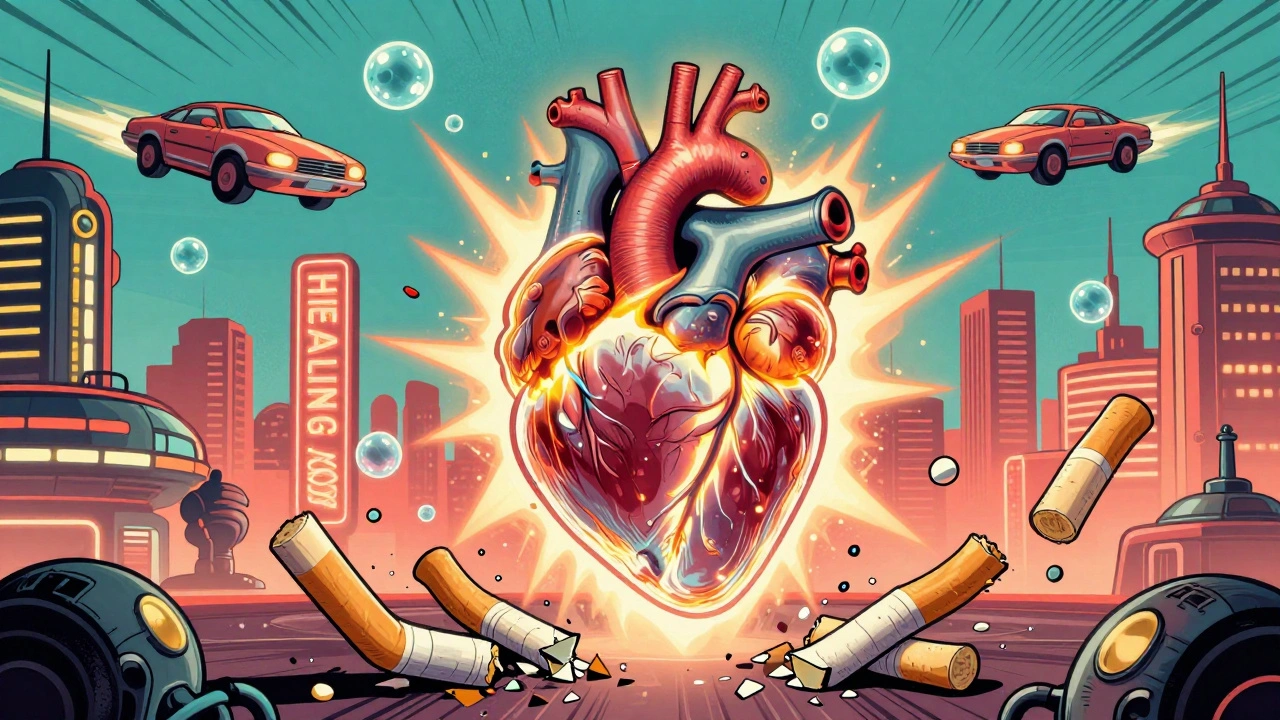
Quitting smoking is the most effective way to reduce heart disease risk-cutting heart attack chances in half within a year. Learn proven strategies, medications, and timelines that save lives.

©2026 rxmedicin.su. All rights reserved
12