
When you hear pharmaceutical competition, the clash between brand-name drug makers and companies producing cheaper copies. Also known as drug market rivalry, it’s what keeps prices down and gives you access to affordable meds. This isn’t just corporate drama—it directly affects whether you can afford your blood pressure pill, your insulin, or your antidepressant. The more companies that can legally make the same drug, the more pressure there is to lower costs. And in places like the EU and the U.S., rules around generic drugs, chemically identical versions of brand-name medications approved after patents expire and biosimilars, near-copies of complex biologic drugs that can’t be exactly replicated are tightening to speed up access and cut waste.
But not all competition is equal. A bioequivalence, the scientific proof that a generic drug performs the same way in the body as the brand study isn’t just paperwork—it’s what keeps you safe when switching from brand to generic. For drugs like blood thinners or seizure meds, even tiny differences in how your body absorbs the drug can change how you feel. That’s why some doctors ask you to keep a medication journal when switching. Meanwhile, the FDA and EMA are updating rules to make it easier for generics to enter the market, but also to stop companies from gaming the system—like paying rivals to delay cheaper versions. And when it comes to drug pricing, how much you pay depends on who’s making it, where you live, and whether your insurer forces you to try the cheapest option first, the battle gets even messier. Insurance denials for generics? They’re common. But knowing how to appeal them, or understanding when a biosimilar can be automatically swapped in, puts power back in your hands.
What you’ll find here isn’t theory—it’s real-world guidance from people who’ve been there. Whether you’re tracking side effects after switching to a new generic, fighting an insurance denial, trying to understand why your doctor won’t let you swap your biologic, or just wondering why your prescription cost jumped last month—this collection gives you the facts. No fluff. No jargon. Just what you need to know to navigate the messy, often confusing world of drug pricing, availability, and safety. You’re not just a patient—you’re a participant in this system. And now you know how it works.
 3 December 2025
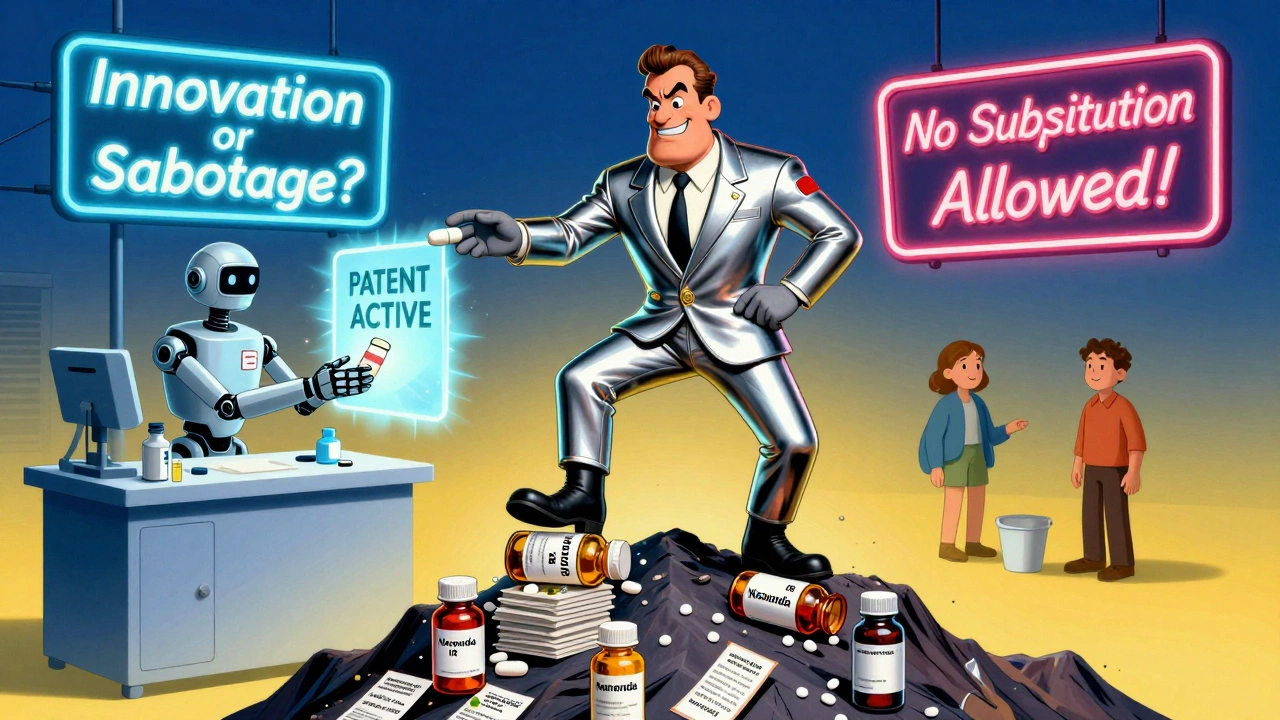
Big pharma is using legal loopholes to block cheaper generic drugs by pulling older versions off the market. Learn how product hopping, REMS abuse, and court rulings are affecting drug prices and what’s being done to stop it.


©2026 rxmedicin.su. All rights reserved
11