
When you're trying to quit smoking, your brain craves nicotine—not the smoke, the ritual, or the habit. That’s where nicotine replacement therapy, a set of FDA-approved products that deliver controlled doses of nicotine without tobacco smoke. Also known as NRT, it helps you break the physical addiction so you can focus on changing the habit. Unlike vaping or chewing tobacco, NRT gives you just enough nicotine to calm withdrawal—no tar, no carbon monoxide, no cancer risk.
There are several types of nicotine patches, slow-release adhesive strips worn on the skin that deliver steady nicotine over 16 or 24 hours. They’re great for people who need constant relief from cravings. Then there’s nicotine gum, a chewable option that lets you control timing and dose by chewing and parking it between cheek and gum. It’s ideal for sudden urges, like after a meal or when stressed. Other forms include lozenges, inhalers, and nasal sprays—each with different speed and delivery patterns. The key isn’t which one you pick, but whether you use it correctly. Most people use too little, too short, or quit too early.
Studies show that using any form of NRT doubles your chances of quitting compared to going cold turkey. But combining two types—like a patch with gum—works even better. The patch handles background cravings, and the gum tackles the spikes. People who stick with NRT for 8 to 12 weeks are far more likely to stay quit after six months. And yes, it’s safe. You won’t get addicted to NRT the way you did to cigarettes. The dose is lower, the delivery is slower, and there’s no rush of dopamine from smoke inhalation.
What doesn’t work? Thinking NRT is a magic fix. It doesn’t erase the mental habit. That’s why many people who quit with NRT still relapse—they didn’t change their triggers. But if you pair NRT with simple behavioral changes—like avoiding coffee after meals, taking a walk when stressed, or telling friends you’re quitting—you stack the odds in your favor. You’re not just replacing nicotine; you’re rebuilding your daily routine.
Below, you’ll find real-world advice from people who’ve been there: how to pick the right product, how to avoid common mistakes, what side effects to expect, and how to know if you’re using it right. No fluff. Just what actually helps when you’re trying to put cigarettes behind you.
 2 December 2025
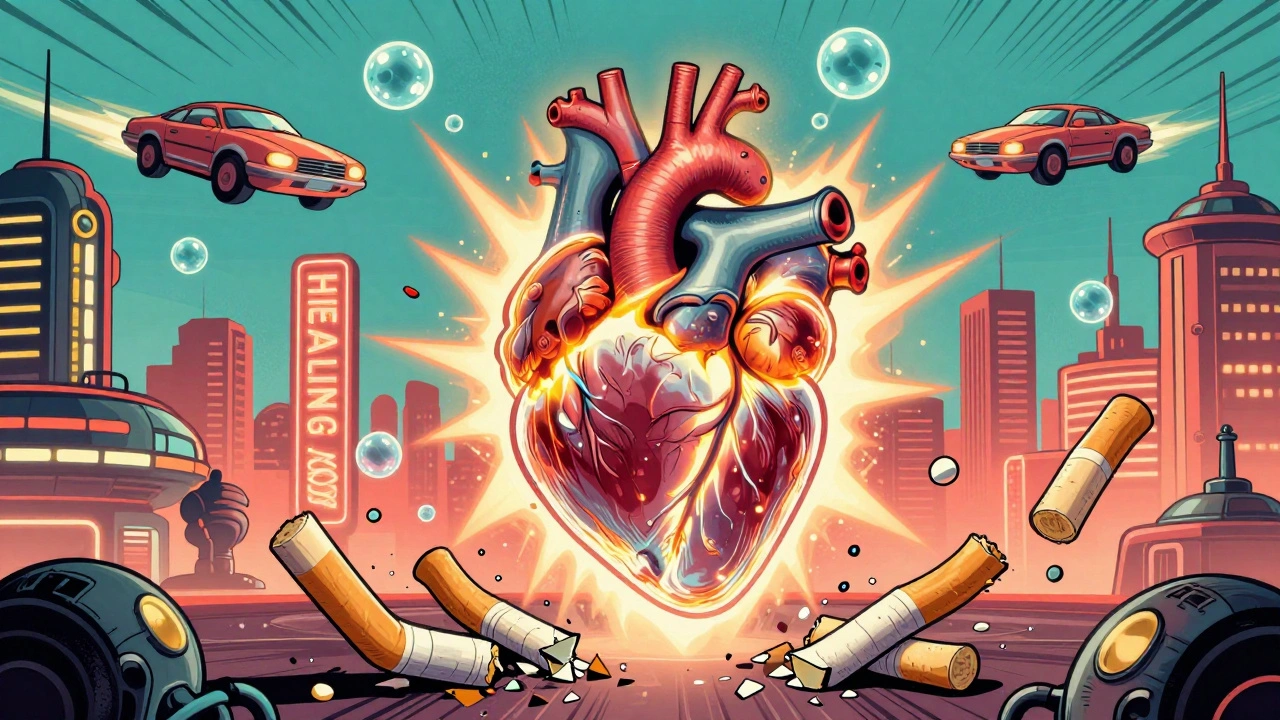
Quitting smoking is the most effective way to reduce heart disease risk-cutting heart attack chances in half within a year. Learn proven strategies, medications, and timelines that save lives.



©2026 rxmedicin.su. All rights reserved
12