
When you’re standing in front of a room, heart pounding, hands shaking, voice trembling - it’s not just nerves. For more than 12% of adults in the U.S., this is everyday life with social anxiety disorder. The fear isn’t just about being judged. It’s the physical reaction that feels out of control: racing heart, sweaty palms, shaky voice. And while therapy can rewire how you think, there’s another tool that helps you survive the moment - beta-blockers.
What Beta-Blockers Actually Do
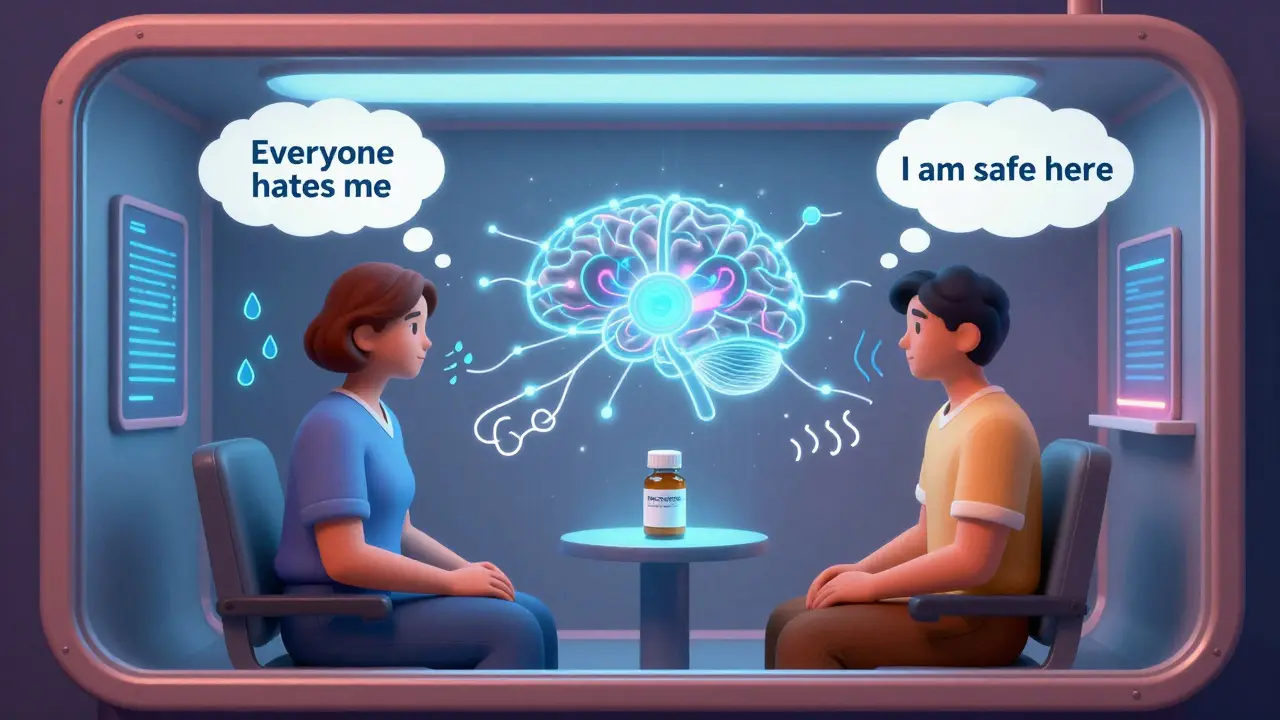
Beta-blockers like propranolol don’t calm your mind. They calm your body. These medications block adrenaline’s effects on your heart, lungs, and muscles. That means your heart doesn’t race as fast, your hands stop trembling, and your voice steadies. It’s not magic. It’s pharmacology.
Propranolol is the most common one used for anxiety. People take it 60 to 90 minutes before a stressful event - a presentation, a job interview, a wedding speech. Within an hour, it hits peak levels in the blood. Studies show it reduces heart rate by 15 to 25 beats per minute and cuts hand tremors by 30 to 40%. One musician who’d failed three auditions because of shaking hands got through the fourth using 20mg of propranolol. She didn’t feel less anxious - but she could play.
Unlike SSRIs, which take weeks to work, beta-blockers kick in fast. Unlike benzodiazepines, they don’t make you drowsy or addicted. That’s why they’re popular for short-term use. But here’s the catch: they do nothing for the thoughts. If you’re thinking, “Everyone thinks I’m weird,” or “I’m going to embarrass myself,” beta-blockers won’t touch that. They only mute the physical symptoms.
When Beta-Blockers Work - And When They Don’t
They’re not for everyone. If you have asthma, heart failure, or diabetes, beta-blockers can be dangerous. They can hide low blood sugar symptoms, and they can tighten airways in people with lung conditions. About 15% of people can’t use them safely.
They also don’t work for chronic social anxiety. If you avoid parties, dread phone calls, or panic every time you speak up at work, beta-blockers won’t fix that. A 2023 meta-analysis of 10 studies found no real difference between propranolol and a placebo for people with generalized social phobia. The effect size? Near zero.
But for specific, predictable events? That’s where they shine. In performance anxiety - public speaking, musical recitals, sports competitions - success rates jump to 65-70%. Reddit users report dramatic improvements. One person took 40mg before a TEDx talk and said their shaking went from “visible to barely noticeable.” Healthline’s survey of 250 users showed 62% were satisfied. The #1 reason? Speed.
Behavioral Therapy: The Real Fix
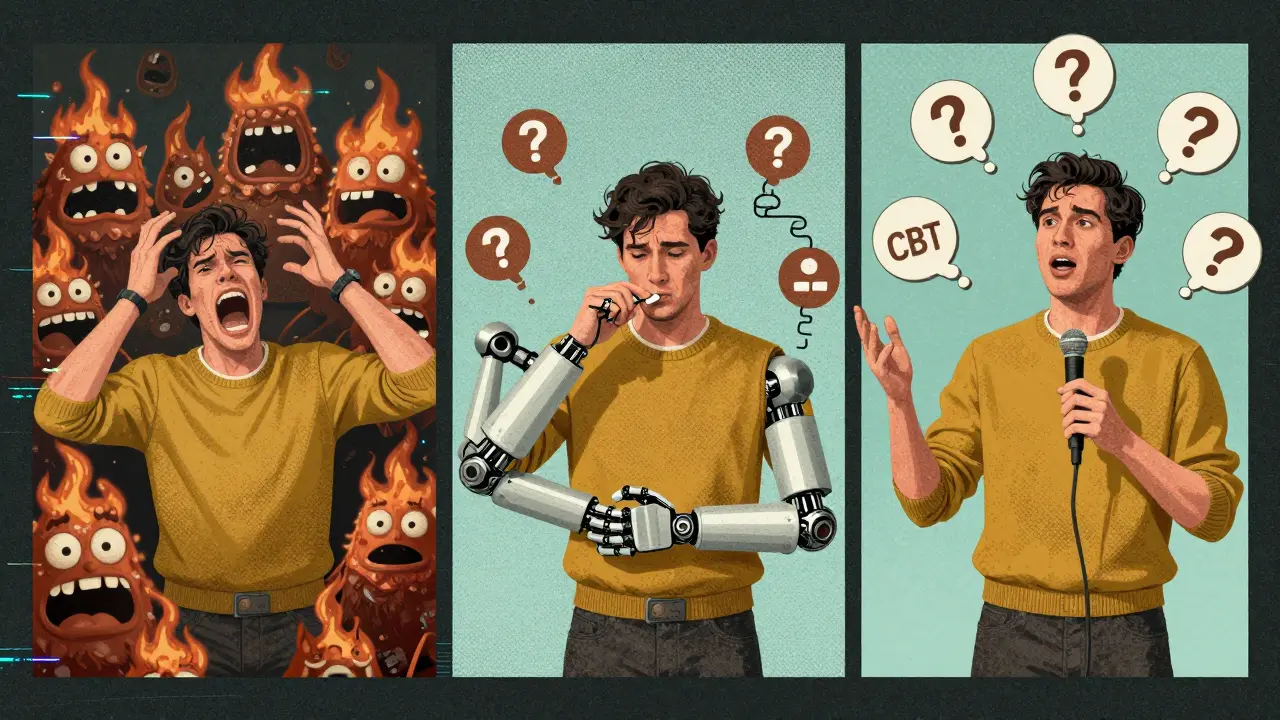
Here’s the truth: beta-blockers are a bandage. Cognitive behavioral therapy (CBT) is the cure.
CBT teaches you to recognize and change the thoughts that fuel social anxiety. Instead of thinking, “They’re all judging me,” you learn to ask, “What’s the evidence?” Instead of avoiding situations, you gradually face them - with support. After 12 to 16 weekly sessions, 50-60% of people with social anxiety disorder see their symptoms drop enough to no longer meet diagnostic criteria.
It’s not easy. It requires work. But the results last. Unlike beta-blockers, which wear off after a few hours, CBT rewires your brain. Digital CBT apps like Woebot Health now show 52% remission rates in clinical trials - matching or beating medication in some cases.
And here’s the powerful synergy: beta-blockers can make CBT work better. When you’re too physically overwhelmed to even try exposure, a low dose of propranolol can give you the stability you need to show up. One psychiatrist put it simply: “They don’t cure anxiety. They let you do the work that does.”
The Cost and Access Gap
Propranolol costs $4 to $10 per dose. Insurance covers it. No copay for many. That’s why prescriptions for anxiety-related use jumped 47% between 2003 and 2018 - even though the evidence for long-term benefit is weak.
Meanwhile, CBT is expensive and hard to find. In the U.S., 43% of counties don’t have enough therapists to meet demand. A single session can cost $100 to $200 without insurance. Many people turn to beta-blockers not because they’re the best option - but because therapy isn’t accessible.
Corporate wellness programs reflect this gap. Only 12% include beta-blockers in their mental health offerings. But 89% offer CBT resources. That tells you something: employers know therapy works. They just can’t get people to it.
What Experts Really Say
There’s disagreement. Some doctors call beta-blockers a “valuable tool.” Others call them overprescribed. The American Psychiatric Association’s 2022 guidelines say they should never be used alone for social anxiety disorder. The American Psychological Association says the same: “Only as an adjunct for specific performance situations.”
Dr. Michael Van Ameringen, who runs a top anxiety clinic, says propranolol helps people perform. Dr. Charlotte Archer’s 2023 review found no benefit for social phobia. Both are right. One is talking about stage fright. The other is talking about lifelong fear of people.
The real consensus? Beta-blockers are situational. They’re not for the disorder. They’re for the moment.
How to Use Them - If You Decide To
If you’re considering propranolol:
- Start low: 10mg to 20mg, 90 minutes before the event.
- Don’t take it daily. It’s not meant for ongoing use.
- Track your symptoms: Did your hands stop shaking? Did your voice hold? Did you feel calmer - or just physically numb?
- Pair it with therapy. Even one session can help you understand why you react the way you do.
- Watch for side effects: fatigue, dizziness, cold hands. These are common. If you feel faint, stop.
And never use them without talking to a doctor. Even though they’re cheap and available, they’re not risk-free.
The Future: Better Tools Coming
The National Institute of Mental Health is funding a $2.3 million trial to finally settle the debate. Starting in 2024, 300 people will be studied to see if propranolol truly helps performance anxiety - or if it’s just placebo with a pulse.
Meanwhile, new drugs like brexanolone derivatives are in late-stage trials. They promise rapid relief without the side effects of beta-blockers. And digital CBT is getting smarter, more personalized, and more affordable.
Beta-blockers aren’t going away. But they’re not the future. They’re a bridge - for people who need to get through today while working toward a better tomorrow.
Can beta-blockers cure social anxiety disorder?
No. Beta-blockers only reduce physical symptoms like shaking and rapid heartbeat. They don’t change the thoughts, fears, or avoidance patterns that define social anxiety disorder. Only therapies like CBT can do that.
Is propranolol addictive?
No. Unlike benzodiazepines, propranolol doesn’t cause dependence or withdrawal. You won’t crave it or need to increase the dose over time. It’s safe for occasional, as-needed use.
How long does propranolol last for anxiety?
Effects typically last 3 to 4 hours. That’s enough for a presentation, interview, or performance. It’s not designed for all-day use or chronic anxiety.
Can I take beta-blockers with therapy?
Yes - and many therapists recommend it. Beta-blockers can help you tolerate exposure exercises by reducing physical symptoms. This makes it easier to face feared situations and learn that they’re not as dangerous as your mind says.
Are there natural alternatives to beta-blockers for social anxiety?
Breathing techniques, mindfulness, and exposure practice are the most effective natural tools. While supplements like magnesium or L-theanine may help mild stress, they don’t match the physical symptom control of propranolol. For real results, structured therapy is still the gold standard.




Stephen Tulloch
January 16, 2026 AT 15:46Bro, I took propranolol before my TEDx talk and it was like my body finally got the memo that I wasn’t about to die. Shaking? Gone. Voice? Solid. Did I still feel like an imposter? Absolutely. But now I could *perform* like one. Beta-blockers aren’t therapy-they’re a cheat code for when your body betrays you. 🎤🔥
Joie Cregin
January 17, 2026 AT 10:01Just wanted to say thank you for writing this. I’ve been too scared to even say ‘hi’ to my coworkers for years. Started CBT last month and it’s brutal-but I finally showed up to a team meeting without my hands in my pockets. Propranolol helped me get through the first three sessions. Not a cure, but a lifeline. 💙
Melodie Lesesne
January 19, 2026 AT 04:08My cousin uses propranolol before her piano recitals. She says it’s like her nerves get a mute button. Doesn’t make her less nervous-but it lets her play the music instead of fighting her body. Honestly? That’s enough. Sometimes you just need to get through the moment. No shame in that.
Corey Sawchuk
January 19, 2026 AT 10:22Been on beta-blockers for public speaking for 5 years now. Never thought I’d say this but I’m glad they exist. Not for everyone but for people like me who freeze up physically? It’s a game changer. Therapy’s the goal but this lets me show up to work on the days my brain says no
john Mccoskey
January 20, 2026 AT 03:25Let me cut through the fluff. Beta-blockers are a band-aid for people too lazy to do the actual work. You want to stop shaking? Stop avoiding social situations. Stop feeding the fear. Stop treating anxiety like a medical emergency when it’s just a conditioned response. The fact that people are popping propranolol like candy before every Zoom call says more about our culture of instant gratification than it does about mental health. CBT is hard. It requires vulnerability. It requires failure. And most people would rather numb the symptoms than face the root cause. Sad. Pathetic. And frankly, dangerous.
Samyak Shertok
January 20, 2026 AT 07:30Oh so now we’re medicating the symptoms of capitalism? You’re not anxious because your thoughts are warped-you’re anxious because your boss expects you to pitch ideas in a room full of people who’ll judge you for your accent, your clothes, your silence. Beta-blockers don’t fix the system. They just let you perform better in it. Congrats, we’ve turned human vulnerability into a productivity hack. 🙃
Bianca Leonhardt
January 22, 2026 AT 06:18People who use beta-blockers for presentations are just weak. If you can’t handle public speaking without drugs, you shouldn’t be in a leadership role. Therapy is free on YouTube. Do the work or get out.
Travis Craw
January 24, 2026 AT 01:28im not saying the author is wrong but i think a lot of people dont have access to cbt like they say. my cousin took propranolol before her wedding speech and cried afterward because she finally said what she wanted to say. that matters more than being ‘properly treated’ if you dont have the resources. also i spell therapy with 2 r’s. oops.
vivek kumar
January 25, 2026 AT 06:25There’s a critical distinction here: beta-blockers reduce somatic symptoms, not cognitive distortions. That’s why they’re adjunctive. The meta-analysis showing no effect on generalized social phobia is correct-but irrelevant to performance anxiety. The APA’s guidelines are spot-on: situational use only. The real issue isn’t the drug, it’s the healthcare system that forces people to choose between affordability and efficacy. Propranolol costs $4. CBT costs $150/hour. Which one would you pick if you were drowning?
Stephen Tulloch
January 25, 2026 AT 23:22And here’s the kicker: I did CBT. I did the exposure. I sat in silence for 10 minutes in a coffee shop pretending I was waiting for someone. I cried. I wanted to quit. Then I took propranolol before my next session and actually spoke up. It didn’t replace therapy. It let me survive it. So no, I’m not weak. I’m strategic. 🧠💪