
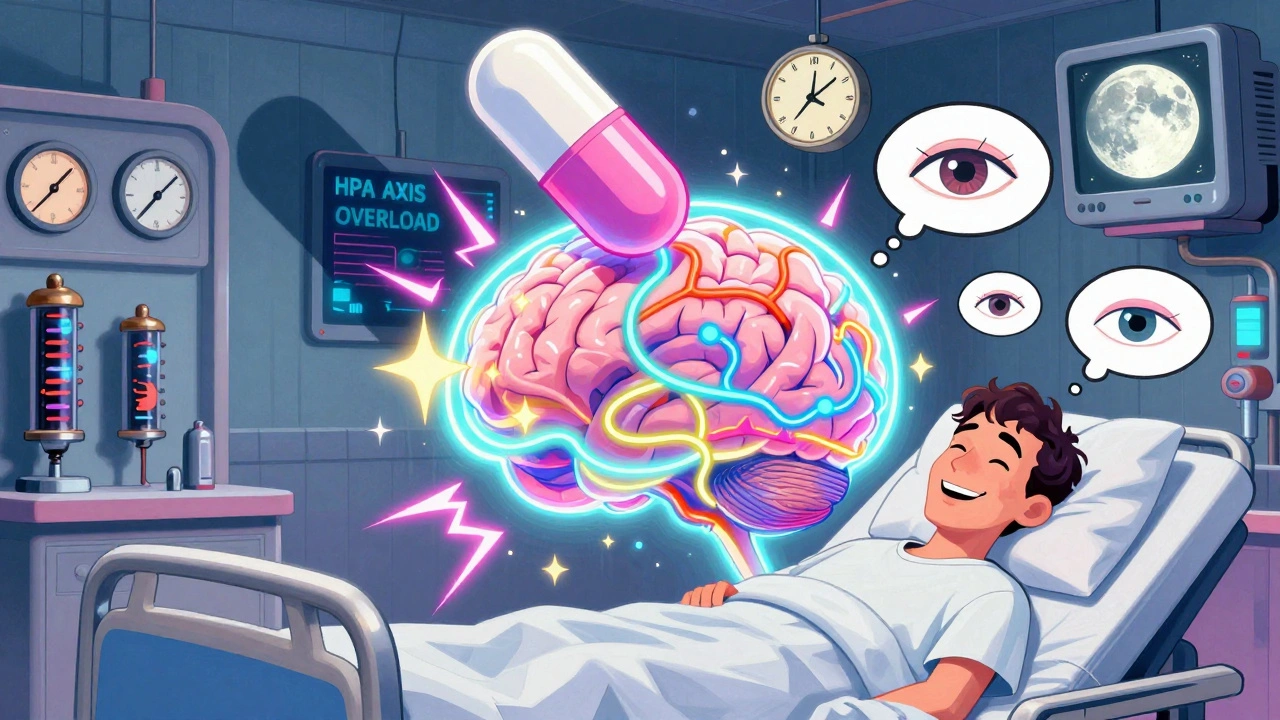
When you take steroids, synthetic versions of hormones like cortisol that reduce inflammation and suppress the immune system. Also known as corticosteroids, they’re prescribed for everything from asthma to autoimmune diseases. But for many people, the side effects aren’t just physical—they’re emotional. Mood changes from steroids aren’t rare. Studies show up to 25% of people on long-term steroid therapy report anxiety, irritability, or even depression. It’s not weakness. It’s biology.
Steroids don’t just target inflamed joints or swollen airways. They cross the blood-brain barrier and mess with neurotransmitters like serotonin and dopamine. That’s why some people feel euphoric at first—then crash into deep sadness or rage days later. This isn’t the same as being "stressed out." It’s a direct chemical effect. People on high doses or those with a history of mental health issues are at higher risk. Even short courses can trigger sudden mood swings, especially in teens and older adults. And because these changes often show up weeks after starting treatment, many don’t connect them to the steroid at all.
What makes it worse? Doctors rarely warn patients. If you’re prescribed prednisone or dexamethasone, you’ll get a list of stomach issues and weight gain—but not always the emotional risks. That’s why tracking your mood matters. If you start feeling unusually angry, weepy, or detached, write it down. Note the dose and how long you’ve been on it. This isn’t just for your own peace of mind—it helps your doctor decide whether to taper you slower, add support, or switch treatments. You’re not overreacting. Your brain is reacting to a powerful drug.
Some people bounce back fast after stopping steroids. Others need weeks or months to feel normal again. Therapy, sleep fixes, and avoiding alcohol can help. But the most important step? Speaking up. If your mood shifts while on steroids, tell your provider. You’re not being dramatic. You’re giving them the data they need to keep you safe.
Below, you’ll find real patient experiences and medical insights on how steroids affect mental health, what alternatives exist, and how to spot the warning signs before they turn into a crisis.
 1 December 2025
Corticosteroids can trigger mood swings, mania, and even psychosis - especially at high doses or in older adults. Learn the signs, risks, and what to do if you or a loved one experiences psychiatric side effects.

©2026 rxmedicin.su. All rights reserved
12