
When it comes to heart disease prevention, the practice of reducing risk factors for cardiovascular conditions like heart attack and stroke through lifestyle and medical management. Also known as cardiovascular disease prevention, it’s not about waiting for symptoms to show up—it’s about acting before they do. Most people think it’s all about cutting fat or taking pills, but the truth is simpler: it’s about consistent, small habits that protect your arteries over time.
One major player in heart disease prevention is cholesterol management, the process of keeping LDL (bad) cholesterol low and HDL (good) cholesterol at healthy levels to prevent plaque buildup in arteries. You don’t need fancy tests to track it—just know your numbers and talk to your doctor if your LDL is above 100. Statins help many people, but even without medication, swapping out processed snacks for nuts or oats can drop cholesterol by 10% or more. Then there’s blood pressure control, keeping systolic pressure under 120 to reduce strain on the heart and blood vessels. High blood pressure often has no symptoms, which is why it’s called the silent killer. Cutting salt, walking 30 minutes a day, and avoiding late-night snacks can make a real difference. Studies show people who lower their blood pressure by just 5 mmHg cut their stroke risk by nearly a third.
And let’s not forget lifestyle changes, daily habits like movement, sleep, and stress management that directly impact heart health over years. You don’t need a gym membership. Walking after dinner, taking the stairs, or even standing up every hour helps. Poor sleep? It raises cortisol and inflammation—two silent drivers of heart trouble. Chronic stress? It makes you more likely to smoke, overeat, or skip meds. The posts below show how people manage these factors while on medications like DOACs, SSRIs, or diuretics—and how drug interactions can quietly affect your heart if you’re not paying attention.
What you’ll find here isn’t theory. It’s real advice from people who’ve tracked side effects, adjusted meds, and figured out what works when life gets busy. Whether you’re worried about bleeding risks from combining antidepressants and blood thinners, or how diuretics can dehydrate older adults, these posts connect the dots between daily choices and long-term heart health. No fluff. No magic pills. Just what you need to know to keep your heart working right.
 2 December 2025
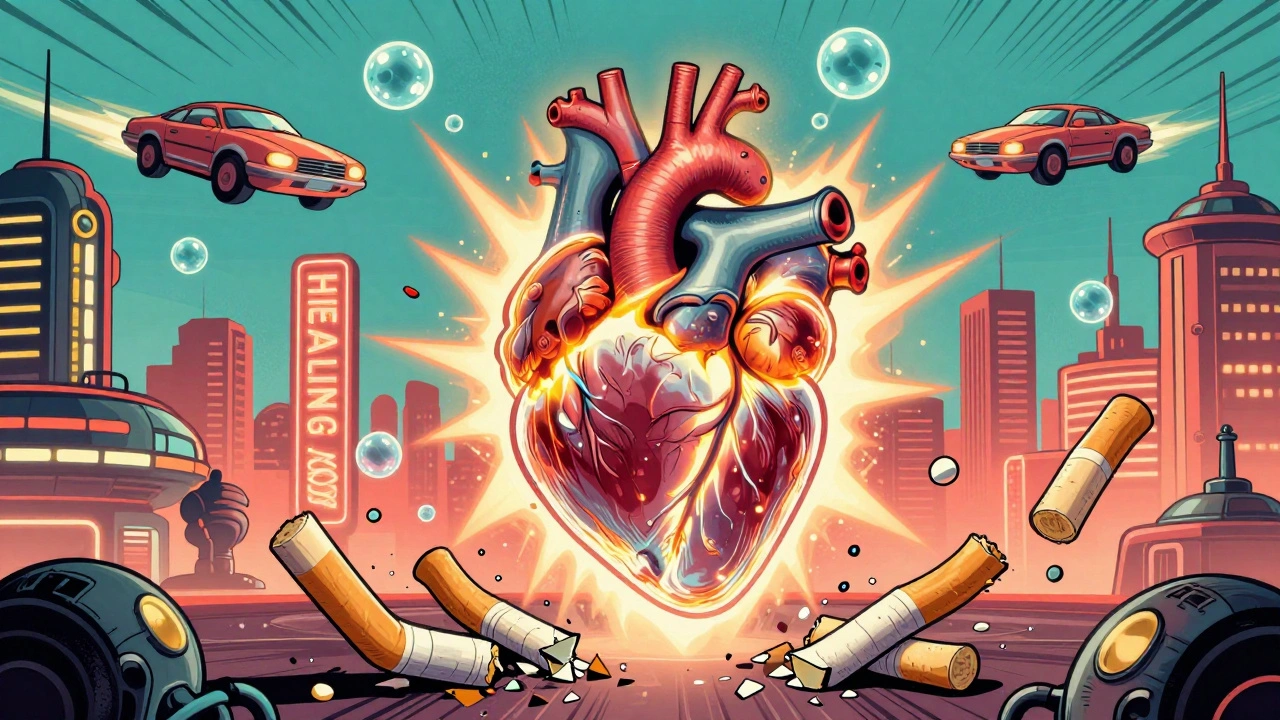
Quitting smoking is the most effective way to reduce heart disease risk-cutting heart attack chances in half within a year. Learn proven strategies, medications, and timelines that save lives.
©2026 rxmedicin.su. All rights reserved

12