
Every year, thousands of children end up in emergency rooms because a parent gave them two medicines that seemed different-but contained the same active ingredient. It’s not laziness. It’s not carelessness. It’s confusion. And it’s completely preventable.
Think about this: your child has a fever. You give them acetaminophen-the active ingredient in Tylenol, Panadol, and many cold syrups. Later, they start coughing. You grab a bottle of nighttime cough medicine. It says "for kids" and has a cute cartoon on the label. You don’t think twice. But that cough syrup? It also has acetaminophen. Now your child has gotten two doses of the same drug in a few hours. That’s double dosing. And for a small child, that can mean liver damage.
Why Double Dosing Happens More Than You Think
Most parents don’t realize how common this is. Research shows about 1 in 5 parents have accidentally given their child too much of the same medicine. The problem isn’t that people are bad caregivers. It’s that medicine labels are designed for pharmacies, not tired parents at 2 a.m.
Here’s what makes it worse:
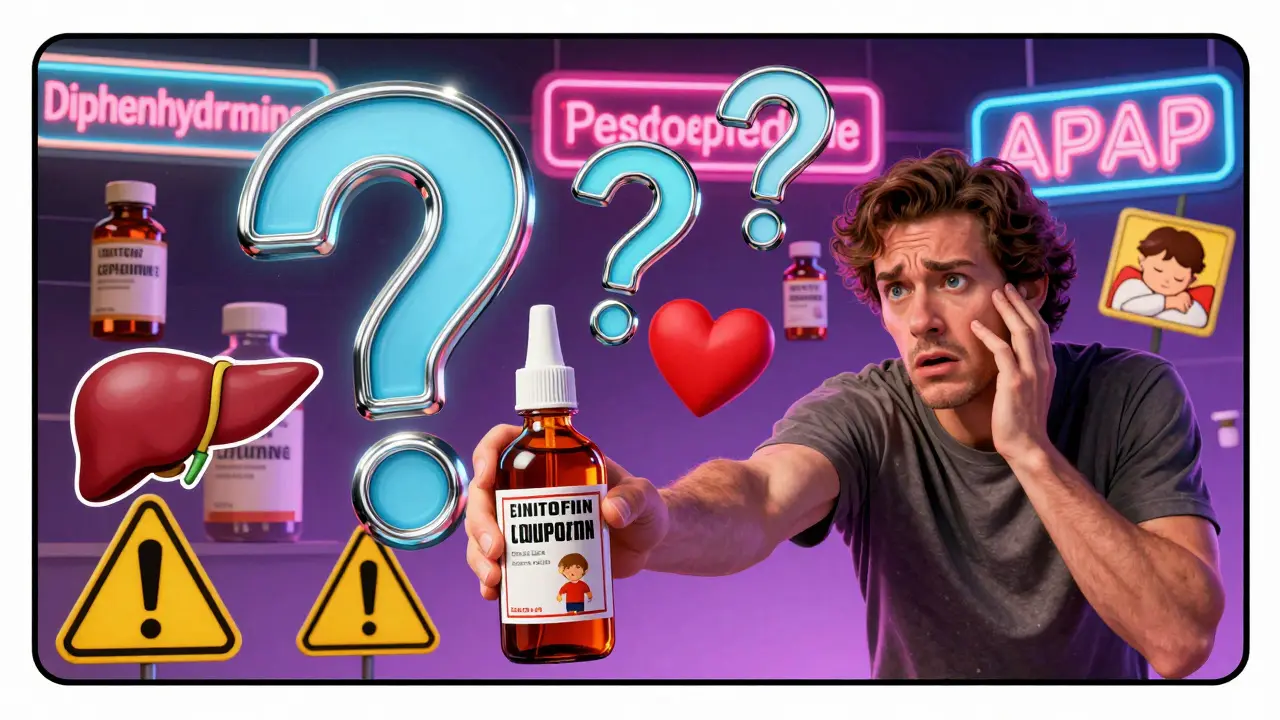
- One product might say "acetaminophen," another says "APAP," and another says "paracetamol." They’re all the same thing.
- There are over 15 different names for acetaminophen alone on children’s medicine labels.
- Combination cold and flu medicines often include pain relievers, antihistamines, and cough suppressants-all in one bottle.
- Parents assume "children’s" means "safe to mix." It doesn’t.
The FDA says 89% of multi-symptom cold medicines for kids contain acetaminophen. That means if you give a cold medicine and a fever reducer, you’re likely doubling the dose. And acetaminophen overdose is the #1 cause of acute liver failure in children under six.
The Most Dangerous Ingredients to Watch For
Not all active ingredients are equal. Some are fine in small extra doses. Others can cause serious harm-even death-when doubled.
Acetaminophen (Tylenol, Panadol, APAP)
Therapeutic window is narrow. More than 150 mg/kg can cause liver failure. Even 10% extra in kids under 2 doubles the risk of adverse events.
Ibuprofen (Advil, Motrin)
Can cause stomach bleeding or kidney damage if doubled. Never alternate with acetaminophen in kids under 3-it increases double dosing risk by 47%.
Diphenhydramine (Benadryl)
An antihistamine found in allergy meds, cough syrups, and sleep aids. Double dosing causes extreme drowsiness, confusion, and even seizures in young children.
Decongestants (pseudoephedrine, phenylephrine)
Can spike heart rate and blood pressure. In toddlers, this can lead to rapid heartbeat, agitation, or fainting.
Antidepressants, ADHD meds, insulin
These aren’t OTC, but if your child takes them, double dosing can be deadly. Methylphenidate (Ritalin) can increase heart rate by 20-30 bpm in minutes. Insulin overdose can trigger life-threatening low blood sugar.
How to Check Active Ingredients-Step by Step
You don’t need a pharmacy degree. You just need a system.
- Look at the label. Not the brand name. Scroll down to the "Active Ingredients" section. That’s the only thing that matters.
- Write it down. Keep a simple list: Medication name, active ingredient, dose, time given. Use a notepad, phone note, or app.
- Compare before giving. Before giving any new medicine, check your list. Is this ingredient already given in the last 4-6 hours?
- Use the measuring tool that came with the bottle. Household spoons vary by up to 200%. A "teaspoon" might be 2.5ml or 7.5ml. The dosing cup? That’s your safe tool.
- One person gives the medicine. If two caregivers are involved, assign one person to handle all meds. This cuts communication errors by 38%.
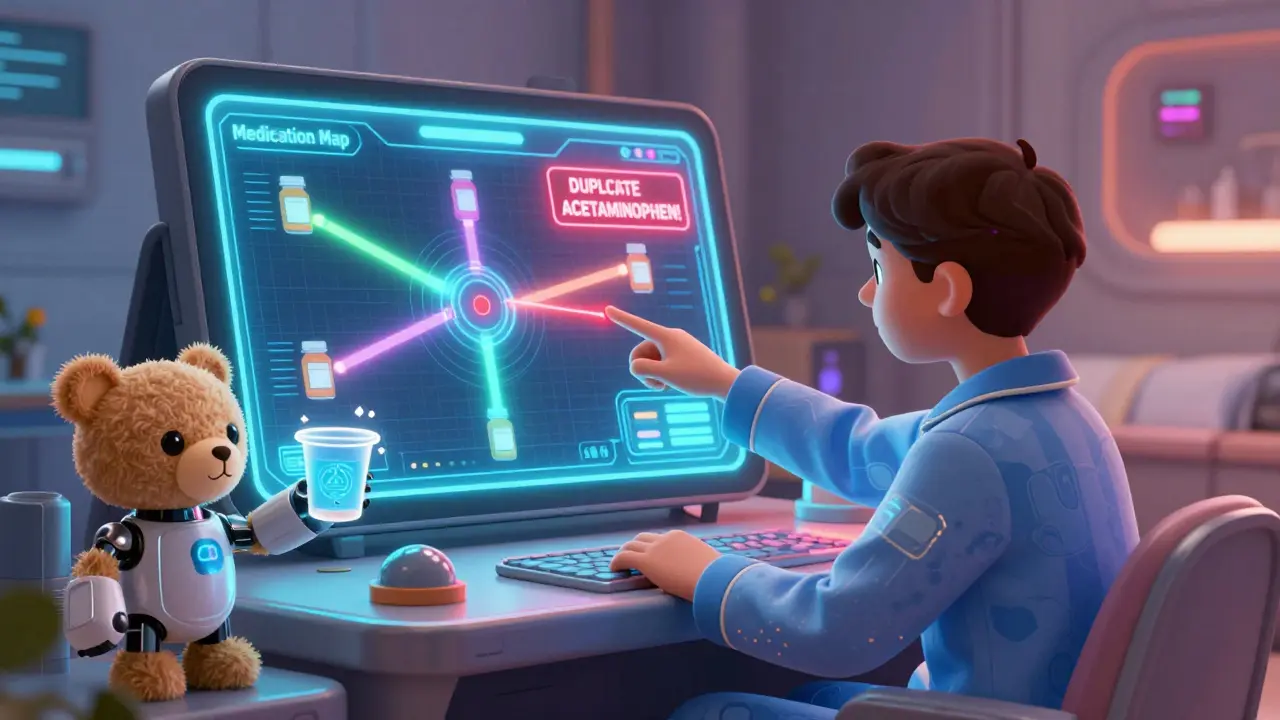
Example: Your child takes Tylenol at 10 a.m. At 3 p.m., they start coughing. You pick up a bottle of "Children’s Cold & Flu Nighttime." You check the label: "Active Ingredients: Acetaminophen 160 mg per 5 mL, Dextromethorphan 5 mg, Doxylamine 6.25 mg." You see acetaminophen. You put it back. You call the pediatrician.
What to Do If You Accidentally Double Dose
Don’t panic. But don’t wait.
- If you gave acetaminophen and you’re unsure if it’s too much-call Poison Control immediately: 1-800-222-1222 (U.S.) or your local poison center.
- Have the medicine bottle ready. Tell them the active ingredient, how much was given, and when.
- Don’t induce vomiting unless instructed. That can make things worse.
- For non-acetaminophen overdoses, still call. Many ingredients can cause delayed reactions.
Over 55% of double dosing calls to poison centers involve acetaminophen. The sooner you act, the better the outcome. N-acetylcysteine, the antidote for acetaminophen overdose, works best within 8 hours.
What’s Changing to Help Parents
There’s progress. The FDA just mandated that by December 2025, all children’s OTC medicines must list active ingredients in bold, standardized format. No more hiding them in tiny print.
Some companies are adding QR codes to packaging. Scan it, and you get a simple chart showing all active ingredients and warnings. Johnson & Johnson and Procter & Gamble already use this on 45% of their pediatric products.
The American Academy of Pediatrics launched "Know Your Ingredients"-a campaign with simple icons on packaging. In pilot tests, parents recognized duplicate ingredients 57% faster.
Apps like Medisafe and Round Health alert you if you’re about to give a duplicate. They’re not perfect, but they reduce risk by 52% when used consistently. The problem? Only 28% of parents use them.
Real Stories, Real Consequences
A mom on Reddit shared how her 4-year-old ended up in the ER after one parent gave Benadryl for allergies and another gave a cough syrup with the same ingredient. The child was so drowsy he couldn’t wake up for his meal.
A dad on BabyCenter created a "medication map"-a printed chart of every medicine in the house, with active ingredients circled. He hung it on the fridge. Within six months, they had zero dosing errors.
One study found that parents who got just 10 minutes of clear instruction on checking ingredients reduced double dosing from 42% to 12%.
Final Rule: When in Doubt, Don’t Give It
There’s no shame in calling your pediatrician. No shame in waiting. No shame in asking a pharmacist: "Is this safe to give with what I already gave?"
You don’t need to memorize every ingredient. Just learn these four:
- Acetaminophen (Tylenol, Panadol, APAP)
- Ibuprofen (Advil, Motrin)
- Diphenhydramine (Benadryl)
- Pseudoephedrine (Sudafed)
If you see any of those, pause. Check your list. Ask yourself: "Have I given this already?"
That one question saves lives.
Can I give my child both Tylenol and Advil for fever?
It’s not recommended for children under 3. Alternating acetaminophen and ibuprofen increases the chance of double dosing by 47%, according to the American Academy of Family Physicians. Stick to one and use it correctly. If the fever doesn’t break, call your doctor-not the medicine cabinet.
Is it safe to use adult medicine for my child if I cut the dose?
No. Adult formulations are not just stronger-they often contain different inactive ingredients, extended-release forms, or additional chemicals that aren’t safe for children. Always use products labeled for kids. If you’re out of children’s medicine, call your pharmacy or doctor. Never guess the dose.
Do all cough syrups contain acetaminophen?
No, but 89% of multi-symptom cough and cold syrups for children do. Always check the "Active Ingredients" section. Some are just dextromethorphan or guaifenesin. But if you’re not sure, assume it has acetaminophen-and don’t give it if you’ve already given Tylenol.
What should I do if my child accidentally gets too much medicine?
Call Poison Control immediately at 1-800-222-1222 (U.S.) or your local emergency number. Have the medicine bottle ready. Don’t wait for symptoms. Acetaminophen overdose can take 12-24 hours to show signs, but treatment is most effective within 8 hours. For other drugs, symptoms can appear faster.
Are digital apps helpful for tracking doses?
Yes. Apps like Medisafe and Round Health track what you gave, when, and warn you if you’re about to duplicate an ingredient. They’re not foolproof, but studies show they cut double dosing risk by 52% when used consistently. The biggest barrier? Only 28% of parents use them. If you’re forgetful or have multiple caregivers, try one. It’s free and simple.
Why do some labels say "acetaminophen" and others say "paracetamol"?
They’re the same drug. "Acetaminophen" is the U.S. name. "Paracetamol" is used in the UK, Australia, and many other countries. In New Zealand, both terms appear. If you see either, treat them as identical. The FDA says 68% of parents don’t realize they’re the same-so always check the chemical name, not the brand.
What to Do Next
Take five minutes today. Open your medicine cabinet. Grab a pen. Write down every children’s medicine you have. For each one, write the active ingredient. Circle any duplicates.
Then, put a sticky note on the cabinet: "Check ingredients before giving."
That’s it. No apps needed. No fancy tools. Just awareness.
Double dosing isn’t about being perfect. It’s about being careful. And in pediatric medicine, careful is everything.


srishti Jain
December 31, 2025 AT 11:13Ugh, I did this. Gave Tylenol at 8am, then a cough med at 2pm. Kid passed out. Turned out the cough med had APAP. I thought "kids' medicine" meant safe. Not anymore. 🤦♀️
Cheyenne Sims
January 1, 2026 AT 02:10While the intent of this article is commendable, the use of colloquialisms such as "cute cartoon on the label" undermines its scientific rigor. Proper labeling protocols require standardized nomenclature, not emotional appeals to parental fatigue. The FDA mandate is a step forward, but regulatory enforcement remains inconsistent across jurisdictions.
Shae Chapman
January 1, 2026 AT 22:09THIS. IS. EVERYTHING. 🙏 I used to just grab whatever looked right until my daughter almost went to the ER. Now I keep a sticky note on the cabinet with the four key ingredients circled in red. I even made a little chart for my mom when she babysits. She cried when she saw it. We’re all just trying to do our best. 💙
Kunal Karakoti
January 3, 2026 AT 00:52It’s fascinating how we’ve outsourced our medical literacy to corporate packaging. We trust logos over labels because we’re exhausted, not ignorant. The real failure isn’t parental error-it’s the design of a system that profits from confusion. Maybe the solution isn’t more education, but less complexity.
Glendon Cone
January 4, 2026 AT 12:47Love this post. Seriously. I started using Medisafe after my niece got a little too sleepy from Benadryl in a cold med. Now I screenshot every bottle before I give anything. Took me 3 months to get into the habit, but now I can’t imagine parenting without it. 📱💊 Also, QR codes on bottles? Genius. Why didn’t we do this 10 years ago?
Henry Ward
January 5, 2026 AT 23:17People are idiots. You don’t need a PhD to read a label. If you can’t tell the difference between Tylenol and a cough syrup, maybe you shouldn’t be parenting. This isn’t rocket science. It’s basic reading. Stop making excuses and pay attention. Your kid’s liver doesn’t care how tired you are.
Aayush Khandelwal
January 6, 2026 AT 01:54Let’s not reduce this to mere pharmacokinetics-it’s a semiotic crisis. The polysemy of active ingredients (APAP, paracetamol, acetaminophen) reflects a deeper epistemological rupture between pharmaceutical nomenclature and lay cognition. We’re drowning in lexical noise. The solution? Standardized iconography: a red ⚠️ glyph for hepatotoxicants, a blue 🔄 for alternating risks. Visual literacy > textual overload.
Sandeep Mishra
January 6, 2026 AT 13:59My son’s pediatrician gave me a 5-minute tip: "Write down every med, every time. Even if you’re sure you didn’t give it." I started using a notepad. Now I have 14 months of records. My wife and I both sign off. No more "I thought you gave it." No more panic. Just clarity. And yeah, I still check the label. But now I know what to look for. You don’t need an app. You just need to write it down. 💪