
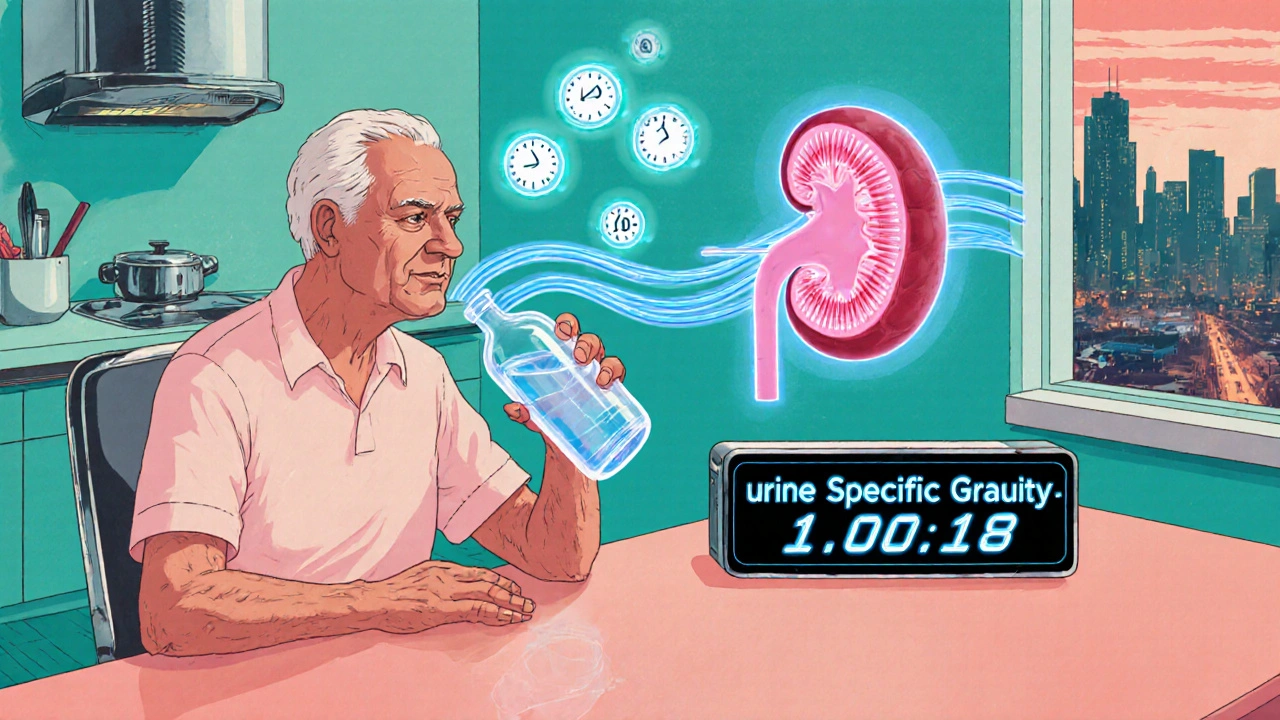
When older adults don’t get enough fluids, elderly dehydration, a dangerous drop in body water that happens more easily in seniors due to reduced thirst signals and kidney changes. It’s not just about feeling thirsty—it’s a medical risk that can lead to confusion, falls, kidney damage, and even hospitalization. Unlike younger people, seniors often don’t feel thirsty until they’re already dehydrated. Their bodies hold less water to begin with, and their kidneys don’t conserve fluid as well. This makes fluid loss, the reduction of water in the body from sweating, urination, or illness happen faster and with fewer warning signs.
Many medications commonly taken by older adults make dehydration worse. Diuretics for high blood pressure, laxatives for constipation, and even some antidepressants increase urine output or reduce fluid retention. At the same time, conditions like diabetes, dementia, or mobility issues can make it harder to drink enough. Someone with Alzheimer’s might forget to drink. Someone with arthritis might avoid getting up to refill their glass. And if they’re taking multiple pills, they might skip water to avoid frequent bathroom trips. This is why electrolyte imbalance, a disruption in the levels of sodium, potassium, and other minerals critical for nerve and muscle function is so common—and so dangerous—in this group.
Look for more than just dry mouth. Dark yellow urine, dizziness when standing, low blood pressure, rapid heartbeat, confusion, or sunken eyes are all red flags. A simple skin pinch test—pinch the skin on the back of the hand and see if it snaps back quickly—can help, but it’s not always reliable in older skin. The real key is prevention: encourage small sips of water throughout the day, even if they don’t ask. Offer water with every meal and medication. Keep a water bottle nearby. Flavor water with lemon or cucumber if plain water isn’t appealing. Avoid too much caffeine or alcohol—they pull water out of the body. And don’t wait for heat waves to worry. Dehydration can happen in winter too, especially in heated homes where the air is dry.
The posts below give you real, practical ways to spot, manage, and prevent this issue. You’ll find advice on how certain drugs increase risk, how to recognize early signs before it becomes an emergency, and what daily habits make the biggest difference. Whether you’re caring for a parent, a partner, or yourself, these insights help turn guesswork into action.
 28 November 2025
Elderly people on diuretics face a high risk of dehydration and kidney injury. Learn how to recognize early signs, adjust fluid intake, and prevent hospitalization with simple, proven strategies backed by current medical research.





©2026 rxmedicin.su. All rights reserved
11