
When you're struggling with depression, anxiety, or chronic pain, finding the right medication can feel like searching for a key in a dark room. SNRIs-serotonin and norepinephrine reuptake inhibitors-are one of the most common keys doctors reach for. Unlike older antidepressants that only target one neurotransmitter, SNRIs work on two: serotonin and norepinephrine. That dual action makes them especially useful for people who have both mood symptoms and physical pain. But they’re not without risks. Side effects can be real, and stopping them suddenly can be dangerous. If you’re considering venlafaxine, duloxetine, or another SNRI, here’s what you need to know-no fluff, no hype, just what actually happens.
How SNRIs Actually Work
SNRIs don’t create new chemicals in your brain. They stop your brain from reabsorbing serotonin and norepinephrine too quickly. Think of it like leaving the faucet on instead of turning it off right away. More of these mood-and-energy-regulating chemicals stay around in the spaces between your brain cells, helping signals get through more clearly. This isn’t just theory. Studies show that people who take SNRIs often report feeling more alert, less emotionally numb, and better able to handle daily stress.
Venlafaxine and duloxetine are the most well-known. Venlafaxine (sold as Effexor XR) was the first SNRI approved in 1993. It’s especially strong at blocking serotonin reuptake, but at higher doses, it also significantly affects norepinephrine. Duloxetine (Cymbalta) is more balanced between the two, but it’s also the only SNRI approved for multiple types of chronic pain-diabetic nerve pain, fibromyalgia, and lower back pain. That’s why so many people with long-term pain and depression end up on duloxetine. Levomilnacipran and desvenlafaxine are newer, but they work similarly. Milnacipran is mostly used for fibromyalgia and leans more toward norepinephrine, which may help with energy and focus.
Unlike older antidepressants like tricyclics, SNRIs don’t mess with your heart rhythm, dry out your mouth, or cause urinary problems as often. That’s why they’ve become a go-to for many doctors. But they’re not magic. They don’t fix everything, and they don’t work for everyone. Research suggests that the idea of depression being just a chemical imbalance is too simple. Inflammation, stress hormones, and even gut health play roles too. Still, for many, SNRIs make a real difference.
Common Side Effects: What to Expect
Most people starting an SNRI will feel some side effects in the first few weeks. They’re usually mild and fade over time, but that doesn’t mean you should ignore them.
Nausea is the most common. About 25% to 30% of people taking duloxetine feel sick to their stomach, especially in the first week. Venlafaxine causes it less often, but it still happens. Eating a small meal before taking the pill helps. Most people find it gets better after two to four weeks.
Sexual side effects are widespread. Around 40% of users report reduced libido, trouble getting aroused, or delayed orgasm. It’s one of the most common reasons people stop taking these meds. For some, switching to another SNRI helps. Others find that adding a low dose of bupropion (which doesn’t affect sexual function) can counteract it.
Dry mouth, increased sweating, and constipation are also frequent. About 30% of venlafaxine users report dry mouth. Duloxetine users often sweat more-around 20% say it’s noticeable. Constipation affects about 15% of users across the class. Drinking more water, chewing sugar-free gum, and moving your body regularly can help.
Some people feel dizzy or lightheaded, especially when standing up quickly. This happens because SNRIs can slightly lower blood pressure at first, then raise it later. That’s why blood pressure monitoring matters.
Serious Risks You Can’t Ignore
Most side effects fade. But some need attention right away.
High blood pressure is a real concern with venlafaxine, especially at doses over 150mg per day. About 12% to 15% of people on higher doses develop hypertension. If you’re on venlafaxine and your doctor hasn’t checked your blood pressure in the last three months, ask for it. It’s simple, fast, and can prevent long-term damage.
Serotonin syndrome is rare but dangerous. It happens when too much serotonin builds up-usually because you’re mixing SNRIs with other drugs like MAOIs, certain painkillers (tramadol, meperidine), or even St. John’s wort. Symptoms include confusion, fast heart rate, high fever, muscle stiffness, and shaking. If you feel this way, go to the ER. It’s not a wait-and-see situation.
SNRIs also make your blood less likely to clot. That’s because they reduce serotonin in platelets. If you’re on blood thinners, have a bleeding disorder, or are about to have surgery, tell your doctor. You might need to stop the SNRI a week before the procedure.
Tramadol is sometimes called an SNRI, but it’s primarily an opioid. It carries its own risks: respiratory depression, seizures, and physical dependence. Don’t assume it’s safe just because it’s sold for pain. It’s not a replacement for SNRI antidepressants.

Discontinuation Syndrome: The Hidden Danger
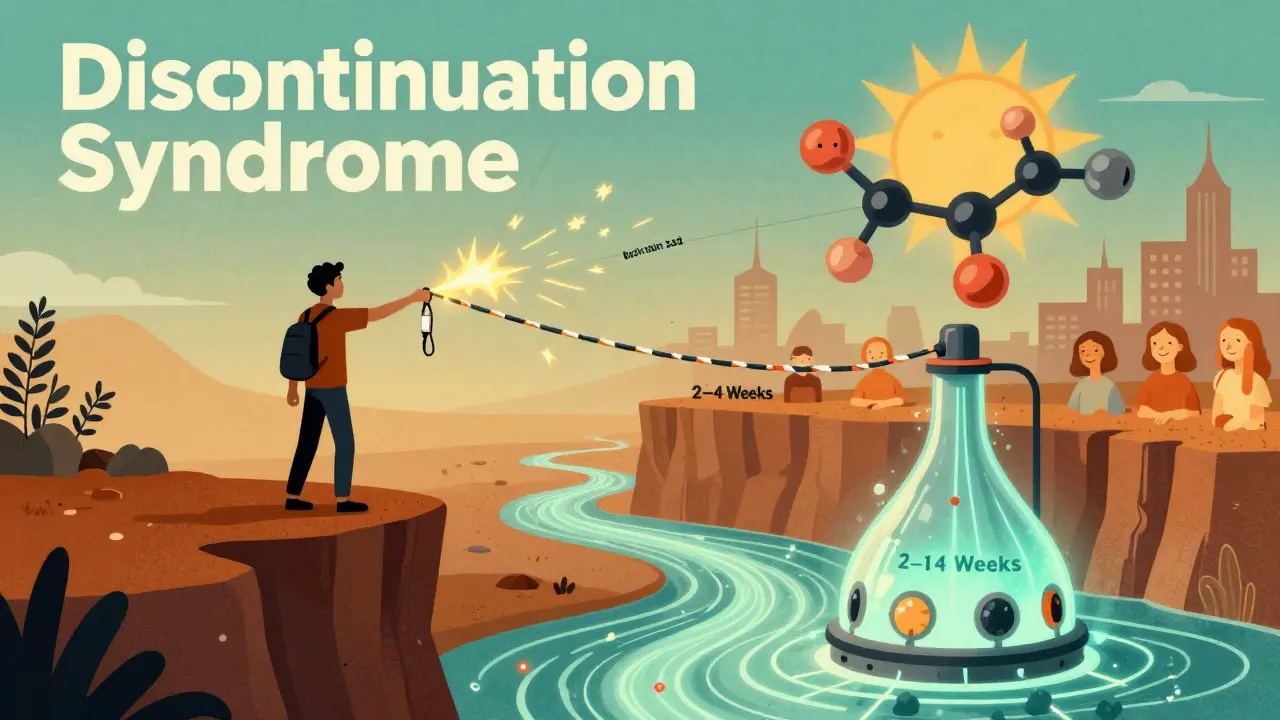
One of the biggest surprises for people on SNRIs is how hard it is to stop. About 40% to 50% of people who quit cold turkey get withdrawal symptoms. These aren’t “just in your head.” They’re physical.
Common symptoms include brain zaps (sudden electric-shock feelings in the head), dizziness, nausea, insomnia, irritability, and flu-like aches. Venlafaxine users often report the worst symptoms-some call it the “venlafaxine cliff.” If you miss a dose or take it late, you might feel awful within hours. That’s because venlafaxine leaves your system quickly. Duloxetine is a bit gentler, but still risky if stopped abruptly.
The fix? Taper slowly. Most doctors recommend reducing the dose over two to four weeks. Some people need even longer. Never stop on your own. If you’re thinking about quitting, talk to your prescriber. A 2022 JAMA survey found that 78% of clinicians follow a tapering protocol-so you’re not alone in needing help.
How SNRIs Compare to Other Antidepressants
SSRIs like sertraline or escitalopram only affect serotonin. That’s why they’re often tried first. But if you’ve tried an SSRI and still feel sluggish, unmotivated, or stuck in physical pain, an SNRI might be the next step.
SNRIs are more likely to help with fatigue, low energy, and chronic pain. That’s why they’re often chosen for people with fibromyalgia or diabetic neuropathy. SSRIs rarely help with those symptoms.
Compared to tricyclic antidepressants (TCAs), SNRIs are much safer. TCAs can cause heart rhythm problems, extreme dry mouth, and weight gain. SNRIs don’t usually do that. But they’re not perfect. They can still cause weight changes. Some people lose a few pounds early on with duloxetine, then gain them back after months. Others gain weight slowly over time.
And while SNRIs are more expensive than older generics, prices have dropped. Generic venlafaxine costs $4 to $8 a month in the U.S. Duloxetine generics are a bit pricier but still under $30. That’s a far cry from the $300 to $400 you’d pay for the brand name.
What the Data Says About Real-World Use
Over 22 million prescriptions for venlafaxine were filled in the U.S. in 2022. It’s one of the top 30 most prescribed drugs in the country. Duloxetine, despite losing patent protection in 2013, still generated $1.2 billion in sales that year. Why? Because it works for people who didn’t respond to other meds.
Reddit and Drugs.com reviews show a pattern: 72% of users say their mood stabilized. 68% felt more energy. But 65% reported sexual side effects. And 54% of venlafaxine users said they experienced severe withdrawal if they missed a dose.
For people with chronic pain, the results are clearer. A 2021 study found that duloxetine reduced pain scores by over 30% in fibromyalgia patients after 12 weeks. That’s better than most NSAIDs. And it’s why doctors keep prescribing it-even when newer drugs come out.
Starting or Switching: What to Do
If you’re starting an SNRI, expect a slow climb. Venlafaxine usually begins at 37.5mg per day, then increases every week or two. Duloxetine starts at 30mg, then goes to 60mg. Higher doses for pain (up to 120mg) are common but need close monitoring.
Take it at the same time every day. Morning is best for most people-these meds can be stimulating. If you feel wired at night, switch to morning.
Don’t mix them with other serotonergic drugs. That includes certain migraine meds, cough syrups with dextromethorphan, and herbal supplements like 5-HTP or St. John’s wort. Ask your pharmacist to check for interactions. They’re trained to catch this stuff.
Give it four to six weeks before deciding if it’s working. Antidepressants don’t kick in overnight. Some people feel better in two weeks. Others need longer. Track your mood, sleep, and energy in a simple notebook. That helps your doctor adjust things faster.
What Comes Next
New SNRIs are in development. One called LY03015 is in late-stage trials and promises a more balanced effect on serotonin and norepinephrine, which could mean fewer side effects. Research is also looking at SNRIs for PTSD, ADHD, and menopausal hot flashes.
But right now, venlafaxine and duloxetine are the workhorses. They’re not perfect. They’re not risk-free. But for millions of people, they’re the reason they can get out of bed, go to work, or hold their child without feeling numb.
If you’re considering one, ask your doctor: What’s my goal? Is it mood? Energy? Pain? Then ask: What’s the plan if it doesn’t work? And what’s the plan if I want to stop?
There’s no one-size-fits-all. But with the right information, you can make a decision that fits you.
Can SNRIs cause weight gain?
Yes, but it’s not guaranteed. Some people lose a few pounds early on, especially with duloxetine-about 5 to 7 pounds in the first three months. But over time, many gain weight back, or even gain more. This varies by person and dose. Weight changes are more common with long-term use than with short-term. If weight gain becomes a concern, talk to your doctor about adjusting the dose or switching meds.
Is venlafaxine stronger than duloxetine?
Not necessarily. They work differently. Venlafaxine is more potent at blocking serotonin, especially at higher doses, and it’s often better for anxiety disorders like panic disorder and social anxiety. Duloxetine is more balanced and has FDA approval for multiple types of chronic pain. Which one is “stronger” depends on your symptoms. One might work better for your mood; the other for your back pain.
How long do SNRI side effects last?
Most common side effects-nausea, dizziness, dry mouth-improve within two to four weeks. Sexual side effects and fatigue can linger longer, sometimes for months. If they don’t get better after eight weeks, talk to your doctor. You might need a dose change or a switch. Never assume side effects will go away on their own if they’re affecting your quality of life.
Can I drink alcohol while taking an SNRI?
It’s not recommended. Alcohol can worsen dizziness, drowsiness, and liver stress. It also increases the risk of serotonin syndrome when mixed with SNRIs. Even one drink can make side effects worse. If you choose to drink, limit it to very small amounts and only after you’ve been on the medication for several weeks and know how it affects you.
Do SNRIs work faster than SSRIs?
Some studies suggest SNRIs may help with energy and motivation slightly faster than SSRIs-within two weeks instead of four. But for full mood improvement, both take four to six weeks. The difference isn’t huge, but if you’re feeling extremely fatigued or stuck in pain, SNRIs might give you a noticeable boost earlier.
If you’re on an SNRI and feeling better, great. But if you’re struggling with side effects or wondering if it’s worth continuing, don’t guess. Talk to your doctor. There are options. You don’t have to suffer in silence.






kenneth pillet
January 19, 2026 AT 09:21Been on venlafaxine for 3 years. Nausea faded after 2 weeks. Sexual side effects? Still there. Switched to bupropion add-on and life changed. No more brain zaps when I forget a dose. Just sayin.
Wendy Claughton
January 20, 2026 AT 01:41Wow. This post is so thorough. I’m crying a little. Not because I’m sad-because someone finally got it. The brain zaps? The dry mouth? The way you feel like a ghost in your own body for the first 3 weeks? It’s real. And it’s not weakness. It’s chemistry. Thank you. 🙏
Stacey Marsengill
January 21, 2026 AT 11:14Everyone’s acting like SNRIs are some miracle cure. Newsflash: they’re just fancy chemical handcuffs. You’re not healing-you’re just numbing. And when you try to get off? Welcome to hell. Your brain forgets how to make its own serotonin. It’s not medicine. It’s a trap. And doctors? They’re just selling the keys.
Jay Clarke
January 22, 2026 AT 13:17Bro. I went off venlafaxine cold turkey because I was tired of feeling like a zombie. 48 hours later I was sweating, shaking, and convinced my teeth were melting. ER trip. Now I’m back on it. And I’m not ashamed. Some things are worth the side effects. You don’t get to choose your brain’s wiring. But you can choose to not let it ruin your life.
Eric Gebeke
January 23, 2026 AT 17:47Of course you’re having side effects. You’re probably also eating junk food, sleeping 4 hours, and scrolling TikTok at 2am. Medication isn’t a magic wand-it’s a tool. And if you’re not doing the basics? Don’t blame the drug. Blame your life choices. You want energy? Move. You want sleep? Turn off the screen. You want mood? Stop treating your brain like a broken phone you keep plugging into a faulty charger.
Jake Moore
January 24, 2026 AT 18:39For anyone considering switching from an SSRI to an SNRI: give it 6 weeks. Seriously. I was on sertraline for 8 months with zero energy. Switched to duloxetine. Week 3: I walked outside without crying. Week 5: I cleaned my apartment. Week 6: I called my mom. It’s not instant. But it’s real if you stick with it.
Joni O
January 26, 2026 AT 13:32i started duloxetine last month and the first week was rough. nausea + dizziness. but i kept a journal and tracked my sleep. by week 3 i noticed i could focus at work. not perfect, but better. also, drinking water and chewing gum helped with dry mouth. you got this. ❤️
Ryan Otto
January 26, 2026 AT 19:40Let’s be honest. SNRIs are a corporate pharmaceutical strategy disguised as mental healthcare. The FDA approval process is compromised. The long-term data is sparse. And the withdrawal syndrome? Deliberately downplayed. This isn’t medicine-it’s a controlled dependency model designed to keep patients in the system. The real cure? Detoxification, sunlight, and community. But that doesn’t sell pills.
Max Sinclair
January 27, 2026 AT 15:18Thanks for writing this. So many people don’t know about the tapering. I tried to quit duloxetine in 3 days. Ended up in the ER with brain zaps and vertigo. My doctor now says 6 weeks minimum for tapering. And yes, the pain relief for my sciatica was worth it. Just don’t rush it.
Praseetha Pn
January 29, 2026 AT 04:17You think this is bad? Try being Indian and on SNRIs. No one talks about it. Family thinks it’s 'weakness'. Doctors prescribe it like candy. And when you say you feel weird? They say 'it's normal'. But I read the studies. I know about serotonin syndrome. I know about platelet issues. I’m not just some patient. I’m a researcher. And I’m not taking another pill until I understand every interaction. And no, I won’t take your advice. I’ve already read 47 papers.