
When you're prescribed edoxaban, a direct oral anticoagulant used to prevent blood clots in people with atrial fibrillation or after hip or knee surgery. Also known as Savaysa, it's one of the few blood thinners where your body mass index actually changes how much you take. Unlike warfarin, which needs constant monitoring, edoxaban has fixed doses—but not always the same one for everyone.
Your BMI isn't just a number on a chart. For edoxaban, it's a decision point. If your BMI is under 18.5 kg/m² or over 120 kg/m², your doctor may adjust your dose. Why? Because very low body weight can make the drug build up too much in your system, raising bleeding risk. Very high weight can make it less effective, increasing the chance of clots. But BMI isn't the whole story. Your renal function matters just as much. If your kidneys aren't clearing the drug well—measured by creatinine clearance under 30 mL/min—you'll likely get the lower dose, even if you're not underweight. This is why two people with the same BMI might get different doses: one has healthy kidneys, the other doesn't.
Most people take 60 mg once daily. But if you're under 60 kg and have reduced kidney function, you'll get 30 mg. That’s it. No titration. No weekly checks. Just two clear paths. This simplicity is why edoxaban became popular—but it also means you can't guess your dose. If you’ve lost or gained a lot of weight since starting, tell your doctor. If you’re on other meds that affect kidney function, like NSAIDs or diuretics, that changes the picture too. You might think your weight is the only factor, but it’s really the combo of weight, kidney health, and other drugs that decides your dose. The posts below cover real-world cases: how people track side effects, why generic substitutions matter for anticoagulants, and how drug interactions can turn a safe dose into a dangerous one. You’ll find advice on medication journals, bleeding risks with SSRIs, and how to spot when your blood thinner isn’t working right. This isn’t theory. It’s what happens in clinics, pharmacies, and living rooms every day.
 4 December 2025
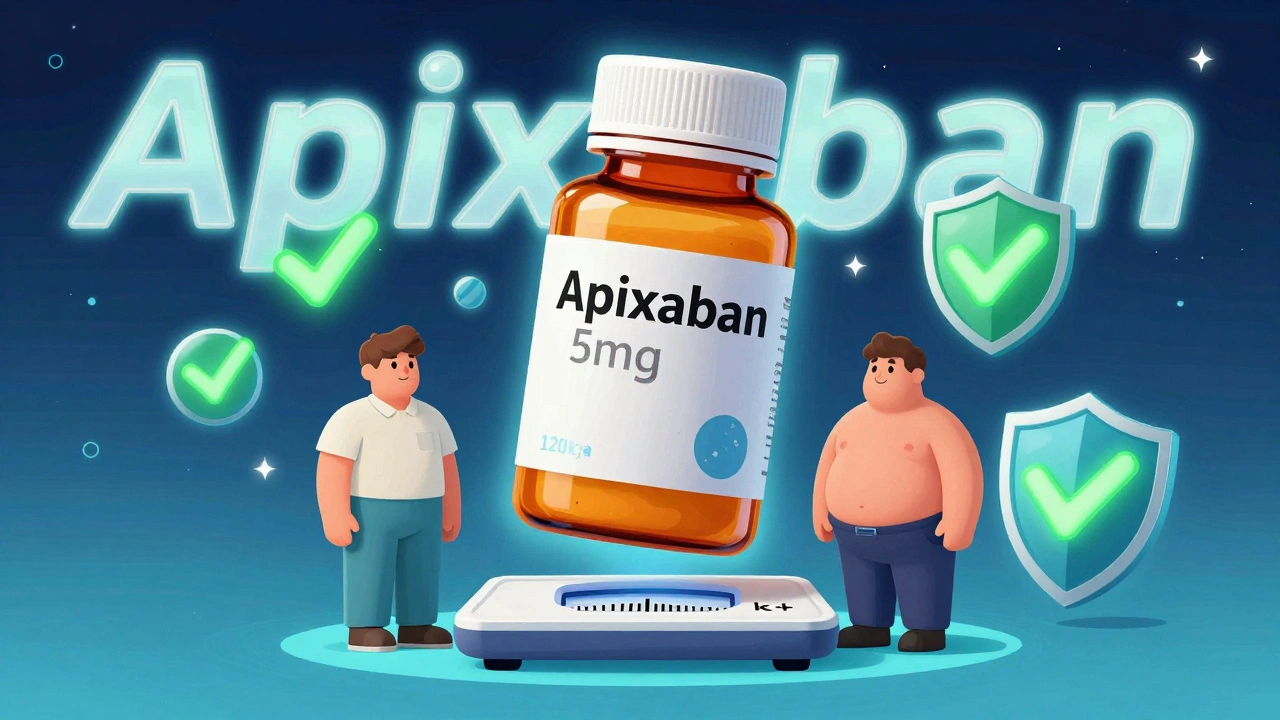
Learn how DOACs like apixaban, rivaroxaban, dabigatran, and edoxaban work in obese patients. Find out which ones are safe, which to avoid, and why standard doses still work-even for extreme obesity.





©2026 rxmedicin.su. All rights reserved
13