
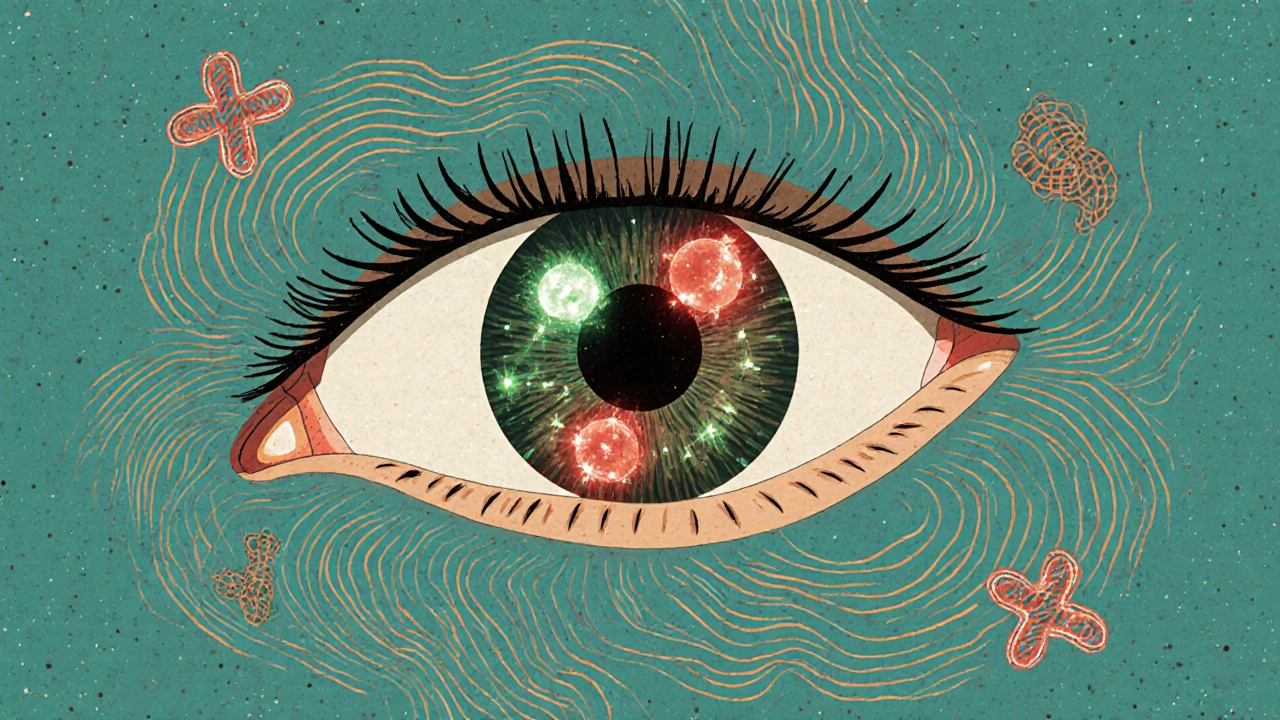
When someone has color vision deficiency, a condition where the eyes can't distinguish certain colors the way most people do. Also known as color blindness, it doesn't mean seeing only in black and white — it usually means mixing up reds and greens, or sometimes blues and yellows. This isn't a rare glitch; about 1 in 12 men and 1 in 200 women have some form of it. You might not even know you have it until you're older, or until you fail a color test at the DMV or notice you're the only one who can't tell if the traffic light is red or green.
Most cases are inherited, passed down through genes — especially the red-green type, which is the most common. It's not something you develop from staring at screens too long or eating too much sugar. It's your eye's photoreceptors, called cones, not working the way they should. Some people have one type of cone missing or altered. Others have cones that respond too similarly, making colors blend together. red-green color blindness, a subtype where distinguishing reds, greens, browns, and oranges becomes hard affects the majority. Less common is blue-yellow color deficiency, a rarer form where blues look greener and yellows appear pinkish or gray. And yes, there are people who see almost no color at all — but that’s extremely rare.
This isn’t just about picking socks or identifying ripe fruit. It affects safety, careers, and even how you experience art or nature. Pilots, electricians, graphic designers, and firefighters often face restrictions because color cues are critical. But here’s the thing: most people with color vision deficiency adapt. They learn patterns — like traffic lights always being red on top, green on bottom. They use apps that label colors. They ask friends. They rely on brightness and shape more than hue. And modern tech is helping more than ever: some phones now have color filters built in, and even some video games offer colorblind modes.
There’s no cure, but understanding your type makes life easier. If you’ve ever been confused why your friend sees a purple shirt as gray, or why you keep mixing up crayons, you’re not alone. The posts below cover real stories, practical tips for managing daily tasks, how color vision deficiency interacts with medications (yes, some drugs can affect color perception), and what to ask your doctor if you suspect something’s off. You’ll find advice from people who live with it every day — not theory, not textbook definitions, but what actually works.
 13 November 2025
Red-green color blindness is a genetic condition affecting 8% of men and 0.5% of women. Learn how it's inherited, how it affects daily life, and what tools can help.



©2026 rxmedicin.su. All rights reserved
14