
When you hear that a new drug is statistical power, it’s not just jargon—it’s the hidden key to whether that study actually proves anything. Think of it like a flashlight in a dark room: if the beam is too weak, you might miss something important, even if it’s right in front of you. In medicine, low statistical power means a study might fail to detect a real effect of a drug—not because the drug doesn’t work, but because the study wasn’t built well enough to see it. This isn’t rare. Many trials, especially those testing generics or new uses for old drugs, run with too few people or too short a time, making their results unreliable. You deserve to know if a study’s conclusion is solid—or just luck.
Statistical power relates directly to three things: sample size, the number of people in a study that determines how confidently results can be trusted, drug efficacy, how strongly a medication actually affects the condition it’s meant to treat, and research bias, hidden flaws in study design that skew results, like only including healthier patients. A study with high power can detect even small but meaningful differences—like one generic brand causing slightly more dizziness than another. Low power? It might miss that entirely. That’s why you see conflicting reports: one study says generic thyroid meds are identical, another says they cause flare-ups. The difference isn’t your body—it’s the study’s ability to catch the truth.
Real-world examples matter. Take the 2023 FDA review of DOAC dosing in obese patients. Some early studies claimed standard doses were unsafe, but they had tiny groups—under 50 people. Later, larger trials with enough statistical power showed those same doses worked fine. That’s why you can trust apixaban or edoxaban at normal doses even if you’re heavier. Or look at the SSRI-anticoagulant bleeding risk: the 33% increase wasn’t guessed—it was proven in a study with over 12,000 patients. That’s power. Without it, you’d be left wondering if the risk was real or just noise. When a study says "no difference," ask: Was the sample big enough to notice one if it existed? If not, don’t take it as proof.
What you’ll find below isn’t just a list of articles—it’s a collection of real cases where statistical power shaped outcomes. From generic substitution debates to shingles vaccine effectiveness, each post digs into studies that got it right—or wrong—because of how they were designed. You’ll learn how to spot weak evidence, why some drug warnings vanish after larger trials, and how to tell when a study’s conclusion is trustworthy. This isn’t about statistics class. It’s about making sure your next medication decision isn’t based on a flashlight with a dead battery.
 1 December 2025
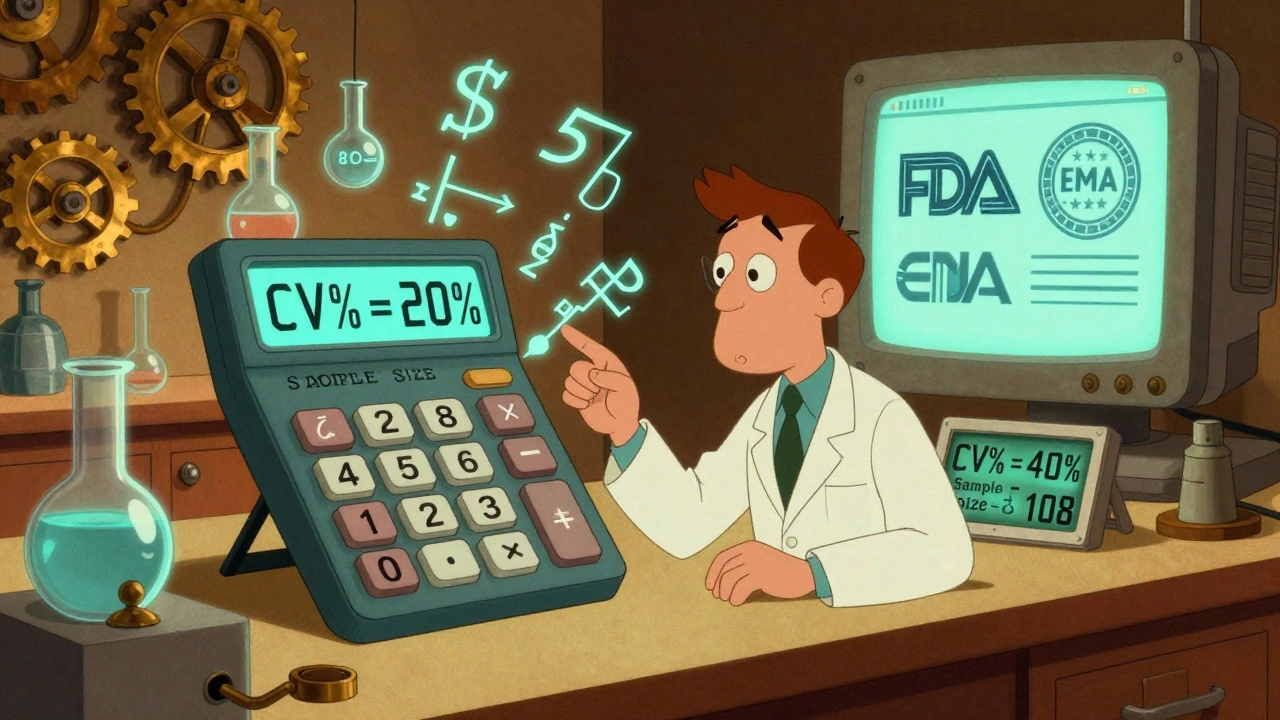
Learn how to correctly calculate power and sample size for bioequivalence studies to avoid costly failures. Understand CV%, GMR, regulatory requirements, and tools used by industry professionals.




©2026 rxmedicin.su. All rights reserved
9