
When someone experiences psychosis risk, a condition where a person loses touch with reality, often through hallucinations or delusions. It’s not a diagnosis—it’s a warning sign that something in the brain is off balance. This can happen suddenly or creep in slowly. People with a family history of schizophrenia, those who’ve used strong drugs like meth or LSD, or individuals under extreme stress are more likely to enter this state. What most don’t realize is that early psychosis, the first signs before full-blown psychosis develops can often be managed—if caught in time.
Many cases of psychosis are linked to antipsychotic medications, drugs designed to calm overactive brain signals. But here’s the twist: sometimes, these same meds can trigger psychosis if misused or combined with other drugs. SSRIs and anticoagulants, for example, can interact in ways that affect brain chemistry. Even switching generic versions of seizure or thyroid meds—something many do to save money—can cause subtle shifts that push someone closer to the edge. And it’s not just about pills. Sleep loss, trauma, and chronic stress all pile up. One study showed that people with PTSD who had frequent nightmares were nearly three times more likely to develop psychotic symptoms over time.
It’s not about fear. It’s about awareness. If you or someone you know is hearing voices that aren’t there, believing things that clearly aren’t true, or suddenly acting withdrawn and confused, it’s not "just stress." It’s a signal. And the good news? There’s a lot of research behind how to respond. From how drug-induced psychosis, psychosis triggered by substance use or medication side effects differs from genetic forms, to why some people respond better to certain antipsychotics than others, the answers are out there. Below, you’ll find real-world stories and data-backed guides on tracking medication changes, understanding drug interactions, and spotting early red flags—so you’re not guessing when it matters most.
 1 December 2025
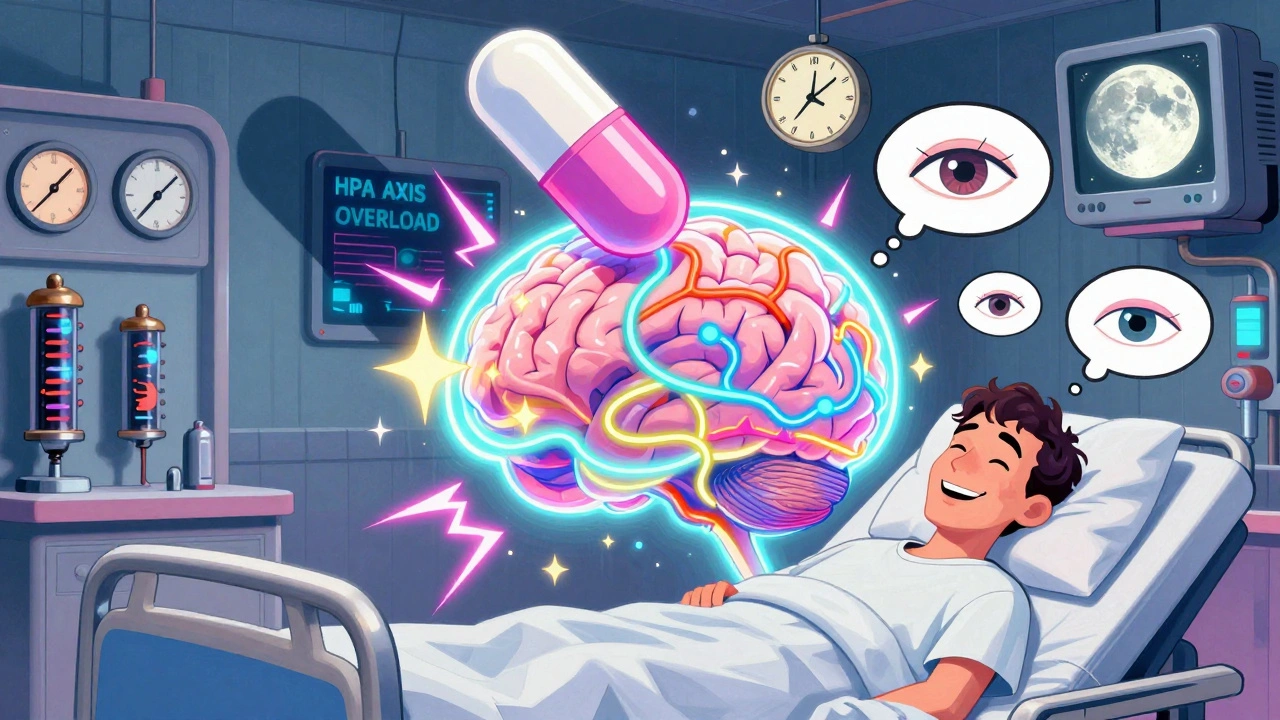
Corticosteroids can trigger mood swings, mania, and even psychosis - especially at high doses or in older adults. Learn the signs, risks, and what to do if you or a loved one experiences psychiatric side effects.




©2026 rxmedicin.su. All rights reserved
12