
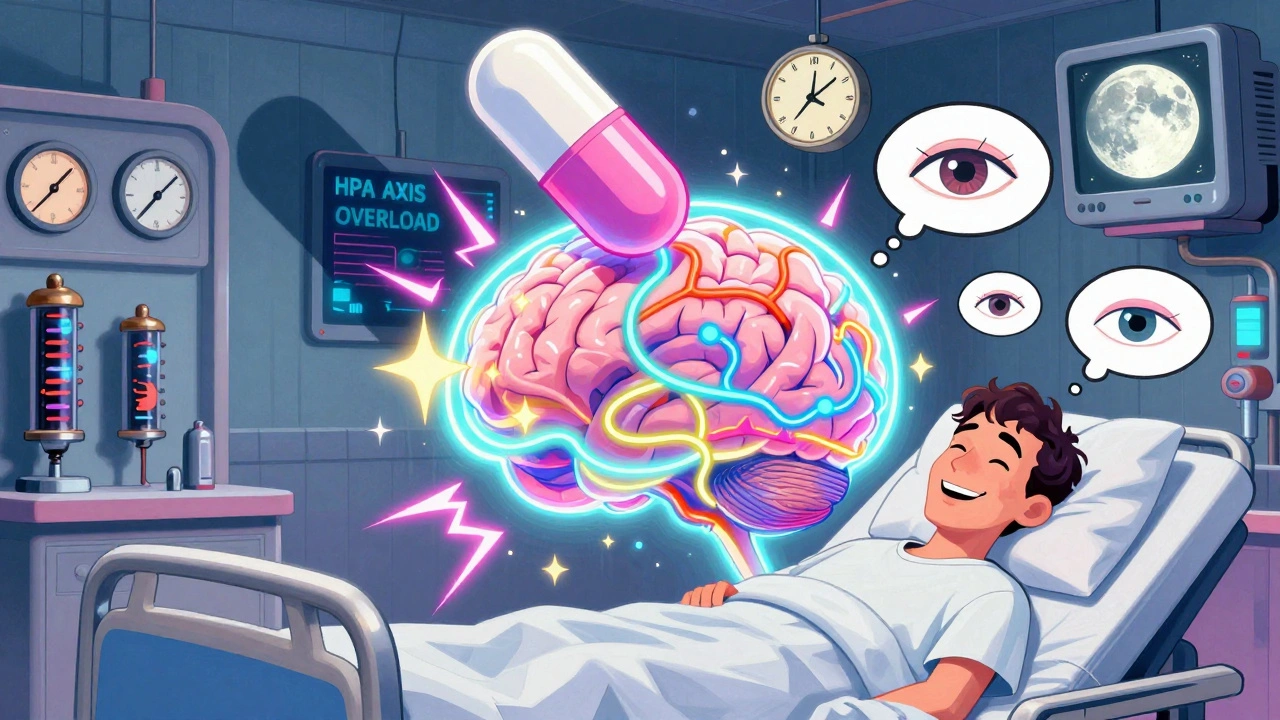
When you take steroids, synthetic versions of hormones like cortisol that reduce inflammation and suppress the immune system. Also known as corticosteroids, they’re prescribed for conditions like asthma, rheumatoid arthritis, and multiple sclerosis. But for some people, these drugs don’t just calm the body—they mess with the mind. The psychiatric effects of steroids aren’t rare. They’re real, documented, and often underreported.
People on long-term steroid therapy—especially at high doses—can develop mood changes, including irritability, anxiety, or sudden bouts of sadness that don’t match their situation. Some report feeling unusually energetic or even euphoric at first, then crash into deep depression. In more serious cases, steroid-induced psychosis, a condition where users lose touch with reality, experience hallucinations, or develop paranoid thoughts can happen. It’s not just about feeling "off." It’s about your brain reacting to a chemical imbalance triggered by the drug. And it doesn’t always happen while you’re still taking them. steroid withdrawal depression, a drop in mood after stopping steroids, even after short courses is common too. Many patients feel worse after stopping than they did before starting.
These effects aren’t the same for everyone. Age, pre-existing mental health conditions, dosage, and how long you’ve been on steroids all play a role. Older adults and people with a history of depression or bipolar disorder are at higher risk. But even healthy young adults can be affected. What’s often missed is that these symptoms don’t always show up right away. They can creep in weeks into treatment—or pop up after you’ve cut the dose. That’s why tracking your mood while on steroids matters as much as tracking your blood pressure or blood sugar.
The good news? These effects are usually reversible. Stopping or lowering the dose often helps. But doing that on your own is risky. You need medical guidance. If you notice sudden anger, panic attacks, insomnia, or thoughts of self-harm, tell your doctor immediately. Don’t brush it off as "just stress." It could be the steroids.
In the posts below, you’ll find real-world insights from people who’ve dealt with these side effects, studies on how steroids affect brain chemistry, and practical advice on spotting warning signs before things get serious. You’ll also learn what alternatives exist, how to talk to your doctor about reducing risk, and why some people react differently than others. This isn’t just about knowing the risks—it’s about knowing what to do when they show up.
 1 December 2025
Corticosteroids can trigger mood swings, mania, and even psychosis - especially at high doses or in older adults. Learn the signs, risks, and what to do if you or a loved one experiences psychiatric side effects.
©2026 rxmedicin.su. All rights reserved



12