
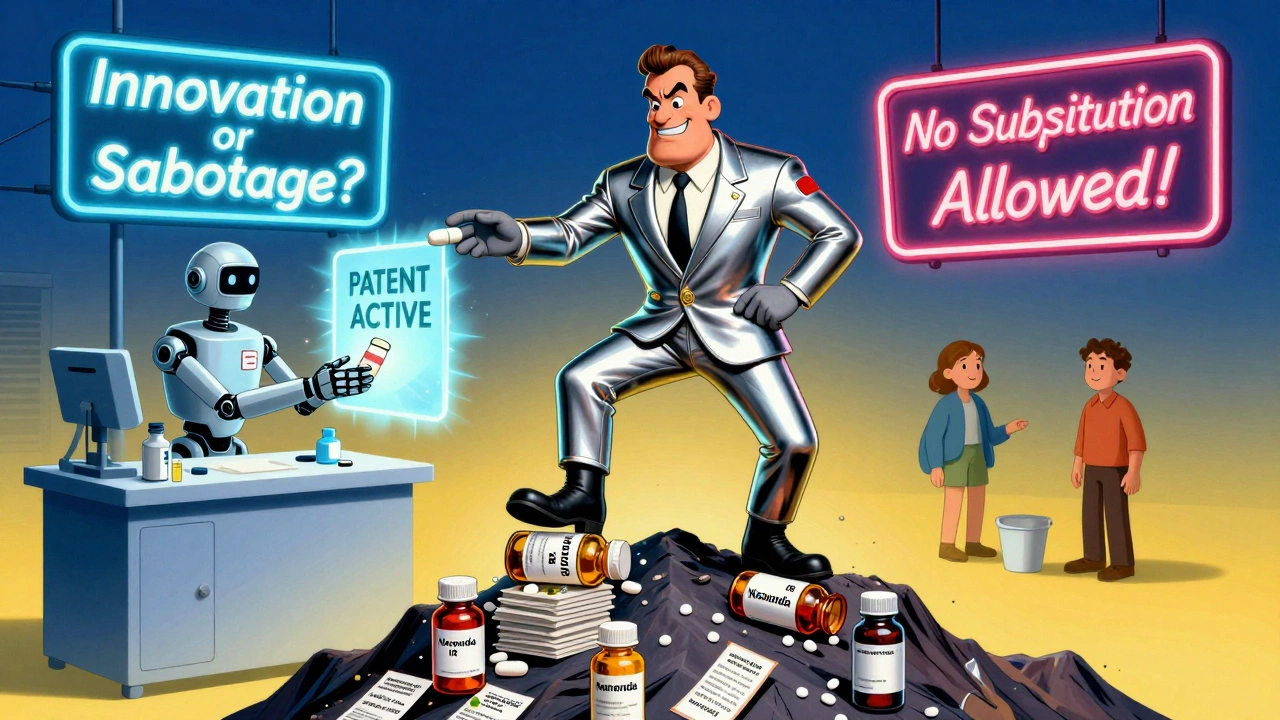
When a brand-name drug’s patent is about to expire, some companies don’t just wait for generics to arrive—they launch a product hopping, a strategy where pharmaceutical companies make minor changes to an existing drug to extend market exclusivity and block cheaper alternatives. Also known as patent evergreening, it’s a legal but controversial move that keeps prices high even after the original patent ends. This isn’t about better medicine—it’s about keeping profits flowing.
Here’s how it works: a company takes a drug that’s about to lose patent protection, makes a small tweak—like changing the pill shape, adding a slow-release coating, or combining it with another inactive ingredient—and then markets it as a "new" or "improved" version. Patients are then switched over, often with little warning. Insurance companies, pressured by pharmacy benefit managers, may stop covering the old generic and only pay for the new branded version. That means you might suddenly be forced to pay $300 for a pill you could’ve gotten for $10 just weeks before.
This trick hits hardest with drugs for chronic conditions—like thyroid meds, blood thinners, or seizure treatments—where even tiny changes in formulation can affect how your body responds. That’s why so many posts here talk about keeping a medication journal, a personal record of side effects, effectiveness, and manufacturer changes when switching between generics or new branded versions, or why people need to appeal insurance denials, fighting to keep access to the generic version their body actually tolerates. It’s not just about cost—it’s about stability. When your body gets used to a specific formulation, a switch can trigger headaches, mood swings, or worse.
Regulators are catching on. The FDA now tracks these switches more closely, and some states have passed laws to limit automatic substitutions when product hopping occurs. But the practice still happens, especially with high-revenue drugs. What you need to know is this: if your doctor suddenly changes your prescription without explaining why, or your pharmacy starts refusing to fill your old generic, ask if it’s because of a product hop. You have rights. You can request the original version. You can push back. And you’re not alone—thousands of patients have been caught in this game, and the stories below show exactly how it plays out in real life.
Below, you’ll find real patient experiences, expert breakdowns of how these switches happen, and how to protect yourself when drug companies try to outsmart the system.
 3 December 2025
Big pharma is using legal loopholes to block cheaper generic drugs by pulling older versions off the market. Learn how product hopping, REMS abuse, and court rulings are affecting drug prices and what’s being done to stop it.




©2026 rxmedicin.su. All rights reserved
11