
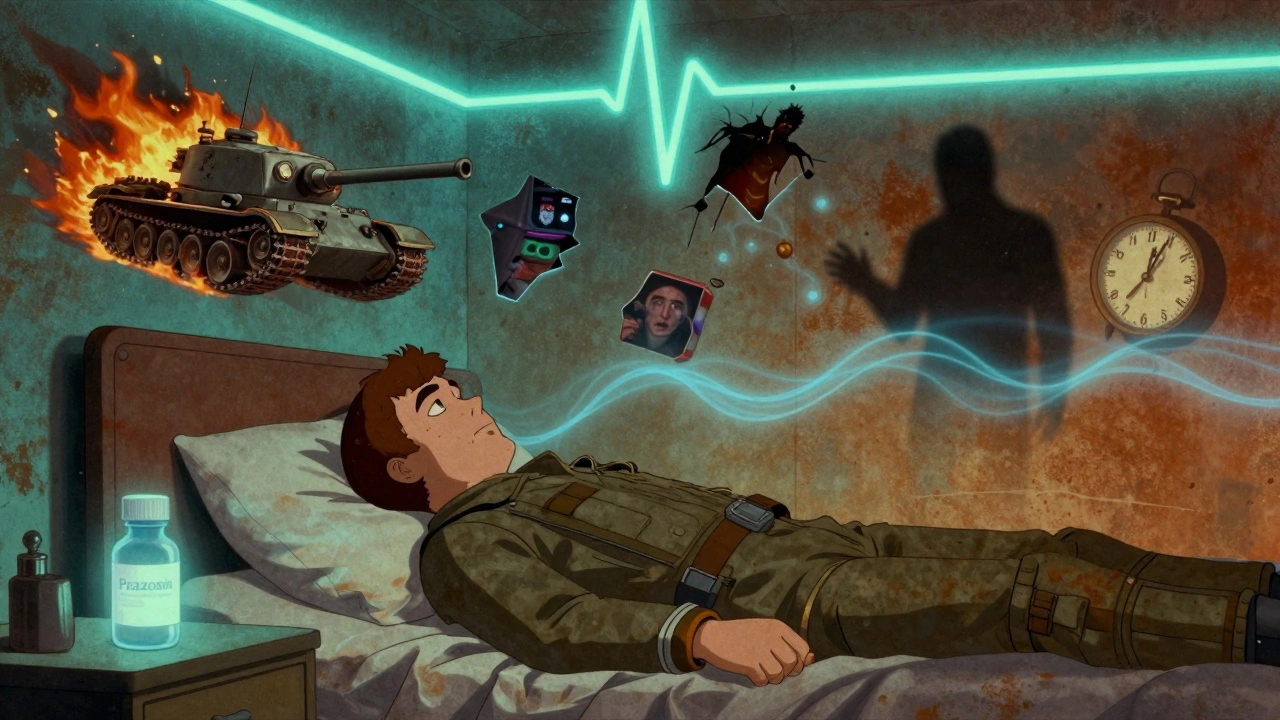
When prazosin for PTSD, a blood pressure medication repurposed to calm trauma-driven nightmares. Also known as an alpha-1 blocker, it works by blocking adrenaline’s effect on the brain’s fear centers—especially during sleep. Unlike antidepressants that take weeks to work, prazosin often reduces nightmares within days. It’s not a cure, but for many veterans, first responders, and trauma survivors, it’s the difference between sleep and terror.
It’s not just about stopping nightmares. PTSD treatment, a broad category including therapy, medication, and lifestyle changes often fails when sleep stays broken. Prazosin targets the root of that problem: hyperarousal at night. Studies show it cuts nightmare frequency by over 50% in people who respond. But not everyone does. Some feel dizzy, tired, or have low blood pressure—especially when standing up fast. That’s why doctors start low and go slow. It’s not for everyone, but for those who need it, it’s life-changing.
What makes prazosin unique is how specific it is. It doesn’t numb emotions like benzodiazepines. It doesn’t alter mood like SSRIs. It quietly shuts down the brain’s midnight alarm system. That’s why it’s often used alongside therapy—not instead of it. trauma-related insomnia, a sleep disorder caused by recurring nightmares and hypervigilance is stubborn. Many try melatonin, sleep hygiene, or CBD. None work as reliably as prazosin for this exact issue. And while newer drugs are being tested, none have matched its track record in real-world use.
There’s a reason this drug keeps showing up in VA clinics and trauma centers. It’s cheap, generic, and doesn’t require daily titration like some other meds. But it’s not magic. You need to take it consistently, usually at bedtime. Missing doses can bring nightmares back fast. And if you’re on other blood pressure meds, your doctor needs to check for interactions. It’s not a first-line treatment for everyone, but if nightmares are ruining your nights, it’s one of the few options with solid proof it works.
Below, you’ll find real patient experiences, dosing tips, and comparisons with other treatments. Some posts cover how prazosin stacks up against other PTSD meds. Others explain why it’s not always covered by insurance—or how to appeal if it’s denied. You’ll also see how it fits into broader PTSD care, from sleep hygiene to therapy. This isn’t theory. These are stories from people who’ve tried it, failed it, or finally found relief.
 1 December 2025
PTSD nightmares are common and debilitating. Learn how prazosin and sleep therapies like CBT-I and IRT work, what the research says, and which options actually lead to lasting recovery.




©2026 rxmedicin.su. All rights reserved
15