
When a new drug is being tested, power analysis, a statistical method used to determine the likelihood of detecting a real effect if one exists. It’s not just math—it’s what keeps you safe when you take a pill that claims to lower blood pressure or stop seizures. Without enough people in a study, even a drug that works might look like it doesn’t. That’s why clinical trials, structured experiments to test drug safety and effectiveness in humans rely on power analysis to avoid false negatives. Imagine a study testing a new generic thyroid med with only 20 people. If 5 out of 20 feel better, is that because the drug works—or just luck? Power analysis tells you how big the group needs to be to know for sure.
It’s not just about the number of participants. statistical significance, the threshold used to decide whether an observed effect is real or due to random chance plays a big role too. If researchers set the bar too low—say, a 10% chance the result is fake—they might approve a drug that doesn’t actually help. But if they set it too high, they might miss a breakthrough because the study was too small. This is why companies like Pfizer or generics makers run power calculations before they even start recruiting patients. And when regulators like the FDA review data, they check these numbers too. A poorly powered trial can delay a life-saving drug or, worse, let an ineffective one reach the market.
Power analysis also explains why some drugs work in trials but not for you. A study might show that a new anticoagulant reduces strokes by 15% in 1,000 people—but what if you’re one of the 30% who don’t respond? That’s not a failure of the drug. It’s a failure of the study design to account for real-world variation. That’s why the best trials use power analysis to include diverse groups: older adults, obese patients, people with kidney issues. Look at the posts here: studies on DOAC dosing in obesity, SSRIs and anticoagulants, and generic substitution all depend on solid power analysis to be trustworthy. If the sample size was too small, the results could be misleading. And that’s dangerous when you’re deciding what to take every day.
What you’ll find below isn’t just a list of articles—it’s a collection of real-world examples where power analysis made the difference between a reliable treatment and a risky guess. From tracking side effects in generics to understanding why a shingles vaccine works for some but not others, every post here was built on data that passed the power test. You’re not just reading about meds—you’re reading about how we know they work.
 1 December 2025
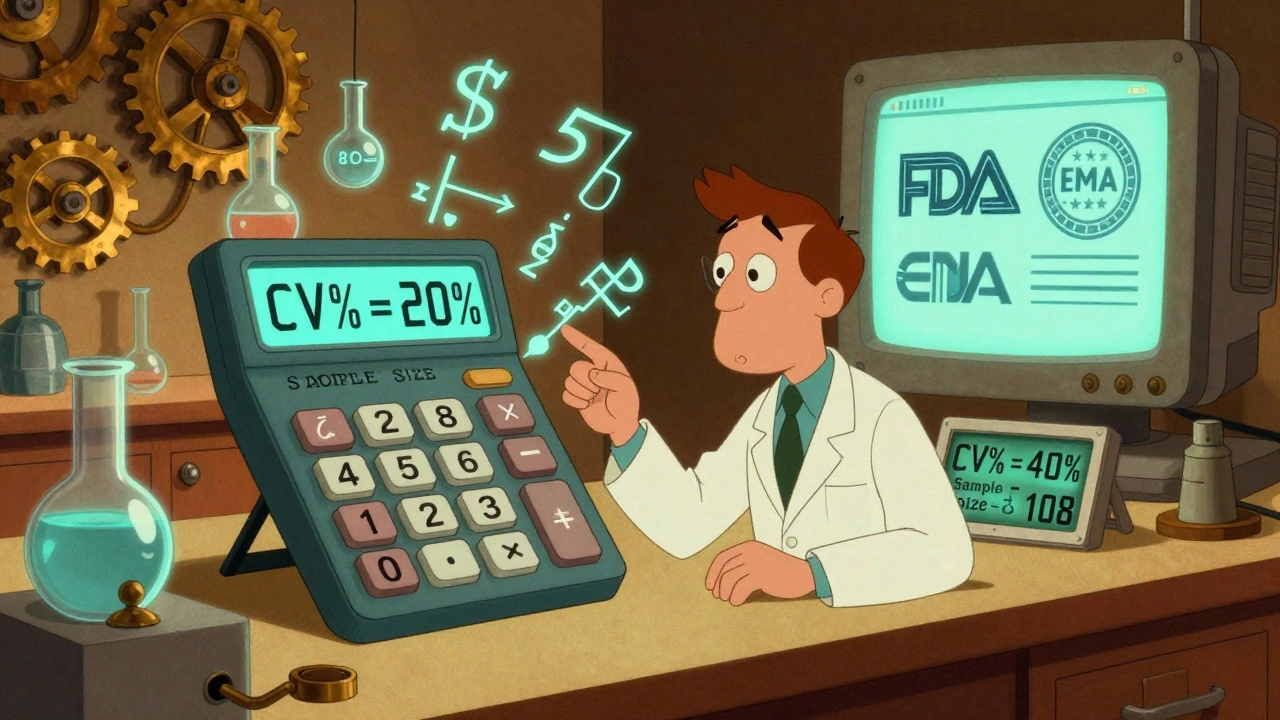
Learn how to correctly calculate power and sample size for bioequivalence studies to avoid costly failures. Understand CV%, GMR, regulatory requirements, and tools used by industry professionals.


©2026 rxmedicin.su. All rights reserved
9