
When you pick up a generic pill at the pharmacy, you expect it to work just like the brand-name version. You don’t want to wonder if it’s weaker, less pure, or made under sloppy conditions. The truth is, the FDA doesn’t just approve generic drugs - it ensures their quality at every step of manufacturing. And that process is far more rigorous than most people realize.
It’s Not About the Final Product - It’s About the Process
For decades, regulators tested drugs only after they were made. That changed after a 1960s review found that 8% of approved medicines were either too strong or too weak. The FDA realized: if you wait until the end to check quality, you’re already too late. So they shifted focus. Today, the entire system is built around how a drug is made, not just what comes out at the end. The foundation? Current Good Manufacturing Practices, or cGMP. These aren’t suggestions. They’re federal law under Title 21 of the Code of Federal Regulations. Every company making a generic drug in the U.S. - whether it’s in Ohio or India - must follow them exactly. The FDA doesn’t trust luck. They trust control.The Five Pillars of Generic Drug Quality
The FDA breaks down quality assurance into five non-negotiable areas. If any one of these fails, the drug doesn’t get approved - or worse, it gets pulled from shelves.- Control of Materials: Every ingredient, from the active drug to the coating, must be tested and tracked. Suppliers are audited. Labels are verified. Records show exactly where each batch came from - down to the truck that delivered it. No guessing. No shortcuts.
- Production and Process Controls: Every step of making the drug has a written procedure. Temperature, mixing time, pressure - all monitored in real time. If a machine runs too hot or a batch is under-mixed, the system flags it. And it’s documented. Not just once - every single time.
- Quality Control and Laboratory Testing: Before a pill leaves the plant, it’s tested for strength, purity, and dissolution. The FDA requires these tests to follow ALCOA+: data must be attributable, legible, contemporaneous, original, accurate, complete, consistent, enduring, and available. That’s not just paperwork - it’s forensic-level accountability.
- Packaging, Labeling, and Distribution: A mislabeled bottle can kill. The FDA checks that the right drug is in the right bottle, with the right strength, dosage instructions, and expiration date. Even the shipping conditions matter. If a drug needs to stay cool, the FDA verifies the cold chain wasn’t broken.
- Documentation and Record Keeping: Everything is recorded. No exceptions. If it wasn’t written down, it didn’t happen. These records can be pulled at any time - during an inspection, after a complaint, or even years later if a problem surfaces.
Inspections Don’t Come With Notice
You won’t get a heads-up when the FDA is coming. Inspectors show up unannounced at over 1,200 facilities each year - including 1,700 global sites that supply the U.S. market. They stay as long as needed. Sometimes days. Sometimes weeks. They don’t just look at paperwork. They walk through the facility. They watch operators. They check calibration logs. They test samples on the spot. In 2022, 42% of inspection findings (Form 483s) were about data integrity - people backdating records, deleting files, or falsifying results. The FDA catches these. And they don’t forgive them. Foreign facilities get inspected more often now. In 2021, 17% of foreign sites had cGMP violations compared to 8% of U.S. sites. That doesn’t mean foreign drugs are worse - it means the FDA is looking harder. And they’re not afraid to block imports. In 2023 alone, over 100 shipments of generic drugs were refused entry due to quality concerns.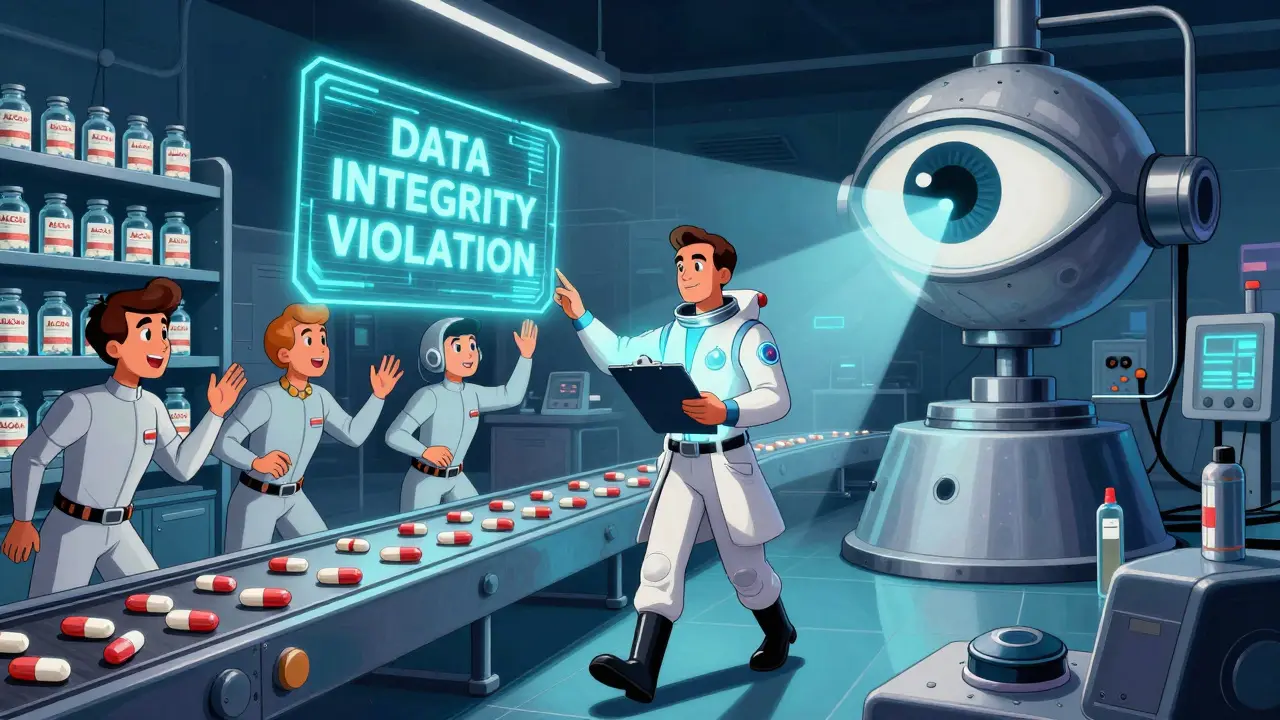
What Happens Before Approval?
Getting a generic drug approved isn’t quick. It takes 12 to 24 months - often longer than the original brand drug took to get approved. Why? Because the FDA doesn’t just accept claims. They demand proof. Applicants must submit three separate batches of the drug’s intermediate form. One batch is used to make all the strengths. The other two are used to test the lowest and highest doses. This isn’t just for show. It proves the manufacturing process works consistently across all strengths. If the drug dissolves too slowly at 10 mg but too fast at 40 mg, the FDA rejects it. They also require bioequivalence studies - proving the generic drug enters the bloodstream at the same rate and amount as the brand. In 98-99% of cases, generics match the brand perfectly. But the FDA doesn’t rely on that number. They verify every single application.How the FDA Stays Ahead of Problems
The FDA doesn’t wait for complaints. They use data to predict risks. Their market surveillance system tracks adverse event reports, pharmacy complaints, and lab results from across the country. If a pattern emerges - say, a batch of metformin dissolving too slowly - they investigate before patients are affected. In 2020-2022, during the pandemic, this system helped prevent shortages of critical generics like insulin and antibiotics. The Office of Manufacturing Quality worked directly with manufacturers to fix issues before they became crises. They’ve also added new tools. Remote Interactive Evaluations (RIEs) let inspectors review records and observe operations via video - saving time and increasing inspection frequency. In 2022, 35% of inspections were partially remote. And starting in 2023, the Drug Quality Reporting System (DQRS) streamlined how manufacturers report quality issues. It’s faster. More transparent. And harder to ignore.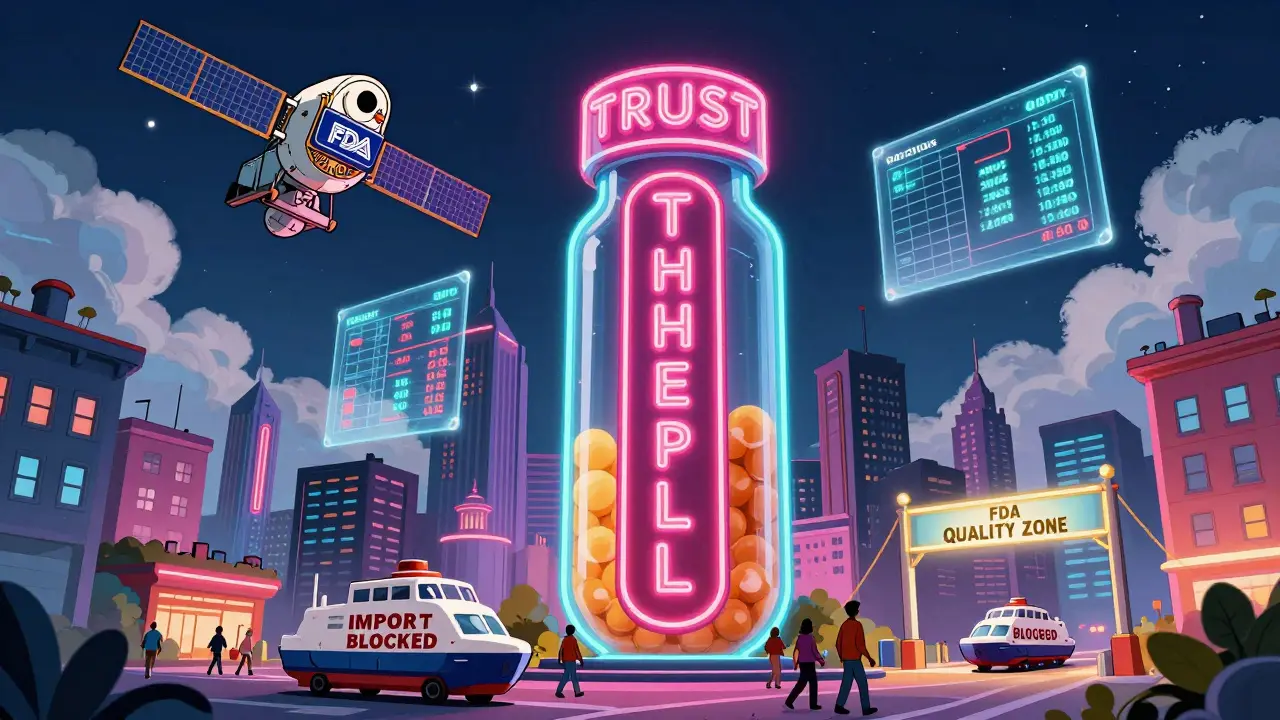
Costs, Challenges, and Real-World Impact
Complying with FDA standards isn’t cheap. A new generic manufacturer typically spends $2-5 million just to set up the right labs, training, and documentation systems before even submitting an application. For small companies, the paperwork alone eats up 30-40% of their development time. But the payoff is real. Generics make up 90% of all prescriptions filled in the U.S. - over 6.8 billion pills a year. And they cost 80-85% less than brand-name drugs. That’s not because they’re cheaper to make. It’s because the FDA keeps quality high while allowing competition to drive prices down. Industry surveys show 68% of manufacturers think FDA rules are stricter than Europe’s or Japan’s. But 82% agree those rules make the drugs better. And patients? They’re the ones who benefit. No one knows which pill they’re taking - but they trust it will work. That trust is built by thousands of inspections, millions of records, and a system that refuses to cut corners.What’s Next?
The FDA is pushing into the future. Their Pharmaceutical Quality for the 21st Century initiative is testing technologies like continuous manufacturing - where drugs are made in one unbroken flow, not in batches. Real-time release testing could mean drugs are approved as they’re made, not weeks later. By 2025, new rules may require full traceability of active ingredients from raw source to final pill. That means knowing not just who made your drug, but where the chemicals came from, how they were transported, and who handled them. It sounds intense. And it is. But that’s the point. The FDA doesn’t just approve generic drugs. They guarantee them. Every pill. Every batch. Every time.Are generic drugs as safe as brand-name drugs?
Yes. The FDA requires generic drugs to have the same active ingredient, strength, dosage form, and route of administration as the brand-name version. They must also be bioequivalent - meaning they work the same way in the body. Every generic must pass the same quality standards, including cGMP inspections and lab testing. Over 98-99% of generics perform identically to their brand-name counterparts in clinical use.
How often does the FDA inspect generic drug factories?
The FDA inspects about 1,200 drug manufacturing facilities each year - including those overseas. Many inspections are unannounced. Facilities that produce generics for the U.S. market are inspected at least once every two years, but high-risk or previously non-compliant sites may be visited more often. In 2022, 35% of inspections included remote components to increase efficiency.
Why do some generic drugs look different from the brand name?
The appearance - color, shape, or size - doesn’t affect how the drug works. Federal law requires generics to look different from brand-name drugs to avoid trademark infringement. But the active ingredient, dose, and effectiveness are identical. Differences in inactive ingredients (like fillers or coatings) are allowed as long as they don’t change how the drug is absorbed.
What happens if a generic drug fails FDA inspection?
If a facility fails an inspection, the FDA issues a Form 483 listing violations. The company must respond with a corrective plan. If the issues are serious - like falsified data or unsafe conditions - the FDA can refuse to approve new applications, block imports, or even issue a warning letter. In extreme cases, the facility may be placed on import alert, meaning all products from that site are automatically detained at the border.
Can I trust generics made outside the U.S.?
Yes. The FDA inspects all facilities that supply drugs to the U.S., no matter where they’re located. In fact, over 80% of generic drug ingredients are made overseas, mostly in India and China. The FDA holds foreign manufacturers to the same standards as U.S. ones. Facilities with repeated violations are blocked from exporting to the U.S. - and many have been.



Edith Brederode
January 20, 2026 AT 03:05Wow, this is actually so reassuring 😊 I used to worry that generics were just cheap knockoffs, but learning how much oversight goes into every batch makes me feel way better about saving money on prescriptions. Thanks for laying this out so clearly!
Renee Stringer
January 21, 2026 AT 08:17The FDA’s obsession with documentation is not bureaucracy-it’s bioethics in action. Every signature, every timestamp, every calibration log is a shield against human error and corporate negligence. This isn’t about red tape. It’s about survival.
Jacob Cathro
January 21, 2026 AT 22:09so like... the fda just watches every single pill get made?? lmao. they dont even know if my doritos are stale. how they got time to audit 1700 global sites? someone’s lying. 🤡
kumar kc
January 23, 2026 AT 21:49India makes 40% of global generics. FDA inspections here are tougher than in US. We follow rules. Not because we fear punishment-but because patients deserve better.
Thomas Varner
January 25, 2026 AT 08:47...I just realized... the FDA is basically the only thing standing between me and a pill that’s 70% sugar and 30% wishful thinking... and I never even thought about it... wow...
Manoj Kumar Billigunta
January 25, 2026 AT 12:59Many people think generics are lower quality because they cost less. But the truth? The system is designed so that competition lowers price-not quality. The FDA makes sure of that. No shortcuts. No compromises. That’s why so many doctors, including myself, prescribe generics without hesitation.
Andy Thompson
January 25, 2026 AT 14:49HA! They inspect foreign plants but let China make 80% of our antibiotics?? 😂 Wake up people-this is all a scam. The FDA is just a PR arm for Big Pharma. They let dangerous stuff in and then blame ‘foreign labs’ when things go wrong. 🇺🇸💊 #BuyAmerican
sagar sanadi
January 26, 2026 AT 09:06So the FDA says they catch fraud... but how many people got sick before they noticed? How many batches slipped through? You think they inspect every truck? Nah. They inspect the ones they know about. The rest? Lucky guess.
Crystal August
January 28, 2026 AT 01:48Why do you trust a government agency that can’t even fix the VA waitlist? They’re just making us feel safe while the real criminals run the show. You think they care if your blood pressure pill works? They care about their budget. That’s it.
Shane McGriff
January 28, 2026 AT 23:03Let’s be real-this system works because it’s brutal. The FDA doesn’t play nice. They show up unannounced, demand records from 2018, and shut down facilities over a single backdated log. That’s not overreach-that’s responsibility. And if you’ve ever taken a generic and lived to tell the story? Thank them. Not the pharmacist. Not the manufacturer. Them.
clifford hoang
January 29, 2026 AT 05:58What if the FDA’s entire model is just a simulation? What if the inspections are staged? What if the ‘bioequivalence’ data is generated by AI trained on brand-name drug patterns? What if we’re all just living in a placebo-controlled trial designed by the Deep State? 🤯 The pills work... but why? And who’s really pulling the strings?
Art Gar
January 30, 2026 AT 16:07It is objectively incorrect to suggest that regulatory rigor correlates with public safety. The historical record demonstrates that excessive oversight often impedes innovation and inflates costs without commensurate benefit. The notion that process control supersedes outcome validation is a technocratic fallacy rooted in 20th-century industrial paradigms. One must question whether the ALCOA+ framework, while syntactically elegant, is epistemologically sound in the context of dynamic pharmaceutical manufacturing systems.
pragya mishra
January 31, 2026 AT 12:52You all are ignoring the real issue. Why are we letting foreign countries make our life-saving drugs? This isn’t about FDA inspections-it’s about national security. We should ban all imports and build every factory in the U.S. Now. No excuses.