
When you have multiple sclerosis, a chronic condition where the immune system attacks the protective covering of nerve fibers. Also known as MS, it doesn’t just happen randomly—flares are often pushed by specific triggers that you can identify and manage. These aren’t just bad days; they’re real changes in your nervous system that can make walking, seeing, or even thinking harder. The good news? Knowing what sets them off gives you power you didn’t have before.
One of the biggest heat sensitivity, a common reaction in people with MS where even mild temperature rises worsen symptoms is often overlooked. A hot shower, a summer day, or even a fever from a cold can make you feel like your body is shutting down. It’s not new damage—it’s your nerves temporarily struggling to send signals. Cooling down can bring relief fast. Then there’s stress, emotional or physical strain that can activate the immune system and spark a flare. It’s not that stress causes MS, but it sure makes it harder to keep things stable. People who track their flares often notice patterns: a big work deadline, a family conflict, or even sleep loss right before things go sideways.
infections, especially urinary tract or respiratory infections are another major trigger. A simple cold can throw your whole system off for weeks. That’s why staying up to date on vaccines and washing your hands matters more than ever. And don’t forget vitamin D, a key player in immune regulation that many people with MS are low in. Studies show levels below 30 ng/mL are linked to more frequent flares. Getting sunlight or taking a supplement isn’t a cure—but it’s one of the few things that actually shows up in research as helping.
You’ll also find that some triggers are personal. One person gets flares after drinking alcohol. Another sees symptoms spike after a long flight. A few notice their legs feel heavier after eating sugar-heavy meals. The key isn’t to fear every little thing—it’s to pay attention. Keep a simple log: what you did, how you felt, what you ate, how much you slept. Patterns emerge over time, and they’re your best tool for staying ahead of flares.
The posts below cover real-world strategies from people living with MS and the experts who help them. You’ll find how to handle heat without quitting your life, how to spot early signs of an infection before it becomes a flare, what supplements actually help (and which ones don’t), and how to talk to your doctor about triggers that aren’t on the standard list. There’s no magic fix, but there are clear, doable steps that make a difference. What you’re about to read isn’t theory—it’s what works when you’re trying to live well with MS.
 24 November 2025
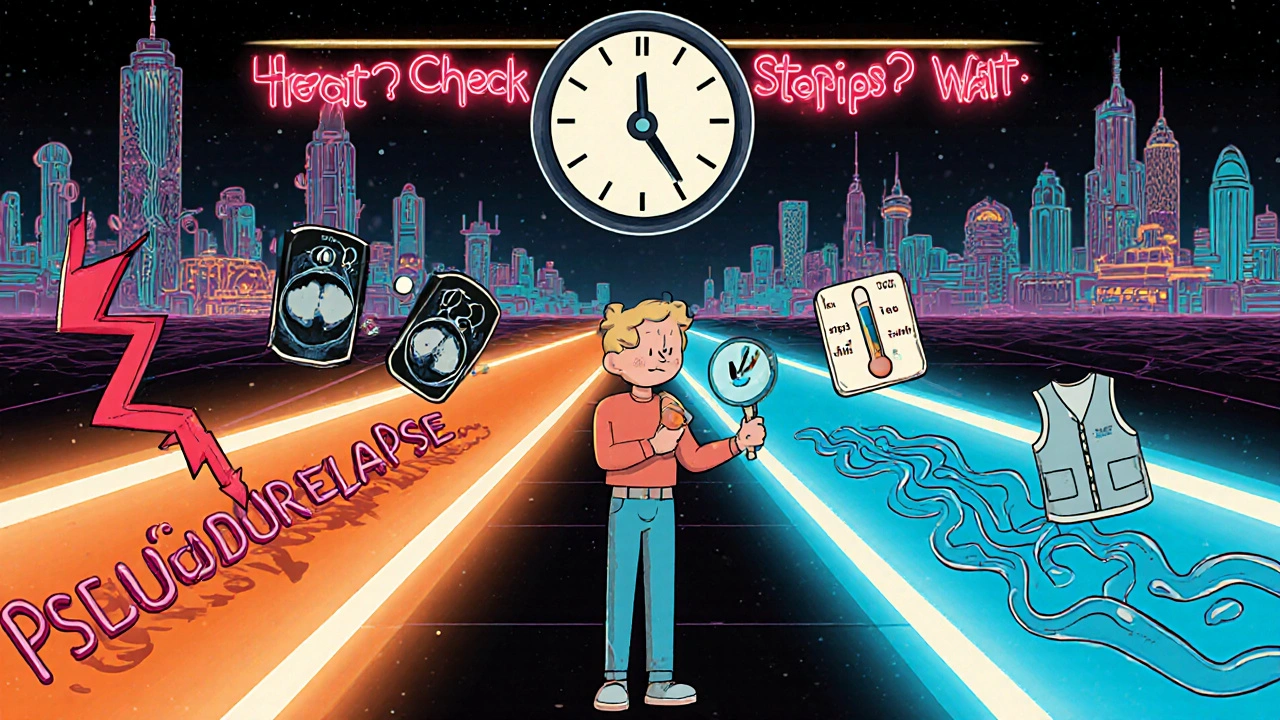
Learn how to tell the difference between a true MS relapse and a pseudorelapse, what triggers each, and why steroids aren't always the answer. Avoid unnecessary treatments and protect your health with smart, evidence-based steps.





©2026 rxmedicin.su. All rights reserved
9