
When your body overreacts—swelling up, itching, or attacking its own tissues—it’s often corticosteroids, a class of synthetic drugs that mimic natural hormones produced by your adrenal glands to control inflammation and immune responses. Also known as steroids, they’re not the same as the muscle-building kind you hear about in sports. These are prescription drugs that calm down your body’s alarm system when it’s gone haywire. They’re used for everything from severe allergies and asthma flare-ups to autoimmune diseases like lupus and multiple sclerosis. But they’re not harmless. Even short-term use can cause sleep problems, mood swings, or weight gain. Long-term use? That’s where things get serious—bone thinning, high blood sugar, cataracts, and weakened immunity can show up quietly over time.
One key thing to understand: inflammation, the body’s natural response to injury or infection isn’t always bad. It’s how your body heals. Corticosteroids don’t fix the root cause—they just turn down the noise. That’s why they work so well for conditions like immune system, the body’s defense network that can mistakenly target healthy tissues in autoimmune disorders disorders. But if you’re treating a flare-up of MS or rheumatoid arthritis, you’re not curing it—you’re buying time. That’s why doctors often pair corticosteroids with other therapies that target the underlying problem. And here’s the catch: not every flare-up needs them. Sometimes, what looks like a relapse is just a pseudorelapse triggered by heat, stress, or infection. Using steroids unnecessarily doesn’t help—it just adds risk.
What you’ll find in these posts isn’t just a list of uses. It’s a look at real-world trade-offs. One article breaks down why steroids aren’t always the answer for MS patients. Another explains how they interact with blood thinners, raising bleeding risk. There’s even a piece on how people on diuretics—often prescribed for swelling caused by steroid use—can end up dehydrated and hospitalized. These aren’t theoretical concerns. They’re daily realities for people managing chronic conditions. The posts cover how to spot side effects, when to push back on a prescription, and how to monitor your body’s response. You’ll also see how switching to generics or alternatives can cut costs without losing effectiveness, especially when long-term steroid use is involved.
Whether you’re taking corticosteroids now, considering them, or just trying to understand why your doctor recommended them, this collection gives you the practical, no-fluff facts. No hype. No jargon. Just what you need to know to ask the right questions and protect your health.
 1 December 2025
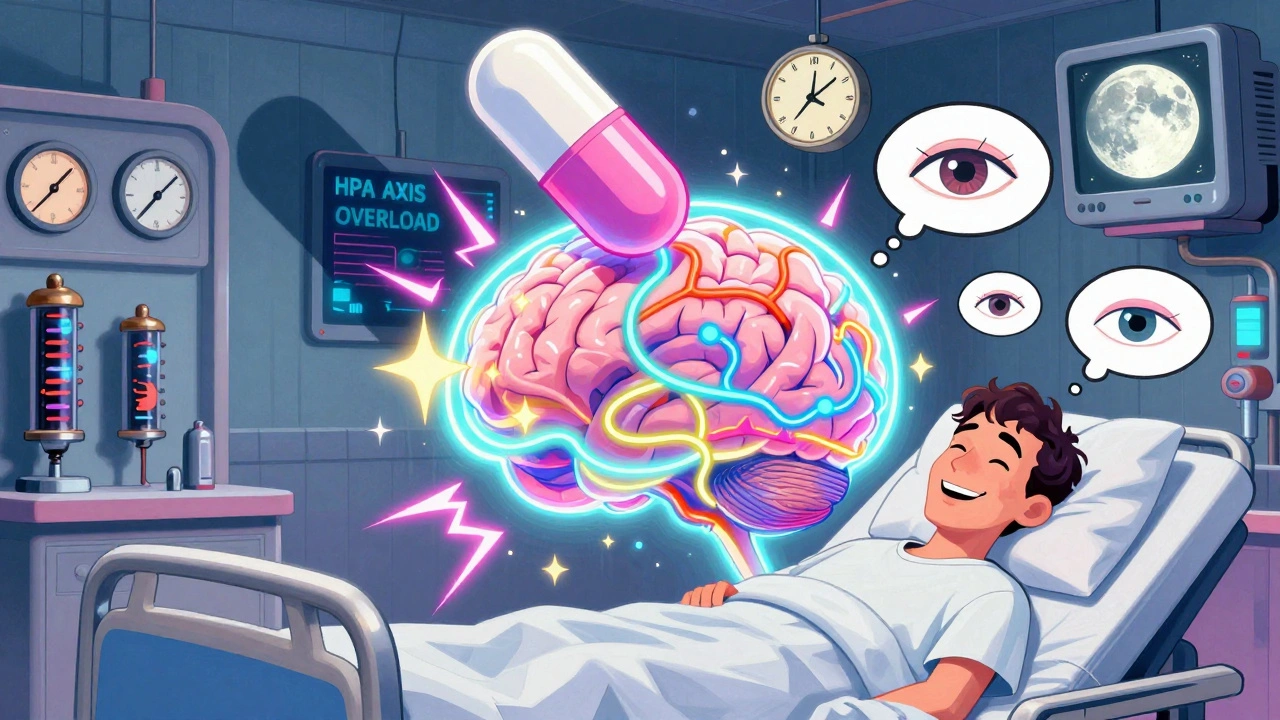
Corticosteroids can trigger mood swings, mania, and even psychosis - especially at high doses or in older adults. Learn the signs, risks, and what to do if you or a loved one experiences psychiatric side effects.




©2026 rxmedicin.su. All rights reserved
12