
When a life-saving drug isn’t in stock, doctors don’t just wait. They scramble. Patients miss treatments. Surgeries get canceled. Pain goes untreated. This isn’t science fiction-it’s happening right now, across hospitals and clinics in the U.S., and the ripple effects are reaching patients everywhere.
What’s Really Going On With Drug Shortages?
A drug shortage isn’t just a low shelf in the pharmacy. It’s when no manufacturer can keep up with demand, and no backup is available. Since 2022, the number of active drug shortages has surged. In early 2024, there were 323 drugs in short supply. By mid-2025, that number dropped slightly to 253-but it’s still far higher than in 2021, when there were just 187. These aren’t obscure medications either. They’re the ones people rely on daily: antibiotics, cancer drugs, anesthesia, even basic IV saline. The problem isn’t random. It’s systemic. About 47% of shortages come from broken global supply chains. Another 32% are tied to manufacturing failures-contaminated batches, failed inspections, or shutdowns. And 21% happen because the raw ingredients can’t be sourced. Most of these drugs are generics, made for pennies on the dollar. When profit margins are thin, companies stop making them. No one goes bankrupt over a $0.50 vial of heparin… until someone dies because it wasn’t there.Who Gets Hurt the Most?
It’s not just the elderly or the chronically ill. It’s children with leukemia waiting for asparaginase. It’s cancer patients whose treatment is delayed by two weeks because nelarabine is out. It’s someone in the ER needing lorazepam for a seizure, but the only option left is a different drug that takes longer to work-and carries more side effects. Pediatric hospitals are hit hardest. They need special formulations-smaller doses, different concentrations-that few manufacturers bother to produce. One survey found pediatric facilities track 25% more shortages than general hospitals. That means pharmacists spend more time hunting for alternatives, training staff, and rewriting protocols. Every hour spent managing a shortage is an hour not spent with a patient. And it’s not just hospitals. Outpatient infusion centers-where patients get chemotherapy or immune therapies-reported that 41% of treatments were missed, delayed, or skipped because of drug shortages. Patients are skipping doses. Some are going without. One study found that 1.1 million Medicare patients could die over the next decade because they can’t afford their meds. Shortages make that worse.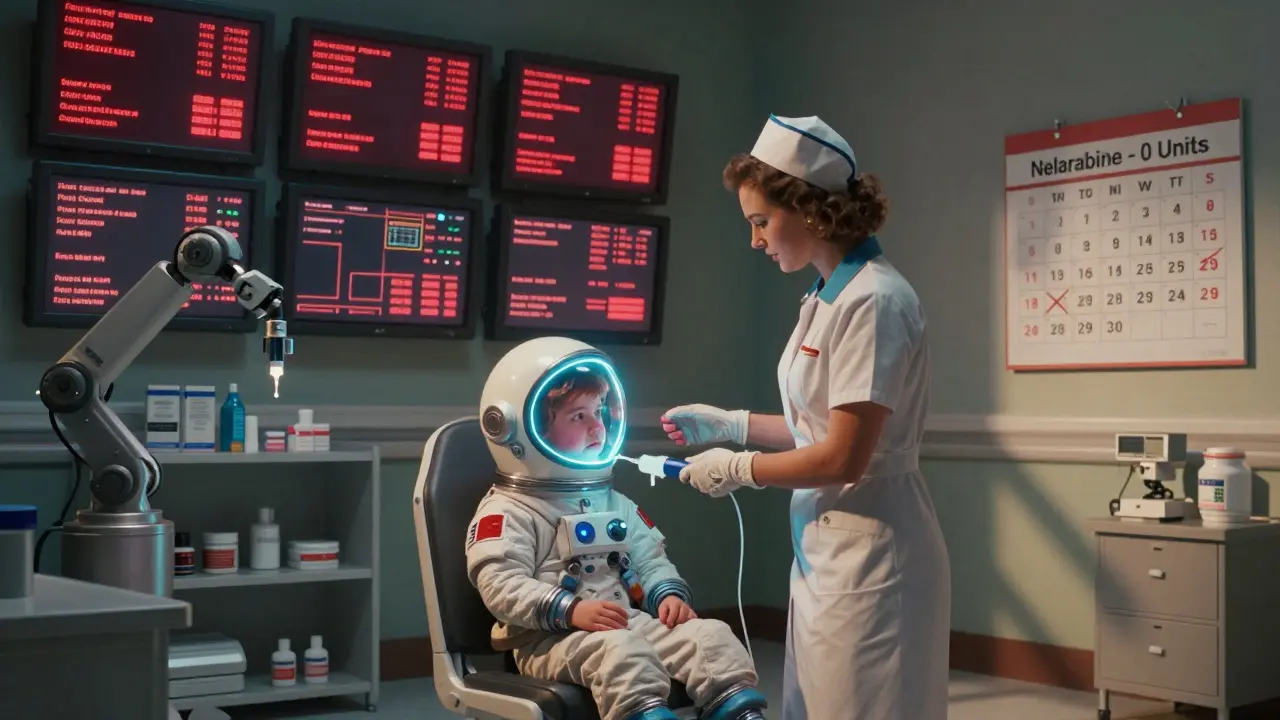
The Hidden Costs of Missing Medicine
You think the cost is just the price of the drug? Think again. Hospitals are spending nearly $900 million a year just on extra labor to handle shortages. That’s not counting the cost of pricier alternative drugs, canceled surgeries, or longer hospital stays. One hospital might spend 15 to 20 hours a week per shortage just to find a replacement, train nurses, update electronic records, and check for interactions. For a facility managing 50 shortages? That’s 750 to 1,000 hours a month-almost 50 full-time jobs. Medication errors have jumped 43% since 2019, directly because of shortages. Nurses give the wrong drug because the labels look similar. Doctors prescribe something unfamiliar because it’s the only thing available. One study found error rates spiked 18.3% during transitions to substitute drugs. A patient gets the wrong dose. A reaction happens. A life is changed. And the financial burden doesn’t stop at the hospital. Patients pay 18.7% more out-of-pocket during shortages. Insurance won’t cover the expensive alternative. The pharmacy charges more because supply is low. People choose between paying for meds or paying rent.When a Drug Vanishes, What Happens Next?
There’s no playbook. When a drug disappears, hospitals improvise. They might switch to another drug in the same class-but it’s rarely a perfect swap. For example, when heparin-a blood thinner used in heart surgeries-ran out, cardiac centers had to develop new anticoagulation protocols. Procedure times went up by 22%. More staff were needed. More monitoring. More risk. In oncology, delays of 7 to 14 days in chemotherapy can mean the difference between remission and relapse. Asparaginase shortages forced pediatric cancer programs to ration doses. Some kids got half the dose. Others waited. Parents watched helplessly as their child’s treatment timeline slipped away. Even common drugs like triamcinolone injection-used for joint pain, rashes, and inflammation-have been unavailable for months. Patients with arthritis or lupus are stuck in pain. No steroids. No relief.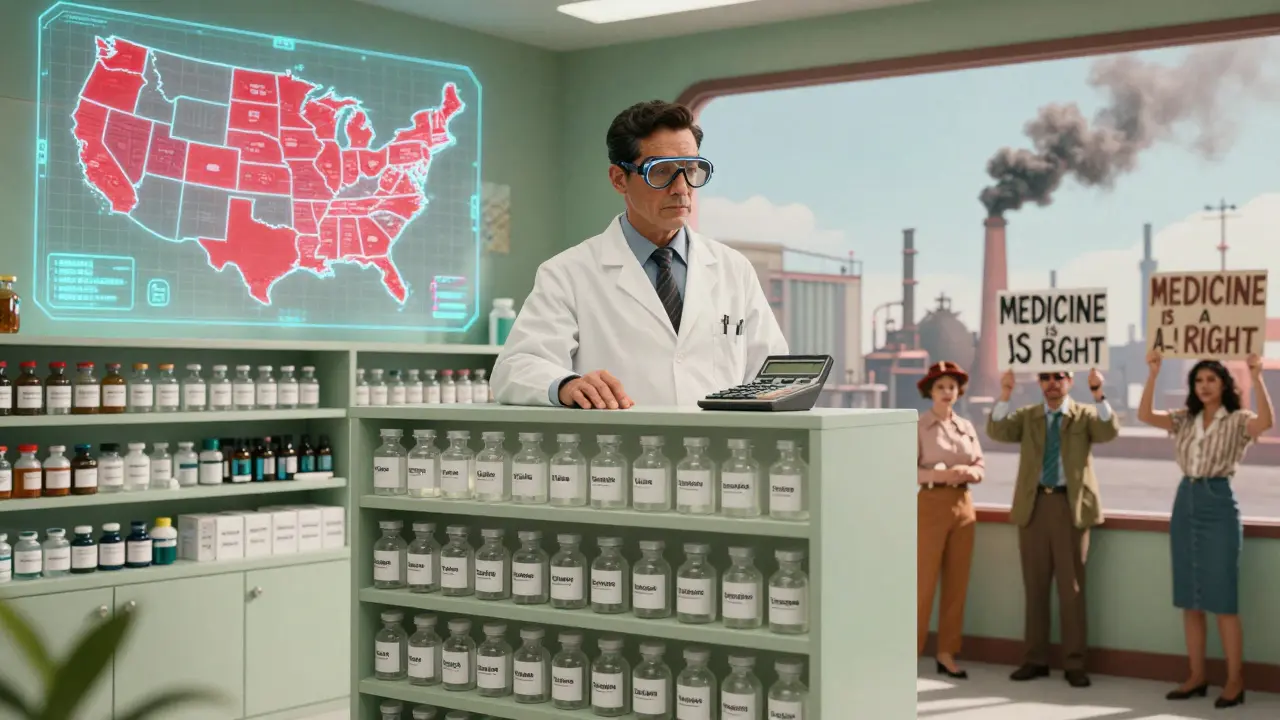
Why Isn’t This Fixed Yet?
The FDA now requires manufacturers to report potential shortages six months in advance. That’s a step forward. But it’s not enough. Many companies still wait until the last minute. Others don’t report at all. And even when they do, the system doesn’t have the power to force production. The U.S. relies on a handful of overseas factories for active ingredients. One factory in India or China shuts down for a quality issue, and thousands of American patients feel the impact. There’s no backup. No redundancy. No safety net. Some hospitals are trying to fix this by building their own inventory buffers. Others are joining group purchasing organizations like Vizient, which have saved members nearly $300 million since 2023 by pooling demand and negotiating better supply deals. But these are band-aids on a broken system. The real fix? Incentives. If making low-cost generic drugs was profitable, companies would do it. But right now, it’s cheaper to let a drug go short and wait for prices to spike. That’s not a market failure. It’s a policy failure.What Can You Do?
If you’re on a medication that’s been in short supply, don’t wait for your doctor to bring it up. Ask. Call your pharmacy. Ask if there’s an alternative. Ask if they’ve had to change your prescription before. Keep a list of your meds, doses, and why you take them. If your drug runs out, you’ll need that info fast. If you’re on a life-sustaining drug-like insulin, seizure meds, or cancer therapy-talk to your provider about backup plans. Is there a different formulation? A different route? A different drug with similar effects? And speak up. Tell your representatives. Share your story. Drug shortages aren’t just a hospital problem. They’re a public health emergency. And until people demand better, nothing will change.The truth is, no one should have to choose between their health and a broken supply chain. But right now, that’s exactly what’s happening.
Why are generic drugs more likely to be in short supply?
Generic drugs make very little profit-sometimes just pennies per pill. Manufacturers don’t invest in extra capacity or quality controls because there’s no financial reward. When a factory has a problem, or raw materials get delayed, these low-margin drugs are the first to be cut. Companies focus on high-profit brand-name drugs instead, leaving generics vulnerable.
Can drug shortages cause long-term health problems?
Yes. Delays in cancer treatment can reduce survival rates. Missing antibiotics can turn a minor infection into a life-threatening one. Patients with chronic conditions like epilepsy or heart disease can suffer seizures, strokes, or heart attacks if their meds aren’t available. Even short gaps in treatment can lead to disease progression that’s harder-and more expensive-to treat later.
Are there any drugs that are always in short supply?
Some drugs keep reappearing on shortage lists: heparin, asparaginase, naloxone, IV saline, and certain chemotherapy agents like nelarabine. These aren’t random. They’re either complex to make, low-profit, or rely on a single overseas supplier. When one factory shuts down, the whole country feels it.
How do hospitals cope when a drug runs out?
Hospitals activate shortage teams. Pharmacists search for alternatives, check expiration dates, contact other hospitals, and sometimes ration doses. Nurses get trained on new protocols. Electronic systems get updated. All of this takes time, money, and staff. Many hospitals now use automated monitoring tools to track shortages in real time, but not all can afford them.
Is there any progress being made to solve this problem?
There’s some. The FDA’s new reporting rules help, and more hospitals are joining group purchasing networks. Some states are starting to stockpile critical drugs. A few companies are moving production back to the U.S. But progress is slow. The number of shortages is still far above pre-2020 levels. Without stronger incentives for manufacturers and better oversight of global supply chains, shortages will keep happening.




Ben Kono
January 12, 2026 AT 12:44My mom’s chemo got delayed for 3 weeks because they ran out of the damn drug. She’s fine now but I swear if I see another article about ‘systemic issues’ without someone getting fired I’m gonna lose it. This isn’t a supply chain problem it’s a greed problem.
They make pennies on generics so they just let people die. That’s it.
Cassie Widders
January 12, 2026 AT 20:56I work in a small clinic in Scotland and we’ve had to switch patients off their usual meds twice this year because the US stopped shipping. It’s not just an American problem anymore. People don’t realize how global this is.
Windie Wilson
January 14, 2026 AT 09:04Oh wow. A 900 million dollar problem. How tragic. I guess we should all just cry into our $120 insulin vials while the CEOs fly to the Bahamas in their private jets.
Meanwhile the FDA is still waiting for a memo from the 1990s about how to regulate a factory in India that’s been making the same drug for 20 years.
Progress.
Daniel Pate
January 16, 2026 AT 05:34The fundamental flaw here is treating medicine like a commodity instead of a public good. Profit margins dictate life and death. That’s not capitalism-it’s moral bankruptcy.
When a drug like heparin or asparaginase disappears, it’s not a market signal-it’s a failure of governance. We’ve outsourced not just manufacturing but our ethical responsibility.
Companies aren’t failing because they’re inefficient. They’re succeeding at maximizing shareholder value at the cost of human survival.
And we call this a free market? No. We call it a rigged game where the players don’t even have to play by the same rules.
Fixing this requires dismantling the incentive structure, not adding more reporting requirements. The FDA can’t regulate morality. Only public outrage can.
Amanda Eichstaedt
January 16, 2026 AT 20:27I’ve been on a life-saving drug for 12 years. Last year it was gone for 4 months. My pharmacy called me every week like it was a holiday sale. ‘We got a partial shipment! Only 3 vials!’
My doctor had to write 5 different scripts trying to find something that wouldn’t make me vomit or pass out.
And the worst part? No one at the drug company ever called to apologize. Not once.
They don’t see us. We’re just numbers on a spreadsheet. I’m not a patient. I’m a lost sale.
My kid asked why I cried when I got my refill. I didn’t know how to explain that the system forgot I existed.
Cecelia Alta
January 18, 2026 AT 12:21Let me get this straight. We’ve got people dying because a company decided it’s not worth making a $0.50 vial of medicine but somehow we’re still giving tax breaks to pharmaceutical CEOs who make $40 million a year?
And you think the answer is ‘ask your pharmacist’? Oh honey. You really think this is a customer service issue?
Someone’s got a mansion in Malibu because a child missed a chemo dose. That’s not capitalism. That’s a horror movie and we’re all just waiting for the jump scare where the FDA finally wakes up.
Meanwhile, my cousin’s brother’s neighbor’s dog got more attention than a cancer patient on a shortage list.
It’s not a system failure. It’s a soul failure.
Rebekah Cobbson
January 19, 2026 AT 16:29If you’re on a critical medication, please reach out to your provider now. Ask about alternatives, backup plans, and whether your pharmacy tracks shortages. You’re not being annoying-you’re protecting your life.
Also, if you have the means, donate to patient advocacy groups like the American Cancer Society or the National Organization for Rare Disorders. They’re the ones pushing for change when no one else will.
You’re not powerless. Your voice matters. Even one call to your rep can make a difference.
Audu ikhlas
January 21, 2026 AT 11:04USA always crying about their health care. In Nigeria we have no drugs at all and we still live. No one gets mad because the system is broken. We just find a way. You people think medicine is a right? No. It’s a privilege. And if you can’t afford it you should have worked harder.
Why you think we import drugs from China? Because your factories are lazy. Fix your own damn country before you blame others.
Also why you always say ‘generic’ like its a bad word? Generic means cheap and good. You want expensive? Buy brand name. Simple.
Sonal Guha
January 22, 2026 AT 10:54Stop romanticizing the patient experience. 90% of these shortages are caused by hospitals hoarding drugs to inflate their billing codes. They stockpile so they can charge more for the ‘rare’ alternative. The real villains are the administrators, not the manufacturers.
Also the FDA reports are useless. They don’t verify data. Companies lie. End of story.
And no, putting production back in the US won’t fix it. Labor costs are 3x higher. You want cheap drugs? Then stop pretending you care about workers too.