
Clearing expired medications isn’t just about cleaning out a shelf. It’s a safety step that can prevent harm, avoid legal trouble, and stop thousands of dollars in waste. But if you’re guessing expiration dates from a jumble of letters and numbers on a pill bottle, you’re doing it wrong. And you’re not alone. Pharmacies across New Zealand and the U.S. are still making the same mistakes - mixing up lot numbers with expiration dates, missing recalls, or tossing out perfectly good medicine because they misread a label.
Lot Numbers Are Not Expiration Dates
Let’s start with the biggest myth: lot numbers do not tell you when a medicine expires. That’s not how they work. A lot number - sometimes called a batch number - is a manufacturer’s internal code. It tracks where, when, and how a batch of pills, capsules, or liquids was made. It helps them find and recall a specific group of products if something goes wrong.
For example, a lot number like 230515A might mean the batch was made on May 15, 2023, and the A stands for production line A. But that doesn’t mean it expires on May 15, 2023. It might last two years. Or five. Or ten. The expiration date is printed separately - usually as EXP 05/25 or EXP 15/05/2025.
The FDA requires every prescription and over-the-counter medicine to show the expiration date clearly on the packaging. That date is the only one that matters. No matter how fancy the lot number looks, never calculate an expiration date from it. If you do, you risk either throwing away safe medicine or keeping dangerous, expired drugs on the shelf.
How to Read the Real Expiration Date
Look for the word EXP, Expires, or Use By on the bottle, box, or blister pack. The date format can vary:
- Month/Year: EXP 08/26 → expires August 2026
- Day/Month/Year: EXP 12/03/2025 → expires March 12, 2025
- Year/Month: EXP 2025-07 → expires July 2025
International meds are tricky. Some European labels show MFG: 2023-01 and then 36M below it. That means manufactured in January 2023, good for 36 months - so it expires in January 2026. Don’t assume the MFG date is the expiration. Always look for the EXP label.
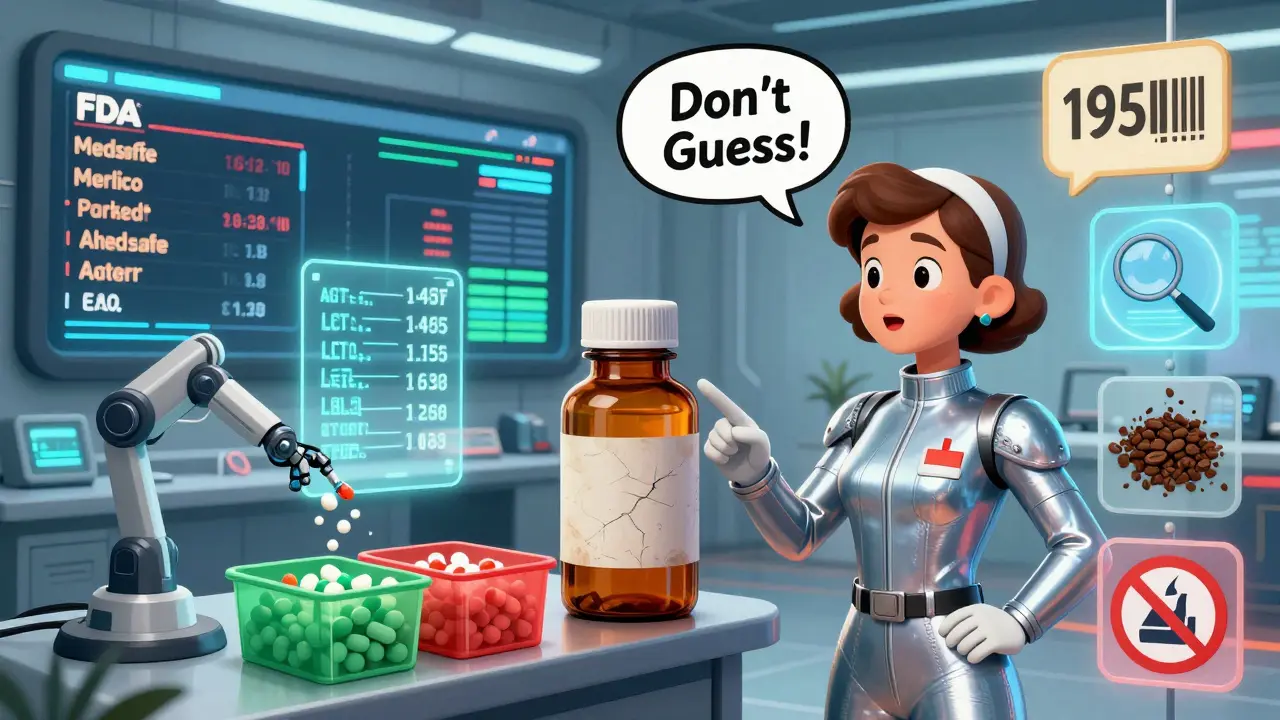
Pro tip: If the label is faded, cracked, or hard to read, don’t guess. Discard it. The risk isn’t worth it.
Why Lot Numbers Matter During Clearance
Lot numbers become critical when there’s a recall. If a manufacturer finds a batch of medication contaminated, mislabeled, or unstable, they issue a recall. They don’t recall all of a drug - just the specific lot(s) affected.
Imagine this: A batch of blood pressure pills from a certain plant had a packaging error. The pills were exposed to moisture. The manufacturer recalls only lot number MK22B047. If your pharmacy doesn’t check lot numbers during inventory clearance, you might miss that batch - and keep selling dangerous pills.
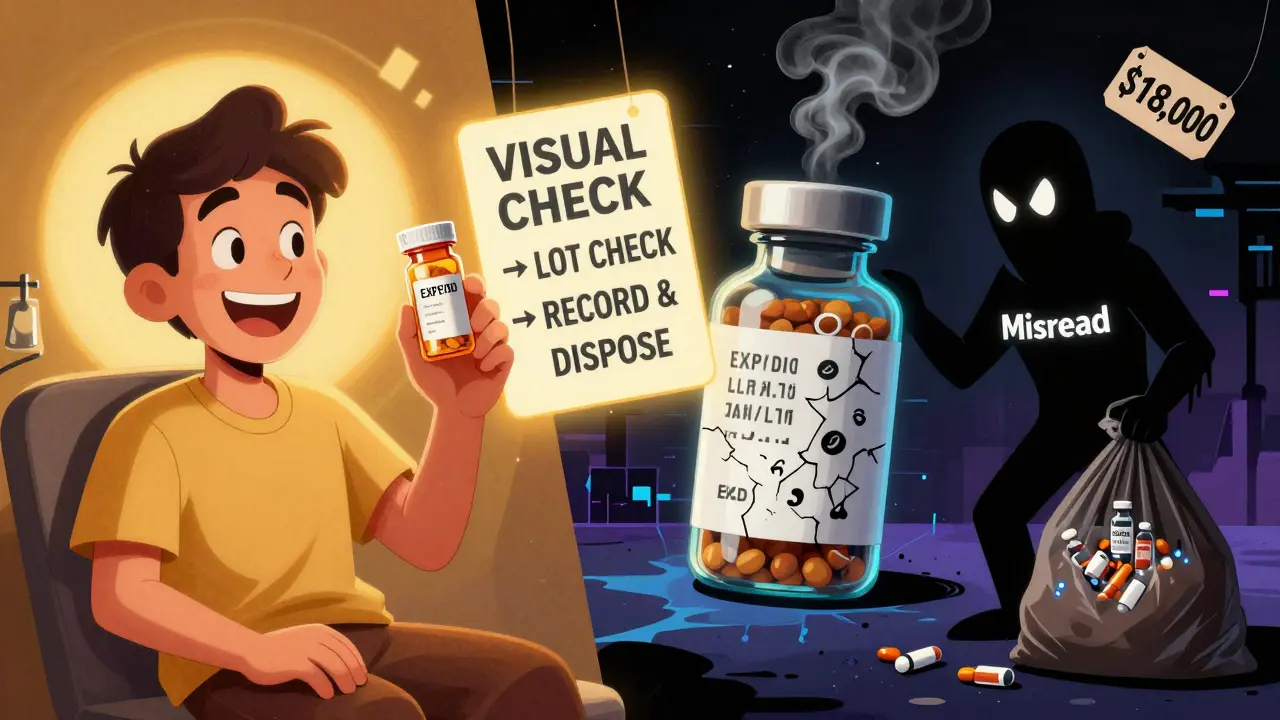
Or worse - you might throw out 500 bottles of the same drug because you saw a strange lot number and assumed it was expired. That’s what happened at a clinic in Dunedin last year. They discarded $18,000 worth of insulin because they misread a lot number as an expiration date. The actual expiration was still 11 months away.
That’s why you need to cross-check: read the EXP date first, then use the lot number to check for recalls.
How to Check for Recalls Using Lot Numbers
The FDA maintains a public database of all drug recalls in the U.S. - and while you’re in New Zealand, many local pharmacies still handle U.S.-imported meds or follow similar protocols. The same applies to Health New Zealand (Te Whatu Ora) and Medsafe’s recall notices.
Here’s how to do it:
- Find the lot number on the medication packaging. It’s usually near the expiration date, often printed in smaller text.
- Go to FDA Recalls Database (or Medsafe’s equivalent in NZ: Medsafe Recalls).
- Search by lot number. You can also search by drug name if you don’t have the lot number handy.
- If a recall matches your lot number, quarantine the product immediately. Do not dispose of it yet - follow recall instructions. Sometimes, you can return it for a refund. Other times, you’ll need to destroy it under supervision.
Don’t rely on memory. Don’t rely on your inventory system unless it’s linked to real-time recall feeds. Manual checks are still required. Even the best systems can lag by a day or two.
Use Technology - But Don’t Trust It Blindly
Many pharmacies now use barcode scanners that read both the lot number and expiration date at once. These systems automatically flag expiring stock 30-60 days out. Some even pull recall data in real time.
But here’s the catch: if the label is damaged, the barcode is smudged, or the scanner isn’t calibrated, it can miss the date. A University of Florida study found that 31% of medication labels are damaged during shipping or storage. That means your scanner might say “no expiration date found” - and you might think it’s a system error. It’s not. It’s a warning.
Always do a visual check. Hold the bottle up to good lighting - at least 500 lux. Use a magnifying glass if needed. If the label is torn, faded, or unclear, treat it as expired. Better safe than sorry.
AI tools like Medplore’s scanner, approved by the FDA in 2024, can now read expiration dates from blurry photos with 99.2% accuracy. But these are still mostly used in large hospital systems. Most small pharmacies and home users don’t have access. So stick to the basics: look, read, verify.
Follow the 3-Step Clearance Protocol
Health-system pharmacists follow a strict three-step process to clear expired meds. You should too:
- Visual Check - Find the EXP date on the primary packaging. If it’s expired or within 30 days of expiring, set it aside.
- Lot Number Check - Cross-reference the lot number with current recall lists from Medsafe or the FDA. If there’s a match, isolate it.
- Record and Dispose - Document the drug name, lot number, expiration date, quantity, and disposal method. For controlled substances, use FDA Form 3639 (or NZ equivalent). For regular meds, follow local disposal guidelines - don’t flush them, don’t throw them in the trash without mixing them with coffee grounds or cat litter.
Harvard Medical School found this method reduces expired medication errors by 98.6%. That’s not just good practice - it’s life-saving.
What Happens If You Get It Wrong?
People don’t realize how dangerous expired meds can be. The FDA estimates 1.3 million emergency room visits in the U.S. each year are tied to expired or misused medications. Some lose potency - an expired antibiotic might not kill the infection. Others break down into harmful chemicals - like aspirin turning into acetic acid (vinegar) and salicylic acid, which can irritate the stomach.
And then there’s the recall risk. In 2021, the FDA reported 217 recall incidents where expired meds were kept in stock because lot numbers weren’t checked. That led to $412 million in wasted inventory - and worse, patients got sick.
Independent pharmacies are especially vulnerable. Only 42% of small pharmacies in the U.S. use automated lot-tracking systems. In New Zealand, the gap is similar. That means one in eight expired meds cleared improperly comes from a small clinic or independent pharmacy.
What You Can Do Today
You don’t need fancy tech to get this right. Start here:
- Every time you receive new stock, write the EXP date on the shelf label - even if the system already has it.
- Check your inventory every two weeks for anything expiring in the next 30 days.
- Bookmark Medsafe’s recall page and check it once a week.
- Train your staff: “EXP date is king. Lot number is for recalls only.”
- Keep a printed list of your most common manufacturers’ lot number formats. It helps when you’re staring at a confusing code.
If you’re clearing meds at home, do the same. Look for the EXP date. Check Medsafe’s site if you’re unsure. Don’t rely on memory. Don’t assume a pill is still good because it “looks fine.”
What’s Changing Soon?
The FDA and global regulators are pushing for standardized lot numbering by 2027. A new system called SNI (Standardized Numerical Identification) will make it easier to track batches. But here’s the key: expiration dates will still be separate. The goal isn’t to make lot numbers tell you when something expires. It’s to make sure every batch can be traced quickly if something goes wrong.
By 2027, 89% of manufacturers are expected to use GS1 standards - meaning barcodes will be clearer, lot numbers more consistent, and recall responses faster. But until then, the old rules still apply: read the EXP date. Check the lot number. Don’t guess.
Frequently Asked Questions
Can I still use medicine after its expiration date?
Some medications, like antibiotics or insulin, lose potency after expiration and can be ineffective or even harmful. Others, like pain relievers, may remain safe but less effective. The FDA says most expired meds aren’t toxic, but they’re not guaranteed to work. Never use expired meds for serious conditions. When in doubt, throw it out.
What if the lot number is missing from the packaging?
If the lot number is missing, treat the medication as untraceable. If the expiration date is still valid, you can use it - but don’t stockpile it. Contact the manufacturer or supplier to report the missing label. If it’s a recalled product, you won’t know. Err on the side of caution and dispose of it properly.
How do I dispose of expired medications safely?
Don’t flush them or throw them in the trash as-is. Mix pills with coffee grounds, cat litter, or dirt in a sealed container. For liquids, pour them into absorbent material like paper towels. Many pharmacies and health centers in New Zealand offer take-back programs - check with your local pharmacy or Te Whatu Ora for drop-off locations.
Are there apps or tools that check lot numbers automatically?
Some pharmacy inventory systems do - but they’re mostly for clinics and hospitals. There’s no reliable public app for consumers to scan a lot number and get recall info. The safest method is still manual: check Medsafe’s website or the FDA’s database using the lot number from the label.
Why do some lot numbers look like dates and others don’t?
Manufacturers use different formats. Some include the manufacturing date (like 230515 for May 15, 2023), others use random alphanumeric codes. There’s no universal standard yet. Never assume a lot number is an expiration date - even if it looks like one. Always look for the word “EXP” or “Expires.”




Rajni Jain
December 25, 2025 AT 15:35omg i just threw out my mom's insulin last week bc the lot number looked like a date 😭 so glad i found this. she's been on it for 10 years and i was terrified i messed up.
sakshi nagpal
December 27, 2025 AT 06:01While I appreciate the practical guidance offered herein, I must emphasize that the distinction between lot numbering and expiration dating is not merely a procedural nuance-it is a foundational principle of pharmaceutical integrity. The conflation of these elements constitutes a systemic vulnerability in community pharmacy operations.
Sandeep Jain
December 28, 2025 AT 16:12i used to think lot numbers were exp dates too... until my cousin got sick from an old antibiotic. now i always check the EXP. dumb move on my part. sorry mom.
roger dalomba
December 29, 2025 AT 15:33Wow. A whole essay on how to read a label. I’m shocked this isn’t taught in kindergarten.
Brittany Fuhs
December 30, 2025 AT 20:44It’s disgusting that New Zealand pharmacies still rely on manual checks. In the U.S., we have AI systems that auto-flag expired meds and recall batches in real time. This post is basically a 2010 relic.
Becky Baker
January 1, 2026 AT 03:04Y’all are overcomplicating this. If it’s expired, toss it. If you’re worried about recalls, call the pharmacy. Stop stressing over lot numbers like they’re nuclear codes.
Natasha Sandra
January 2, 2026 AT 07:48THIS. 🙌 I just found 3 bottles of my anxiety meds from 2021 in my cabinet. I was about to take them... thank you for saving me from a mental breakdown AND a chemical disaster. 💖
Erwin Asilom
January 3, 2026 AT 03:41Effective medication clearance protocols require systematic verification of expiration dates and cross-referencing with official recall databases. Failure to implement such procedures constitutes a breach of duty of care in clinical and retail environments.
Sumler Luu
January 3, 2026 AT 22:20I work at a small clinic in Ohio. We just started using the 3-step method from this post. We’ve caught two recalled batches already. No one believed me until we saved a patient from a bad batch of metformin. Just do the steps.
Sophia Daniels
January 5, 2026 AT 21:52Let’s be real-this is why America’s healthcare system is a dumpster fire. People still don’t know how to read a bottle? We have robots that can land on Mars, but your grandma’s blood pressure pills are still being tossed because someone thought ‘230515’ meant ‘May 15, 2023’? 😭
Nikki Brown
January 7, 2026 AT 00:06It’s not just about expiration dates-it’s about moral responsibility. If you keep expired meds, you’re not just careless-you’re endangering lives. And if you’re too lazy to check a website, you don’t deserve to have medicine in your house.
Peter sullen
January 8, 2026 AT 22:28It is imperative, from a pharmacoeconomic and public health standpoint, that all stakeholders-whether institutional or individual-adhere to the tripartite clearance protocol: (1) Visual verification; (2) Lot-number reconciliation with regulatory databases; and (3) Documented disposition per 21 CFR §211.137 and equivalent national standards.
Steven Destiny
January 9, 2026 AT 09:50Stop being so passive. If you don’t know how to read a label, you shouldn’t be holding pills. Take a class. Watch a video. Google it. This isn’t rocket science-it’s basic survival.
Fabio Raphael
January 10, 2026 AT 18:03Wait, so if the lot number looks like a date, it’s still not the expiration? I’ve been doing this wrong for years. I just assumed if it had numbers in MMDDYY format, it was the end date. Thanks for the clarity-I’ll check Medsafe tonight.
Amy Lesleighter (Wales)
January 11, 2026 AT 06:31exp date = boss. lot number = helper. if you forget that, you’re playing russian roulette with your health. and yes, i’ve thrown out $200 worth of meds just to be safe. worth it.