
Buying medication shouldn’t feel like solving a puzzle. Yet every month, people pay more than they need to because they don’t know the difference between a generic and an authorized generic. The truth? Both can save you serious money-but only if you ask the right questions.
What’s the difference between generics and authorized generics?
A generic drug is a copy of a brand-name medicine. It has the same active ingredient, same dose, same way of working in your body. The FDA requires it to be just as safe and effective. But here’s the catch: generics are made by different companies after the brand’s patent expires. An authorized generic (AG) is different. It’s made by the same company that makes the brand-name drug-but sold under a generic label. Think of it like a car manufacturer selling the exact same model under a cheaper brand name. No changes to the pills, no difference in how they work. Just a different name on the bottle. Why does this matter? Because price isn’t always what it seems. A brand-name drug might cost $150. A traditional generic might drop to $20. But an authorized generic? Sometimes it’s $15. Or even $10. But not always.Why you’re still paying too much (even with generics)
You’d think if a drug is cheaper, your copay drops too. But that’s not how insurance works. Insurance plans put drugs into tiers. Brand-name drugs are usually Tier 3 or 4. Traditional generics are often Tier 1. Authorized generics? They can be placed anywhere-sometimes even on the same tier as the brand. Here’s what that means: You might switch from brand to authorized generic, and your copay stays the same. Why? Because your pharmacy benefit manager (PBM) didn’t renegotiate the contract. The drug is cheaper, but your insurer still treats it like the expensive version. A 2023 survey by Patients for Affordable Drugs found that 28% of people paid over $20 for a generic prescription-even though the list price was under $5. That’s not a pricing issue. That’s a system issue.How to ask for savings at the pharmacy
Don’t just say, “Do you have a generic?” That’s like asking, “Is there a cheaper option?” and getting a yes-but not the best one. Instead, ask these four questions:- “Is there a generic version of this drug?” - Start here. Always.
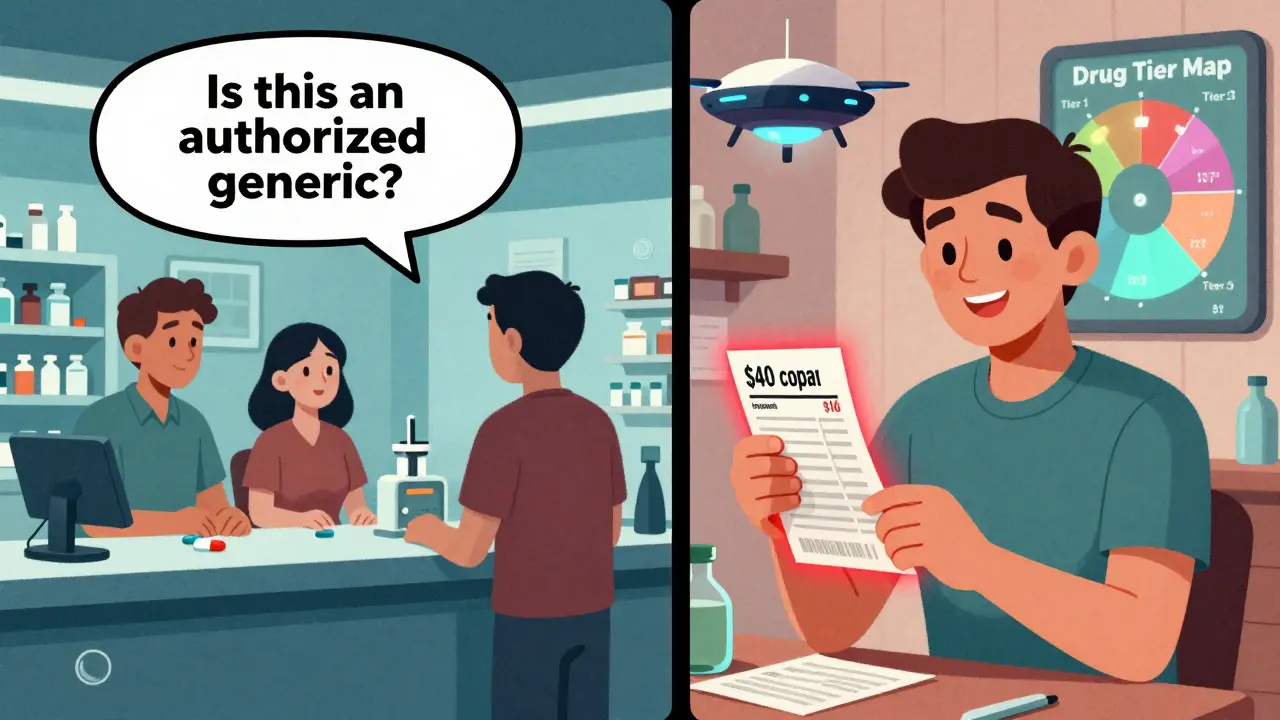
- “Is this an authorized generic?” - If yes, ask the next question.
- “How does my insurance treat authorized generics compared to traditional generics?” - This is the key. You’re trying to find out if your plan gives them the same discount.
- “Can I save money by switching between generic types?” - Sometimes, a traditional generic costs less than the authorized one-even if they’re identical.
Pharmacists aren’t always trained on rebate structures. A 2022 survey found only 43% of independent pharmacists could explain the difference in pricing between authorized and traditional generics. So be ready to dig deeper.
Use tools to compare prices
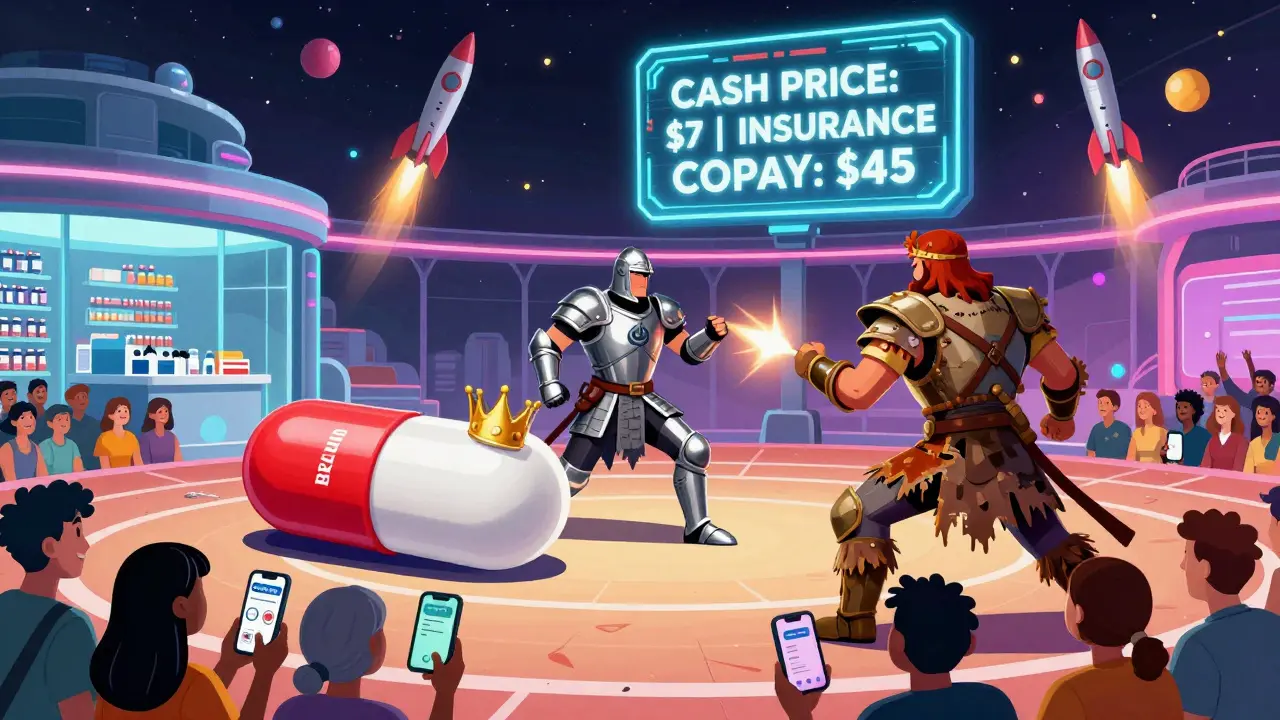
You don’t have to guess. Use apps like GoodRx or SingleCare. Type in your drug, then toggle between “brand,” “generic,” and “authorized generic.” You’ll see cash prices side by side. For example: Insulin glargine (Lantus). The brand costs $130. A traditional generic? $85. An authorized generic? $62. But if you pay cash, the authorized version might be $45. Meanwhile, your insurance copay might still be $45. So paying cash saves you more than using insurance. This happens often with high-cost drugs like those for diabetes, cholesterol, or blood pressure. The list price drops-but your copay doesn’t.Authorized generics aren’t always cheaper for you
Here’s the twist: Sometimes, the traditional generic is cheaper. Why? Because manufacturers of traditional generics compete fiercely. One company makes a generic. Then three more enter. Prices crash. The first generic might be $15. The second, $10. The third, $7. But authorized generics? Often, only one exists. And since it’s made by the brand company, there’s no real competition. So while the list price is lower than the brand, it might not be lower than the traditional generic. A Reddit user shared: “My blood pressure med was an authorized generic. My copay was $40. I switched to the traditional generic-and saved $20 a month. Same pills. Different price.”What to do if your insurance won’t budge
If your plan treats authorized generics like brand-name drugs:- Call your insurer’s member services. Ask: “Can you move this authorized generic to a lower tier?”
- Ask your doctor to write a letter of medical necessity. Sometimes, that triggers a review.
- Request a formulary exception. Many plans have a process for this.
Also, ask if your plan has a mail-order pharmacy. Sometimes, mail-order prices for generics are 30-50% lower than retail.
Real savings are possible-but you have to ask
In 2022, generic drugs saved the U.S. healthcare system over $408 billion. That’s billions. But only 17.5% of total drug spending went to generics. That’s because savings are huge-but they’re not automatic. The FDA says 93% of generic prescriptions cost less than $20. But that’s an average. It doesn’t mean you’re getting that price. The difference between paying $40 and $15 for the same pill? It’s not luck. It’s asking the right questions.What’s next? Watch for biosimilars
If you take biologic drugs-like those for rheumatoid arthritis, cancer, or psoriasis-you’re not done yet. Biosimilars are the next wave. They’re like generics, but for complex biologic drugs. In 2023, biosimilars saved over $7 billion. And prices are dropping fast. One biosimilar for Humira cut costs by 50%. Ask your doctor: “Are there biosimilars for my drug?” If yes, ask if your insurance covers them. They’re not always listed as generics, but they’re just as safe-and often cheaper.Bottom line: Your medication shouldn’t cost more than it should
You’re not being lazy if you ask. You’re being smart. Generics and authorized generics aren’t magic. They’re tools. And tools only work if you know how to use them. Next time you pick up a prescription, ask:- Is there a generic?
- Is it authorized?
- What’s the cash price?
- Can I switch to save money?
That’s it. No jargon. No confusion. Just four questions-and potentially $20, $50, or $100 saved every month.
What’s the difference between a generic drug and an authorized generic?
A generic drug is made by a different company after the brand’s patent expires. An authorized generic is made by the original brand-name company but sold under a generic label. Both have the same active ingredient and work the same way. The difference is in who makes it-and sometimes, how much it costs.
Are authorized generics always cheaper than brand-name drugs?
Usually, yes-but not always for you. The list price is lower, but your insurance might still charge you the same copay as the brand. That’s because insurers don’t always update their formularies. Always check the cash price with GoodRx or ask your pharmacist.
Why does my copay stay the same even after switching to a generic?
Insurance plans group drugs into tiers. Even if the drug’s price dropped, your plan might still place the generic on the same tier as the brand. This often happens with authorized generics. Ask your insurer: “Is this drug on a lower tier now?” If not, request a formulary exception.
Can I save more by paying cash instead of using insurance?
Yes-especially for high-cost drugs. Sometimes, the cash price for a generic is lower than your insurance copay. Use apps like GoodRx to compare. For example, a $130 brand might have a $45 cash price for a generic, while your copay is $50. Paying cash saves you $5.
Do authorized generics delay cheaper generics from entering the market?
Yes, historically they did. Brand companies would launch their own generic to block competitors from entering. But this practice is declining. Still, in some cases, authorized generics can slow down competition. That’s why it’s worth checking if a traditional generic exists-it might be cheaper.
Next time you’re at the pharmacy, don’t just accept the first option. Ask. Compare. Save.




Joe Prism
March 7, 2026 AT 03:27Generics aren't magic. They're just business. The brand makes the AG to keep the monopoly alive while pretending to be cheap. It's not about saving money-it's about who controls the levers.
Pharmacies don't care. PBMs don't care. You have to care enough to ask.
And most people? They just take what's handed to them.
That's not laziness. That's systemic abandonment.
Bridget Verwey
March 8, 2026 AT 17:23OMG YES. I switched my blood pressure med from brand to authorized generic and my copay stayed $45. Then I found the *traditional* generic for $12 cash. I cried. Not from sadness-from rage. Why is this so hard?!
Andrew Poulin
March 9, 2026 AT 11:03You people are overthinking this. Ask for the generic. If it's not cheaper, ask for cash price. If that's not cheaper, go to another pharmacy. Done.
Stop letting corporations turn your health into a negotiation game.
It's not complicated. You're just tired of fighting.
Vikas Verma
March 11, 2026 AT 01:11From an Indian perspective, generics are the backbone of our healthcare system. We have over 200 manufacturers of metformin alone. The price differential between authorized and traditional generics is negligible here.
But in the U.S., the PBM structure distorts incentives. It's not about drug cost-it's about rebate capture.
Until we dismantle the PBM middleman, patients will keep paying premiums for nothing.
Sean Callahan
March 11, 2026 AT 01:25i just got my script for lantus and the pharmacist said "oh its an authorized generic so its $40" and i was like okay cool and then i checked goodrx and it was $32 cash??
why do they even say anything if they dont tell you the real deal??
also my insurance says "generic" but its not the cheap one??
im so tired of this
Ferdinand Aton
March 12, 2026 AT 22:51Actually, authorized generics are the *worst* thing that happened to drug pricing. They're a trap. The brand company creates one to block real competition. It's not saving you money-it's locking you in.
Traditional generics? That's where the real savings are.
Stop praising AGs. They're corporate bait.
Jeff Mirisola
March 13, 2026 AT 18:39I used to think generics were just cheaper versions. Then I learned about authorized generics. Then I learned about tier placement. Then I learned about cash prices vs. insurance.
Now I feel like I need a PhD just to buy insulin.
But hey-at least I know to ask now. That’s something.
Thank you for making this clear. I’m passing this to my mom.
Ian Kiplagat
March 15, 2026 AT 06:24Same. Switched from brand to AG. Copay didn’t drop.
Went to Walmart. Paid $12 cash.
Went back to pharmacy. Asked why they didn’t tell me.
They shrugged.
😂
Amina Aminkhuslen
March 16, 2026 AT 07:21This whole system is a goddamn circus. You’re not dumb for not knowing this. You’re just a target.
They want you confused. They want you resigned.
They want you to think $40 is "fair" for a pill that costs $2 to make.
Wake up. Ask. Fight. Don’t just accept the first answer.
They’re counting on you to quit.
amber carrillo
March 17, 2026 AT 20:49Thank you for this. I’ve been taking my med for years and never knew the difference between generic and authorized generic.
I just thought I was lucky when my copay dropped.
Now I know it wasn’t luck. It was because I asked the right question.
I’m going to print this and give it to my sister.
You did good.
Tim Hnatko
March 18, 2026 AT 09:59My dad’s on 6 meds. I helped him switch three to traditional generics last year. Saved $1,200.
He didn’t even know AGs existed. He thought "generic" meant "cheap".
Turns out "generic" is a marketing term now, not a price tag.
He’s still mad he didn’t know sooner.
I’m not mad. I’m just… tired.
Aaron Pace
March 19, 2026 AT 12:36bro i just used goodrx and paid $9 for my generic and my insurance said i owed $45
so i paid cash and now i’m mad at my insurance
and also my pharmacist looked at me like i was crazy for asking
why do they make this so hard??
Joey Pearson
March 20, 2026 AT 07:28Yes. This. Every single word.
I used to feel guilty for asking. Like I was being difficult.
Now I know: asking is my right.
And if they give you side-eye? Smile and say "I’m just trying to afford my life."
They can’t argue with that.
You’re not asking too much. You’re asking for what you deserve.