
Every year, thousands of seniors with atrial fibrillation are told to stop their blood thinners because they fell once too often. But here’s the truth: anticoagulants save more lives than they endanger - even when falls happen.
Why Seniors Need Anticoagulants
Atrial fibrillation (AFib) isn’t just an irregular heartbeat. In seniors, it’s a silent timer ticking toward stroke. About 9% of people over 65 have AFib. And the older you get, the higher the risk. At 80, your chance of having a stroke in a single year jumps to nearly 24%. That’s not a small risk - it’s a crisis waiting to happen. Anticoagulants cut that risk in half. Warfarin, used since the 1950s, reduces stroke risk by about 65%. Newer drugs - apixaban, rivaroxaban, dabigatran, and edoxaban - do just as well or better, with fewer dangerous side effects. These are called DOACs, and they don’t need weekly blood tests like warfarin. They just work, quietly, every day. The data doesn’t lie. In the BAFTA trial, seniors averaging 81 years old on anticoagulants had 52% fewer strokes than those on aspirin. And here’s the kicker: they didn’t have more major bleeds. Not even close.The Fall Fear - And Why It’s Misplaced
Falls are scary. They’re real. And yes, if you’re on a blood thinner and you take a bad tumble, you’re more likely to bleed inside your skull. That’s why families panic. That’s why some doctors hesitate. But here’s what most people don’t realize: the risk of stroke from untreated AFib is far greater than the risk of bleeding from a fall. A 2023 review of Minnesota hospital data showed that 90% of fall-related deaths in seniors happened either to people over 85 or those on anticoagulants. Sounds alarming, right? But that’s because those are the two biggest risk factors for death after a fall - age and blood thinners. It doesn’t mean the blood thinner caused the fall. The real problem? We confuse correlation with causation. A senior falls. They’re on a blood thinner. They bleed. So we blame the drug. But what if they hadn’t been on it? They might have had a stroke instead - and died just the same. Studies like ARISTOTLE and RE-LY followed thousands of seniors over 80. They found that even those with multiple falls still had a net benefit from anticoagulants. For every 100 octogenarians treated for a year, 24 strokes are prevented. Only 3 major bleeds occur. That’s a net gain of 21 lives saved or spared from disability.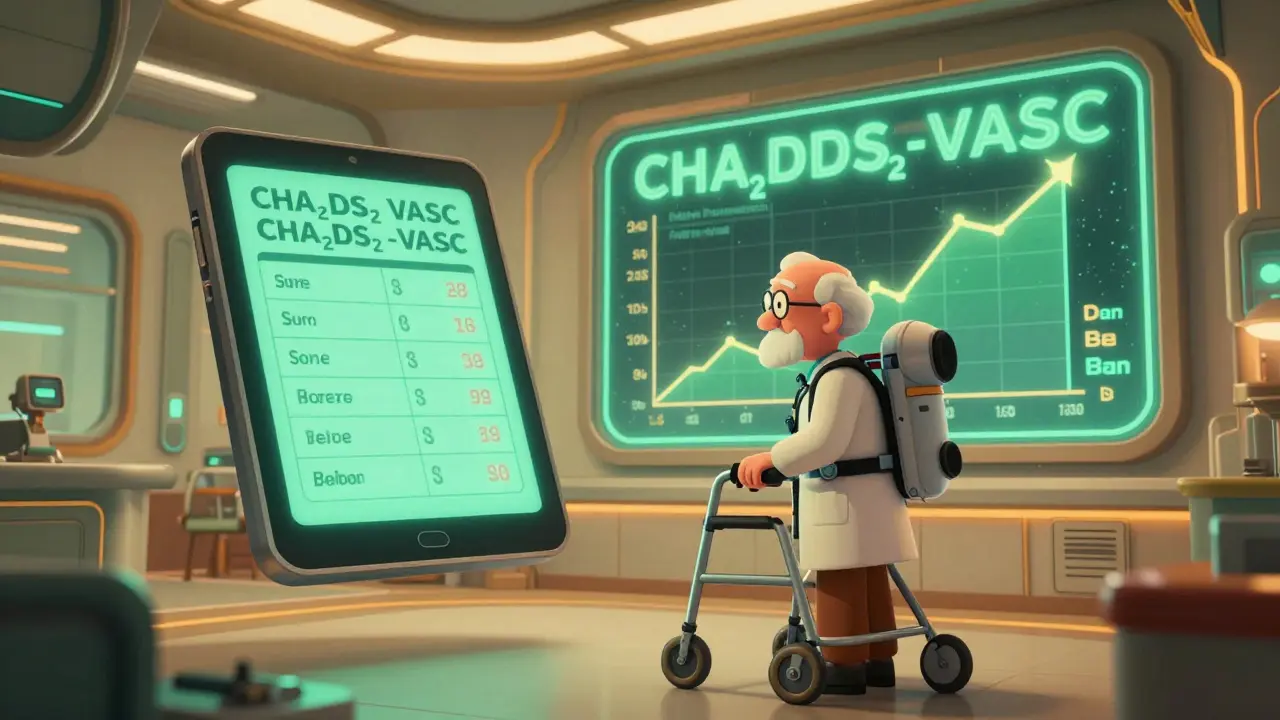
DOACs vs. Warfarin: What’s Best for Seniors?
Not all blood thinners are the same. Warfarin works, but it’s finicky. It needs regular blood tests to keep the INR between 2 and 3. Most seniors don’t hit that target more than 60-65% of the time. That means their blood is either too thin (risk of bleeding) or not thin enough (risk of stroke). DOACs changed the game. Apixaban (Eliquis) cuts major bleeding risk by 31% compared to warfarin in patients over 75. Rivaroxaban reduces brain bleeds by 34%. Dabigatran slashes stroke risk by 88% compared to placebo. And they don’t need constant monitoring. But they’re not perfect. Most are cleared by the kidneys. As we age, kidney function drops. That’s why doctors check creatinine clearance every 6 to 12 months. If it falls below 50 mL/min, the dose may need lowering - especially for dabigatran and edoxaban. And yes, reversal agents were a problem. If you bleed badly, how do you stop it? Warfarin had vitamin K and fresh frozen plasma. DOACs didn’t - until recently. Now, idarucizumab reverses dabigatran. Andexanet alfa reverses apixaban, rivaroxaban, and edoxaban. These aren’t magic bullets, but they give doctors tools to act fast.When Not to Use Anticoagulants
There are rare cases where anticoagulants aren’t right. If someone has active bleeding, uncontrolled high blood pressure, or severe liver disease, it’s too risky. But fall risk? That’s not one of them. The American College of Cardiology, American Heart Association, and Heart Rhythm Society all say age alone should never be a reason to avoid anticoagulation. Neither should a history of falls. The 2020 European Society of Cardiology guidelines go even further: if your CHA₂DS₂-VASc score is 2 or higher (which most seniors with AFib have), you should be on a blood thinner - no exceptions. Yet here’s the gap: only 48% of seniors over 85 get anticoagulants, even though 72% of those aged 65-74 do. Why? Because doctors are scared. And families are scared. And fear overrides data.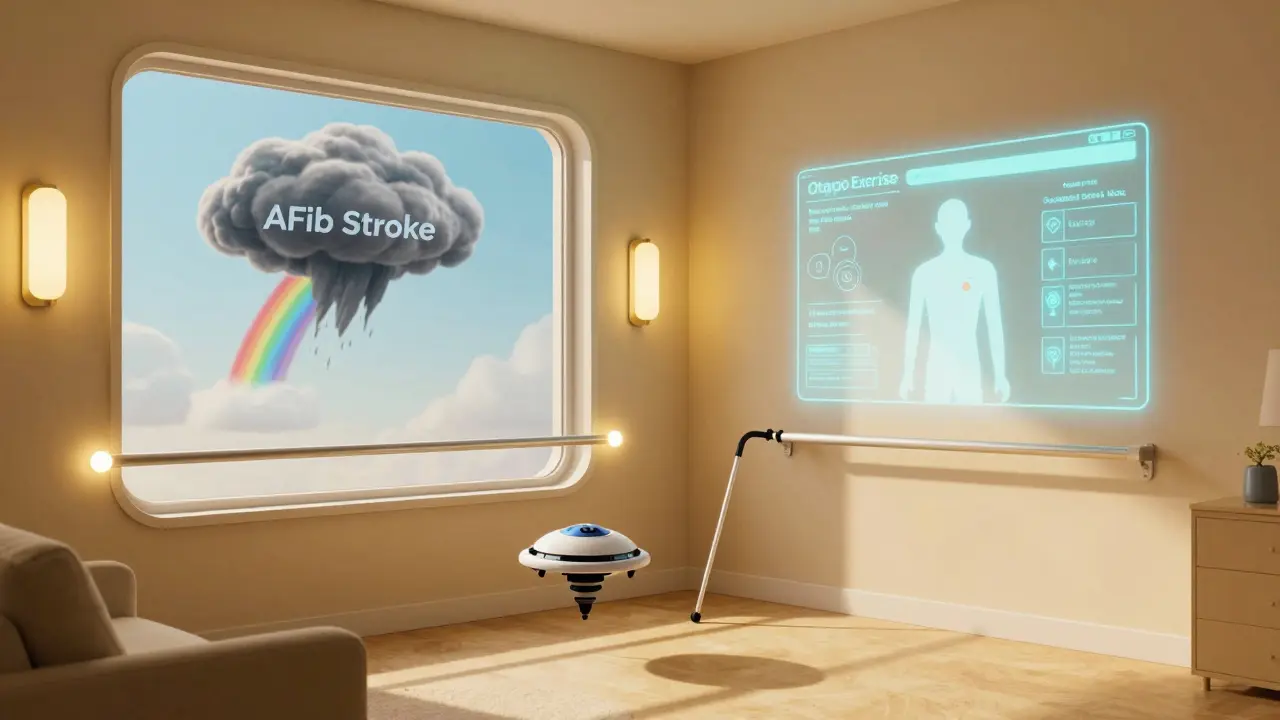
How to Stay Safe - Without Stopping the Medication
You don’t have to choose between stroke and a fall. You can reduce both. Start with a fall risk assessment. Use the Morse Fall Scale or ask your doctor to do a multifactorial evaluation. Look at these areas:- Medications: Are you on benzodiazepines, sleep aids, or opioids? These increase fall risk. Ask if they can be cut or replaced.
- Vision: Are your glasses up to date? Cataracts or glaucoma can make stairs dangerous.
- Balance: Do you use a cane or walker? If not, consider it. Physical therapy helps - the Otago Exercise Program cuts falls by 35% in seniors.
- Home safety: Remove throw rugs. Install grab bars in the bathroom. Add nightlights. Fix loose steps.
- Footwear: Slip-on shoes with rubber soles beat slippers any day.
The Bottom Line: Don’t Quit - Optimize
If you’re a senior with AFib, your biggest threat isn’t falling. It’s having a stroke that leaves you paralyzed, dependent, or dead. Anticoagulants are one of the most effective tools we have to prevent that. The data is clear. The guidelines are clear. The only thing holding people back is fear - fear of bleeding, fear of falls, fear of the unknown. The solution isn’t stopping the drug. It’s managing the risks smarter. Test your kidneys. Fix your home. Review your meds. Do balance exercises. Talk to your doctor about DOACs if you’re still on warfarin. You don’t have to live in fear. You just have to be informed.Should seniors stop anticoagulants after a fall?
No. A single fall - or even multiple falls - is not a reason to stop anticoagulation. Studies show the risk of stroke from untreated atrial fibrillation far outweighs the risk of bleeding from a fall. Instead of stopping the medication, focus on reducing future fall risks through home safety, balance training, and medication review.
Are DOACs safer than warfarin for elderly patients?
Yes, for most seniors. DOACs like apixaban and rivaroxaban have lower rates of major bleeding - especially brain bleeds - compared to warfarin. They also don’t require frequent blood tests. However, they rely on kidney function, so regular monitoring is needed. Apixaban has the best safety profile in patients over 75, with 31% less major bleeding than warfarin.
What if my parent is 90 and falls often? Should they still be on a blood thinner?
Yes - and they may benefit the most. Research from Lip et al. (2015) showed that patients aged 85 and older derive the greatest net clinical benefit from anticoagulation. Even with frequent falls, the risk of stroke is so high that the benefits outweigh the risks. The key is using a DOAC with proper kidney monitoring and implementing fall prevention strategies.
Can anticoagulants be reversed if a senior has a serious bleed?
Yes, but it depends on the drug. Idarucizumab reverses dabigatran. Andexanet alfa reverses apixaban, rivaroxaban, and edoxaban. Warfarin can be reversed with vitamin K and fresh frozen plasma. These reversal agents aren’t perfect, but they give emergency teams critical tools to act quickly. That’s why DOACs are now preferred - they’re more predictable, and reversal options exist.
Why are so many seniors not on anticoagulants if they’re so effective?
Because doctors and families are afraid of bleeding. A 2021 survey found 68% of primary care physicians would withhold anticoagulants from an 85-year-old with two falls, even if their stroke risk was high. This is a gap between guidelines and practice. The evidence is clear: stroke prevention wins. The challenge is changing habits, not science.




Josh josh
January 27, 2026 AT 20:48bro i saw my grandpa on warfarin and it was chaos every week for blood tests lmao
then they switched him to Eliquis and he just takes one pill a day and stops acting like a lab rat
no more needles no more crying at the pharmacy
and yeah he fell twice last year
still alive still walking still not having a stroke
stop being scared of the drug and start being scared of the stroke
Karen Droege
January 29, 2026 AT 03:34OH MY GOD I’M SO GLAD THIS POST EXISTS
My mom’s cardiologist wanted to take her off apixaban after she slipped on the bathroom mat - SHE’S 82 AND HAS A CHA₂DS₂-VASc OF 6
I printed out the ARISTOTLE trial data and taped it to his whiteboard
He apologized two days later
DOACs aren’t magic - but ignoring them is criminal
And yes, her bathroom now has grab bars, non-slip mats, and a nightlight shaped like a cat
She’s still dancing in the kitchen at 2am
And I’m still mad at every doctor who says ‘you’re too old’
Age isn’t a contraindication - fear is
shivam utkresth
January 29, 2026 AT 08:21in india we got this weird cultural thing where elders are told to ‘stop meds if they fall’ - like it’s some kind of karma reset
my uncle’s doctor in delhi literally said ‘beta, agar gir gaye toh blood thinners band karo’
he had a TIA six weeks later
DOACs? we barely have access to them
and when we do, the pharmacy charges 3x because ‘foreign medicine’
we need education, not superstition
and maybe a damn subsidy
also - who the hell still prescribes warfarin to someone over 70?!
Aishah Bango
January 30, 2026 AT 04:17Let’s be honest - this isn’t about medicine. It’s about responsibility.
If you’re on a blood thinner and you fall - it’s not the drug’s fault.
It’s the family’s fault for not installing grab bars.
It’s the doctor’s fault for not checking kidney function.
It’s the patient’s fault for still wearing slippers.
Stop blaming the pill.
Fix the environment.
And stop treating seniors like fragile porcelain dolls.
They’ve lived long enough to know what’s risky.
Let them live.
Angie Thompson
January 30, 2026 AT 05:45my grandma’s on rivaroxaban and she’s 88 and still walks her dog every morning 😍
she has a cane now and a bright red one at that
and guess what? she didn’t have a stroke last year
but her neighbor? stopped warfarin after a fall
had a massive stroke in February
now she’s in a nursing home and can’t say her own name
please don’t let fear make decisions for your loved ones 💔
talk to your doctor. get the DOAC. fix the floor. live.
Shweta Deshpande
January 30, 2026 AT 06:35you know what made me finally push for my dad to switch from warfarin to apixaban? watching him cry because he missed his INR test because the clinic was closed on a holiday
he’s 81, has diabetes, and walks with a walker - but he’s still the one who waters the plants and fixes the leaky faucet
he doesn’t want to die from a stroke - he wants to keep fixing things
and honestly? the DOACs are so much easier
no more weekly blood draws, no more worrying about kale salads, no more frantic calls to the doctor
and yes, he fell last winter - slipped on ice
got a bruise the size of a dinner plate
and guess what? no brain bleed
just a sore hip and a lot of grumbling
but he’s still here
and he’s still fixing things
so please - if you’re reading this and your parent is on warfarin - ask about DOACs
it’s not just safer - it’s kinder
bella nash
January 30, 2026 AT 18:57The ethical imperative to preserve autonomy must be balanced against the paternalistic impulse to mitigate risk through pharmacological withdrawal.
While the statistical advantage of anticoagulation is empirically demonstrable, the phenomenological experience of familial anxiety constitutes a legitimate heuristic in clinical decision-making.
Moreover, the commodification of pharmaceuticals within neoliberal healthcare systems exacerbates disparities in access to DOACs, thereby rendering guideline adherence an abstract ideal rather than a practical reality for many elderly populations.
Therefore, while the data is compelling, the moral architecture of care must account for the emotional labor of caregivers and the cultural stigma attached to pharmacological intervention in aging bodies.
One cannot reduce human vulnerability to a risk-benefit ratio.
Robin Van Emous
February 1, 2026 AT 00:41my dad was on warfarin for 7 years.
he fell. once.
got a bruise.
doctor wanted to stop it.
i said no.
switched him to Eliquis.
no more blood tests.
no more food rules.
he’s 86.
still drives.
still argues with me about politics.
still walks to the corner store.
he’s not dead.
and he’s not having a stroke.
stop being scared.
do the right thing.