
When a brand-name drug loses its patent, the first generic version usually hits the market and drops the price by about 13%. That sounds like a win-until you realize the real savings come after that first entry. The second and third generic manufacturers are where the biggest price crashes happen. This isn’t guesswork. It’s backed by years of FDA data, congressional reports, and real-world pharmacy sales figures.
Why the First Generic Isn’t Enough
The first generic to enter after a brand patent expires often doesn’t cut prices as much as you’d expect. Why? Because there’s still no real competition. That first maker has the market to themselves. They can set a price just low enough to win the race, but high enough to still make a solid profit. FDA data from 2022 shows that after the first generic enters, prices typically drop to about 87% of the original brand price. That means if a drug cost $100 as a brand, the first generic might sell for $87. Still expensive for patients paying out of pocket.The Real Price Drop Starts with the Second Generic
When a second manufacturer gets approval and starts selling the same drug, everything changes. Suddenly, there are two companies fighting for the same business. They’re not just competing on quality-they’re competing on price. The FDA found that the second generic drives prices down to 58% of the original brand cost. So that $100 drug now costs $58. That’s a 31% drop in just one step. This isn’t rare. It happens across dozens of common medications every year-blood pressure pills, cholesterol drugs, antibiotics.Enter the Third Generic: The Price Plummets
Now imagine a third company joins. This is where the savings explode. The third generic pushes prices to just 42% of the original brand price. That $100 drug? Now it’s $42. That’s a 58% total reduction from the brand price, and nearly half of what the first generic offered. The Department of Health and Human Services confirmed this pattern in 2021: markets with three generic competitors see price drops of about 20% within three years. But here’s the kicker-the drop from one to three competitors is often more than 60%. That’s not a coincidence. It’s the natural result of competition.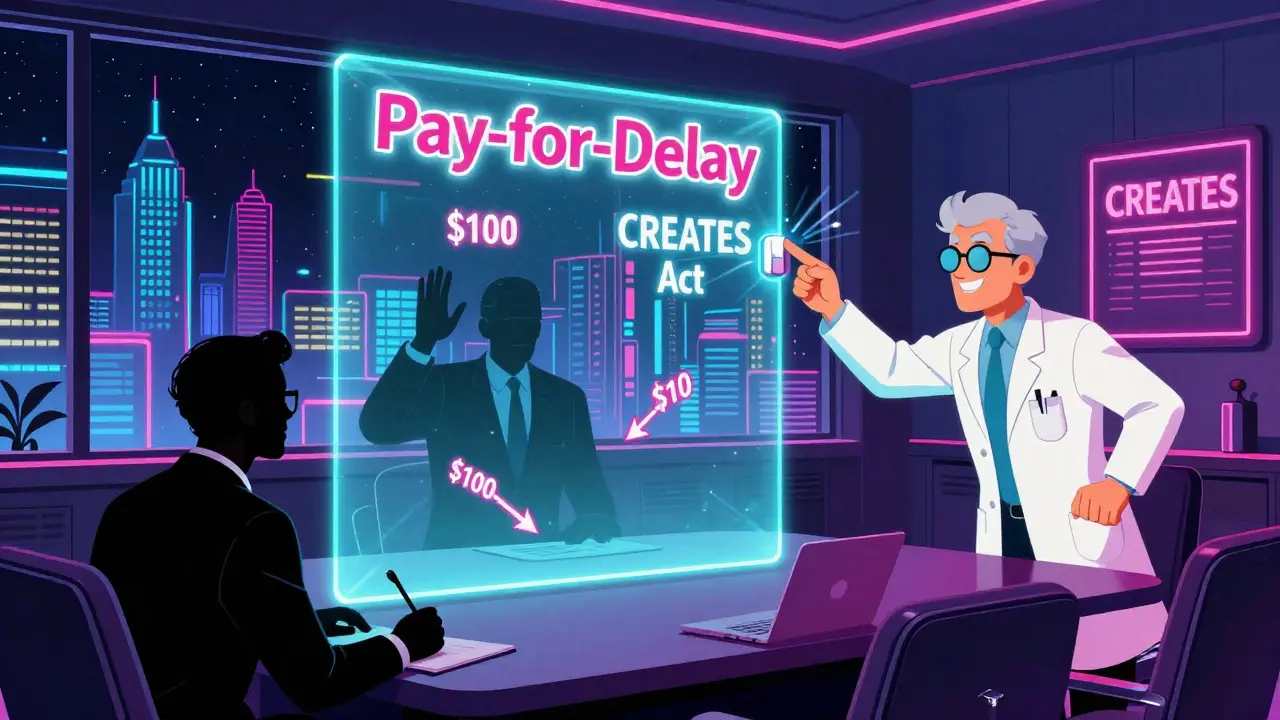
Numbers Don’t Lie: The More Competitors, the Lower the Price
The pattern is clear and consistent. Each new generic entrant adds pressure. The University of Florida studied over 1,000 generic drugs and found that when competition drops from three manufacturers to two, prices often spike by 100% to 300%. Yes, you read that right. One less competitor can double or even triple the price. That’s how fragile the system is. On the flip side, when a drug has 10 or more generic makers, prices can fall 70% to 80% below the original brand cost. That’s not theory-it’s what happens in markets like metformin, lisinopril, or atorvastatin, where over a dozen companies now produce the drug.Why Do Some Drugs Still Cost Too Much?
Not every drug gets this kind of competition. In fact, nearly half of all generic markets are stuck in a duopoly-just two manufacturers. Why? Because it’s hard to get into the market. Some brand companies use shady tactics to delay generics. They file dozens of weak patents just to extend their monopoly-called “patent thickets.” Or worse, they pay the first generic company to stay off the market. These “pay-for-delay” deals cost patients over $3 billion a year in extra out-of-pocket costs, according to the Blue Cross Blue Shield Association. These aren’t rumors. They’re documented in court cases and congressional testimony.Who Controls the Market? It’s Not Just the Manufacturers
Even when generics flood the market, the savings don’t always reach patients. Three big wholesalers-McKesson, AmerisourceBergen, and Cardinal Health-control 85% of drug distribution. Three pharmacy benefit managers (PBMs) handle 80% of prescriptions. These middlemen negotiate discounts behind closed doors. They don’t always pass savings along. A drug might cost $42 at the manufacturer level, but the pharmacy pays $55 because of markups and rebates. The FDA found that while manufacturer prices drop 60-70% with multiple generics, pharmacy acquisition costs only fall 40-50%. The difference? Wholesaler and PBM fees.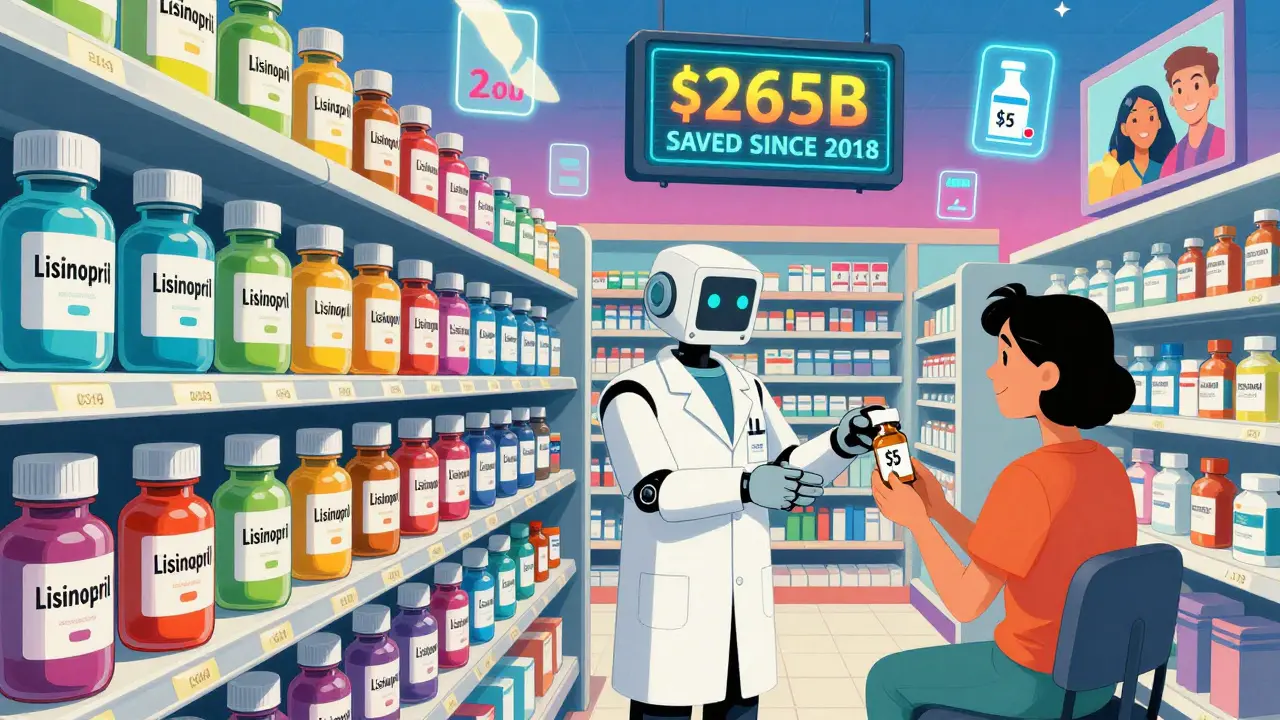
What’s Being Done to Fix This?
Lawmakers are starting to act. The 2022 CREATES Act blocks brand companies from refusing to supply samples needed for generic testing. The Preserve Access to Affordable Generics and Biosimilars Act targets pay-for-delay deals. The FDA’s GDUFA III program, running from 2023 to 2027, is speeding up approvals for complex generics-drugs that are harder to copy, like inhalers or injectables. These aren’t just policy changes. They’re lifelines for patients who need affordable meds.What This Means for You
If you’re paying for prescriptions, ask your pharmacist: “Is there another generic version available?” Sometimes, switching to a different manufacturer can cut your cost in half. Insurance plans often favor certain generics-but not always the cheapest one. Ask for the lowest-priced version, even if it’s not on your plan’s preferred list. Many pharmacies will order it for you. And if your drug has only one or two makers, ask your doctor about alternatives. Sometimes, a similar drug in a more competitive market will cost far less.The Bigger Picture: $265 Billion in Savings
Between 2018 and 2020 alone, 2,400 new generic drugs entered the market. Thanks to second and third competitors, they saved U.S. consumers $265 billion. That’s more than the entire annual budget of New Zealand’s public health system. Every time a new generic maker enters the race, it’s not just a business move-it’s a public health win. The system works when competition is real. And the second and third generics? They’re the ones that make it real.Why don’t all generic drugs get cheaper after the first one enters?
Many drugs only have one or two manufacturers because the market is hard to enter. High manufacturing costs, regulatory hurdles, or anti-competitive tactics by brand companies can block new entrants. Without at least three competitors, prices don’t fall as much. Some markets are stuck in duopolies, where two companies split the market and avoid price wars.
Can I ask my pharmacy for a different generic version?
Yes, absolutely. Generics are required by law to be identical in effectiveness, but they can come from different manufacturers. Ask your pharmacist if another version is available at a lower price. Many pharmacies will order it for you, even if it’s not on your insurance’s preferred list.
Do pay-for-delay deals still happen?
Yes, though they’re now illegal in many cases. Brand companies still sometimes pay generics to delay entry, especially for high-revenue drugs. The Blue Cross Blue Shield Association estimates these deals cost patients $3 billion a year. New laws like the Preserve Access to Affordable Generics Act aim to shut them down completely.
Why do some generic drugs cost more than others even if they’re the same medicine?
It’s usually because of who makes it and how it’s distributed. A drug made by a small company in a competitive market may cost $10, while the same drug from a large manufacturer with little competition might cost $30. Wholesalers and PBMs also influence pricing through rebates and contracts that aren’t always transparent to patients.
Are there drugs where second and third generics don’t help?
Yes. Complex drugs like inhalers, injectables, or biologics are harder to copy. It takes longer and costs more to get approval. That’s why fewer companies enter these markets. The FDA is working to speed up approvals for these drugs under GDUFA III, but progress is slower than for simple pills.


John Smith
March 3, 2026 AT 05:45First generic? More like first scam. That 13% drop is just the bait. The real meat? When the second and third guys show up and start throwing prices like confetti. I paid $140 for my blood pressure med last year. Switched to the third generic? $38. Same damn pill. Same damn results. Why the hell are we still letting monopolies get away with this?
And don't get me started on PBMs. They're the real vampires. Manufacturer drops to $42? Pharmacy charges $58. Who pockets that difference? Not you. Not me. Some suit in Connecticut with a yacht.
Stop asking for 'alternatives.' Demand the cheapest version. Period.
Sharon Lammas
March 5, 2026 AT 05:35I think about this differently. It's not just about price. It's about dignity. When I was on insulin, the first generic was still unaffordable. I remember sitting in a pharmacy parking lot, crying because I had to choose between meds and groceries. Then, after the third generic came in? I could breathe again. Not because the drug changed. But because the system finally let people live.
It's not economics. It's survival. And we act like this is normal.
Donna Zurick
March 5, 2026 AT 14:22This is why I always ask my pharmacist if there's another version. One time I switched from the brand to the first generic-saved $20. Then I switched again to the third one-saved another $40. Total drop: 60%. I didn't even need to change doctors. Just asked. That's it. So simple. Why don't more people do this?
Also-PBMs are the worst. They're the middlemen who act like they're helping but are just taking cuts. We need transparency. Like, NOW.
Pankaj Gupta
March 6, 2026 AT 11:17The data presented here is both compelling and alarming. The exponential price reduction with each additional generic manufacturer is not merely an economic phenomenon-it reflects a systemic failure in market regulation. When competition is artificially suppressed through patent thickets and pay-for-delay agreements, the market ceases to function as a free mechanism. This is not capitalism-it is rent-seeking disguised as innovation. The solution lies not in consumer behavior alone, but in robust antitrust enforcement and elimination of regulatory capture by pharmaceutical interests.
Richard Elric5111
March 7, 2026 AT 01:17One must acknowledge the inherent complexity of pharmaceutical manufacturing. The entry of second and third generic manufacturers is not a spontaneous or organic occurrence-it is contingent upon regulatory approval, bioequivalence testing, and capital investment. The observed price reductions are the result of competitive equilibrium, which, while beneficial to consumers, requires careful oversight to ensure safety and efficacy. To reduce this to a simplistic narrative of 'more competitors = cheaper drugs' is to ignore the rigorous scientific and legal frameworks that underpin pharmaceutical distribution.
Dean Jones
March 8, 2026 AT 15:45I’ve been following this for years. The first generic? It’s like a guy showing up to a party and saying, 'I’ll bring snacks.' Then the second guy shows up with a whole damn buffet. The third? He brings a taco truck and a keg. And suddenly everyone’s eating for free. That’s what’s happening. The system works when you have real competition. But the real horror? When only two companies are left. One day, prices jump 200%. Just like that. No warning. No reason. Just because they decided to stop being nice.
And don’t even get me started on how PBMs and wholesalers hide the real price. It’s like a magician’s trick. The drug costs $42. You pay $70. Where’s the other $28? Gone. Into some black box labeled 'rebates.'
It’s not rocket science. It’s greed. And it’s killing people.
Betsy Silverman
March 10, 2026 AT 09:50I used to work in a pharmacy. We had this one drug-generic metformin. For months, it was $45 a month. Then a third manufacturer got approved. Suddenly, it was $12. I had patients crying. Not from sadness. From relief. One woman told me she’d been skipping doses to make it last. Now she could take it every day. That’s the real number. Not $265 billion. It’s the woman who didn’t die because she could afford her pill.
And yeah, PBMs are sketchy. But patients don’t know that. We need to educate them. Simple. Direct. No jargon.
Ivan Viktor
March 11, 2026 AT 02:44So let me get this straight. The government lets a company charge $100 for a pill, then when someone else makes the same pill, they only drop it to $87? And we call that competition? That’s not capitalism. That’s a hostage situation. And the third guy? He’s the hero who shows up with a crowbar. But why does it take three people to fix something that should’ve been fixed by one? We’re doing capitalism wrong. Or maybe we’re not doing capitalism at all. Maybe we’re doing monopoly with a smiley face.
Zacharia Reda
March 12, 2026 AT 00:00I love how this post breaks it down. But here’s the thing most people miss: the real victory isn’t the price drop. It’s the fact that competition forces manufacturers to actually care about quality. When there’s only one generic, they can cut corners. When there are ten? They can’t. I’ve seen generics fail quality tests. But with competition? The bad ones get exposed. The market purges them. That’s not just cheaper. That’s safer.
And yes-ask for the cheapest version. Even if your insurance says no. Pharmacies can order it. They just don’t always tell you. Be the annoying customer. It works.
Jeff Card
March 13, 2026 AT 21:46I have a friend who’s a pharmacist. She told me about a drug that had five manufacturers. Price: $8. Then one of them got bought out. Suddenly, three left. Price jumped to $22. Then one more left. Two left. Price hit $41. She said it was like watching a car crash in slow motion. No one intervened. Just… profit. And patients? They just kept paying. I didn’t even know this was happening. Now I ask every time. And I tell everyone I know.
Matt Alexander
March 15, 2026 AT 21:38Simple rule: if your drug has only one or two generics, ask for another brand. There’s always another. You don’t need to be an expert. Just say, 'Is there a cheaper version?' The pharmacist will know. And if they say no? Ask why. They’ll usually admit it’s because the insurance company picked the expensive one. That’s not your fault. It’s their system. Fix it by switching.
Gretchen Rivas
March 17, 2026 AT 09:23I switched my cholesterol med to the third generic. Cost dropped from $75 to $11. I didn’t change anything else. Just asked. That’s it. I wish more people knew this was possible.