
Depression isn’t just feeling sad. It’s waking up exhausted, losing interest in things you once loved, and struggling to get through the day-even when nothing obvious is wrong. If you’ve been feeling this way for more than two weeks, you’re not alone. About 280 million people worldwide live with major depressive disorder, making it the top cause of disability globally. The good news? We now have clear, evidence-backed ways to manage it-medications, therapy, and lifestyle changes that actually work together.
Medications: Not a Quick Fix, But Often Necessary
When depression is moderate to severe, medication can be a critical part of recovery. The most common first-line choices are SSRIs-selective serotonin reuptake inhibitors-like sertraline, citalopram, and fluoxetine. These aren’t "happy pills." They don’t make you euphoric. Instead, they help your brain regain balance, making it easier to engage in therapy and daily life. Sertraline is often preferred because it’s affordable, well-tolerated, and backed by strong data. But no single SSRI works for everyone. Side effects vary: about 30-50% of people on SSRIs report sexual dysfunction, while SNRIs like venlafaxine may raise blood pressure in 10-15% of users. Bupropion, another option, has fewer sexual side effects but carries a small seizure risk-about 0.4% at standard doses. For treatment-resistant depression-when two or more meds haven’t helped-doctors may add an atypical antipsychotic like quetiapine. Studies show this boosts response rates to nearly 60%, compared to 44% with placebo. Lithium or thyroid hormone (T3) can also help in these cases. For the most severe cases-especially with psychosis or suicidal thoughts-electroconvulsive therapy (ECT) remains the most effective option, with remission rates of 70-90%. Yes, memory issues can happen, but for many, the relief outweighs the risks.Therapy: Rewiring Thoughts, Not Just Masking Symptoms
Therapy isn’t just talking. It’s training your brain to think differently. Cognitive Behavioral Therapy (CBT) is the gold standard. In 8-28 weekly sessions, you learn to spot negative thought patterns-like "I’m a failure" after one mistake-and replace them with more realistic ones. For mild to moderate depression, CBT alone works about as well as medication, with 50-60% of people seeing meaningful improvement. Interpersonal Therapy (IPT) focuses on relationships. If your depression stems from grief, conflict, or isolation, IPT helps you rebuild connections. Twelve to sixteen sessions can match medication’s effectiveness for moderate cases. For those who’ve had depression before, Mindfulness-Based Cognitive Therapy (MBCT) is a game-changer. This 8-week group program teaches you to notice early warning signs of relapse without getting pulled back in. Studies show it cuts relapse risk by 31% over a year. If your depression is tied to a troubled relationship, couples therapy can help. One study found 40-50% of people improved when both partners joined therapy, compared to 25-30% with individual sessions alone.Lifestyle Changes: The Hidden Pillars of Recovery
You can’t out-medicate a sedentary life, poor sleep, or constant stress. Lifestyle isn’t optional-it’s foundational. Exercise is a proven antidepressant. Three to five sessions a week of brisk walking, cycling, or swimming for 30-45 minutes can be as effective as medication for mild depression. One 2020 meta-analysis found exercise had a bigger impact than placebo-effect size of -0.68. Sleep is non-negotiable. Seven out of ten people with depression have insomnia. Fixing sleep means sticking to a strict schedule: wake up and go to bed within 30 minutes of the same time every day, even on weekends. Limit time in bed to actual sleep (no lying there scrolling). Avoid screens an hour before bed. These steps alone can reduce depression scores by 30-40%. Diet matters more than you think. The SMILES trial gave 67 people with moderate depression a Mediterranean-style diet-lots of veggies, fruits, whole grains, fish, nuts, and olive oil-for 12 weeks. Thirty-two percent went into full remission. The control group, which got social support, had only an 8% remission rate. Stress reduction techniques like daily 10-20 minute mindfulness meditation, progressive muscle relaxation, yoga, or tai chi can lower depression symptoms. These aren’t "nice-to-haves." They’re tools that help regulate your nervous system.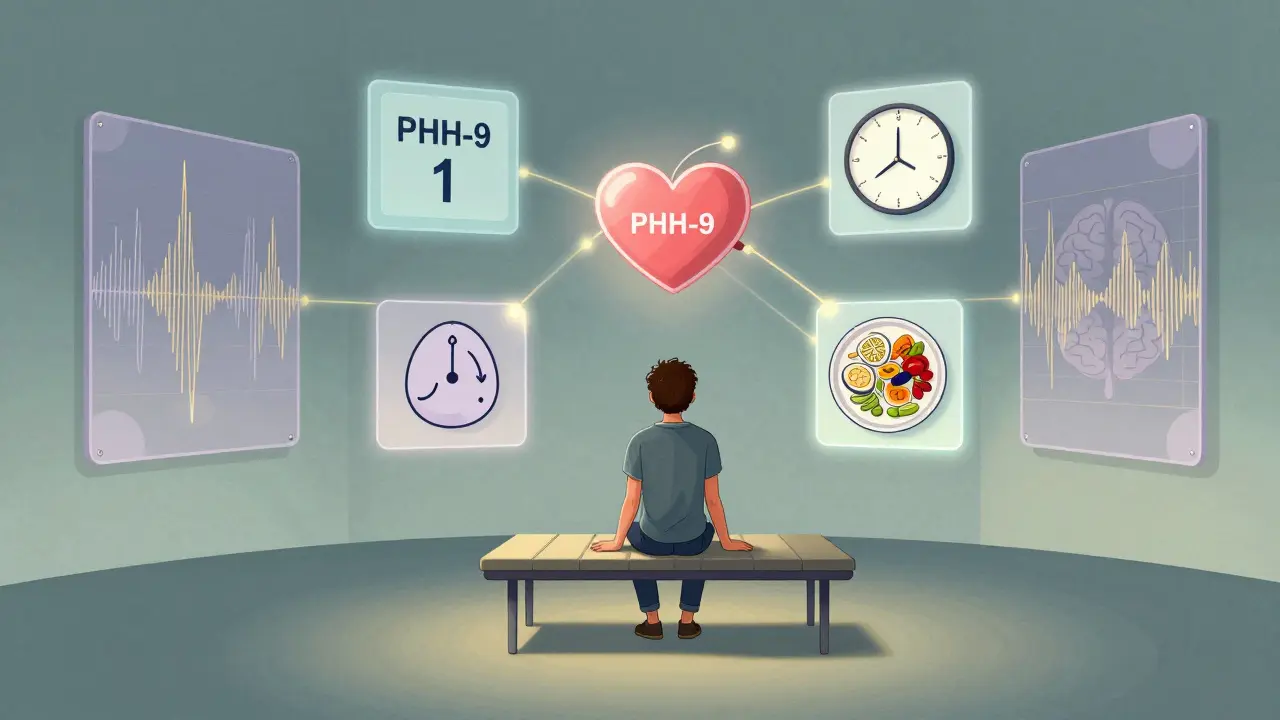
What Works Based on How Bad It Is
Depression isn’t one-size-fits-all. Treatment should match severity.- Mild depression (PHQ-9 score 5-9): Skip meds unless you really want them. Start with structured exercise, guided self-help apps, or weekly check-ins with a counselor.
- Moderate depression (PHQ-9 score 10-14): Choose between CBT or an SSRI. Both work. Combine them if you’re struggling to function at work or home.
- Severe depression (PHQ-9 score 15+): Start with both medication and therapy. Alone, each helps about 40-50%. Together, it jumps to 60-70%.
- Chronic depression (lasting 2+ years): Try CBASP-a specialized form of therapy that helps you reconnect with how others see you. One study showed 48% improved with CBASP plus meds, versus 28% with meds alone.
- Psychotic depression: Requires antidepressants plus antipsychotics-or ECT. ECT works in 70-80% of cases here.
Barriers and Real-World Challenges
Knowing what works is one thing. Getting it is another. In the U.S., only 35.6% of adults with depression get any treatment. Why? Shortages. Cost. Stigma. There are over 6,200 mental health professional shortage areas in the country. Finding a therapist can take months. That’s why digital tools are filling gaps. FDA-cleared apps like reSET have shown 47% response rates in trials. They’re not perfect, but they’re better than nothing. Treatment takes time. Don’t give up after two weeks. Antidepressants need 4-8 weeks to kick in. Therapy needs 8-12 sessions to show real change. The STAR*D trial proved that even if your first treatment fails, sticking with a step-by-step plan leads to remission in 67% of people over time.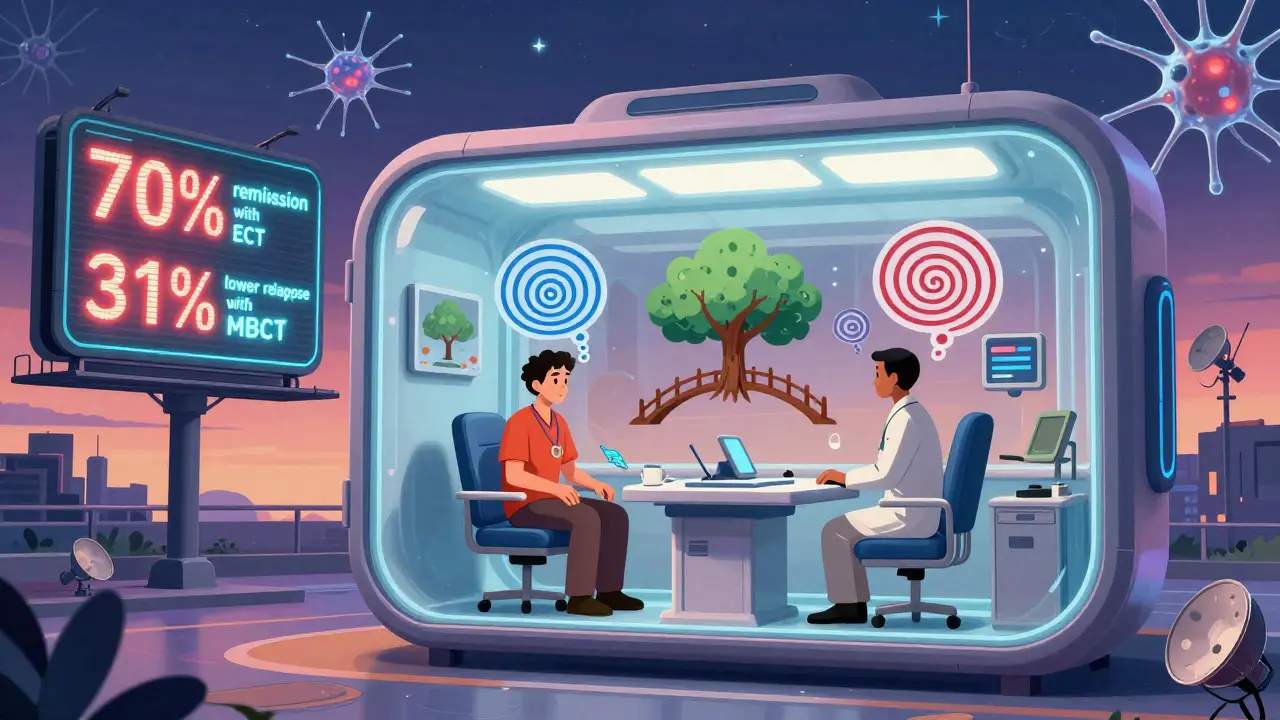
The Future Is Personalized
The days of guessing which pill or therapy will work are ending. New tools are emerging:- Psilocybin-assisted therapy showed 71% response rates in early trials-though it’s not yet legal outside clinical settings.
- Smartphone apps now analyze speech patterns, typing speed, and social activity to predict depressive episodes up to 7 days ahead with 82% accuracy.
- Researchers are studying biomarkers-like inflammation levels or brain activity patterns-to match people with the right treatment faster.
What to Do Next
If you’re struggling:- Take a free PHQ-9 screening online-it’s quick and gives you a baseline.
- Talk to your doctor. Ask: "Which of these options makes the most sense for me?" Don’t let them push one path.
- Start one lifestyle change: walk 20 minutes a day, or go to bed 30 minutes earlier.
- If therapy feels out of reach, try a free app like Woebot or Moodfit-they’re based on CBT principles.
- Be patient. Recovery isn’t linear. Some days will feel worse. That doesn’t mean you’re failing.
Depression doesn’t have to be a life sentence. With the right mix of tools-medication, therapy, and daily habits-you can rebuild your life. It’s not about being perfect. It’s about being consistent.
Can I just take medication and skip therapy?
You can, but you’re likely missing out on long-term benefits. Medication helps you feel better enough to engage in life. Therapy teaches you how to stay better. Studies show combining both leads to higher remission rates and lower relapse. For moderate to severe depression, guidelines strongly recommend both.
How long should I stay on antidepressants?
For a first episode of depression, most doctors recommend staying on medication for 6-12 months after symptoms improve. For people with two or more episodes, or chronic depression, long-term use (2+ years) is often advised. Stopping too soon increases relapse risk by up to 80%. Never quit abruptly-work with your doctor to taper safely.
Do natural supplements help with depression?
Some supplements like omega-3s (especially EPA), vitamin D, and folate may help as add-ons, especially if you’re deficient. But they’re not replacements for proven treatments. St. John’s Wort can interact dangerously with other meds. Always talk to your doctor before starting anything.
What if I can’t afford therapy or meds?
Many community health centers offer sliding-scale fees. Online platforms like Open Path Collective connect people with low-cost therapists. Generic SSRIs like sertraline cost as little as $4 a month at Walmart or Costco. Free apps like PTSD Coach or MindShift can provide CBT tools. Exercise and sleep hygiene cost nothing-and are proven to help.
Is depression my fault?
No. Depression isn’t weakness, laziness, or a character flaw. It’s a medical condition with biological, psychological, and social roots. Just like diabetes isn’t caused by eating too much sugar, depression isn’t caused by thinking negatively. Blaming yourself makes it worse. Treatment is about healing-not fixing yourself.

Chris Clark
December 19, 2025 AT 04:19man i wish i knew all this 5 years ago. i was on zoloft for a year and thought i was just being weak until i started therapy and realized my brain was literally stuck in a loop. now i walk 45 mins every morning and it’s the only thing that keeps me from falling back
Nina Stacey
December 19, 2025 AT 08:22i’ve been doing mbct for 6 months now and it’s changed everything honestly i used to spiral over the tiniest thing like if my coffee was cold i’d think i was a failure now i just notice the thought and let it float by like a cloud and it’s so freeing i wish everyone could try this its not woo woo its science
mary lizardo
December 19, 2025 AT 20:46This article is dangerously oversimplified. The SMILES trial had a sample size of 67. The STAR*D trial was deeply flawed due to high attrition rates. You’re promoting pharmaceutical-industry-approved narratives while ignoring systemic causes like economic precarity and social isolation. Depression is not a biochemical imbalance-it’s a societal failure.
Nicole Rutherford
December 21, 2025 AT 07:40Oh please. You think exercise fixes depression? I’ve run marathons. I’ve done yoga, meditated, ate kale smoothies. None of it touched the void. SSRIs saved my life. Stop pretending lifestyle changes are magic. People like you make it worse by making people feel guilty for needing meds.
Chris Davidson
December 22, 2025 AT 02:18Therapy is just talking to a stranger for money. If you want real change you gotta fix your environment. Move cities. Get a better job. Stop blaming your brain. Your brain is fine. Your life is broken
Sajith Shams
December 23, 2025 AT 04:03SSRIs are designed by Big Pharma to keep you dependent. In India we use ayurveda and sunlight. No pills. No therapy. Just discipline. You Americans are weak. You want a pill for everything. Depression is a test of character. Face it without chemicals.
Erica Vest
December 24, 2025 AT 21:18For anyone wondering about St. John’s Wort: it can interact with birth control, blood thinners, and SSRIs. I’ve seen patients end up in the ER because they thought ‘natural’ meant ‘safe.’ Always talk to your doctor. Even if it’s just a supplement.
Glen Arreglo
December 26, 2025 AT 11:13I get what you’re saying about meds vs therapy but the real issue is access. I’m in rural Ohio. My nearest therapist is 90 minutes away. I had to wait 11 weeks just for an intake call. The system is broken. Apps like Woebot aren’t perfect but they’re the only thing keeping me alive right now.
Matt Davies
December 28, 2025 AT 00:55ECT sounds terrifying but honestly? My cousin had it after three failed meds and she came back like a different person. Like someone turned the lights on in her soul. Yeah her memory was fuzzy for a bit but she remembered how to laugh again. That’s worth it. Don’t let fear stop you from the thing that might save you.
mark shortus
December 29, 2025 AT 03:35I’ve been in and out of hospitals for 12 years. I’ve tried everything. I’ve had ECT. I’ve been on 11 different meds. I’ve done CBT, DBT, ACT, IPT, and even art therapy where I painted my pain. I’m still here. Not because of one thing. Because I kept trying. Even when I wanted to die. Even when I hated myself. I kept trying. And that’s the only thing that matters.
William Storrs
December 29, 2025 AT 10:52you’re not broken. you’re not lazy. you’re not failing. you’re healing. and healing isn’t pretty. it’s messy. it’s slow. it’s two steps forward one step back. but every time you get up and take that walk. every time you text your friend even when you don’t want to. every time you take that pill even when you hate it. you’re winning. keep going. you’re doing better than you think
Takeysha Turnquest
December 30, 2025 AT 19:27Depression isn’t an illness. It’s a mirror. It shows you the lies you’ve been telling yourself. The life you’ve been living that doesn’t align with your soul. Medication numbs the mirror. Therapy cleans it. But the real work? That’s facing what’s reflected back. And most people aren’t ready for that kind of truth
jessica .
January 1, 2026 AT 05:06They’re pushing ECT and psilocybin because the government wants to control your mind. You think Big Pharma cares about your mental health? No. They want you dependent. The real cure is getting off the grid. Move to the woods. Stop using phones. Live off the land. That’s the only way to escape the system that made you depressed in the first place