
Ever picked up a prescription and been shocked by the price-only to see a nearly identical pill in the same box, labeled as a generic, and costing half as much? That’s not a mistake. It’s an authorized generic. And if you’re paying full price for a brand-name drug when an authorized generic is available, you’re leaving money on the table.
What Exactly Is an Authorized Generic?
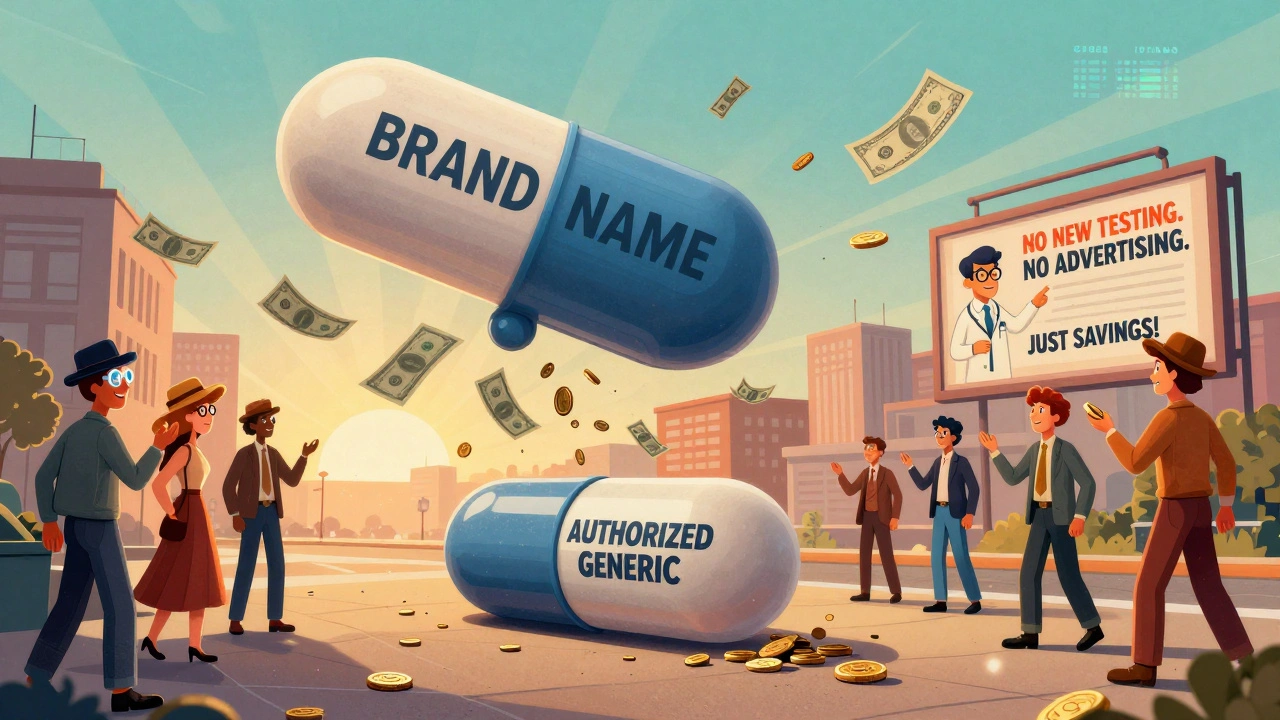
An authorized generic isn’t just another generic. It’s the exact same drug as the brand-name version-same active ingredient, same factory, same pill shape, same color, same packaging, even the same inactive ingredients. The only difference? It’s sold without the brand name on the label.
Here’s how it works: The original drug company (like Pfizer or Merck) makes the brand-name drug. When the patent is about to expire, they either launch their own generic version under a different name or license another company to make and sell it. This version is called an authorized generic because it’s officially approved under the original brand’s FDA application (called an NDA). That means no new testing, no new manufacturing setup. It’s literally the same drug, just cheaper.
Think of it like buying a Coca-Cola bottle with the label peeled off and replaced with a plain white label. Same soda. Same factory. Same ingredients. Just no branding.
Why Are Authorized Generics Cheaper?
The price drop isn’t because the drug is lower quality. It’s because the company doesn’t need to spend money on advertising, marketing, or maintaining a brand image anymore.
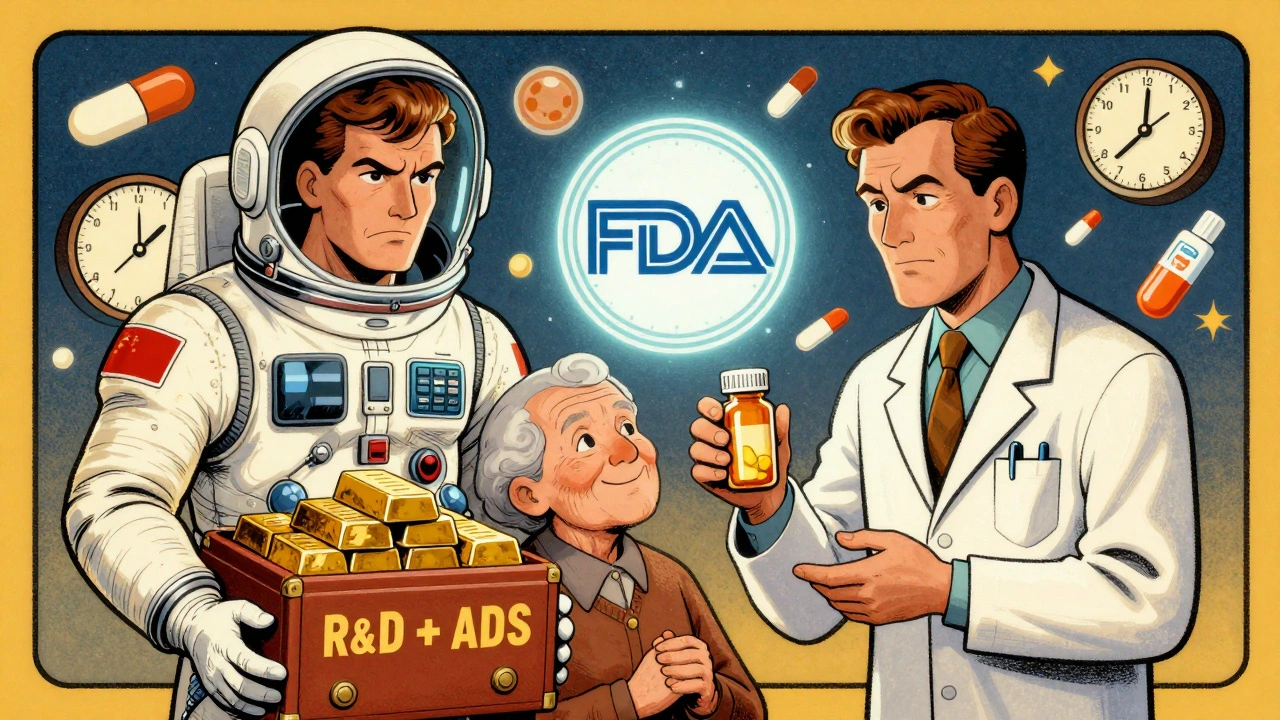
Brand-name drugs cost a lot because pharmaceutical companies recover billions in R&D, marketing, and promotion through high prices during the patent window. Once the patent expires, those costs disappear. Authorized generics skip the whole branding game. No TV commercials. No doctor samples. No fancy packaging. No sales reps knocking on clinic doors.
Plus, there’s competition. When a brand launches its own authorized generic, it’s not just competing with traditional generics-it’s competing with itself. That forces prices down fast. In fact, studies show that when an authorized generic enters the market, retail prices drop 4% to 8% compared to the brand, and pharmacy wholesale prices drop even more-up to 14%.
How Authorized Generics Change the Market
Before authorized generics, the first company to file for a traditional generic got 180 days of exclusive rights to sell it. During that time, they could charge high prices because no one else could enter the market. That meant patients paid more, insurers paid more, and pharmacies had little leverage.
Authorized generics changed that. Now, when a brand company launches its own generic version at the same time as the first traditional generic, it breaks the monopoly. Suddenly, there are two versions of the same drug on the shelf: one from the original maker (now labeled as generic), and one from the challenger.
This forces both to lower prices. Medicaid data shows that when an authorized generic enters the market on day one, the on-invoice price pharmacies pay drops by 13% to 18%. That’s not a small savings. That’s life-changing for people on fixed incomes.
Take the EpiPen. In 2016, Mylan raised the price from $100 to $600. Public outrage followed. Then they released an authorized generic for $300-half the price. That didn’t just save money. It forced other manufacturers to lower their prices too.
Authorized Generics vs. Traditional Generics
Not all generics are the same. Traditional generics are made by other companies after the patent expires. They have to file their own FDA application (an ANDA), prove they’re bioequivalent, and go through their own manufacturing process. That takes time and money.
Authorized generics don’t. They’re made in the same facility, on the same line, with the same batch numbers. The FDA doesn’t require them to go through the ANDA process because they’re covered under the original brand’s approval. That’s why they’re identical down to the last ingredient.
Here’s what that means for you:
- Traditional generic: Same active ingredient, but possibly different fillers, coating, or shape. May take months to appear after patent expiry.
- Authorized generic: Identical to brand. Available on day one of generic competition. No waiting.
Some people worry about switching from brand to generic. With authorized generics, there’s no switch. It’s the same drug. No adjustment period. No risk.
Why Aren’t More People Using Them?
Here’s the catch: pharmacies and pharmacy benefit managers (PBMs) don’t always make authorized generics easy to find.
PBMs control which drugs go on which formulary tiers. Sometimes, they put the brand-name drug and the authorized generic on the same tier-meaning you pay the same copay for both. That makes no sense. If the authorized generic costs the pharmacy $20 and the brand costs $50, why are you paying the same $10 copay for both?
Other times, PBMs push the brand-name drug as the preferred option because they get rebates from the manufacturer. That’s right-the brand company pays the PBM to keep their drug on the top tier, even when a cheaper, identical version is available.
That’s why you need to ask your pharmacist: “Is there an authorized generic for this?” Don’t assume the cheapest option on your receipt is the best. Sometimes, the lowest copay is the brand. The real savings are hidden.
Real-World Impact: Who Benefits?
The biggest winners? People on Medicare Part D, Medicaid, and those without insurance.
A 2022 analysis of 1.2 million Medicare beneficiaries found that when authorized generics were placed on the same tier as traditional generics, medication adherence improved by 8.2 percentage points. Why? Because people could afford to take their meds.
For drugs like statins, blood pressure pills, or antidepressants, that small price difference can mean the difference between taking your medicine every day or skipping doses to save money.
Even for people with good insurance, the savings add up. A $50-a-month drug becomes $40. That’s $120 a year. Multiply that by five prescriptions, and you’re saving $600 a year-just by asking the right question.
How to Get an Authorized Generic
It’s simple. Just ask.
- When your doctor prescribes a brand-name drug, ask: “Is there an authorized generic for this?”
- When you get to the pharmacy, ask the pharmacist: “Do you carry the authorized generic for this medication?”
- If they say no, ask them to order it. Most pharmacies can get it within 24-48 hours.
- Check your plan’s formulary online. Look for the drug name followed by “(AG)” or “authorized generic.”
Some popular drugs with authorized generics include:
- Pradaxa (dabigatran) - for blood clots
- Lexapro (escitalopram) - for depression and anxiety
- Viagra (sildenafil) - for erectile dysfunction
- Humira (adalimumab) - for autoimmune conditions
- Harvoni (ledipasvir/sofosbuvir) - for hepatitis C
These aren’t rare cases. Over 130 authorized generics are currently listed by the FDA. And more are coming as older drugs lose patent protection.
What About the Future?
Authorized generics aren’t going away. In fact, they’re becoming more common. With drug prices under scrutiny and the Inflation Reduction Act capping out-of-pocket costs at $2,000 a year for Medicare users, manufacturers know they need to offer cheaper options to stay competitive.
Some critics argue that authorized generics are used to delay true generic competition-by letting the brand company control the first wave of generics. But the data doesn’t support that. Studies from the FTC show that authorized generics don’t cost more than traditional generics over time. In fact, they drive prices down faster.
For patients, the message is clear: Don’t accept the first price you’re given. Ask for the authorized generic. It’s the same drug. Just cheaper.
Frequently Asked Questions
Are authorized generics as safe as brand-name drugs?
Yes. Authorized generics are made in the same facility, using the same ingredients and processes as the brand-name drug. The FDA requires them to meet the exact same quality standards. There’s no difference in safety, effectiveness, or side effects.
Why is my pharmacy not offering the authorized generic?
Pharmacies may not stock it because their PBM doesn’t prioritize it, or they don’t know it exists. Ask them to order it. Most can get it within a day or two. If they refuse, ask for a different pharmacy or contact your insurance plan directly.
Can I switch from a brand to an authorized generic without side effects?
Absolutely. Since authorized generics are chemically and physically identical to the brand, switching causes no changes in how your body responds. Many patients report no difference at all-except the lower price.
Do insurance plans cover authorized generics?
Yes. Most insurance plans cover authorized generics, often at the same or lower cost-sharing level as traditional generics. Always check your plan’s formulary or ask your pharmacist to confirm coverage.
How do I find out if my drug has an authorized generic?
You can check the FDA’s quarterly list of authorized generics online. Or simply ask your pharmacist or doctor. Many drug manufacturers also list authorized generics on their websites. If you’re unsure, search the drug name + “authorized generic” in your browser.



Sam Mathew Cheriyan
December 7, 2025 AT 00:15so like... uhm... the pharma companies are just like... *sneakily* selling the same pill under a different name? and we’re all paying extra because we dont know? bro this is wild. i thought generics were cheaper because they were, idk, made in a garage in bangladesh lmao
Ernie Blevins
December 7, 2025 AT 18:54this is basic supply chain manipulation. brand companies use authorized generics to crush independent generics by flooding the market with their own version at a discount. it’s not about savings-it’s about control. the FTC should be investigating this as anti-competitive behavior. period.
Ted Rosenwasser
December 9, 2025 AT 07:37The structural economic incentives here are fascinating. The NDA pathway bypasses the ANDA regulatory burden, which is a deliberate legislative loophole designed to accelerate market entry-but it’s being weaponized by incumbents to maintain market share under the guise of consumer benefit. The FDA’s regulatory capture is evident.
Helen Maples
December 10, 2025 AT 21:48You’re not supposed to just accept the first price. You have power. Ask. Every. Single. Time. If your pharmacist says no, ask why. If they can’t answer, go to another pharmacy. Your health isn’t a negotiation. Stop letting corporations dictate your choices. You’re not paying for the brand-you’re paying for the lie.
Olivia Hand
December 12, 2025 AT 02:59i never realized how much of this is about packaging and perception. like, imagine if apple sold the same iphone but with a white box and no logo-would people still pay $1,000? i think we’re conditioned to equate brand with quality, even when the thing is literally identical. it’s psychological pricing at its most insidious.
Desmond Khoo
December 13, 2025 AT 14:49this is the kind of info that changes lives 😊 seriously, if you’re on meds long-term, this could save you hundreds a year. i switched my blood pressure med to the authorized generic and my wallet breathed a sigh of relief. don’t overthink it-just ask your pharmacist. they’ll be glad you did.
Kyle Oksten
December 15, 2025 AT 09:09There’s a deeper question here: if the drug is identical, why does the brand even exist beyond marketing? The answer reveals how much of modern medicine is shaped by perception rather than pharmacology. We treat pills like luxury goods. Maybe we need to stop.
Sadie Nastor
December 17, 2025 AT 04:31i used to be scared to switch from brand to generic... but then i tried the authorized one for my antidepressant and honestly? nothing changed. except i had $30 extra in my pocket this month. 🙌 i wish i’d known sooner. thanks for sharing this 🤍
Sangram Lavte
December 17, 2025 AT 21:22in india we dont even have this option. brand names are everywhere and generics are often sketchy. but this post made me realize-maybe the system isnt broken, its just designed to confuse. if they can do this in the us, why not here? time to push for transparency.
Wesley Phillips
December 19, 2025 AT 10:34Authorized generics are just the pharma industry’s way of saying ‘we’re still in charge’ while pretending to be the good guy. The real winners? PBMs who get rebates from the brand. The real losers? You. And me. And everyone who trusts the system.
Nancy Carlsen
December 20, 2025 AT 13:13this is such an important conversation. i’ve seen elderly patients skip doses because they think generics are ‘lesser’-but when i show them the authorized version, same bottle, same pill, just cheaper? they cry. not from sadness-from relief. we need to normalize asking. it’s not embarrassing. it’s smart.
Ashley Farmer
December 21, 2025 AT 17:47i didn’t even know this was a thing until my mom told me she got her cholesterol med for $12 instead of $48. she said the pharmacist just handed her a different box and said ‘same thing, just no logo.’ i felt guilty for never asking. thank you for making this visible.
David Brooks
December 23, 2025 AT 08:33I JUST SWITCHED MY VIAGRA TO THE AUTHORIZED GENERIC AND MY WIFE SAID I’M MORE RELAXED NOW. NOT JUST BECAUSE IT’S CHEAPER-BUT BECAUSE I’M NOT STRESSED ABOUT THE COST. THIS ISN’T JUST A SAVINGS. IT’S A MENTAL HEALTH WIN. 🚀