
When we talk about workplace safety, the practices and policies designed to protect employees from harm on the job. Also known as occupational safety, it's not just about slip-resistant floors or fire exits—it’s also about how your health, medications, and body respond to daily work stress. Many people don’t realize that a simple side effect from a blood pressure pill, a drowsy antihistamine, or even a misunderstood drug interaction can turn a safe job into a dangerous one.
Medication safety, the practice of using drugs correctly to avoid harm is a silent part of workplace safety. If you’re on gabapentin for nerve pain, taking atomoxetine for ADHD, or using antihistamines for allergies, you’re already in a group where dizziness, fatigue, or slowed reaction time could put you at risk—especially if you operate machinery, drive, or work at heights. One study found that workers on sedating antihistamines were 3x more likely to have workplace accidents. And if you’re managing chronic conditions like MS or neuropathic pain, knowing the difference between a true flare-up and a pseudorelapse (like Uhthoff’s phenomenon) can mean the difference between resting and pushing through dangerously.
Then there’s adverse event reporting, the process of documenting unexpected or harmful reactions to medications. If you notice a new tremor after switching to a generic version of your drug, or if your hearing gets worse after starting a new treatment, your report matters. It’s not just for doctors—it’s for everyone. The FDA’s MedWatch system relies on real people to spot patterns that clinical trials miss. That’s why workplace safety includes knowing when and how to report strange side effects, even if you think they’re "just you."
And it’s not just about drugs. Hyperacusis—where normal sounds feel painfully loud—can make office life unbearable. If you’re in a call center, factory, or even a busy open-plan office, sound sensitivity isn’t just annoying; it’s a safety hazard. Desensitization therapy isn’t just for ear clinics—it’s a workplace accommodation that should be taken seriously. Same goes for color blindness: if you’re a technician reading color-coded wires or a lab worker identifying chemical containers, knowing your limits isn’t weakness—it’s smart risk management.
Workplace safety also means understanding how your body reacts under pressure. High blood pressure doesn’t just hurt your heart—it raises the risk of clots in stents, which could strike during a stressful shift. Diabetic workers need to know how food allergies can trigger rashes that worsen with sweat and friction. And if you’re on imipramine or azilsartan, what you eat at lunch could affect how well your meds work—or make you dizzy at your workstation.
Below, you’ll find real, practical guides that connect the dots between everyday health issues and job safety. No fluff. No theory. Just what you need to know to work smarter, stay protected, and speak up when something doesn’t feel right.
 23 November 2025
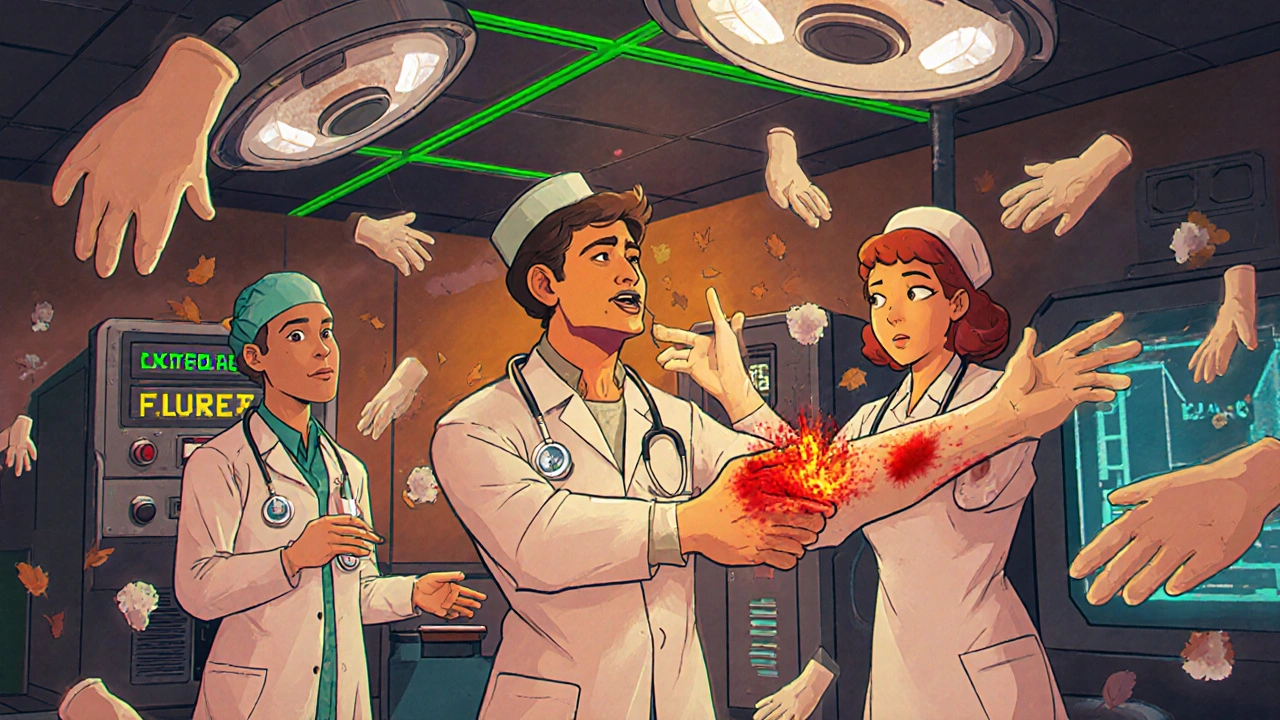
Latex allergy affects 1-2% of the population and up to 12% of healthcare workers. Learn about cross-reactive foods, how powdered gloves spread allergens, and how workplaces can create safe environments with non-latex alternatives.



©2026 rxmedicin.su. All rights reserved
15