
When you're trying to quit smoking, smoking cessation, the process of stopping tobacco use permanently. Also known as quit smoking, it's not just about breaking a habit—it's about rewiring your brain's response to nicotine and managing withdrawal without relapsing. Most people try to quit cold turkey, but studies show that combining behavioral support with FDA-approved medications doubles your chances of success. The real question isn’t whether you can quit—it’s which tools will work for you.
Nicotine replacement therapy, products like patches, gum, or lozenges that deliver controlled doses of nicotine without smoke helps ease withdrawal symptoms like irritability, cravings, and trouble sleeping. It’s not a magic fix, but it gives your body time to adjust. Then there’s varenicline, a prescription pill that blocks nicotine receptors in the brain while reducing cravings. It’s one of the most effective single-agent treatments, though some people report vivid dreams or nausea. Another option, bupropion, an antidepressant repurposed to reduce nicotine cravings and withdrawal, works differently—it doesn’t touch nicotine receptors at all, but helps stabilize mood during quitting. These aren’t interchangeable; each has trade-offs in side effects, cost, and how fast they work.
What most guides skip is how timing and triggers matter more than willpower. If you quit during a high-stress period, your odds drop fast. If you’re still around smokers or keep cigarettes handy, your brain will keep screaming for them. The best outcomes come from pairing medication with a clear plan: swap your morning coffee for a walk, keep gum on hand for after meals, and tell friends you’re quitting so they don’t offer a smoke. It’s not about being perfect—it’s about having a backup plan when cravings hit.
You’ll find posts here that dig into real-world data on what works, from how to handle side effects of quit-smoking meds to why some people succeed with patches and others need pills. There’s no one-size-fits-all fix, but the right combo of medicine, timing, and support makes quitting not just possible—it becomes likely. Below, you’ll see how people actually used these tools, what went wrong, and what made the difference between a failed attempt and a lifetime free of cigarettes.
 2 December 2025
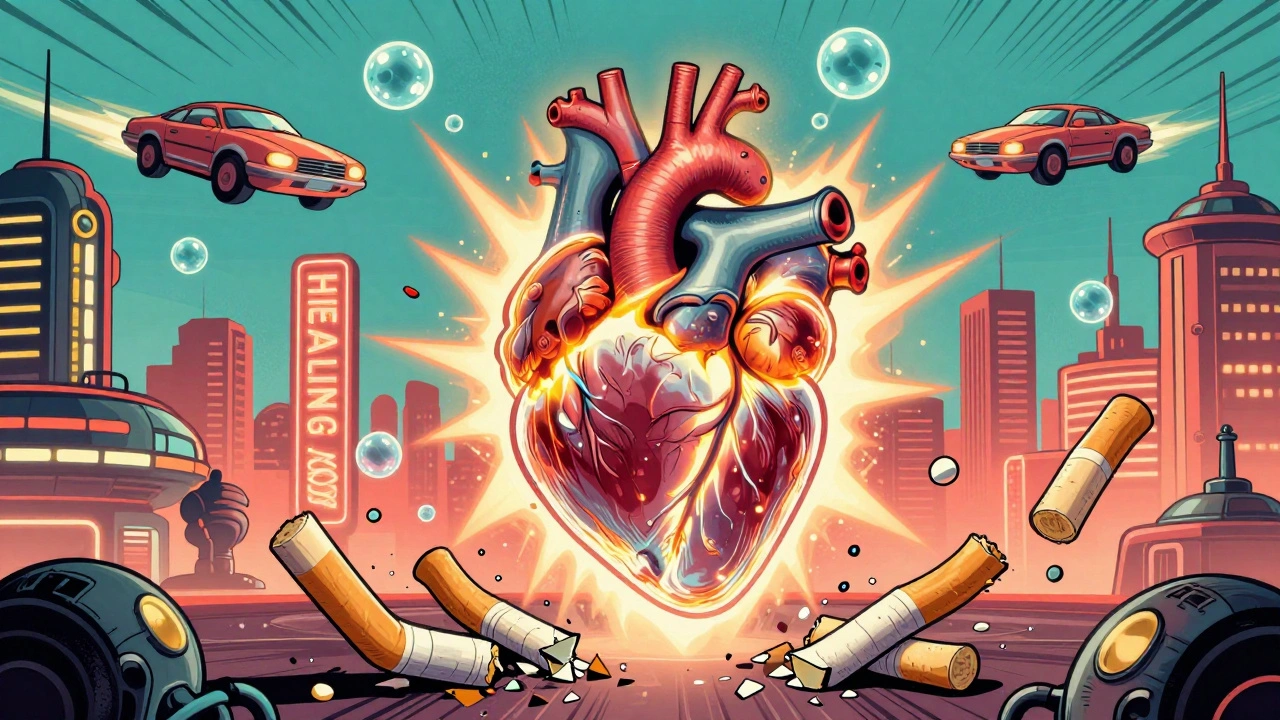
Quitting smoking is the most effective way to reduce heart disease risk-cutting heart attack chances in half within a year. Learn proven strategies, medications, and timelines that save lives.


©2026 rxmedicin.su. All rights reserved
12