
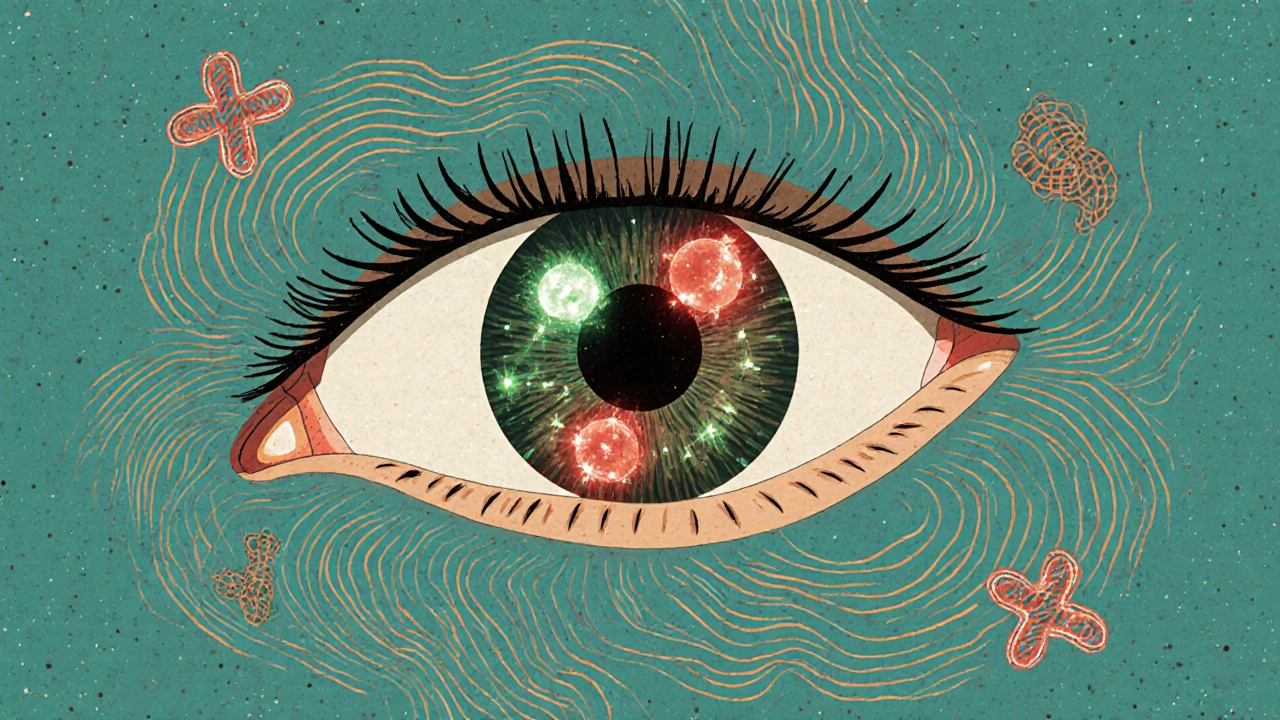
When someone has protanopia, a form of red-green color blindness caused by missing or non-functional long-wavelength (L) cone cells in the retina. Also known as red-blindness, it means the brain can’t process red light the way it should—making reds look darker, duller, or even confused with black or green. This isn’t just about not seeing reds clearly. It affects how you see traffic lights, read color-coded charts, pick ripe fruit, or even match clothes. About 1 in 100 men has it, and it’s usually inherited—not something you develop later in life.
Protanopia is part of a bigger group called red-green color deficiency, a category of inherited vision conditions where the photoreceptors in the eye don’t respond correctly to certain wavelengths. This group also includes deuteranopia (green-blindness) and milder versions like protanomaly. Unlike acquired color vision loss from aging or disease, protanopia is present from birth. The brain adapts, so many people don’t even realize they see color differently until they take a test or someone points it out—like when they mix up a red pen with a black one on a checklist. It doesn’t get worse over time, but it also doesn’t go away. What changes is how you learn to cope. People with protanopia often rely on brightness, shape, or position instead of hue. For example, they know the top light on a traffic signal is red because of where it is, not what color it looks like.
Modern tools help. Apps can simulate or correct color perception on your phone screen. Some glasses claim to enhance red-green contrast, though results vary. Labels on medication bottles, food packaging, and even clothing tags are starting to include symbols or text to make them easier to read. If you’ve been diagnosed, you’re not alone—many people live full, normal lives with it. The real challenge isn’t the vision itself, but the lack of awareness from others. A teacher might not realize a student struggles with color-coded lessons. A designer might pick a palette that’s unreadable to you. That’s why understanding protanopia matters—not just for you, but for the world around you.
Below, you’ll find real stories and practical advice from people dealing with color vision differences, from managing medication labels to navigating everyday tasks without relying on color cues. These aren’t just medical facts—they’re life hacks, backed by experience.
 13 November 2025
Red-green color blindness is a genetic condition affecting 8% of men and 0.5% of women. Learn how it's inherited, how it affects daily life, and what tools can help.



©2026 rxmedicin.su. All rights reserved
14