
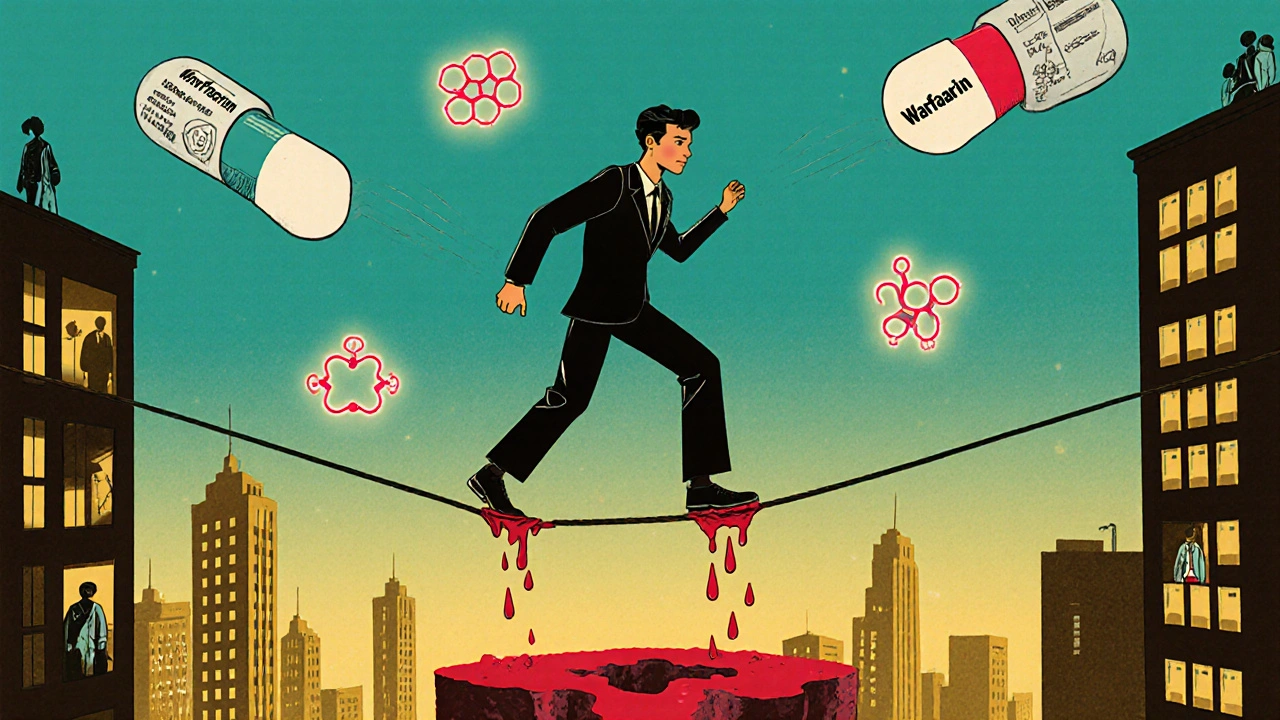
When we talk about bleeding risk, the chance that a person will experience uncontrolled or dangerous blood loss. Also known as hemorrhagic risk, it’s not just about getting a cut—it’s about how your body handles internal bleeding, especially when you’re taking certain drugs. Many people don’t realize that everyday medications, even over-the-counter ones, can quietly raise this risk. It’s not always obvious until something serious happens—a nosebleed that won’t stop, bruising for no reason, or worse, internal bleeding after a fall.
Drugs like anticoagulants, medications that thin the blood to prevent clots (think warfarin or rivaroxaban) and antiplatelets, drugs that stop blood cells from sticking together (like aspirin or clopidogrel) are the biggest culprits. But it’s not just those. Some antibiotics, antidepressants, and even common NSAIDs like ibuprofen can add up. And when you mix them—say, taking a generic blood thinner with an OTC painkiller—you’re stacking risks without realizing it. This is why reporting rare side effects from generics matters, even if you think it’s "just a bruise." Your report helps others avoid the same trap.
The real danger isn’t the drug itself, but how it interacts with your body, age, diet, and other meds. Older adults on diuretics, for example, face higher bleeding risk because dehydration thickens the blood and strains the kidneys. People with liver issues process these drugs slower, so even normal doses become too strong. And if you’re on multiple prescriptions, you might not even know which one is causing trouble. That’s why understanding pharmacokinetic vs pharmacodynamic interactions isn’t just academic—it’s life-saving. You don’t need to stop your meds. You need to know which ones to watch, what symptoms to report, and when to ask your doctor for a safer combo.
Below, you’ll find real-world guides on how these risks show up in practice—from drug interactions that sneak up on you, to how to safely switch to generics without increasing danger, to what to do if you notice unusual bruising or bleeding. These aren’t theory pieces. They’re tools from people who’ve been there, and they’ll help you stay in control.
 27 November 2025
Combining SSRIs with anticoagulants increases bleeding risk by 33%, especially in the first month. Learn why, where it happens, and how to stay safe.



©2026 rxmedicin.su. All rights reserved
12