
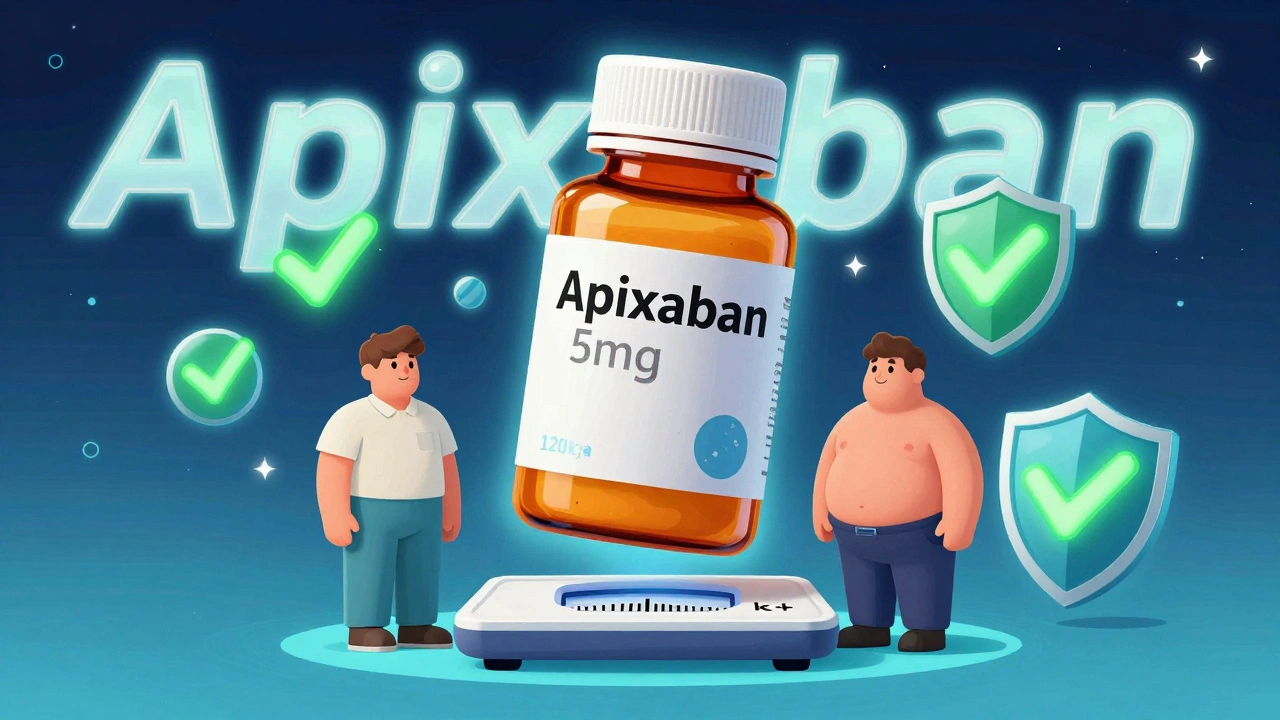
When it comes to apixaban, a direct oral anticoagulant used to prevent blood clots in people with atrial fibrillation, deep vein thrombosis, or pulmonary embolism. Also known as Eliquis, it's one of the most commonly prescribed anticoagulants today because it doesn't require regular blood tests like warfarin. But for people with obesity, especially those with a BMI over 30 or weight over 120 kg, questions arise: Does apixaban still work the same? Is the standard dose safe? And what does real-world data say?
Unlike older blood thinners, apixaban doesn’t rely on kidney clearance alone—it’s broken down by the liver and excreted through both urine and feces. That’s why many doctors feel confident prescribing it to obese patients. Studies show that even in people weighing over 120 kg, apixaban maintains predictable levels in the blood without needing dose adjustments. The FDA and major guidelines like those from the American College of Cardiology don’t recommend changing the standard 5 mg twice-daily dose based on weight alone. But here’s the catch: if someone weighs more than 120 kg AND has two or more other factors—like kidney problems, age over 80, or low body weight—then a reduced dose of 2.5 mg twice daily may be considered. It’s not about weight alone; it’s about the whole picture.
One big concern with any blood thinner in obese patients is bleeding risk. Early fears suggested higher doses might lead to more bleeding, but large real-world studies, including data from over 15,000 obese patients, found no increased risk of major bleeding with standard apixaban dosing. In fact, apixaban performed better than warfarin in this group, with fewer hospitalizations and lower rates of dangerous clots. That’s why many cardiologists now see apixaban as one of the safest options for obese patients needing anticoagulation. Still, if you’re on apixaban and you’re overweight or obese, keep track of any unusual bruising, prolonged bleeding, or dark stools. These aren’t normal, and they need attention.
What you’ll find in the posts below are real patient stories, clinical data, and expert breakdowns on how weight affects blood thinner use. You’ll see how apixaban compares to other DOACs like rivaroxaban or dabigatran in obese populations. You’ll also learn about the hidden risks—like how kidney function changes with obesity, or why some patients end up on the wrong dose by accident. There’s even a guide on how to talk to your doctor about dosing if you’re concerned. This isn’t theoretical. These are the issues real people face every day when managing blood thinners in a body that doesn’t fit the textbook.
 4 December 2025
Learn how DOACs like apixaban, rivaroxaban, dabigatran, and edoxaban work in obese patients. Find out which ones are safe, which to avoid, and why standard doses still work-even for extreme obesity.



©2026 rxmedicin.su. All rights reserved
13