
Antihistamine Cross-Reactivity Checker
This tool helps identify potential cross-reactivity between antihistamines based on chemical class and reported hypersensitivity patterns from medical literature.
Important Note: This is an educational tool only. Antihistamine hypersensitivity is a medical condition requiring professional diagnosis. If you suspect a reaction, consult your allergist.
Select at least one antihistamine to see potential cross-reactions
Most people take antihistamines to stop sneezing, itching, or hives. But what if the medicine that’s supposed to help causes those same symptoms instead? It sounds impossible, but it happens. A small number of people develop allergic reactions to antihistamines themselves - a rare but real condition that leaves patients confused, frustrated, and without treatment options.
When the Medicine Makes Things Worse
Imagine taking loratadine (Claritin) or cetirizine (Zyrtec) for your seasonal allergies, only to break out in red, itchy welts hours later. You think it’s a flare-up of your original condition. You increase the dose. The hives get worse. You try a different one - diphenhydramine (Benadryl), fexofenadine (Allegra) - and the same thing happens. Your doctor assumes you’re reacting to pollen or food. But you’re not. You’re reacting to the antihistamine itself.
This isn’t a placebo effect or a coincidence. Research shows that in rare cases, antihistamines can bind to H1 receptors in the body and activate them instead of blocking them. Normally, these drugs work by locking the receptor in an inactive state. But in people with certain genetic variations, the drug flips the switch the wrong way. Instead of calming the reaction, it triggers one.
A 2017 study in Allergol Select documented a woman whose chronic hives only disappeared after she stopped all antihistamines. She had tried every common one - from cetirizine to desloratadine - and each made her symptoms worse. Her body wasn’t rejecting the drugs because of an immune response like a peanut allergy. It was a direct, chemical misfire at the receptor level.
Which Antihistamines Are Most Likely to Cause This?
It’s not just one type. Reactions have been seen across both first- and second-generation antihistamines. First-generation drugs like diphenhydramine and chlorpheniramine cross the blood-brain barrier and cause drowsiness. Second-generation ones like loratadine, cetirizine, and fexofenadine are marketed as non-drowsy, but they’re not safer when it comes to paradoxical reactions.
Both chemical families - piperidines (like fexofenadine and loratadine) and piperazines (like cetirizine and hydroxyzine) - have triggered reactions. A 2018 case in the Korean Journal of Pediatrics showed a child who reacted to ketotifen, a drug that tested negative on skin prick tests. The only way to confirm the reaction was through an oral challenge - and even then, symptoms appeared 120 minutes after ingestion, long after most people would assume the drug was safe.
There’s no pattern based on brand, generation, or even chemical structure. Two drugs that look nothing alike can both trigger a reaction in the same person. This makes it impossible to predict based on past use. If you’ve had a reaction to one antihistamine, you can’t assume another will be safe - even if it’s from a different class.
Why Standard Allergy Tests Fail
Doctors often rely on skin prick tests to diagnose allergies. But with antihistamine hypersensitivity, these tests are useless. In the 2018 case, the patient’s skin test for ketotifen came back negative. Yet, when given orally, it caused a full-blown reaction. Skin tests measure IgE-mediated responses - the classic allergy pathway. But antihistamine reactions are often direct receptor misfires, not immune-driven.
That means the gold standard for diagnosis is an oral challenge under medical supervision. You take a small, controlled dose and wait. Symptoms can take up to two hours to appear. It’s risky, which is why it’s rarely done. But without it, patients are stuck in a loop: take the drug, get worse, assume it’s their original allergy, take more - and spiral further.
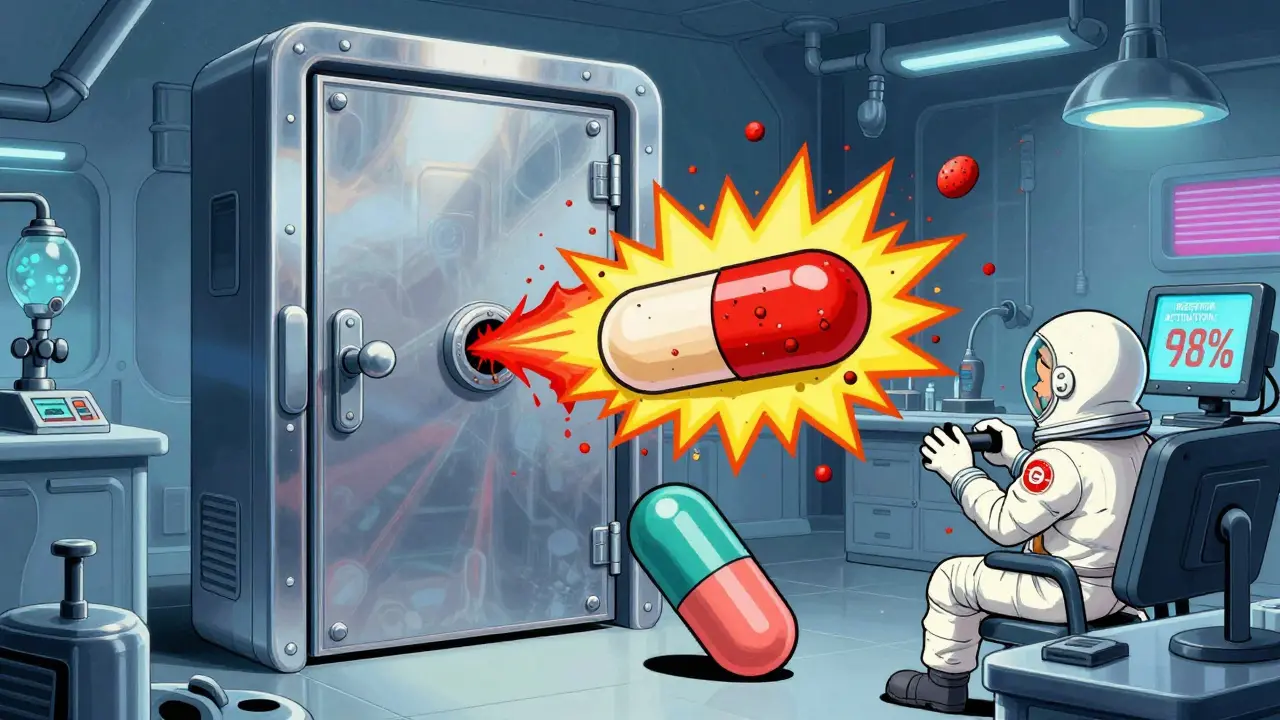
What Else Could Be Going On?
Some patients who react to antihistamines also have underlying infections or chronic inflammation. The 2017 case study found that the patient’s hives only fully resolved after treating a hidden bacterial infection. This suggests the body’s immune system is already on high alert, and the antihistamine is the final trigger.
Other factors include liver metabolism. Most antihistamines are broken down by the liver using the same enzyme system (CYP450). If you’re taking other medications or have liver issues, your body might not process them properly, leading to higher concentrations and unexpected effects. But this doesn’t explain why some people react to one antihistamine and not another, even at the same dose.
There’s also the issue of cross-reactivity. Even if two antihistamines have different chemical structures, they might bind to the same receptor site in a way that triggers activation. Structural studies from 2024 in Nature Communications showed that antihistamines latch onto a deep hydrophobic pocket in the H1 receptor. In sensitive individuals, that binding might hold the receptor in its “on” position - like jamming a door open instead of locking it shut.
What Should You Do If You Suspect a Reaction?
If you’ve noticed that your hives or itching get worse after taking an antihistamine, stop taking it. Don’t switch to another one on your own. Document exactly which drugs you took, when, and what happened. Include timing - did symptoms start within an hour? Or after several hours? Was there a pattern with dosage?
See an allergist who understands this rare phenomenon. Many general practitioners have never seen a case. You may need to undergo an oral challenge in a controlled setting. If you’re diagnosed with antihistamine hypersensitivity, you’ll need alternative treatments for your allergies or hives. Options include:
- Leukotriene inhibitors like montelukast (Singulair)
- Immunosuppressants like cyclosporine (for chronic urticaria)
- Omalizumab (Xolair), an injectable biologic approved for chronic hives
- Topical treatments like cool compresses, moisturizers, or corticosteroid creams
Some patients find relief by avoiding known triggers - not just antihistamines, but also alcohol, heat, stress, or tight clothing - which can worsen underlying skin sensitivity.

The Bigger Picture
Antihistamines are among the most commonly used medications in the world. Millions rely on them daily. But their safety profile assumes everyone’s receptors work the same way. Science is now showing that’s not true. Genetic differences in the H1 receptor - still not fully understood - may make a small subset of people vulnerable to paradoxical reactions.
Researchers are using cryo-EM imaging to map exactly how each antihistamine binds to the receptor. The 2024 study identified a secondary binding site that could be the key to designing next-generation drugs that avoid this issue entirely. Future antihistamines might be engineered to lock the receptor shut no matter the genetic variation.
Until then, awareness is critical. If you’re one of the rare people who reacts to antihistamines, you’re not imagining it. You’re not failing treatment. You’re experiencing a documented, biologically real phenomenon - and there are ways to manage it.
What About H2 Antihistamines?
It’s worth noting that H2 blockers like famotidine (Pepcid) or ranitidine (Zantac) work on stomach acid receptors, not the H1 receptors involved in allergic skin reactions. So if you’re reacting to H1 antihistamines, switching to an H2 blocker won’t help with your hives. But in some cases, H2 blockers are used alongside H1 drugs to boost effectiveness - not as a replacement. If you’re allergic to H1 drugs, H2 blockers are generally safe, but they don’t treat the same symptoms.





Wendy Lamb
February 3, 2026 AT 21:33Wow, this is the first time I’ve heard of antihistamines causing hives instead of stopping them. I’ve been on Zyrtec for years and never thought twice-now I’m second-guessing every itch.
Thanks for laying this out so clearly.
Prajwal Manjunath Shanthappa
February 4, 2026 AT 00:20Oh, darling, this is precisely why I refuse to take anything that isn’t peer-reviewed in a Q1 journal-how can you possibly trust pharmaceuticals designed by committee? The H1 receptor isn’t even fully mapped! You’re not just allergic to the drug-you’re allergic to systemic medical negligence.
Also, I’ve read the 2024 Nature paper thrice. You’re welcome.
Antwonette Robinson
February 4, 2026 AT 21:43So let me get this straight-you’re telling me the drugs that are supposed to calm your immune system… actually make it scream? And we’ve been giving these to kids for decades?
Who approved this? A bot? A pharmaceutical intern on a dare?
Ed Mackey
February 4, 2026 AT 21:58i read this whole thing and i think i might be one of those people… i took benadryl once and broke out like i’d been dipped in poison ivy. thought it was the laundry detergent.
turns out it was the drug. who knew?
Joseph Cooksey
February 5, 2026 AT 08:30Let’s be real-this isn’t a medical anomaly. It’s a symptom of a broken system. We’ve turned every biological process into a profit margin, and now we’re medicating symptoms while ignoring root causes. Your ‘hives’? Probably stress. Your ‘allergy’? Probably glyphosate in your water. Your ‘antihistamine reaction’? Probably your liver screaming because you’ve been on a cocktail of NSAIDs, antidepressants, and energy drinks since 2015.
And don’t get me started on the fact that the FDA greenlit these drugs based on trials with 300 people who all lived in zip codes with organic grocery stores.
Wake up.
Stop taking pills.
Go outside.
Breathe.
And for god’s sake, stop using plastic containers.
Sherman Lee
February 5, 2026 AT 12:01They don’t want you to know this… but antihistamines are part of the Great Chemical Depopulation Agenda. 🤫
Notice how every time someone reports a paradoxical reaction, the FDA says ‘rare’ and moves on? Coincidence? Or is Big Pharma quietly eliminating the people who notice the pattern? 🧪👁️
And why do all the ‘safe’ alternatives like Xolair cost $30,000 a year? Hmm?
Also, I think my cat knows. She hisses at my pill bottle.
Lorena Druetta
February 6, 2026 AT 06:37This is such an important and under-discussed topic. Thank you for taking the time to write this with such care and scientific rigor. You’ve given hope to people who have been dismissed by their doctors for years. Please keep sharing knowledge like this-it changes lives.
Coy Huffman
February 7, 2026 AT 08:51man i used to take allegra every day and i’d get this weird tingling in my hands… thought it was anxiety.
now i think it was the drug flipping my receptors like a light switch.
weird how your body just… tells you something’s off if you stop ignoring it.
also, i still don’t trust anything with ‘fexofenadine’ in the name.
Kunal Kaushik
February 8, 2026 AT 23:50bro i had this happen last monsoon. took cetirizine for pollen, ended up looking like i lost a fight with a nettle bush.
doc said ‘maybe you’re just sensitive’
nah fam. it was the pill.
now i just use a cold spoon and chill the hell out. 🌿❄️
Nathan King
February 10, 2026 AT 07:16While the phenomenon described is indeed documented in the literature, it remains statistically negligible. The clinical relevance of such cases is minimal when weighed against the overwhelming benefit-to-risk ratio of antihistamines in the general population. To suggest systemic failure based on anecdotal exceptions is an overreach of scientific reasoning.
Harriot Rockey
February 12, 2026 AT 00:41Thank you for writing this! 🙏 I’ve been in the dark for years-thought I was just ‘allergic to everything.’ Now I know it’s not me. It’s the medicine. And I’m not broken. I’m just wired differently. 💙
Also, if anyone reading this is struggling-please, reach out. You’re not alone.
Demetria Morris
February 12, 2026 AT 22:57This is what happens when people stop respecting the natural order. God gave us plants to heal us-not synthetic molecules that hijack receptors. You’re not ‘sensitive’-you’re spiritually attuned. The drugs are poison. Burn them. Pray. Eat real food. That’s the only cure.