
When you pick up a prescription at the pharmacy, you might assume the pharmacist is just filling what the doctor ordered. But in many states, that’s not the whole story. Today, pharmacists can do far more than count pills. They can swap medications, adjust doses, even prescribe certain drugs-all legally, and often without needing to call the doctor first. This is called pharmacist substitution authority, and it’s changing how millions of Americans get their medicines.
What Exactly Is Pharmacist Substitution Authority?
Pharmacist substitution authority means a pharmacist is allowed by law to change or replace a prescribed medication under specific conditions. It’s not about guessing or improvising. It’s a structured, regulated practice based on clinical judgment, training, and state laws.
The most common form is generic substitution. If your doctor prescribes, say, Lipitor, and a generic version of atorvastatin is available, the pharmacist can give you the generic unless the doctor specifically wrote “dispensed as written.” This is allowed in every state. It saves money and doesn’t change how well the drug works.
But it goes further. In some states, pharmacists can do therapeutic interchange-swap one drug for another in the same class. For example, if your doctor prescribes one type of statin, the pharmacist might switch you to another, like switching from simvastatin to rosuvastatin, if it’s safer or cheaper. Only three states had this authority as of 2018: Arkansas, Idaho, and Kentucky. Each has rules. In Kentucky, the doctor must write “formulary compliance approval” on the script. In Idaho, the pharmacist must tell you the drug is different and get your consent. And in all three, they must notify the original prescriber.
How Far Can Pharmacists Go? Prescription Adaptation and CPAs
Some states let pharmacists do even more. Prescription adaptation lets them tweak an existing prescription without contacting the doctor. Imagine you’re in a rural town, your doctor is 90 miles away, and your blood pressure medication needs a small dose change. Instead of driving hours, your pharmacist can adjust it-based on guidelines and your lab results. This is legal in states like New Mexico, Colorado, and Oregon.
Then there are Collaborative Practice Agreements (CPAs). These are written agreements between pharmacists and physicians (or other providers) that outline exactly what the pharmacist can do. Maybe they can start a blood thinner, adjust insulin, or order a flu test. CPAs exist in all 50 states and D.C., but how much freedom they give varies wildly. In some places, the pharmacist needs constant oversight. In others, they run the show as long as they follow the protocol.
And it’s getting more advanced. States like Maryland let pharmacists prescribe birth control. Maine allows them to hand out nicotine patches. California uses the word “furnish” instead of “prescribe,” but the effect is the same. New Mexico and Colorado even have statewide protocols-meaning the board of pharmacy sets the rules, and pharmacists can act without waiting for new laws every time.
Why Is This Happening Now?
It’s not random. It’s a response to real problems.
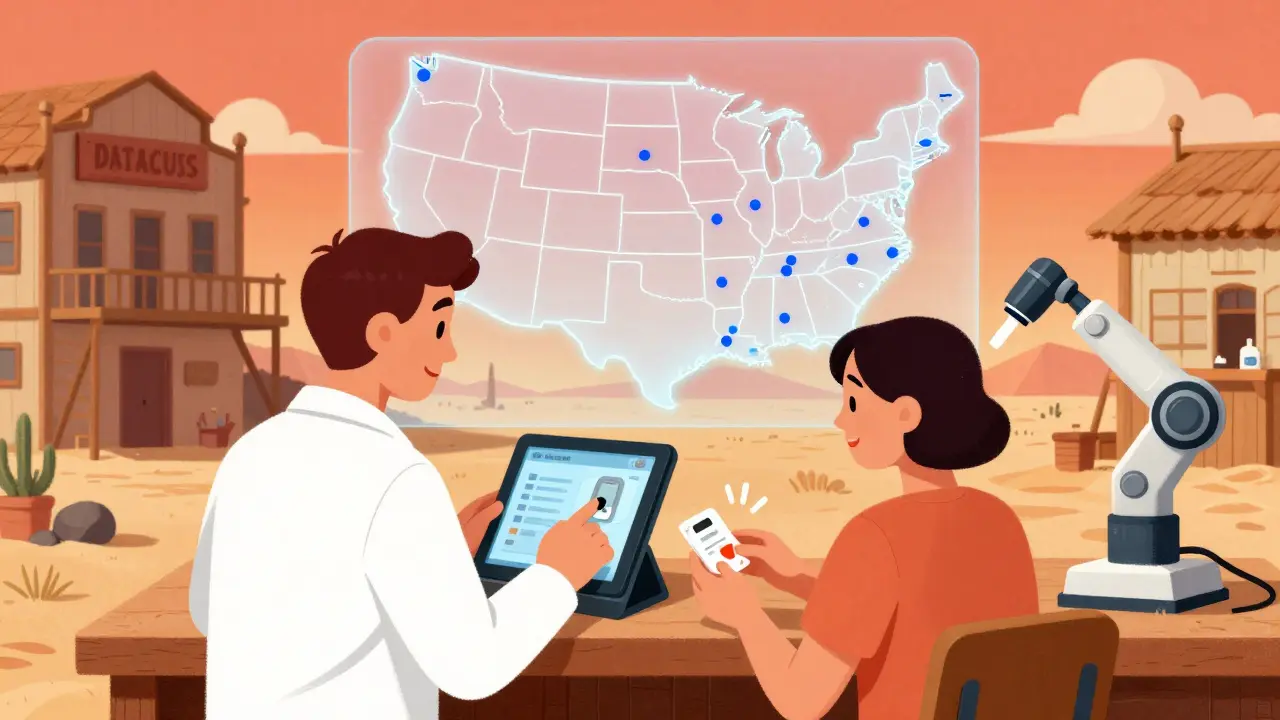
Over 60 million Americans live in areas with too few doctors-called Health Professional Shortage Areas. Rural communities, low-income neighborhoods, and places with aging populations often can’t get timely care. Pharmacies? They’re everywhere. There’s one within five miles of 90% of U.S. residents.
At the same time, the U.S. is facing a looming doctor shortage. The Association of American Medical Colleges predicts a gap of 124,000 physicians by 2034. Pharmacists? There are over 300,000 licensed in the U.S., and most are already trained to manage medications. They’re the most accessible clinical professionals in most towns.
States are acting because it works. Studies show that when pharmacists manage blood pressure, diabetes, or anticoagulants under CPAs, patients reach their goals faster and with fewer hospital visits. In Oregon, pharmacist-led anticoagulation clinics cut emergency visits by 35%. In Minnesota, pharmacists prescribing naloxone reversed over 1,200 opioid overdoses in one year.
What’s the Catch? Reimbursement and Resistance
Just because a pharmacist can do something doesn’t mean they’ll get paid for it.
Many insurance plans still don’t recognize pharmacists as providers. If a pharmacist prescribes birth control or adjusts your diabetes meds, the clinic gets reimbursed. But the pharmacy? Often not. That’s why some pharmacists refuse to offer these services-they’re doing extra work for no pay.
There’s also pushback. The American Medical Association still says pharmacists aren’t trained like physicians and worries about corporate pharmacies pushing for more authority. Some doctors fear losing control over patient care. But the data tells a different story. Pharmacists don’t replace doctors. They extend their reach.
Take the federal ECAPS Act-Ensuring Community Access to Pharmacist Services. If passed, it would require Medicare Part B to pay for pharmacist services like screenings, vaccinations, and medication management. That single change could unlock reimbursement across private insurers too.
State-by-State Differences Matter
You can’t talk about pharmacist substitution authority without talking about state laws. Here’s how it breaks down:
| State | Generic Substitution | Therapeutic Interchange | Prescription Adaptation | Independent Prescribing |
|---|---|---|---|---|
| All 50 States + DC | Yes | No | No | No |
| Arkansas | Yes | Yes | Yes | Yes (limited) |
| Idaho | Yes | Yes | Yes | Yes (limited) |
| Kentucky | Yes | Yes | Yes | Yes (limited) |
| California | Yes | No | Yes | Yes (“furnish” for birth control, naloxone) |
| Maryland | Yes | No | Yes | Yes (birth control) |
| New Mexico | Yes | No | Yes | Yes (statewide protocols) |
| Illinois | Yes | No | Yes | Yes (CPAs for many conditions) |
Some states require a physician’s signature on every change. Others let pharmacists act alone if they’ve completed extra training. Some states limit it to certain drugs-like antibiotics for UTIs, birth control, or epinephrine for allergies. Others let them handle chronic conditions like hypertension or asthma.
What’s Next? The Federal Push
The momentum is building. In 2025 alone, 211 bills were introduced in 44 states to expand pharmacist scope. Sixteen of them passed. That’s more than in any previous year.
The federal ECAPS Act, currently pending in Congress, could be the game-changer. If it becomes law, Medicare would cover pharmacist services like:
- Chronic disease management
- Medication therapy reviews
- Point-of-care testing (blood pressure, glucose, cholesterol)
- Vaccinations
- Emergency contraception and naloxone distribution
That doesn’t just help seniors on Medicare. It sets a precedent. Private insurers follow Medicare’s lead. Once reimbursement is locked in, pharmacists won’t just be able to substitute-they’ll be expected to.
What Patients Should Know
If you’re on a medication, ask your pharmacist: “Can you help me adjust this?” or “Is there a better option?” You might be surprised.
You have rights too. In states with therapeutic interchange, pharmacists must explain the change and get your consent. You can say no. You can ask for the original drug. You can ask why the change was made.
And if your pharmacist offers to check your blood pressure, refill your inhaler, or give you a flu shot-say yes. They’re trained for this. They’re not just dispensing pills. They’re managing your health.
Frequently Asked Questions
Can a pharmacist change my prescription without telling my doctor?
No, not without following legal rules. In most cases, pharmacists must notify the prescriber after making a change, especially with therapeutic interchange or prescription adaptation. Some states require documentation in your medical record. Even in states with independent prescribing, pharmacists often coordinate with your doctor as part of best practice.
Do I have to pay extra if a pharmacist prescribes something?
It depends. In many states, the cost is the same as a doctor’s visit-covered by insurance if the service is reimbursable. But if your insurer doesn’t recognize pharmacists as providers, you might pay out-of-pocket. That’s why the federal ECAPS Act is so important-it would force insurers to cover these services.
Can my pharmacist give me a prescription for antibiotics?
In some states, yes-for specific conditions like urinary tract infections, sinus infections, or strep throat. But only if you meet clear criteria: age, symptoms, no red flags, and no allergies. Pharmacists use clinical guidelines and often test you on the spot. It’s not a free-for-all.
Why don’t all pharmacists do this?
Training, reimbursement, and liability concerns. Not all pharmacists have the extra certification needed. Many pharmacies don’t get paid for these services, so they don’t offer them. And some pharmacists worry about legal risk if something goes wrong. But as laws change and reimbursement improves, more are stepping up.
Is this safe? Aren’t pharmacists just drug experts, not doctors?
Pharmacists don’t diagnose like doctors. They manage medications. Their education includes 6 years of training focused on drug interactions, dosing, side effects, and disease states. They’re trained to recognize when a patient needs a doctor. In fact, studies show pharmacist-led care reduces hospitalizations and ER visits. It’s not about replacing doctors-it’s about filling gaps where doctors aren’t available.
Final Thoughts
Pharmacist substitution authority isn’t a fringe idea anymore. It’s a practical, evidence-backed solution to a broken system. With doctor shortages growing and pharmacies everywhere, it makes sense. Patients get faster care. Costs go down. Outcomes improve.
The future isn’t about pharmacists becoming doctors. It’s about pharmacists doing what they’re trained to do-managing medications-and doing it without waiting for a phone call or a 3-week appointment. And that’s a win for everyone.




peter vencken
March 24, 2026 AT 04:09i've had my pharmacist switch my blood pressure med to a cheaper generic and even gave me a free flu shot. no doctor visit needed. they know their stuff. why are we still acting like they're just cashiers?
Natasha Rodríguez Lara
March 24, 2026 AT 18:53I grew up in a rural town where the nearest doctor was 45 minutes away. My pharmacist was the one who caught my thyroid levels were off before I even felt symptoms. She called my doctor, got approval, and adjusted my dose. That’s not overreach-that’s smart, accessible care. We need more of this, not less.
Kevin Siewe
March 24, 2026 AT 22:28I’ve been a pharmacist for 18 years. We don’t do this to replace doctors-we do it because people can’t wait weeks for an appointment. I’ve helped diabetics stabilize their sugars, stopped ER visits from bad med interactions, and saved people money. If we’re paid for it, more of us will step up. It’s not about power. It’s about people.
Elaine Parra
March 25, 2026 AT 07:49This is a slippery slope. Pharmacists aren’t doctors. They don’t go to med school. They don’t learn anatomy, physiology, or differential diagnosis. Letting them prescribe? That’s not innovation-it’s corporate cost-cutting disguised as progress. Where does it end? Nurses prescribing opioids? Techs reading MRIs?
Darlene Gomez
March 25, 2026 AT 13:57Elaine, your fear is understandable, but it’s not backed by data. Pharmacists have 6 years of clinical training focused entirely on medications. They’re experts in drug interactions, dosing, and patient safety. In Oregon, pharmacist-managed anticoagulation clinics cut ER visits by 35%. In Minnesota, they reversed 1,200 overdoses in a year. This isn’t about replacing doctors-it’s about extending care where it’s needed most. We need to stop seeing this as a threat and start seeing it as a solution.
Chris Farley
March 26, 2026 AT 06:36You people are so naive. Every time you give power to a pharmacist, you’re just handing control to CVS or Walgreens. They don’t care about your health-they care about profit margins. Next thing you know, they’ll be ‘furnishing’ antidepressants from a kiosk. This isn’t healthcare. It’s Walmart medicine.
Darlene Gomez
March 27, 2026 AT 20:59Chris, that’s a tired conspiracy. The same corporate pharmacies are the ones pushing for reimbursement under ECAPS because they know it’s sustainable. The real problem is insurance companies refusing to pay pharmacists for their clinical work-not the pharmacists themselves. And no one’s putting kiosks in charge of prescribing. Every change requires training, protocols, and documentation. This is structured, not chaotic.
Rama Rish
March 28, 2026 AT 15:26in india we dont have this yet but i wish we did. my grandma had to walk 5 km to the doctor just to refill her blood pressure med. if a pharmacist could help, it would change everything.
Anil Arekar
March 28, 2026 AT 20:54The expansion of pharmacist authority must be approached with rigorous oversight, standardized protocols, and equitable reimbursement structures. To dismiss the clinical competence of pharmacists is to ignore decades of evidence demonstrating their efficacy in chronic disease management. We must align policy with proven outcomes, not outdated hierarchies.
Linda Foster
March 30, 2026 AT 05:43I appreciate the intent behind this, but I remain cautious. While pharmacists are highly trained, the prescribing of medications involves complex clinical judgment that requires full diagnostic authority. Without clear, enforceable boundaries and universal reimbursement, we risk creating inconsistency in care-and potential liability. I support collaboration, but not substitution without accountability.