
When you start a new medication, you’re told what to expect: nausea, dizziness, fatigue. But what happens when the side effect isn’t on the list? Or when it’s so bad you can’t sleep, work, or even leave the house? Many people stay quiet. They think it’s normal. They don’t want to bother their doctor. Or they just don’t know they can report it - and that doing so might help others.
Why Your Voice Matters
Clinical trials test drugs on a few thousand people. That’s not enough to catch every possible side effect. Some reactions only show up after millions of people are using the drug. That’s where you come in. The FDA’s MedWatch program collects reports from patients and providers to spot hidden dangers. In 2022 alone, over 2.2 million reports came in - and many of those came from regular people like you. One nurse reported a rare blood clot after a COVID vaccine. That report helped the FDA warn millions within weeks. Another patient described a strange metallic taste after taking Paxlovid. That led to the recognition of "Paxlovid mouth" - a side effect not seen in trials. Your report doesn’t need to be perfect. You don’t need to prove the drug caused it. You just need to describe what happened, when, and how it affected you. That’s enough to trigger a safety review.What Counts as a Side Effect Worth Reporting
Not every symptom needs a report. But here’s what you should speak up about:- Anything new and severe - chest pain, trouble breathing, swelling, sudden confusion, unexplained bruising.
- Anything that makes you stop taking the drug - even if your doctor says it’s "common."
- Anything unexpected - if your pill’s label doesn’t mention it, but you’re experiencing it, report it.
- Anything that lasts more than a few days - especially if it’s getting worse.
- Anything that affects your mental health - depression, anxiety, suicidal thoughts linked to a new medication.
How to Report: Simple Steps for Patients
You don’t need to fill out a 10-page form. Here’s how to do it in under 15 minutes:- Call 1-800-FDA-1088 - This toll-free number is now required on every prescription bottle and label. You can speak to a real person. No online form needed.
- Or go online - Visit www.fda.gov/medwatch and download Form 3500 (the patient version).
- Have these details ready:
- The name of the medication (brand and generic if you know it)
- When you started taking it
- What happened and when it started
- How long it lasted
- Whether you stopped the drug
- Your age and gender (optional, but helpful)
- Submit it - You can mail, fax, or submit online. No ID or insurance info is required.
What Happens After You Report
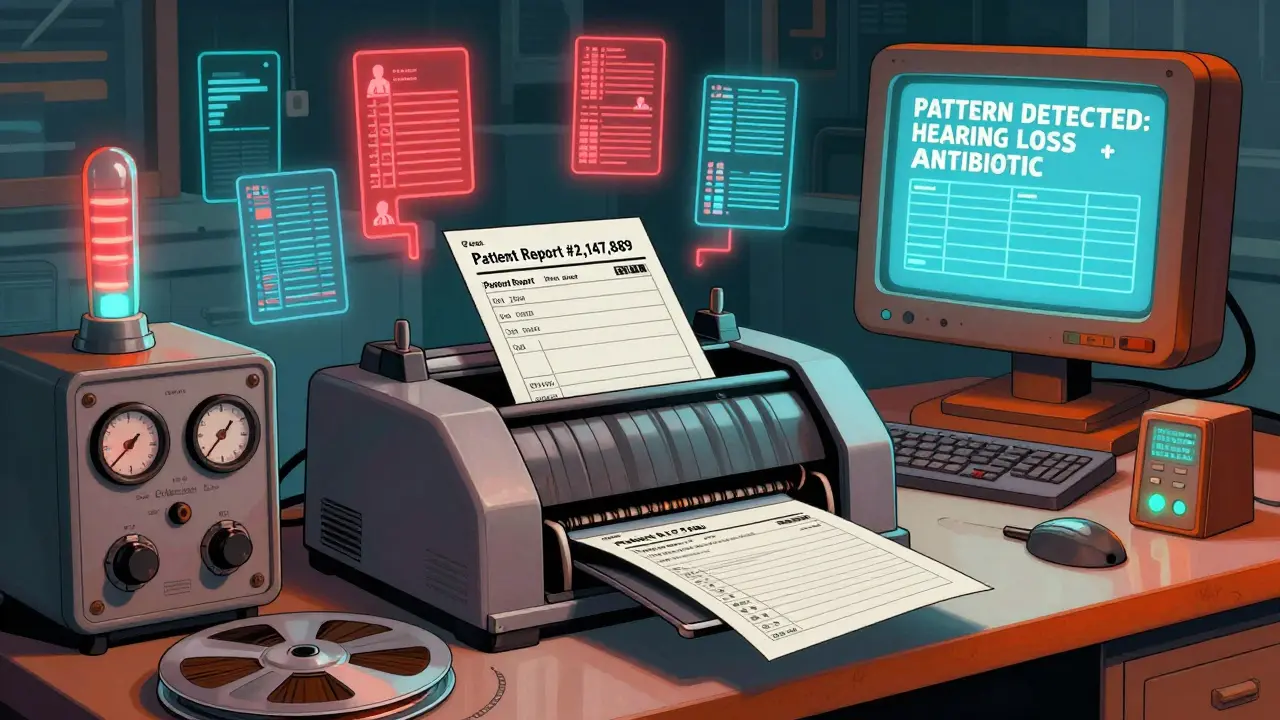
Your report goes into a database with over 2 million others. It’s not reviewed by your doctor. It’s reviewed by pharmacovigilance experts at the FDA. If enough people report the same issue - say, 20 people describing the same rare rash after taking a new blood pressure drug - the FDA may issue a safety alert. They might update the drug label. They might require new warnings. Or they might investigate further. In 2023, a spike in reports of sudden hearing loss linked to a common antibiotic led to a new warning on the label. That happened because patients spoke up. You won’t get a follow-up email. You won’t hear back. That’s normal. But your report is still being used - to protect the next person.Why Doctors Don’t Always Report
You might think your doctor will report your side effect. They won’t. Not always. Studies show only 1% to 10% of serious side effects are reported by healthcare providers. Why? Time. Confusion. Uncertainty. Many doctors don’t know how to report. Others think they need proof the drug caused it. They don’t. The FDA says: "You don’t need to be certain. You just need to suspect." A 2021 study found community pharmacists reported side effects at just 3.2% of cases. Even in hospitals, reporting rates are low. That’s why your voice is critical. If your doctor dismisses your concern - "That’s normal" - don’t take it as the final answer. Say: "I’d like to report this to the FDA. Can you help me with the details?"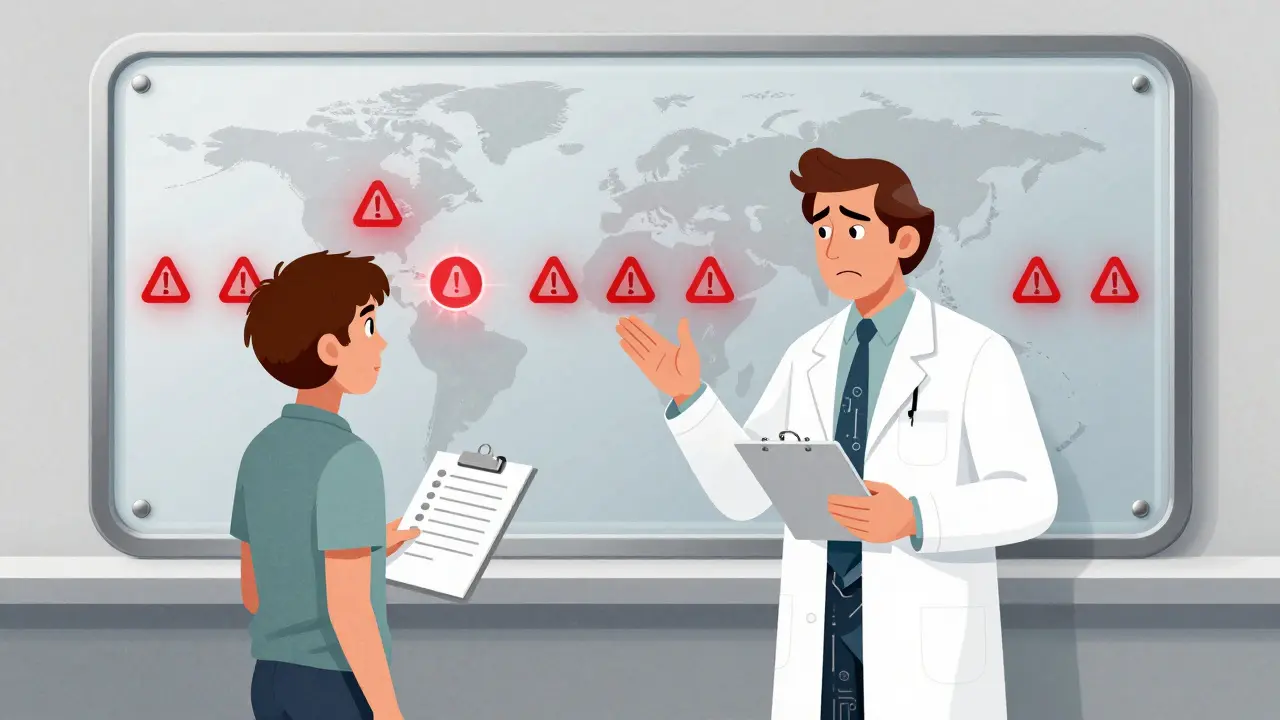
Barriers to Speaking Up - And How to Overcome Them
Most people don’t report because they believe:- "It’s just a side effect. Everyone gets it." - Not true. Some side effects are rare. And if you’re the first to report it, you could save someone else from a worse outcome.
- "My doctor will report it." - They probably won’t. Don’t assume.
- "I’ll be ignored." - You won’t. The FDA reviews every report. Even if it’s just one.
- "I don’t know how." - You do now. Call 1-800-FDA-1088. It’s free, fast, and confidential.
What You Can Do Today
If you’re on a new medication:- Check the bottle. Look for the 1-800-FDA-1088 number. It’s there by law since January 2022.
- Write down any new symptom - even if it seems small.
- When you see your doctor, say: "I’ve been having [symptom]. I’d like to report it to the FDA if it’s not common."
- If you’re not comfortable talking, call 1-800-FDA-1088 yourself. They’ll walk you through it.
It’s Not Just About You
Speaking up isn’t about complaining. It’s about protecting the system. Every report helps make drugs safer for everyone. Think of it like a smoke alarm. You don’t wait for the house to burn down to test it. You test it regularly. Your report is that test. It’s a quiet, powerful way to help others avoid the same pain you went through. You don’t need to be a scientist. You don’t need to be an expert. You just need to be honest. And brave enough to say: "This didn’t feel right. I want to make sure no one else has to go through this."Can I report a side effect if I’m not sure the medication caused it?
Yes. The FDA encourages reporting even when you’re unsure. You don’t need proof. You just need to suspect. Many serious side effects are first noticed because someone said, "I’m not sure, but this happened after I started the drug." That’s enough to start a safety review.
Do I need to give my name to report a side effect?
No. You can report anonymously. The FDA doesn’t require your name, address, or insurance details. But if you leave contact information, they may reach out if they need more details - which can help them understand your case better.
How long does it take for the FDA to act on a report?
There’s no set timeline. Individual reports aren’t responded to directly. But when multiple reports point to the same issue - say, 10 or more people describing the same rare reaction - the FDA’s safety team starts analyzing patterns. This can lead to label updates, safety alerts, or even drug recalls. It can take weeks or months, but your report is part of that process.
Can I report side effects from over-the-counter drugs or supplements?
Yes. The FDA accepts reports for prescription drugs, over-the-counter medicines, and dietary supplements. While supplements aren’t held to the same standards as drugs, reports help the FDA identify dangerous products. If you had a reaction to a vitamin, herbal remedy, or pain reliever bought at the store, report it.
What if I report a side effect and my doctor says it’s not serious?
Your doctor’s opinion doesn’t override your experience. If the side effect affected your daily life - even if your doctor says it’s "common" - you still have the right to report it. Many serious safety signals started as "minor" complaints that were ignored. Your report adds to the bigger picture.
Is there a deadline for reporting a side effect?
No. You can report a side effect months or even years after it happened. The FDA accepts late reports. The more information you can provide - even if it’s from memory - the better. It’s still valuable.



Kishor Raibole
December 28, 2025 AT 08:11It is imperative to underscore the paramount importance of pharmacovigilance as a cornerstone of public health infrastructure. The submission of adverse event reports constitutes not merely a civic duty, but an epistemological imperative for the advancement of medical science. One must not underestimate the systemic significance of individual patient narratives in the construction of evidence-based pharmacological paradigms.
The FDA's MedWatch program, while ostensibly accessible, remains underutilized due to pervasive epistemic inertia among the lay populace. The notion that a side effect must be 'proven' to warrant reporting reflects a fundamental misapprehension of the nature of post-marketing surveillance. The burden of proof does not rest with the patient; it resides with the regulatory apparatus, which aggregates anonymized data to discern patterns of harm.
It is also noteworthy that the underreporting by healthcare professionals-estimated at a disconcerting 90 to 99 percent-exemplifies a systemic failure of professional accountability. Physicians, often overburdened and inadequately trained in pharmacovigilance protocols, frequently dismiss patient concerns as 'common' or 'self-limiting,' thereby perpetuating a culture of medical paternalism.
One must further consider the ethical implications of withholding such data. To remain silent is to implicitly endorse the status quo, wherein pharmaceutical innovation outpaces safety monitoring. The case of the rare blood clot post-COVID vaccination, identified solely through patient reports, stands as a paradigmatic example of how grassroots vigilance can preempt catastrophe.
Moreover, the assertion that 'you don't need to be certain' is not merely pragmatic, but epistemologically sound. In the realm of clinical observation, suspicion, when aggregated, constitutes a valid form of evidence. The Bayesian model of medical inference supports this very principle.
It is also worth noting that the linguistic and cultural barriers to reporting, particularly among non-native English speakers, remain grossly unaddressed. While the FDA offers forms in Spanish, the absence of multilingual triage support undermines the program's equity.
Therefore, I urge all stakeholders-patients, clinicians, policymakers-to treat every anecdote as a potential data point. The integrity of the pharmacological ecosystem depends not on the perfection of individual reports, but on their volume, diversity, and fidelity.
Let us not mistake silence for safety. The next life saved may be your own-or your child's-because someone dared to report what they felt, not what they were told to expect.
John Barron
December 29, 2025 AT 12:24Okay but let’s be real 🤡 I took Paxlovid and my tongue felt like I’d licked a battery for 3 days. I didn’t report it because I thought everyone was just being dramatic. Then I read this and realized… I was the drama. But also, I’m reporting it now. Just sent it in. 📝 #PaxlovidMouthIsReal
Anna Weitz
December 29, 2025 AT 18:00Doctors don't report because they're scared of lawsuits and the FDA doesn't care about you anyway they just want data to keep the pharma money flowing and if you're lucky they'll update the label after 5 people die and then they'll say 'we're reviewing' and everyone forgets
Elizabeth Alvarez
December 30, 2025 AT 20:24Have you ever wondered why the FDA never responds to your report? It’s because they’re not supposed to. The entire system is designed to make you feel heard while quietly burying your data in a database no one ever checks. Big Pharma owns the FDA. They fund the studies, they lobby the lawmakers, and they pay the reviewers. That’s why you hear about ‘rare’ side effects only after 10,000 people are hospitalized. That’s why the same drugs keep coming back with new warnings. That’s why your report? It’s just a number in a spreadsheet. They don’t care about your pain. They care about liability. You’re not helping anyone. You’re just feeding the machine. And if you think calling 1-800-FDA-1088 is empowerment? It’s a placebo. A distraction. A way to make you feel like you’re doing something while they keep selling the same poison to the next person.
And don’t get me started on supplements. The FDA doesn’t regulate them. They don’t test them. They just take your report and file it under ‘unverified.’ But you know what they do with those reports? They use them to justify why they can’t regulate anything. ‘We don’t have enough evidence.’ But you gave them evidence. And they ignored it. Because they’re not here to protect you. They’re here to protect the stock price.
I’ve reported three side effects. Two were from prescription meds. One was from a ‘natural’ energy supplement. The FDA never replied. No follow-up. No thank you. No warning issued. Just silence. That’s the system. And if you still believe reporting makes a difference? You’re the one who’s been dosed.
Miriam Piro
January 1, 2026 AT 02:09They told me it was 'just anxiety' when I started having panic attacks after my new antidepressant. I didn't report it because I thought I was broken. Then I read about how 47% of SSRI users report emotional blunting and I realized-I wasn't crazy. I was a data point. And they don't even track that properly. I called 1-800-FDA-1088 and the woman on the other end said 'thank you for your courage' and I cried. I didn't think anyone cared. But the FDA does. Not because they're noble. But because they have to. If enough people report the same thing, they have to listen. Even if it takes years. Even if it takes 200 reports. Even if your doctor says 'it's normal.' It's not normal if you can't get out of bed. It's not normal if you feel like you're disappearing. I reported it. And I'm glad. Because next time, someone else won't have to wonder if they're imagining it.
And yes, I used a smiley. 😊 Because someone needed to hear that it's okay to feel scared and still speak up.
dean du plessis
January 2, 2026 AT 03:50Been on statins for 5 years. Had muscle pain for 2 years but thought it was just aging. Then I read this and thought hey maybe I should report it. Did it last week. No response. But I feel better knowing someone somewhere might see it and say hey maybe that's not just normal. Good reminder that your experience matters even if no one says thank you. 🙏
Andrew Gurung
January 2, 2026 AT 14:10Wow. Just… wow. I can’t believe people still think the FDA is some kind of benevolent guardian. This whole post reads like a pharmaceutical marketing brochure. You’re being told to report side effects like it’s a civic virtue. But here’s the truth: the FDA doesn’t act on reports unless Big Pharma wants them to. That ‘rare blood clot’? It was reported by thousands, but the vaccine makers fought tooth and nail to avoid a label change. The ‘Paxlovid mouth’? They didn’t update the label-they just quietly added it to the website under ‘uncommon.’ You think your report changes anything? You’re a pawn in a game where the house always wins. And now you’re proud of yourself for playing along? Pathetic.
And don’t even get me started on the ‘call 1-800-FDA-1088’ nonsense. Ever tried calling that number? It’s a 20-minute wait, then you get a script-reading robot who says ‘thank you for your feedback’ and hangs up. No one reads your report. No one follows up. It’s a PR stunt. A distraction. A way to make you feel like you’ve done your part so you stop suing them.
You’re not helping anyone. You’re just feeding the myth that the system works. It doesn’t. And pretending it does? That’s the real danger.
Paula Alencar
January 3, 2026 AT 18:23As a registered nurse with over 18 years in oncology, I cannot emphasize enough how profoundly important this message is. I have witnessed too many patients suffer in silence-terrified of being labeled as ‘difficult,’ or worse, ‘noncompliant’-because their symptoms didn’t match the textbook. I’ve seen brilliant minds deteriorate under the weight of unreported side effects: the woman who stopped eating because of the metallic taste from chemo, the man who withdrew from his family because of the depression induced by his beta-blocker, the teenager who hid her suicidal ideation because she thought it was ‘just part of the treatment.’
Let me be unequivocal: your voice is not noise. It is data. It is dignity. It is the only thing standing between a pharmaceutical company’s profit margin and another person’s life. I have submitted reports on behalf of patients who were too frail to call, too scared to speak, too exhausted to type. I have watched the FDA issue safety alerts based on as few as six reports from patients like you. One report led to a change in dosing for a widely prescribed anticoagulant. Another led to a new warning for a diabetes drug that caused severe neuropathy.
And yes, you will not receive a reply. You will not get a thank-you card. You will not see your name in the news. But you will be part of the invisible architecture of safety that keeps millions alive. You are not a statistic. You are the reason the system doesn’t collapse.
If you are reading this and you’ve ever felt dismissed-by a doctor, by a pharmacist, by your own fear-I want you to know this: you are not alone. And your report? It matters. More than you know. Please. Call 1-800-FDA-1088. Just one time. For yourself. For the next person. For the quiet, brave soul who will one day read your report and realize they weren’t crazy after all.
You are not bothering anyone. You are saving someone.