
Green tea extract is everywhere-pills in your medicine cabinet, powders in your smoothie, capsules labeled "antioxidant boost." It’s marketed as a health hero: fat-burning, heart-protecting, cancer-fighting. But here’s the part no ad tells you: green tea extract can mess with your medications in ways that are dangerous, even life-threatening.
If you’re taking blood pressure pills, cholesterol drugs, chemotherapy, or even asthma inhalers, drinking green tea or popping extract capsules might be reducing their effectiveness-or making side effects worse. And most people have no idea.
How Green Tea Extract Interferes With Your Medicines
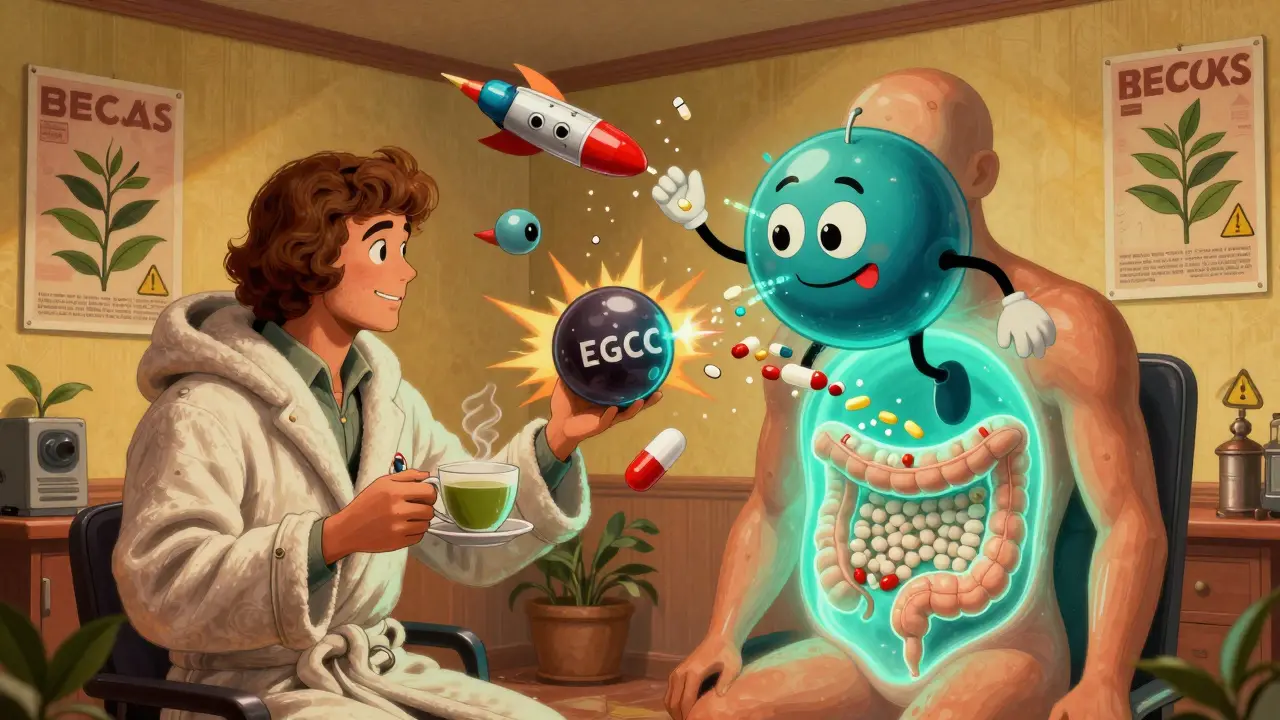
Green tea extract isn’t just tea in a pill. It’s concentrated. One capsule can contain 250 to 500 mg of EGCG (epigallocatechin gallate), the main active compound. That’s five to ten times more than what’s in a cup of brewed tea. And it’s not just EGCG. Green tea extract also packs caffeine-sometimes as much as 100 mg per serving, equal to a strong cup of coffee.
These two components work together to disrupt how your body absorbs and breaks down drugs. EGCG blocks transporters in your gut and liver that move medicines into your bloodstream. Caffeine, meanwhile, acts like a stimulant, amplifying the effects of other stimulants or interfering with sedatives.
It’s not theory. It’s documented in clinical studies. Take nadolol, a beta-blocker for high blood pressure and heart rhythm issues. One study showed that taking green tea extract with nadolol cut its absorption by 83%. That means your blood pressure could spike because the drug isn’t working.
The 8 High-Risk Medications to Avoid With Green Tea Extract
Some drugs have a narrow safety window. Even a small drop in effectiveness can lead to serious consequences. Here are the eight medications with the strongest, most dangerous interactions:
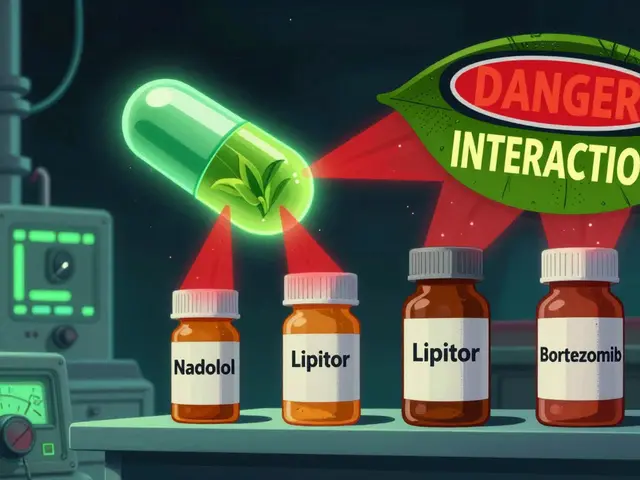
- Nadolol (Corgard) - Absorption drops by up to 83%. Blood pressure control fails.
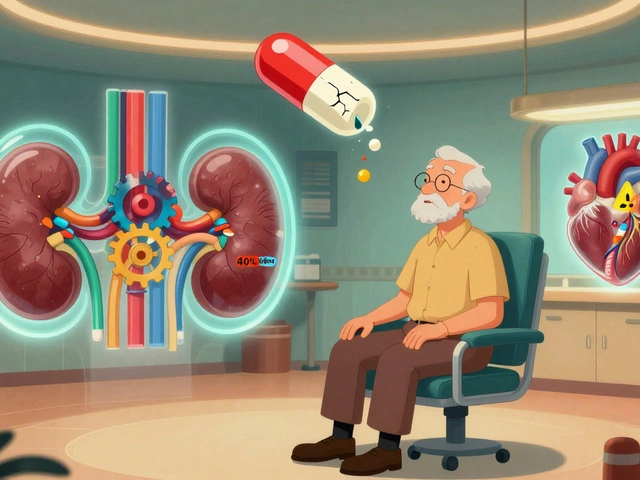
- Atorvastatin (Lipitor) - Cholesterol-lowering effect reduced by up to 40%. LDL levels rise.
- Bortezomib (Velcade) - Used for multiple myeloma. EGCG binds directly to the drug, cutting its cancer-killing power by half. Treatment failure rates jump in patients who keep taking green tea supplements.
- Asthma inhalers (albuterol, salbutamol) - Caffeine + beta-agonists = racing heart. Heart rate can spike 20-30 beats per minute, triggering palpitations or arrhythmias.
- 5-Fluorouracil - A chemo drug. Green tea extract slows its breakdown, causing toxic buildup. Risk of severe nausea, mouth sores, and low blood cell counts increases.
- Rosuvastatin (Crestor) - Blood levels change by up to 25%. Unpredictable cholesterol control.
- Imatinib (Gleevec) - Used for leukemia. Bioavailability drops 30-40%. Risk of cancer recurrence rises.
- Lisinopril - Another blood pressure drug. Absorption falls by 25%. Patients report sudden spikes in readings.
These aren’t rare cases. Oncology centers like MD Anderson report a 15% treatment failure rate in myeloma patients who continued green tea supplements during bortezomib therapy. Pharmacists at Mayo Clinic have seen 47 cases of beta-blocker failure linked to green tea extract use.
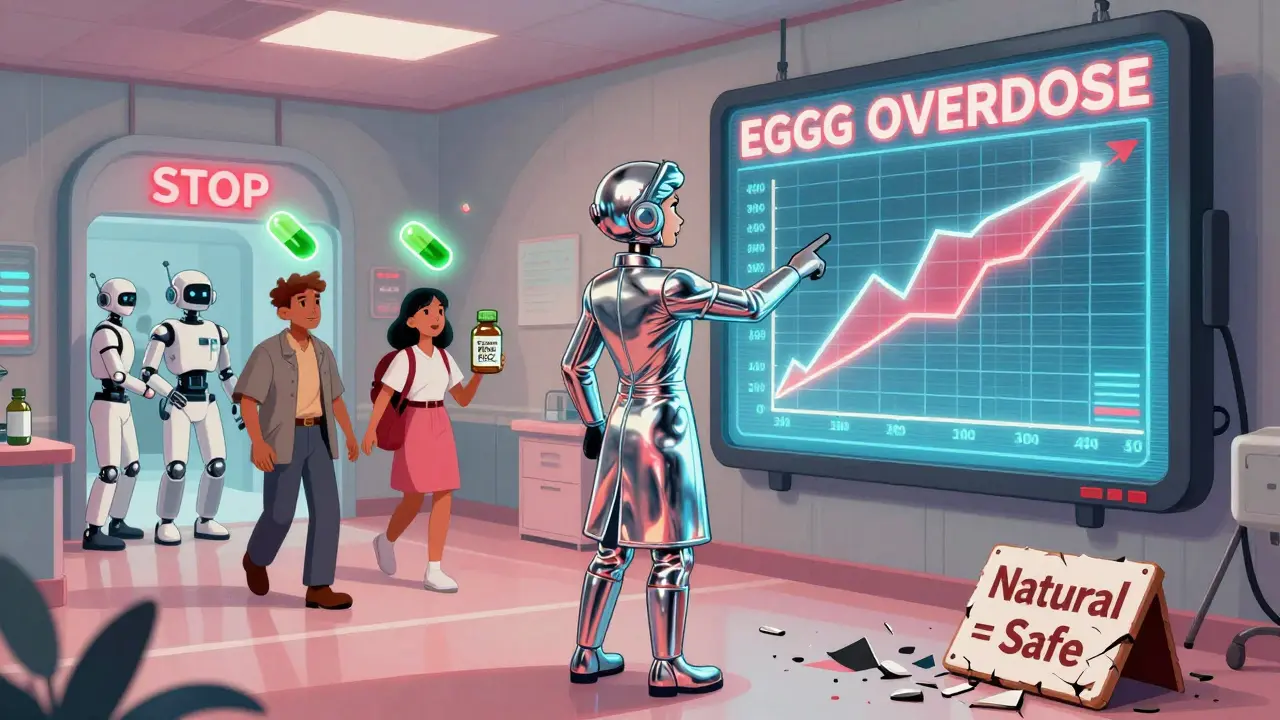
Why "Natural" Doesn’t Mean Safe
Most people assume that because green tea comes from a plant, it’s harmless. That’s the biggest mistake. Herbal supplements aren’t held to the same safety standards as prescription drugs. Under U.S. law (DSHEA, 1994), manufacturers don’t need to prove safety or effectiveness before selling.
Only 12% of green tea extract products mention drug interactions on the label, even though the FDA says they should. A 2021 FDA survey found 62% of supplements didn’t warn about interactions at all. And when they do? The warnings are buried in tiny print.
Patients often don’t think to tell their doctor they’re taking green tea extract. They don’t consider it a "medication." But in the eyes of your pharmacist or oncologist, it’s a drug-just one that’s unregulated.
Who’s at the Highest Risk?
Not everyone needs to avoid green tea extract. But these groups should stop cold:
- Anyone on chemotherapy (especially bortezomib, 5-FU)
- People taking blood thinners like warfarin (INR levels can swing unpredictably)
- Patients with heart conditions on beta-blockers, ACE inhibitors, or statins
- Those on ADHD meds like Adderall or Ritalin (caffeine overload = anxiety, tremors, rapid heartbeat)
- Anyone over 65 taking five or more medications (polypharmacy increases interaction risk exponentially)
Even if you’re not on meds, high-dose green tea extract has been linked to liver damage. The FDA has issued 17 warning letters to manufacturers since 2022 for unsafe products. Some extracts contain up to 800 mg EGCG per serving-far beyond safe limits.
What You Can Do: Practical Steps
You don’t have to give up green tea entirely. But you need to be smart about it.
- Stop all green tea extract supplements if you’re on any of the high-risk drugs listed above. No exceptions.
- If you drink brewed green tea, limit it to 1-2 cups per day. That’s under 100 mg caffeine and 50-100 mg EGCG-low enough to avoid most interactions.
- Separate timing. If you must take green tea with meds, wait at least 4 hours between consumption and your pill. Studies show this cuts interaction risk by 60%.
- Check your labels. Look at the EGCG content. If it’s over 250 mg per serving, it’s a high-risk product.
- Tell your doctor and pharmacist. Say: "I take green tea extract"-not "I drink tea." They need to know it’s a concentrated supplement.
There’s no benefit to taking more than 400 mg EGCG per day. In fact, the risks rise sharply after that point. The idea that "more is better" is dangerous here.
What’s Changing in 2026
Regulators are catching up. The FDA’s 2023 draft guidance now lists green tea extract as a "high-priority substance" for interaction labeling. The European Medicines Agency added 12 new interactions in early 2023-including one with dabigatran (Pradaxa), a blood thinner, where green tea reduced effectiveness by 18-22%.
Research is also shifting. Scientists are now trying to create purified green tea extracts without EGCG, keeping only the safer antioxidants. But those products aren’t on shelves yet.
Meanwhile, the market keeps growing. Global sales hit $2.17 billion in 2022 and are projected to grow 8.7% yearly through 2028. More cancer survivors are turning to supplements hoping for protection-unaware they might be sabotaging their treatment.
Final Word: Don’t Guess. Ask.
Green tea extract isn’t evil. But it’s not harmless either. It’s a powerful bioactive compound that interacts with your body’s drug systems in complex ways. What’s safe for one person could be risky for another.
If you’re on medication, don’t assume green tea extract is fine. Ask your pharmacist. Bring your supplement bottle to your next appointment. Write down the EGCG amount. That’s the only way to know if it’s safe for you.
There’s no shortcut to safety. And when it comes to your health, the natural choice isn’t always the right one.
Can I still drink green tea if I’m on medication?
Yes, but only in moderation. One to two cups of brewed green tea per day (under 100 mg caffeine and 100 mg EGCG) is generally safe for most people. Avoid drinking it within 4 hours of taking medications like blood pressure pills, statins, or chemotherapy drugs. Skip the concentrated extracts entirely-they’re where the real risks lie.
Does green tea extract interact with blood thinners like warfarin?
Yes. While the evidence isn’t as strong as with some other drugs, studies show green tea extract can cause unpredictable changes in INR levels-the measure of how long your blood takes to clot. Some patients experience dangerous spikes or drops. If you’re on warfarin, avoid green tea extract and monitor your INR closely if you drink tea regularly.
What should I do if I’m taking bortezomib and I’ve been using green tea extract?
Stop immediately. The National Comprehensive Cancer Network advises against any green tea product during bortezomib therapy. EGCG binds directly to the drug, cutting its cancer-killing power by up to 50%. Even small amounts can reduce treatment effectiveness. Talk to your oncologist right away about adjusting your regimen.
Are there any green tea supplements that are safe to take with medications?
Currently, no green tea extract supplement is proven safe to take with medications. Even products labeled "low-caffeine" or "decaffeinated" still contain high levels of EGCG, which is the main culprit in drug interactions. The safest approach is to avoid all concentrated extracts if you’re on any prescription drug.
Why don’t supplement labels warn about these interactions?
Because they’re not required to. Under U.S. law, dietary supplements don’t need FDA approval before sale, and manufacturers aren’t forced to list drug interaction risks-even when science proves them. Only 12% of green tea extract products include warnings. The FDA has issued warning letters, but enforcement is slow. You can’t rely on the label. You need to ask your doctor.
Can green tea extract cause liver damage?
Yes. High-dose green tea extract (especially over 800 mg EGCG daily) has been linked to cases of acute liver injury. The FDA has received dozens of reports since 2010, including hospitalizations. The risk increases with prolonged use and higher doses. If you experience nausea, dark urine, or yellowing of the skin while taking green tea extract, stop immediately and see a doctor.
What’s the difference between green tea and green tea extract?
Green tea is the brewed beverage made from leaves-it’s low in EGCG (50-100 mg per cup) and caffeine (20-45 mg). Green tea extract is a concentrated powder, often sold in capsules, with 250-800 mg EGCG per serving. That’s 5 to 10 times more than tea. Extracts are designed to deliver potent doses, which is why they carry far greater interaction risks.
Should I avoid green tea extract if I’m healthy and not on any meds?
If you’re healthy and not taking any medications, occasional use of low-dose green tea extract (under 250 mg EGCG) is likely safe for most people. But there’s little evidence it provides meaningful health benefits beyond what you get from drinking tea. The risks-liver strain, interaction potential, lack of regulation-often outweigh the unproven rewards. Stick to brewed tea if you want the benefits without the unknowns.

Stephen Craig
January 4, 2026 AT 02:20It’s not about fear. It’s about awareness. We treat plants like they’re harmless because they’re old, but biology doesn’t care about tradition.
EGCG isn’t magic. It’s chemistry. And chemistry doesn’t negotiate.
Stop romanticizing nature. It doesn’t love you back.
Roshan Aryal
January 5, 2026 AT 03:56This is why Westerners keep dying from ‘natural’ crap. In India we know better - if it’s not in Ayurveda, it’s a scam. Green tea extract? Pure capitalist poison sold to gullible millennials who think ‘antioxidant’ means ‘immune to death’.
And you wonder why our pharma exports outpace your supplements?
Charlotte N
January 5, 2026 AT 12:08I’ve been taking green tea extract for two years… I’m on lisinopril and atorvastatin… I didn’t know any of this… I’m going to stop tomorrow… I didn’t realize tea extract was even a thing… I thought it was just tea… I feel so stupid…
But also… why isn’t this on every bottle??
Catherine HARDY
January 7, 2026 AT 09:19Big Pharma doesn’t want you to know this because they can’t patent green tea.
They’ve been quietly funding studies to downplay the risks since 2018.
Remember when the FDA ‘accidentally’ lost 37 reports of liver damage?
They’re covering it up. The same people who gave us opioids are now selling you ‘wellness’.
You think this is coincidence? It’s a system.
They want you dependent on pills while pretending the supplement is the villain.
Wake up. The label says ‘natural’ so you trust it. That’s the trap.
bob bob
January 9, 2026 AT 09:01I used to take this stuff every morning with my coffee. Thought I was being healthy. Then my heart started doing the cha-cha. Went to the doc, they asked if I was on anything weird. I said ‘green tea capsules’. They went silent. Then said ‘stop. Now.’
Turns out I was on the edge of atrial fibrillation. I didn’t even know.
Thanks for the wake-up call, OP.
Now I just drink tea. And I’m alive to tell it.
Vicki Yuan
January 10, 2026 AT 09:05There is a critical distinction between brewed green tea and concentrated extract, and the medical community has been clear on this for over a decade.
The concentration of EGCG in supplements exceeds the safe threshold established by EFSA and FDA guidelines.
Moreover, the pharmacokinetic interference with CYP450 enzymes and P-glycoprotein transporters is well-documented in peer-reviewed literature.
Patients on narrow-therapeutic-index drugs such as bortezomib or warfarin are at significant risk.
It is not an overstatement to say that this interaction has contributed to preventable clinical deterioration.
Public health messaging must prioritize clarity over marketing appeal.
Supplement manufacturers must be held accountable for transparent labeling.
This is not fearmongering. This is pharmacology.
Uzoamaka Nwankpa
January 11, 2026 AT 01:40I’ve been taking this for my skin and energy… now I’m scared to even drink tea… what if I’ve ruined my liver already… I feel so tired all the time now… I didn’t know… I just wanted to feel better…
Why does no one tell you this before you buy it…
I just want to be healthy… why is everything trying to kill me…
Chris Cantey
January 11, 2026 AT 17:26Everything is a drug. Even water. Even sunlight. Even oxygen.
There is no ‘natural’ state. There is only interaction.
The body doesn’t care if it came from a leaf or a lab.
It only cares about dose, timing, and receptor affinity.
Green tea extract is just another molecule with unintended consequences.
We’ve been lied to by the wellness industrial complex.
But the truth is always quieter than the hype.
And it doesn’t come with a glittery label.
Abhishek Mondal
January 12, 2026 AT 15:56Let me correct the record - this article is dangerously oversimplified. The nadolol interaction? Only observed in vitro at concentrations 10x higher than human plasma levels. The bortezomib data? From a single 2019 trial with n=17. The FDA warning letters? Mostly for misbranding, not toxicity.
You’re conflating correlation with causation.
And you’re ignoring the fact that 80% of green tea extract users are healthy young adults with no polypharmacy.
This is fear-driven pseudoscience dressed as public service.
Also - why are you targeting Indian supplements? We don’t even sell this in bulk. You’re scapegoating the global south to sell clicks.
Terri Gladden
January 13, 2026 AT 21:20OMG I JUST TOOK A CAPSULE THIS MORNING AND I’M ON LIPITOR AND ADDERALL
MY HEART IS RACING RIGHT NOW I THINK I’M GOING TO DIE
IS THIS IT IS THIS HOW I GO
WHY DID NO ONE TELL ME
MY MOM SAID GREEN TEA WAS GOOD
WHY IS EVERYTHING A TRAP
HELP HELP HELP
Jennifer Glass
January 15, 2026 AT 13:57I appreciate this post so much. I’ve been a nurse for 18 years and I’ve seen too many patients come in with liver enzyme spikes after starting ‘natural’ supplements.
They never think to mention them. They say ‘oh, I just take a little green tea pill’ like it’s a vitamin.
But it’s not. It’s a bioactive compound with real pharmacological effects.
And we don’t have good tools to screen for it.
So we rely on patients being honest.
But they don’t know it counts.
That’s the real tragedy here.
Not the science - the communication gap.
Joseph Snow
January 17, 2026 AT 11:23Of course the FDA is ‘catching up’ - because the supplement industry is now worth over $2 billion.
They’re not protecting you. They’re regulating the market.
They’ll force labels to say ‘may interact’ - then let it keep selling.
They’ll call it ‘high-priority’ and pat themselves on the back.
Meanwhile, your oncologist is still getting calls from patients who took ‘just one capsule’ and lost their treatment window.
This isn’t reform. It’s damage control.
And it’s too late for the ones who already died.
Enrique González
January 18, 2026 AT 14:21My grandma drank green tea every day. Lived to 98. No meds. No problems.
Maybe the real issue isn’t the tea.
Maybe it’s the pills.
And the fact we’ve turned every human into a chemistry experiment.
Maybe we need to ask: why do we need so many drugs?
Not just how to avoid the tea.
Aaron Mercado
January 19, 2026 AT 14:00THIS IS WHY WE CAN’T HAVE NICE THINGS!!!
EVERY TIME SOMEONE THINKS THEY’RE BEING HEALTHY THEY’RE ACTUALLY DOING SOMETHING STUPID!!!
GREEN TEA EXTRACT ISN’T A SUPPLEMENT - IT’S A TIME BOMB IN A BOTTLE!!!
AND THE FACT THAT PEOPLE DON’T TELL THEIR DOCTORS IS A NATIONAL DISGRACE!!!
I’M SO ANGRY RIGHT NOW I COULD SCREAM!!!
STOP BEING LAZY AND JUST ASK YOUR PHARMACIST!!!
WHY IS THIS SO HARD???
WE’RE ALL GOING TO DIE BECAUSE NO ONE READS THE FINE PRINT!!!
Jack Wernet
January 20, 2026 AT 14:42Thank you for this thorough and necessary piece. As someone who works in global health education, I’ve witnessed the growing trend of self-medication with botanical extracts across socioeconomic lines. The assumption that ‘natural’ equals ‘safe’ is not just misleading - it is a public health liability.
What’s concerning is not the extract itself, but the absence of standardized education around it. We teach patients about prescription interactions, yet we rarely mention supplements in pre-med counseling.
Pharmacists are often the first line of defense - but they can’t intervene if patients don’t disclose use.
Perhaps the solution lies not in regulation alone, but in cultural reframing: treating supplements as pharmacologically active substances, not dietary luxuries.
This post is a vital step toward that shift.