
Millions of people take statins to lower cholesterol and protect their hearts. At the same time, nearly half of all Americans take vitamin D supplements-often because they’ve been told it’s good for bones, immunity, or even to ease muscle aches. But what happens when you take both? Does vitamin D help with statin muscle pain? Does it make statins work better-or worse? The answer isn’t simple, and what you hear from friends or online isn’t always backed by science.
Why People Think Vitamin D Helps with Statin Muscle Pain
It’s easy to see why so many people connect vitamin D with statin side effects. Statins can cause muscle soreness, weakness, or cramps-called statin-associated muscle symptoms (SAMS). About 10% to 20% of users report these issues, and for some, it’s bad enough to quit the medication. Meanwhile, vitamin D deficiency is common, especially in older adults, and low levels are linked to muscle weakness. So when someone on a statin starts feeling achy, it’s natural to wonder: Could my low vitamin D be making this worse?
Many patients swear it helped. On patient forums, over half of those who tried vitamin D for statin muscle pain say they felt better. Some doctors, hearing these stories, still recommend it. But here’s the problem: when you look at the actual clinical trials, the results don’t match the anecdotes.
The VITAL Trial: The Biggest Study on This Question
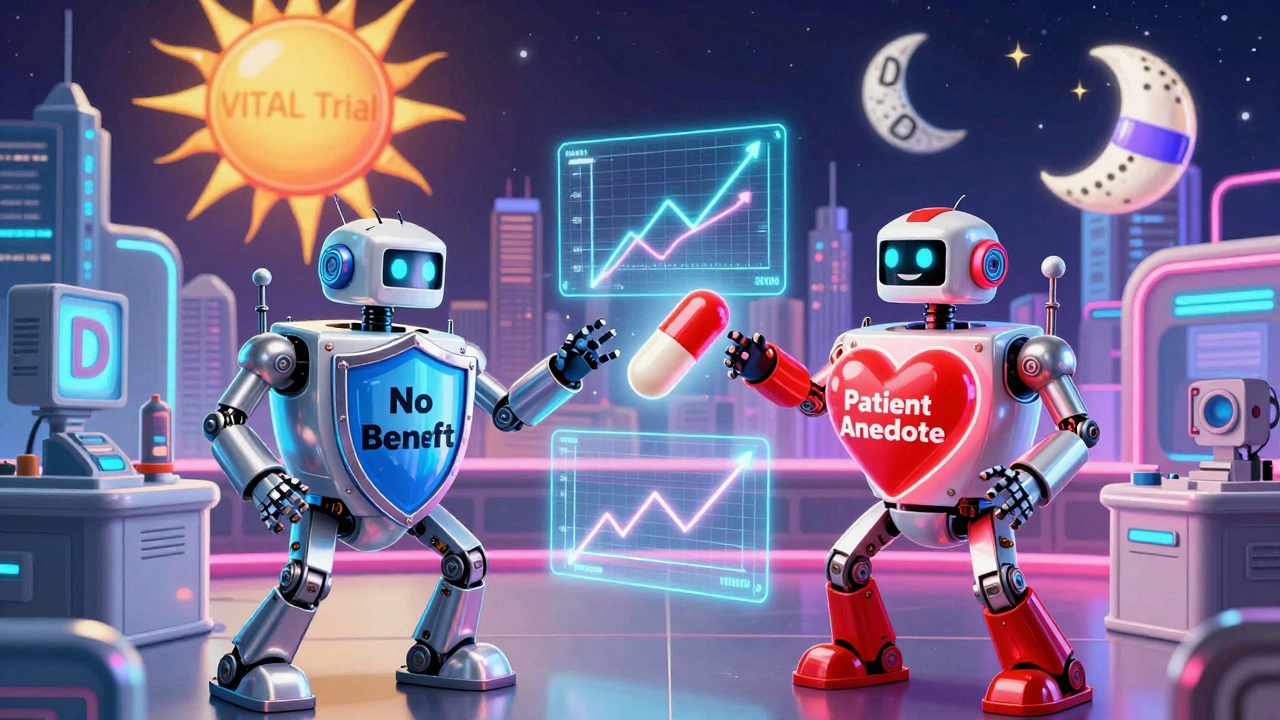
In 2022, researchers from Stanford and Harvard published the most thorough study ever done on this topic-the VITAL trial substudy. They followed 2,083 people who had just started taking statins. Half took 2,000 IU of vitamin D daily. The other half took a placebo. No one knew which group they were in. The study lasted a year.
The results? Exactly the same number of people in both groups developed muscle pain: 31%. It didn’t matter if someone started with low vitamin D (under 20 ng/mL) or normal levels. The supplement didn’t reduce symptoms. Not even a little.
This wasn’t a small or flawed study. It was randomized, double-blind, and large enough to detect even small differences. If vitamin D worked, this study would’ve found it. It didn’t. And yet, 47% of primary care doctors still say they recommend vitamin D for statin users-mostly because patients ask for it.
Do Statins Lower Vitamin D Levels?
Here’s where things get confusing. Some studies say statins lower vitamin D. Others say they raise it. One study found people on statins had lower levels than those not taking them. Another found the opposite. Why the contradiction?
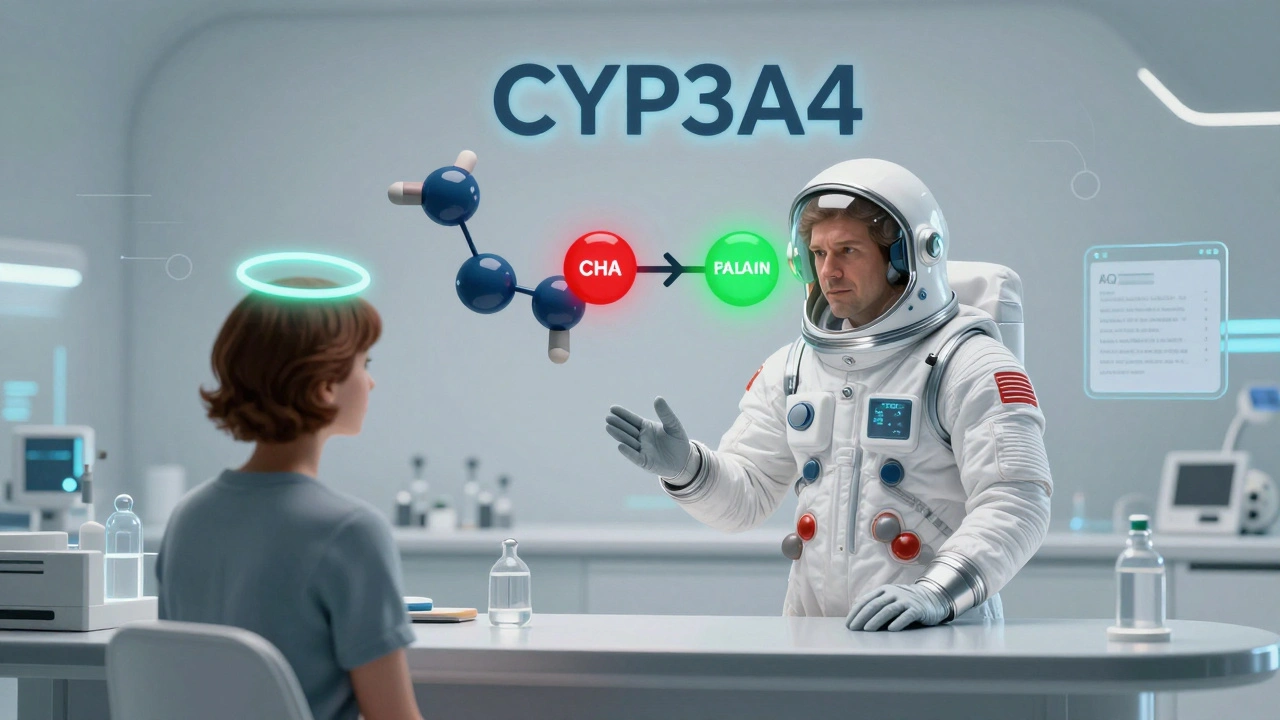
The answer lies in the type of statin. Statins like atorvastatin, simvastatin, and lovastatin are broken down by the same liver enzyme (CYP3A4) that processes vitamin D. Some researchers think these statins might actually boost vitamin D levels by increasing the activity of cholesterol transporters in the gut. One 2012 study showed rosuvastatin raised vitamin D levels from 11.8 ng/mL to 35.2 ng/mL in just eight weeks. That’s a huge jump.
But not all statins do this. Fluvastatin and pravastatin don’t rely on CYP3A4. And in a 2018 study, people taking statins had lower vitamin D levels than controls. So the effect depends on the drug, the person’s genetics, diet, sun exposure, and even their baseline vitamin D status.
Can Vitamin D Interfere with Statin Effectiveness?
There’s another angle: could taking vitamin D supplements reduce how well statins work? One small 2015 study found that people taking 800 IU of vitamin D daily had lower levels of atorvastatin in their blood after six weeks. That suggests vitamin D might be competing for the same liver enzymes, making the statin less effective.
But this was a tiny study. No large trial has confirmed this effect. And even if it’s true, the drop in statin levels was small-likely not enough to affect cholesterol control. Still, it’s a reminder that supplements aren’t harmless. They can interact with medications in ways we don’t fully understand.
What Do the Experts Really Say?
The American College of Cardiology, the European Society of Cardiology, and the American Heart Association all agree: don’t take vitamin D to prevent statin muscle pain. There’s no solid proof it works. Routine testing or supplementation for this reason isn’t recommended.
But they also say this: if you’re deficient in vitamin D, fix it. Everyone-statin users or not-should aim for a level of at least 20 ng/mL for overall health. Bone strength, immune function, and muscle health all depend on it. If your doctor finds you’re low, supplementing makes sense. But not because of your statin.
Which Statins Are More Likely to Interact?
Not all statins are the same. If you’re on one of these, you might be more likely to see a vitamin D interaction:
- Atorvastatin (Lipitor)
- Simvastatin (Zocor)
- Lovastatin (Mevacor)
These are metabolized by CYP3A4, the same enzyme involved in vitamin D processing. If you’re on one of these and you’re also taking high-dose vitamin D, talk to your doctor. It’s not a reason to stop either, but it’s worth monitoring.
On the other hand, these statins have little to no interaction risk:
- Rosuvastatin (Crestor)
- Pravastatin (Pravachol)
- Fluvastatin (Lescol)
They use different liver pathways. So if you’re worried about interactions, switching to one of these might help-especially if you’re also taking vitamin D supplements.
What Should You Do?
Here’s a clear, practical guide:
- If you’re on a statin and have muscle pain, don’t assume it’s low vitamin D. Talk to your doctor first. Muscle pain can be caused by other things-thyroid issues, arthritis, or even overexertion.
- Get your vitamin D level checked only if you’re at risk for deficiency: if you’re over 65, have dark skin, live in a northern climate, or rarely go outside. Don’t get tested just because you’re on a statin.
- If your level is below 20 ng/mL, take a supplement to reach 30-50 ng/mL. That’s good for your bones and overall health.
- If your level is normal or high, don’t take extra vitamin D just to prevent statin side effects. It won’t help.
- If you’re on atorvastatin, simvastatin, or lovastatin and you’re taking high-dose vitamin D (over 2,000 IU/day), ask your doctor if you should monitor your statin levels or consider switching to a different statin.
Why Does This Myth Keep Going?
It’s not just about science. It’s about hope. Statin muscle pain is real, frustrating, and sometimes disabling. People want a simple fix. Vitamin D is cheap, safe, and widely available. It feels like a natural solution.
But hope isn’t evidence. The VITAL trial, the largest and most rigorous study ever done, showed no benefit. And yet, the vitamin D supplement market for statin users is growing-costing the U.S. healthcare system over $285 million a year in unnecessary prescriptions.
Patients aren’t wrong to try. They’re just being misled by stories, not science. The real solution? Better communication. Doctors need to explain why vitamin D won’t help with muscle pain, even if it’s tempting to believe it will.
What’s Next?
Research is still evolving. The PRECISION trial, currently tracking 5,000 statin users with muscle pain, is looking for subgroups that might benefit-like those with extremely low vitamin D levels (under 12 ng/mL). Results are expected in late 2025.
Scientists are also studying whether genetics play a role. Some people have variations in the CYP2R1 gene, which affects how their body converts vitamin D into its active form. This might explain why some people respond to supplements and others don’t.
For now, stick with the facts: vitamin D doesn’t prevent statin muscle pain. But if you’re deficient, correcting it is still important-for your bones, your immune system, and your overall health. Don’t take it for the wrong reason. And don’t stop your statin without talking to your doctor.



john damon
December 11, 2025 AT 23:16OMG YES I TOOK VITAMIN D FOR MY STATIN MUSCLE PAIN AND IT WAS A GAME CHANGER 🙌 I felt like a new person after 2 weeks! Why do doctors always ignore what actually works for people?? 😭
matthew dendle
December 12, 2025 AT 12:40lol so the study says no effect but you still believe your anecdote over a 2000 person double blind trial? 🤡 next youll tell me astrology helps with cholesterol
Jimmy Kärnfeldt
December 13, 2025 AT 11:20It's wild how much we want simple answers to complex problems. Statin pain is real. Vitamin D deficiency is real. But mixing them together hoping for magic? That’s just human nature. We crave control when our bodies feel out of sync. The science says no, but emotionally? I get why people cling to it.
Maybe the real issue isn’t the supplement-it’s that we don’t have better tools to manage side effects. We need more compassion, not just data.
Ariel Nichole
December 15, 2025 AT 10:11Really appreciate this breakdown. I’ve seen so many people quit statins because of muscle pain and then end up with heart issues. It’s scary. I’m glad the article says to check levels if you’re at risk-makes sense to fix real deficiencies without chasing myths.
Also, love the statin breakdown by type. That’s super practical info most docs don’t take time to explain.
Monica Evan
December 16, 2025 AT 09:25My grandma took vitamin D for her statin pain and swore by it even though her levels were 45 ng/mL 😅 She’s 78 and still hikes every weekend
But yeah the study is solid. I work in pharma and I’ve seen how placebo effects can feel like miracles. Still, if someone feels better and isn’t overdosing? Let em have their peace of mind. Just dont make it a standard Rx
Also Rosuvastatin is my fav statin no cap
Taylor Dressler
December 17, 2025 AT 00:03The VITAL trial is the gold standard here. Randomized, double-blind, large sample size, pre-registered protocol. When a study like this finds no effect, it’s not a suggestion-it’s a conclusion.
Doctors recommending vitamin D for statin muscle pain isn’t just unscientific-it’s a failure of medical communication. Patients aren’t dumb. They’re listening to stories because they’re not being given clear, empathetic facts.
Also, the CYP3A4 interaction with certain statins is legit. That part deserves more attention in clinical practice.
Aidan Stacey
December 18, 2025 AT 16:48THIS IS WHY WE NEED TO TALK ABOUT MEDICAL MYTHS. People are dying because they stop statins thinking vitamin D will save them. Meanwhile, the supplement industry is making billions off false hope.
Imagine if we spent half as much money on patient education as we do on vitamin D ads. We could prevent so much heart disease.
Science isn’t cold. It’s the only thing keeping people alive when they’re scared.
Stop selling snake oil. Start teaching truth.
Jean Claude de La Ronde
December 19, 2025 AT 13:22so the study says vitamin d does nothing for muscle pain but statins might raise it?? what even is reality anymore
also why do we treat vitamins like theyre magic bullets when we know the body regulates everything? i mean if you had a broken leg would you take a vitamin to fix it or a cast?
we are so weird
Jim Irish
December 19, 2025 AT 21:49Good summary. The key is distinguishing between treating deficiency and treating side effects.
Two different goals.
One has evidence.
The other doesn't.
Simple.
Mia Kingsley
December 21, 2025 AT 06:54LOL the study was funded by Big Pharma who makes statins and they just want you to keep taking them while ignoring the real solution which is sunlight and real food not pills
Also vitamin D is a hormone not a vitamin so of course it interacts
And why is everyone ignoring that the placebo group had 31% pain? That means statins are trash anyway
Katherine Liu-Bevan
December 22, 2025 AT 13:54One thing missing from the article: vitamin D deficiency is linked to higher inflammation, and inflammation contributes to muscle pain. So while supplementing won’t directly fix statin-induced myopathy, correcting a deficiency might reduce overall systemic stress. That’s not the same as saying it treats SAMS-but it’s a nuanced layer worth considering.
Also, the 2,000 IU dose used in VITAL is standard, but some people metabolize it slower. Genetics matter. We’re not all the same.
Bottom line: test before you treat. Don’t guess.
Kristi Pope
December 23, 2025 AT 08:03My mom took statins for 8 years and never had a single muscle issue. Then she started taking 5000 IU of vitamin D daily and boom-ached like she ran a marathon. She thought it was helping, but it was probably the combo messing with her liver enzymes.
Turns out, more isn’t always better. I’m glad someone finally said it.
Also, I switched her to pravastatin and she’s been golden since. No more guessing games.
Aman deep
December 25, 2025 AT 04:04As someone from India where vitamin D deficiency is super common even in sunny areas, I’ve seen this firsthand. People take supplements like candy. But the moment they start statins, they blame everything on low D.
My uncle stopped his statin because he thought vitamin D would fix his leg pain. He had a mild heart attack last year.
Don’t let hope kill you. Talk to your doctor. Get tested. Don’t self-diagnose.
And yes, rosuvastatin is the quiet hero of statins.